Tag Archives: golden-era-hindi-songs

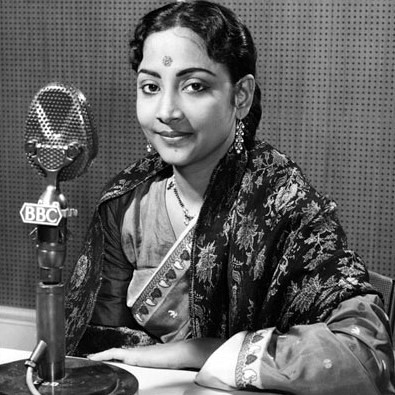
Geeta Dutt-Waqt Ne Kiya Kya Haseen Sitam

23rd  November 1930-20th  July 1972

A voice that can convey varied emotions like  an intense pathos , the ebullience of a girl in love, a devotional fervour , the carefree tease of a cabaret dancer etc. It is really difficult to describe the voice of Geeta Dutt  (born Geeta Ghosh Roy Chowdhuri). When we observe the different female playback singers of Hindi film music, we have sweet-as-nectar Lata Mangeshkar, Suman Kalyanpur and at the other end , powerful , ringing metallic voices like Shamshad Begum, Noorjahan . Somewhere in-between Geeta could find a niche for herself , with a combination of a commanding voice that can also sound so melodious. So we could hear the pain in her Waqt Ne Kiya Kya Haseen Sitam, the peppy Mera Naam Chin Chin Chu or Babuji Dheere Chalna and also a mellifluous Koi Chupke Se Aake Sapne that she sang in her last film before fate snatched her away cruelly at the young age of 42.

Like it happens purely by chance, the time I am publishing this blog is close to the anniversary of Geeta Dutt that falls on 20th July and just few days back, on 9th July , it was the birth centenary of her husband and noted film producer-writer-actor-director Guru Dutt.

Like the intense films that her husband used to make , their personal lives were also entangled in many twists and turns. Both were great artists and unfortunately except for few years , their married life was not a happy one with Guru Dutt very sadly passing away in 1964 at the age of 39 and Geeta Dutt followed eight years later , when she was just about to complete 42 years. There are many articles in the Internet about their personal lives and it must be known to many also and hence I will not elaborate further on that and instead focus more on  her fabulous songs.

Geeta  was one of 10 children born to a wealthy zamindar family in a Faridpur district in East Bengal, that is now Bangladesh. Her family moved to Calcutta and Assam in the early 1940s, leaving behind their land and properties. In 1942, her parents moved to an apartment in Bombay. Geeta was twelve and continued her schooling at the Bengali High School.

During her days in East Bengal ,  she trained as a singer under her music teacher, Hirendranath Nandy before her family settled in Bombay.  The composer K. Hanuman Prasad heard her singing in her house when she was in Bombay and was impressed by her voice . He gave her the first  opportunity to sing in  the mythological film Bhakta Prahlad. She was given two lines to sing for two songs.  Though she sang for few movies subsequently , it was the 1947 film Do Bhai that gave her the much-needed  breakthrough,  with the popular song “Mera Sundar Sapna Beet Gaya” scored by S. D. Burman becoming a hit. There was no turning back for her and soon she started singing for more than a dozen films in the next  two years. Despite one more legend, Lata Mangeshkar storming the music industry in  1949, with Barsaat , Mahal etc , Geeta had her own place and was well established as a leading female playback singer.

In 1951, the film Baazi turned the career of many artists apart from that of Geeta Dutt- S D Burman the composer , Guru Dutt for whom this was his debut as a director and also for Sahir Ludhianvi, the great lyricist. Her songs in the Hindi film Baazi, with music composed by  S. D. Burman, were highly well-received with the song “Tadbeer se bigdi hui taqdeer bana le” being an eternal favourite.  It was also during the song recording for this  film that she met and fell in love with Guru Dutt .

Apart from Hindi she was also well received in Gujarati films despite not knowing the language, and of course in her native Bengali films.  After their marriage, she sang in all of Guru Dutt’s subsequent films with songs from films like  Mr. & Mrs. ’55, C.I.D., Pyaasa, Kaagaz Ke Phool, and Sahib Bibi Aur Ghulam being etched in our memory.

There was a time when Guru Dutt did not want her to continue her singing career and coupled with  the personal turmoil she faced in her married life with Guru Dutt , she turned to alcohol and slowly  her career started declining in the late-1950s. The music composers who gave her immortal songs , S D Burman and O P Nayyar drifted towards  Lata Mangeshkar and Asha Bhonsle respectively. Unfortunately she could not even take the opportunity of the spat between Burman da and Lata for few years as he had started preferring Asha .

Fate brought in a  severe blow to her when  Guru Dutt’s passed away in  1964 ( was it suicide or an accidental overdose of sleeping pills with heavy drinking-it is still debated). She performed even more infrequently in films. After a long hiatus , for composer Kanu Roy, she recorded three superb songs  for Basu Bhattacharya’s film Anubhav in 1971. Just like a lamp that burns the brightest just before fading out , these songs show how she was still able to render classic masterpieces.

In all , over a  25-year career,  Geeta Dutt recorded over 1,400 songs in various languages , mostly in  Hindi, Bengali and  Gujarati, few in languages  like Marathi, Maithili, Bhojpuri, Punjabi, and Nepali. With Guru Dutt, Geeta Dutt had two sons, Tarun (1954-1985), Arun (1956-2014) and a daughter, Nina (b. 1962). She died on 20 July 1972 due to liver cirrhosis aged 41, in Mumbai, Maharashtra.

Geeta Dutt had a voice that can convey various emotions with an intensity that was unique to her. Compared to her other illustrious contemporaries,  she was relatively less trained in the techniques of singing , but could compensate that with the intensity and emotions she brought out in her singing.

I have tried my best to list out 25 songs -some very popular and few that are relatively  rare. Listing is in chronological order of the year of the film, with song-film-year-music director-lyricist and any co-singer mentioned in that order. The usual disclaimer -these are purely my personal favourites and it is very difficult to capture that huge variety of songs she had rendered in a short article.

<Some of the links to the songs embedded here do not play from the video version of the songs due to restrictions in Youtube and in those cases I have provided only the audio version links>

  1. Mera Sundar Sapna Beet Gaya -Do Bhai-1947-S D Burman-Raja Mehdi Ali Khan

Geeta Dutt would have been just 17 years old when this song was recorded-what a maturity in her voice and the emotions she had conveyed became one of her greatest strengths.

2. Ghunghat Ke Pat Khol re tohe piya-Jogan-1950- Bulo  C Rani-Meera Bai

This Meera bhajan composed so nicely by one the legends of the vintage era of Hindi film music, Bulo C Rani ( for a long time I was under the wrong impression this was a female music director but it was actually a male Bulo Chandiram Ramchandani!). The devotional genre was one more feather in her cap for Geeta Dutt.

3. Tadbir Se Bigdi Hui Taqdeer-Baazi-1951-S D Burman-Sahir Ludhianvi

It was a unique strength of Geeta Dutt that she could render a song full of pathos or a devotional one with as much skill as the fun-filled , peppy numbers like  this one. It is said that people used to watch the movie Baazi only for this song, repeatedly! That ‘hey hey heyyyyy’  by her makes this song immortal.

4. Suno  gajar kya gaaye-Baazi-1951- S D Burman-Sahir Ludhianvi

Burman da composed this with a grand orchestration that was rare in those days. A fast paced, combination of  Spanish gypsy and Arabian music styles , Burman da truly excelled in this composition. The way  Geeta Dutt sings the second antara-Husn bhi faani aur Ishq bhi faani hai marks her distinct style.

5. Yeh kaun aaya Baazi-1951- S D Burman-Sahir Ludhianvi

The film Baazi had both Geeta Bali and Kalpana Kartik and note how Geeta Dutt renders this song , picturized on Kalpana in a different tone when compared to those she sang  for Geeta Bali.

6. Jai Jagadish Hare -Anand Math-1952-Hemant Kumar- Composed By Sanskrit Poet Jayadeva Circa 1200 AD-With Hemant Kumar

One of the masterpieces from Hemant da, Anand Math was his debut film in Hindi as a composer. This could be one of the rarest songs of HFM in which  a Sanskrit shloka was taken  from the 13th century work ‘Geeta Govinda’, by a Sanskrit poet Jayadeva . It is amazing to note that way back in 1952 , Hemant da had conceptualized this with two contrasting tunes. He recites the main shloka and  Geeta Dutt follows him , repeating the lines Keshava dhrut meena shareera jaya Jagadeesh hare, Keshava dhrut wamana roopa  jaya jagadeesh hare, Keshava dhrut Rama shareera   jaya jagadeesh hare, Keshava dhrut Budhha shareera   jaya jagadeesh hare and Keshava dhrut Kalki  shareera   jaya jagadeesh hare in a different tune. Imagine in the year 1952, with primitive recording technology and maybe just one mike for both the singers , they created such magical compositions.

The baritone of Hemant da contrasted with the intense devotional fervour in Geeta’s voice is something that remains in our mind long after the song is over.

7. Na Yeh Chand Ho Ga-Shart -1954-Hemant Kumar-S H Bihari

This song has two solo versions, one by Hemant da and one by Geeta Dutt . Both are classics in their own way.

8. Babuji Dhire Chalna-Aar Paar- 1954- O P Nayyar-Majrooh Sultanpuri

Contrast this with the Na yeh chand hoga that you might have just heard. Apart from S D Burman, it was O P Nayyar who gave maximum number of hits for Geeta Dutt. One can say this was the signature style of Geeta! The way she adds that special charm in the word “ Chalna” -simply superb!

9. Hoon abhi mein jawan ae dil- Aar Paar- 1954- O P Nayyar-Majrooh Sultanpuri

Continuing on similar lines to that of Babuji Dheere Chalna, this is one more delightful song by the magical team of OPN-Geeta -Majrooh. One difference is that Geeta  renders this in a fantastic intoxicated tone. All the songs from this film could be included! I had to sacrifice them for the sake of brevity- Geeta’s fabulous duets with Rafi- Mohobbot Kar lo ji bhar lo, Arrey na na na tauba tauba, Sun sun sun zaalima pyar humko are simply outstading! Geeta’s solo Ye lo mein haari piya and the sad version Ja ja ja bewafa kaise pyar …those days all the songs from a film used to be super hits!

10. Aan Milo Aan Milo -Devdas- 1955- S D Burman- Sahir Ludhianvi-

    Duet with Manna Dey

    This is one genre that was absolutely Geeta’s forte! The devotional songs that she rendered were evergreen classics.  Manna da adds more charm to this with his inimitable style .

    11. Jaane Kahan Mera Jigar Gaya Ji Mr. & Mrs. ’55 – 1955- O P Nayyar-Majrooh Sultanpuri-Duet with Rafi

      One of the iconic songs of Johnny Walker- Rafi and Geeta at their playful best! And when we have the foot-tapping rhythm of Nayyar sahab, what more do we want?!

      12. Jaata Kahan Hai deewane-CID -1956- O P Nayyar-Majrooh Sultanpuri

        Those days the censor board officials were strange! They had this song removed from the film due to the words “ phi phi…kuch tere dil mein phi phi…kuch mere dil mein phi ..phi!!! They thought the words phi phi was gibberish. Fortunately we have the audio! And what a scintillating performance by Geeta Dutt-note that  extra drawl she added to the word ‘ kasam….aaaa’ as they say in today’s lingo-she just rocked!

        13. Aye Dil Mujhe Bata De-Bhai Bhai- 1956-Madan Mohan-Rajendra Krishan

          The normally staid and melodious Madan Mohan comes out with one more rocking number for Geeta Dutt. I do not have the statistics with me , but I think there must be very few songs he had composed for her. But legends, when they get even one song, grab the opportunity  and make it an immortal classic.

          14. Aaj Sajan Mohe Ang Lagalo-Pyaasa-1957-S D Burman- Sahir Ludhianvi

            The character played by Waheeda Rehman conveys her unrequited love through this song that is composed as a bhajan – a classic example of Burman da’s superb composing skill. That dhol , a typical percussion used in Bengal , coupled with Geeta Dutt’s  voice that brings out the pain sets the tone for this evergreen song. Pyasa had some of the best ever songs by Rafi like Yeh mehlon yeh takhton, Sar Jo tera chakraye, Jinhe Naaz hai Hind par woh kahan hai but in the midst of all those , this one by Geeta has its own place in Hindi film music. Of course there is another famous duet Hum Aaapki aankhon mein is dil ko …but sometimes radio, and almost all the albums have repeated this song so many times that I have not included that here.

            15. Tum jo mil mere humsafar-12 ‘O’ Clock-1958-O P Nayyar-Majrooh Sultanpuri-Duet with Rafi

              A soft and subtle romantic duet by OPN that brings out the voice of both Rafi and Geeta so nicely.

              16. Mera Naam Chin Chin Chu-Howrah Bridge- 1958-O P Nayyar-Qamar Jalalabadi

                The quintessential rock and roll style that was in vogue for most of the 50’s and 60’s , I think this song doesn’t need any thing to be written about. An eternal classic that describes the music of OPN and also the style of  Geeta Dutt for whom this has become almost a signature song. This is equally popular with today’s generation as it was around six decades ago.

                17. Mujhko tum jo mile yeh jahaan-Detective-1958-Mukul Roy-Shailendra-Duet with Hemant Kumar

                  Mukul Roy was brother of Geeta Dutt and a music composer too. During the stressful times  that Geeta had in her personal life and even after her death, he took care of her and her children.  The film Detective  had some of the  best scores by   Mukul Roy. This is a delightful melody.

                  18. Nanhi Kali Sone Chali Hawa Dhire Aana -Sujata -1959-S D Burman-Majrooh Sultanpuri

                    One of  the most famous lullabies of HFM. Caresses you as a gentle breeze.

                    19. Waqt Ne Kiya Kya Haseen Sitam-Kaagaz Ke Phool- 1959-S D Burman-Kaifi Azmi

                      My title for this blog has the lines from  this song-tragically Geeta’s best song  describes how fate brought in  a tragic end to both Guru Dutt and herself. The way she has sung this is something that no one can replicate. That pangs of separation  is conveyed so well but at the same time in an understated way. Considered as a cult classic movie now, Kagaz Ke Phool was a commercial disaster for Guru Dutt and he never directed a movie after this. Though he made  few films afterwards that had his distinct touch , officially he credited the title to others.

                      His trusted photographer of the black & white era V K Murthy’s artistry is apparent in the way this song has been shot. Each frame is  a painting.

                      20. Na mein dhan chahoon na ratan -Kala Bazaar-1960- S D Burman-Shailendra-Duet with Sudha Malhotra

                      One of the most beautiful bhajans ever composed in HFM ( some say this was Jaidev’s creation who was assisting S D Burman at that time) , this is a rare combination of Geeta with Sudha Malhotra.

                      Shailendra , as usual comes out with gems of wisdom with few words.

                      21. Na Jao Saiyaan Chhuda Ke Baiyaan -Sahib Bibi Aur Ghulam-1962-Hemant Kumar-Shakeel Badayuni

                      The three songs from Sahib Bibi Aur Ghulam that I have listed here do not need any description. Words will simply fail to explain them. Just close your eyes and get yourself immersed in them. The music of Hemant Kumar, lyrics of Shakeel Badayuni and last but not least Geeta Dutt’s out-of-the world rendition transport you to another world.

                      22. Piya Aiso Jiya Mein Samaye Gayo- Sahib Bibi Aur Ghulam-1962-Hemant Kumar-Shakeel Badayuni

                      23. Chale Aao Chale Aao- Sahib Bibi Aur Ghulam-1962-Hemant Kumar-Shakeel Badayuni

                      24. Mujhe Jaan Nah Kaho Meri Jaan-Anubhav- 1971- Kanu Roy-Gulzar

                      The last two songs in my blog is from the film Anubhav that was directed  by Basu Bhattacharya , part of the trilogy by him on marital discord -Gharonda & Avishkar . Though Geeta sang in one more film after this, but this was her swan song. With almost nil orchestration , the immensely talented but sadly sidelined music director Kanu Roy brought out the best in Geeta Dutt’s voice in the three songs from this film. I have excluded Mera Dil Jo Mera Hota just for the sake of having the traditional 25 number of songs in my blogs!

                      25. Koi Chupke Se Aake- Anubhav- 1971- Kanu Roy-Gulzar

                      Acknowledgements and Disclaimer:
                      I sincerely thank the publishers of following  Internet sources   for the information that I could gather for this article:

                      1. You Tube
                      2. Wikipedia

                      The songs mentioned are from the popular, public domain and have been embedded here   only for the listening pleasure of the music lovers. This blog does not claim any copyright over them, which rests with the respective owners of the rights The photograph is taken from the internet, duly recognizing the full copyrights for the same to the  original creator or the site where they were originally displayed .This blog does not claim any copyright over them, which rests with the respective owners of the rights.
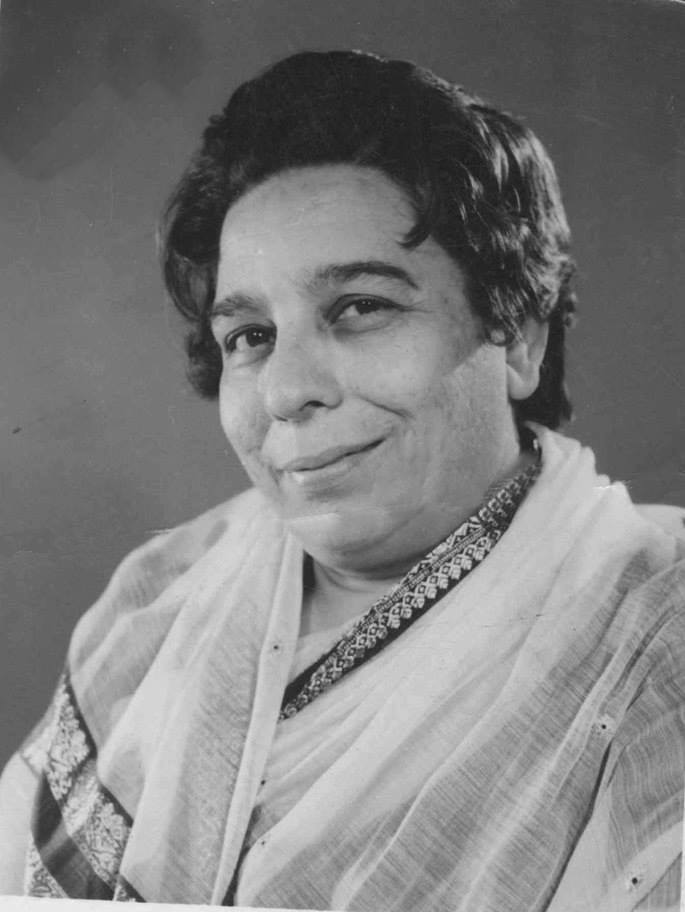
                      Shamshad Begum – a powerful voice

                      14th April 1919- 23rd April 2013

                      In the year 2004, many newspapers published a report that Shamshad Begum, the noted playback singer had passed away , when she was very much alive and living with her daughter , son-in-law, and grandchildren, in Powai, Mumbai. No doubt it was sheer negligence by the media. It  was also  a reflection on the famous short-lived  public memory . To some extent, it was also due to her own decision to stay away from the film industry, having been disillusioned with the politics in film industry. Actually, it was another Shamshad Begum, a  lesser-known actress and  happened to be the grandmother of actress Saira Banu who had passed away ,  which the media reported wrongly! Surprisingly  this was much before the  social media and fake news dominated world in which we live today!

                      In the early decades of Hindi films, singers with a resonating, powerful voices ruled the music scene. Singers like Ameerbai Karnataki, Kanan Devi, Zohrabai Ambalewali, Noorjahan, Suraiyya, Khursheed and Shamshad Begum are some of the famous female playback singers from that era. Among them, few like Noorjahan and Khursheed  migrated to Pakistan after the partition of our country,  whereas  other singers  faded into oblivion with  Lata Mangeshkar, Geeta Dutt , Sudha Malhotra, Suman Kalyanpur , Asha Bhonsle gradually replacing them.

                      However, it was Shamshad Begum ( I will refer to her as SB for brevity) who  remained successful even till the 60’s despite many other new singers entering the industry. Her decision to stay away from limelight was partly due  to the  disillusionment with the politics in the industry and partly due to the sudden demise of her husband in a road accident in 1955. It is good to note that the government honoured with the Padma Bhushan award when many other legendary singers had to be content with lesser awards or no awards at all!

                      During her peak years, she commanded a price that was unbelievable for those times. In one of her interviews , she had stated that her father’s advice to her always kept her in good stead. “Do not be too sweet that people would take you for granted and at the same time do not be too bitter so that everyone would avoid you.” She maintained a dignified relationship with all her associates and simply focused on her singing alone.

                      Born in Lahore in the undivided India on 14th April 1919, to Mian Hussain Baksh and Ghulam Fatima , she was one among the eight children of her parents . She started singing at the age of 12 in weddings, social functions and  being from a  conservative family , her father did not allow her to be photographed , although he reluctantly agreed to her singing career. As she had promised to her father that her face would not appear in public , it is said that only , much later , in 1970’s people could see her photograph!

                      Right from her school days, she was recognized for the quality of  her voice and used to lead the school prayers. She had no formal training in music and though her parents were not much in favour of a career in singing , her uncle supported her and took her to a recording company Jenophone/Xenophone ( that was later taken over by HMV) . The well-known composer Ghulam Haider, who had given breaks for many legendary singers gave her a contract and it is said that she got around Rs 5000 for completing many songs for that recording company. Unfortunately those songs and many other songs that she would go on to sing live for All India Radio in Peshawar and Lahore are not available as they were never recorded but broadcast live. 

                      When she was around 15 years old , she  met Ganpat Lal Bhatto , a Hindu lawyer and married him , despite opposition from her family due to religious difference. They had a daughter   Usha Ratra who married an Army Colonel Yogesh Ratra and she spent her  last days with them and her grandchildren who were very much devoted to her. 

                      She got her musical skill honed by Hussain Bakshwale Saheb a sarangi maestro and also by Ghulam Haider himself. She was one of the highest paid singers in Hindi film industry, with a voice that some  compared to that of a temple bell , resonating , majestic , and flowing like a river effortlessly. She could sing  a western style or cabaret song , a folk song , a peppy romantic duet , a sad ‘ bidaiee’ song, a qawwali -all with equal fervour. The 1941 film Khazanchi was a landmark film for her as she sang all the eight songs in that movie with the film and songs becoming a great hit.

                      She was once that most favoured female playback singers for all the top music composers of the 1940’s and 50’s . During the vintage era she sang for  Ghulam Haider, Pt Govindram , Ghulam Mohammad followed by the legendary  Naushad, C Ramachandra , S.D Burman & O.P Nayyar. In the industry she was  a senior   to most of the later day legends like  Rafi, Talat, Kishore , Mukesh, Lata , Geeta Dutt, Asha Bhonsle etc . Even Naushad was junior to her and he had acknowledged publicly the fact that it was mainly due to Shamshad lending her vocals to many of his early hits, he got immense fame.

                      It is SB’s bad luck that all these four music directors, who worked with her in many hit songs, gradually shifted their focus to other female playback singers. C Ramachandra and Naushad started giving more songs  to Lata, S.D Burman to Geeta Dutt , Asha Bhonsle initially and later on to Lata. O.P Nayyar initially worked with SB &  Geeta Dutt but later on he shifted to  Asha till they had their bitter rift. Although I could not get any authentic information on exactly how many songs SB had sung, it is estimated to be around 2000. Not only in Hindi, she also sang in Punjabi, Bengali, Marathi, Gujarati and even 2-3 songs in Tamil! I have given the link to a rare Tamil song by her in dubbed version of the hit film Aan at the end of this blog.

                      It is really difficult to select few songs from her vast repertoire , especially when we see that most of her songs during the golden era were super hits!

                      I have tried to select a few to the best of my ability , trying to showcase the huge variety in her singing. Songs are arranged in the chronological order of the song, film ,year of film’s release, co-singer, music director and lyricist mentioned in that order.

                      < Though I have tried to embed almost all the songs that can be played here itself, there are two songs which are not allowed by the respective uploader in YouTube and so you may have to click and view it in YouTube seperately>

                      1. Sawan Ke Nazare Hain-Khazanchi-1941-Ghulam Haider-Ghulam Haider-Wali Khan

                      The film Khazanchi was adapted loosely from  a silent English film The Way of All Flesh made by Victor Fleming in 1927and it is considered to be one of the early blockbuster movies of Hindi cinema. It is to the credit of Shamshad Begum that she sung all the songs in this movie, mostly solos and one or two duets with Ghulam Haider himself.

                      2. Kahe Koyal Shor Machaye Re – Aag -1948-Ram Ganguly-Behzad Lucknowi

                      Whenever I listen to the songs of the film Aag, I always wonder why Ram Ganguly could not recreate the magic in later films. It is my personal observation that the music in this film was something far ahead of its times. Apart from this solo, Shamshad had a superb duet “ Solah baras ki bayee umariya” with Rafi , a funky Raat ko Jab Chamke Tare with Mukesh and another solo Dil Toot Gaya Ji  in this film.

                      3. Dharti Ko Aakash Pukare – Mela-1948-Mukesh-Naushad -Shakeel Badayuni

                      Mela had some of the excellent scores of Naushad from his early years. Mukesh had  his Gaye Jaa Geet Milan Ki, Rafi had  his Ye Zindagi Ke Mele but it was Shamshad who sang a whopping 9 songs in the film! Dharti Ko Aaksh Pukare, though a very brief song , tugs at your heart with the pathos rendered soulfully by SB.

                      4. Mein Bhanwara Tu Hai Phool- Mela-1948-Mukesh-Naushad-Shakeel Badayuni

                      A vintage Naushad composition , with a superb combination of Mukesh’s soft voice and SB’s powerful voice providing a unique melody!

                      5. Chandini Aayee Banke Pyaar O sajna-Dulari-1949-Naushad-Shakeel Badayuni

                      One more quintessential Naushad composition. However we can notice how Naushad changes track by giving Lata around 9 songs and only 2 for SB! Must be the effect of the immense success of Barsaat when Lata stormed the industry and slowly started replacing other singers.

                      6. Na Bol Pi Pi More Angna-Dulari-1949-Naushad-Shakeel Badayuni

                      With just two songs given to her in this film by Naushad as compared to the lion’s share to Lata,  SB makes the best  out of them with these two evergreensongs.

                      7. Mera Piya Gaye Rangoon-Patanga-1949-Chitalkar-C Ramachandra-Rajendra Krishan

                      One of the most famous songs by Chitalkar ( C Ramachandra) and Shamshad Begum, this is a duet that sounds as fresh as if it was composed yesterday. One of the TV channels I used to watch earlier and also our good old Vividh Bharati might have made an over-kill of playing this song almost every day and for a moment I thought if I should include any other CR ‘s composition instead of this, but on second thoughts, this is a great iconic song to be left out!

                      8. Woh Aayenge- Khel- 1950-Sajjad Hussain-Zia Sarhadi

                      I had included this song in my blog on the genius composer Sajjad Hussain and generally I try not to  repeat the songs. But I have to make an exception to my own ‘ unwritten’ rule! This song, though I heard it very recently is a hidden gem that I do not understand how it remained an obscure one till now. A fantastic composition that is typical of the maestro Sajjad, superbly rendered by SB.

                      9. Chod Babul Ka ghar – Babul-1950-Naushad-Shakeel Badayuni

                      One of the most famous “ bidayee” ( when the bride leaves for her husband’s house after marriage) , SB has once again given an immortal song with Naushad. It was Naushad’s firm belief in keeping the orchestration to the minimum in such songs and let the singer elevate the song to the height it deserves.

                      10. Milte Hi Aankhen Dil Hua- Babul-1950-With Talat Mehmood-Naushad-Shakeel Badayuni

                      I read somewhere that the newcomer Talat Mehmood was a bit nervous during the rehearsals for  this song and it was the veteran Shamshad who boosted his morale by encouraging him to shed his inhibitions and what an evergreen duet this turned out to be. Whenever the Begum sings a duet , her voice overpowers the male singer!

                      11.Sharmaye Kahe Ghabraye Kahe- Baazi-1951-S D Burman-Sahir Ludhianvi

                      Shamshad delivers a superb foot-tapping cabaret number in this SDB composition.

                      12. Saiyyan Dil Mein Aana Re -Bahaar-1951-S D Burman-Rajendra Kumar

                      A 32-year-old SB singing for an eighteen-year-old Vyjantimala! A peppy song by the great Burman da to suit her breezy style of singing. Though I hate the concept of remixing old classic gems ( and mostly spoiling them!) I see that many of SB’s songs are popular with the remixing guys!

                      13. Duniya Ka Maza Lelo – Bahaar -1951- S D Burman- Rajendra Krishna

                      SDB takes us through Arabia and  Hawaii with the fabulous interludes , superbly enacted on the screen by the great dancer Vyjanthimala and last but not least, a power-packed singing by the Begum!

                      14. Chaman Mein Reheke Veerana – Deedar -1951-Naushad-Shakeel Badayuni

                      I think the songs she sang for Naushad are of excellent quality. This is one of the  lesser heard songs of SB.

                      15. Door Koi Aaaye Dhun – Baiju Baawara 1952- Rafi & Lata- Naushad-Shakeel Badayuni

                      Although this song is a triad, Rafi has only a small part humming “ O jee ho…” throughout the song  and Lata also has an equal stanza, somehow  SB, with her resonating voice,  dominates the  song.

                      16. Badi Mushkil Se Dil Ki Beqaraari- Naghma- 1953-Nashad-Nakshab Jaravachi

                      There is always confusion between the names Naushad and Nashad. I wonder why Shaukat Hussain Dehlvi/Shaukat Ali Hashmi called himself Nashad , which in Urdu signifies “ joyless,” “cheerless” . Maybe it was an intentional , antonym  to his bitter rival Naushad which means , cheerful, happy! Anyhow, leaving that aside, this is a complex , difficult composition which SB renders with effortless ease.

                      17. La De More Baalma Aasmani Chudiyan – Rail Ka Dibba -1953- Rafi-Ghulam Mohammad-Shakeel Badayuni

                      Long before terms like ‘ breathless singing’ , ‘rap songs’ became a rage, SB and Rafi gave this superb , peppy rap song. Both of them render a breathless antara , effortlessly!

                      18. Kabhi aar kabhi paar – Aar Paar-1954- O P Nayyar-Majrooh Sultanpuri

                      SB’s best songs in the early years were with the stalwarts like C.Ramachandra, Naushad , S.D.Burman , and later on , it was the turn of another great composer from the musical land of Punjab, O.P Nayyar with his foot-tapping rhythm and beats to give equally great songs for her.

                      19. Boojh Mera Kya Naam Re- C.I.D- 1956- O P Nayyar-Majrooh Sultanpuri

                      The film C.I.D had some of Shamshad’s most memorable songs like the solos Boojh Mere Kya Naam Re, Kahni Pe Nigahen Kahin Pe Nishana and the triad with Rafi & Asha that remains so popular till now, Leke Pehla Pyaar Bharke.

                      20. Kahin Pe Nigahen Kahin Pe Nishana – C.I.D-1956-O P Nayyar-Majrooh Sultanpuri

                      An iconic song that defines the singing style of Shamshad Begum. OPN ‘s interludes mostly get repeated throughout the song but one does not feel bored as he makes it so catchy!

                      21. Leke Pehla Pehla Pyaar -C.I.D-1956-Rafi & Asha-O P Nayyar-Majrooh Sultanpuri

                      I am now running short of words as I cannot keep thinking of synonyms to words like evergreen/immortal/fresh /masterpieces for all the songs of SB! This only shows a whopping  75-80 % of her songs have been super-duper hits!

                      22. Mere Neendon Mein Tum Naya Andaaz -1956- Kishore Kumar-O P Nayyar-Jaan Nissar Akhtar

                      One of the rare duets of SB with Kishore , the two voices match each other perfectly well. And what a mesmerizing tune by OPN! The song lingers in your mind long after you have stopped listening to it.

                      23. Gaadiwale Gaadi Dheere- Mother India-1957-Rafi-Naushad-Shakeel Badayuni

                      By mid-50’s , Shamshad had reduced her  singing due to the sudden demise of her husband in 1955 in a road accident.  It was mainly due to the persistence of the producer-director Mehboob Khan , who managed to convince  her to sing for this film after her brief hiatus.

                      24. Teri mehfil Mein kismat-Mughal-E-Aazam-1960-Lata-Naushad-Shakeel Badayuni

                      In the early years Lata and Shamshad had sung many songs together. This famous qawwali  from Mughal-E-Azam was the  last time they sung  together. When it comes to qawwali, Shamshad was way ahead of others , but to her credit, Lata has also sung this well , despite this genre not being one of her strong points.

                      25. Kajra Mohabbat wala Kismet-1968-Asha-O.P.Nayyar-S.H. Bihari

                      One may observe the huge gap between the years-from 1960, we now straight away come to 1968! It is to the credit of OPN that he gave the Begum a last memorable song. Technically this is not her last song as she sang for few films like  1970 Heer Ranjha ( Nache Ang Ve in Madan Mohan’s music with Jagjit Kaur) and I understand the song Main Papi Tum Bakshankar was her last recorded song.

                      As a bonus song, I am providing a link to her Tamil song ( Naan Raaniye Rajavin-Tamil dubbed version of Aan-Naushad-Kambadasan) . It is always a pleasure to listen to a legend from Hindi films rendering a song in my native language! This is from the dubbed version of the famous film Aan..the Hindi equivalent of this song  was Mein Rani Hoon Raja Ki

                      Acknowledgement & Disclaimer 

                      I sincerely thank the publishers of following blogsites & Internet sources for the information that I could gather for this article:

                      1. You Tube
                      2. Wikipedia

                      The songs mentioned are from the popular, public domain and have been embedded here   only for the listening pleasure of the music lovers. The photograph is taken from the internet, duly recognizing the full copyrights for the same to the  original creator or the site where they were originally displayed .This blog does not claim any copyright over them, which rests with the respective owners of the rights.

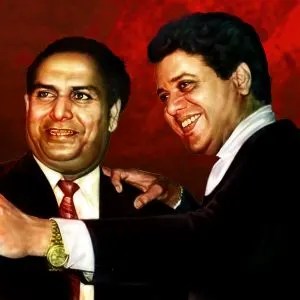
                      The golden duo: Shankar-Jaikishan-Part 1

                      Shankar Singh Raghuvanshi (15th October 1922 to 26th Apr 1987)

                      Jaikishan Dayabhai Panchal (4th Nov 1929 to 12th Sep 1971)

                      Among the great legendary music directors who created immortal film songs during the golden era of Hindi film music ( HFM) , that is from late 40’s to early 70’s , there were two, who ruled at the top for almost two decades. It is very rare to see quality and quantity going hand-in-hand , but Shankar Singh Raghuvanshi & Jaikishan Dayabhai Panchal could exactly do that ! They created sheer magic with their tunes that had an eclectic mix of the classical , catchy rhythm patterns, unparalleled  orchestration that appealed to the connoisseurs as well as the laity. If we look at the Hindi film music( HFM) journey from the 1930’s when songs started appearing , the early years were influenced by Hindustani classical music and  Rabindra sangeet style of music. They were no doubt melodious but was not that much understood and appreciated by the masses. However , when  Shankar -Jaikishan ( abbreviated SJ  from now onwards) stormed the music scene with the film Barsaat in 1949, there was  sudden whiff of freshness in the music that was melodious and at the same time with a faster tempo and an easier format for a layman to appreciate  and sing along. From then it was literally a “ barsaat” of hit songs for the next two decades, uninterruptedly.

                      The impact  of their music was so powerful  that even in regions within our country where Hindi is not the main language, their songs Like Awaara Hoon or Ramayya Vastavayya became  so popular. Crossing the seas, even in far off countries where the Hindi language was unknown, like Turkey, Russia  & China  people could sing along with “ Awaara Hoon” ! Talking about that song , noted music director Pyarelal of the Laxmikant -Pyarelal duo once said , if one has to understand S-J , it was that  accordion piece that comes immediately after that Awaara hoon line. We cannot  think of that song without that piece. That , in essence , was S-J style. For their fans , every note of the preludes and interludes of the songs are almost etched in memory.

                      The pulse of the masses was rightly discovered by S-J . Their compositions were  a heady cocktail of underlying classical raag base to which they added  a fast , catchy rhythm, an orchestration with superb preludes, interludes & postludes, even to the extent of composing sad songs with a faster tempo -all these factors making them the undisputed ‘emperors ‘ of HFM till around 1970. If I can go a little overboard , I can even call them the  ‘ superstars’ among music directors. They painted with a larger canvas and made songs the center-piece of a film , and started getting paid sometimes even more than the main actors ! Their names in the posters were enough to pull the crowd.  With 179 films and around 1300 songs , any discussion on the golden era of HFM cannot be complete without their music. In one of his shows, noted lyricist and story, screenplay writer Javed Akhtar rightly described their music as: “till the advent of S-J , film song  was a short story, but S-J made it into a novel” There can  be no better way to describe .

                      Somehow, despite all the greatness in their career, today we seem to have totally forgotten them, more so in the so-called mainstream media, radio/TV channels that keep harping about just one or two names always! The year 2022 was the birth centenary of Shankar,  and sadly there was no mention  of that! That is no surprise as the film world is notorious for ignoring many such stalwarts . For Shankar , the neglect  started immediately after the sad and sudden demise of his partner Jaikishan in 1971. Even more irritating is that in many of the books or blogs , whenever they talk about S-J , they start off with how the glorious music they gave initially deteriorated in their later years ( as if all other music directors did not have their creativity reducing in later years!) ,  their so-called rift , and again how they did not deserve some of the Filmfare awards etc. Somehow I find this repulsive and so would not talk anything about that and would, instead  dedicate a two-part blog to capture their excellent music. S-J’s music has to be celebrated.

                      I started writing this blog on 16th October ’24 just a day after  the 102nd birth anniversary of Shankar. By the time I complete this blog it would be closer to 4th November which happens to be the 95th birth anniversary  Jaikishan. This blog comes  immediately after my earlier one on the genius Sajjad Husain. I am wonder-struck with the contrasting variety that we had in the music of the golden era. Sajjad music became immortal with just less than hundred songs and on the other extreme end  of the spectrum we have S-J with more than 1300 songs , working with some 115 different movie banners and around 100 different film directors!

                      One may wonder why I am going overboard in praising their music.   In any  creative art, sustaining the top position for two decades is definitely a great achievement , more so in the intensely competitive film industry. Also there may not be a single day when their songs are not played or remembered . Their songs were the first to transcend our borders and go to various regions  like Russia , the middle-east and even Europe. One of their songs Jaan Pehchaan Ho ( from the film Gumnaan, sung by Mohammad Rafi) is strangely ignored in our country , but so many artists in Europe & USA have recreated that and even used it in a commercial advertisement for a beer brand and in the  titles   of a Hollywood movie Ghost World! Songs like Awaara Hoon , Mera Joota Hai Japani, Kisiki Muskurahaton Pe Ho Nisar , Aaj Kal Tere Mere Pyaar Ke Charche, Yahoo!..Chahe Mujhe Koi Junglee Kahe, Zindagi Ek Safar Hai Suhana are popular even in those regions of our country where people may not know Hindi.  

                      At their peak , they mostly  used a grand 60–70-piece orchestra ! They were the highest paid among music directors, reaching an astronomical figure of Rs 5 lakhs in the 60’s. It is a fact that  many actors owed their career to the super hit songs scored by  S-J in their films. They had the maximum number of silver jubilee and golden jubilee films in those days. It is said that , if the film producer was able to rope in  S-J , a simple letter from the duo that they are composing music for the film , would make  financiers  queue up for funding the film. Sometimes the film posters used to have only “ Music by Shankar Jaikishan”  rather than the name of  actors and it was a guarantee for success. Only one other music director had  this recognition and that was O.P Nayyar.

                      How these two legends joined together is interesting. They were from different  backgrounds. Shankar,  a Punjabi born in Madhya Pradesh and brought up in Hyderabad ( then in Andhra Pradesh & now in Telengana ) and Jaikishan , a Gujarati , born in  Bansada, Gujarat. Both did not have much of formal education. But music was their passion. When these two met at the office of Gujarati film director , Chandravadan Bhatt in search of opportunities to score music for films , they discovered their common interest and that is how their association began.

                      Shankar started working for the Prithvi theatres that was run by Prithviraj Kapoor and he introduced Jaikishan as a harmonium player. Shankar had by then learnt to play Harmonium , Tabla, Accordion, Piano and also learnt kathak dance. When Prithviraj ‘s son Raj Kapoor made his first film , Aag in 1948 , he chose Ram Ganguly as the music director. S-J assisted him on the orchestration and Shankar was also assisting the noted music duo Husanlal -Bhagatram . When Raj Kapoor wanted to make Barsaat in 1949, he had some issues with Ram Ganguly and that is how luck smiled upon the young S-J to fetch them their first break as independent composers. Barsaat’s music brought in a huge wave in the form and style of HFM that catapulted them to the top. Initially , it is said that many other veteran music directors were initially skeptical and only C Ramachandra had remarked that one day these boys will prove to be tough competitors!    

                      Although they composed under the joint name Shankar-Jaikishan, it is no secret that they used to compose the songs individually. However they had their trusted arranger for orchestration and percussion in common: Sebastian D’ Souza taking care of the orchestration and Dattaram Wadkar, looking after the  rhythm section. It is said that Shankar’s forte was more on dance-based songs, theme-based songs and in Raj Kapoor’s films the title song was always Shankar’s responsibility. He worked more with Shailendra. Jaikishan was more into the romantic and sad songs and worked with Hasrat Jaipuri. Jaikishan was also an expert in background music.  He was also more social and looked after the financial aspects. He had the skill to interact with the outside world  whereas Shankar was more of an introvert , a bit short tempered , traits that would go against him after the demise of Jaikishan. He was not the party-going type unlike Jaikishan and was happy with his other hobby, that was wrestling! Many stories were written about their so-called rift post Sangam film. I read somewhere that Shankar himself denied those stories.

                      More than two years back , in this blogsite I had written about the golden team of S-J with their inseparable lyricists Shailendra & Hasrat Jaipuri. During those days , I was not embedding the songs and so it was just a long write up on some of their best songs. Their music is an ocean and I am sure that I would be able to pick many other songs that I could not cover in my earlier blog .

                      To my pleasant surprise, when I started listing out their songs , I found that I could pick an astonishing 50 songs from their debut year 1949 to 1960! And there was more to come from the  decade of 60’s which was their peak! So I am breaking this blog into two parts-Part 1 covers 1949 to 1960 and Part 2 the years after 1960 till Shankar’s demise in 1987. Many music critics  tend to completely dismiss the songs composed by Shankar alone , but I beg to differ and found many good songs composed by him in the 70’s. I will try to cover them in Part 2.

                      Songs are sequenced chronologically, as per the year of their films, with song /film/year/singer(s) and lyricist mentioned in that order.

                      1. Patli Kamar Hai Tirchhi Nazar Hai/Barsaat/1949/Mukesh & Lata / Shailendra

                      I have selected this song as this shows the early signs of S-J’s fabulous orchestration. Note how they seamlessly switch over from the foot-tapping part that Mukesh sings in contrast to  the sober Lata’s part. The long association of Mukesh & Lata would continue for many years with S-J . With Barsaat , S-J had arrived in a grand style!

                      2. Tere Bina Aag Ye Chandini-Ghar Aaya Mera Pardesi/Awaara/1951/Manna Dey & Lata/Shailendra

                      Can someone believe this song was composed around 75 years back! A classic example of their grand orchestration. Starting off slowly with Lata’s slow lament conveying the pangs of separation , the song jumps to a fast tempo with Manna Dey conveying the  frustration of on screen Raj Kapoor  soulfully. The violin arrangement became a trademark of S-J and stayed with them in most of their songs. Mandolin brings in the joy when Lata starts off with the lines ‘Ghar aaya mera pardesi’ with that famous dholak beats of Dattaram who was instrumental in providing a great percussion support in all S-J songs. That peculiar style of Dattaram’s dholak had a unique term in the industry-Dattu’s theka!

                      3. Aawara Hoon/Aawara/1951/Mukesh/Shailendra

                      This song could be termed as the most famous song from India, having captured the hearts of Russia , Turkey, and many other Middle-Eastern countries. It was   mentioned even in the Noble -prize winner Aleksandr Solzhenitsyn’s novel Cancer Ward! A simple tune , but the way in which S-J composed it with the follow-through accordion, and those fabulous interludes, and last but not least , Shailendra’s simple but heart-touching poetry make this song an eternal one.

                      4. Ae Mere Dil Kahin Aur Chal/Daag/1952/Talat Mehmood/Shailendra

                      One of the earliest examples of counter -melody. Note how S-J play with accordion in the antara. A simple song , but remains popular till today, with Shailendra’s poetry that touches every heart. Although Talat Mehmood sang very few songs in S-J’s direction, this one will count among his top ten without a doubt.

                      5. Jhoome Jhoome Dil Mera /Poonam/1952/Lata/Hasrat Jaipuri

                      In the 50’s Lata’s career was to a great extent shaped by S-J’s solos, a fact that she might not have attached much importance , but we , fans of Lata & S-J can very well appreciate. In this article alone there are around 11 duets and 6 solo songs of Lata-all fantastic ones. The best part in this song is the manner in which the interlude  starts  with that fabulous accordion playing just  for  few seconds only to handover the baton to those violins . All along the mandolin gives great company to Lata , with a flute that chirps like a bird in between. Tere is never a dull  moment in S-J’s orchestration. They embellish each and every part of the song.

                      6. Aa Neele Gagan Tale/Badshah/1953/Hemant Kumar & Lata/Hasrat Jaipuri If I can rank the famous duets of Hemant Kumar & Lata , this song will definitely be in the top 10!. What a haunting superb melody ,  accompanied by an under-stated orchestration that has  accordion , harmonium      , violins with a waltz rhythm.

                      7. Manmohana Bade Jhoote/Seema/1955/Lata/Shailendra

                      For all those critics of S-J who trivialized their music as ‘copied from western music’ or ‘too loud’ , they gave a fitting reply by composing songs like Manmohana Bade Jhoote and also with all the songs of Basant Bahar. Based on raag Jaijaivanti, with that exceptional singing by Lata, S-J prove  that  they do not need a 60–70-piece orchestra always! They have used  just a tanpoora, tabla & sarangi in this song.

                      8. Ramaiyya Vastavayya/Shree 420/1955/Rafi, Mukesh & Lata/Shailendra

                      An iconic song that is popular across our country, even in non-Hindi speaking regions! One of the best songs with three legends singing together: Rafi , Mukesh & Lata. Shankar , having been brought up in Hyderabad knew Telugu and it is said that once he, along with Jaikishan & lyricist Shailendra were waiting for tea in a small tea stall where the boy serving tea was supposedly named Ramaiyya. Shankar was calling out to him for bringing the tea -the first lines of this song in Telugu translates to”  would you come , Ramaiyya” . Jaikishan started putting those words to a tune  and Shailendra filled in the rest of the lines. A legendary song was born!

                      9. Duniya Na Bhaye Mohe/Basant Bahaar/1956/Rafi/Shailendra

                      As I had mentioned earlier , with the film Basant Bahar , S-J figuratively slapped their critics and proved they can compose songs with pure classical base as much as a jazz or rock& roll song. One can include all the songs from this film , but due to brevity , I am including this one and another gem of  a  song by Manna Dey.

                      10. Bhaya Bhanjana Vandana Sun/ Basant Bahaar/1956/Manna Dey /Shailendra

                      The music directors of the golden era were firm in deciding who should sing which song. It seems the producer & director wanted Rafi to sing all the songs of Basant Bahaar , but Shanker was very firm in insisting Manna Dey for this and few other songs in the film. What a great decision and how soulfully Manna Da has rendered this song based on Mian  Malhaar raag. I literally have goosebumps whenever I listen to this song. I have read articles and seen videos , where many ignore the name of Shankar in giving a major boost to Manna Da’s career. But the man who really matters, Manna Dey always acknowledged the contribution of Shankar to his career and that is enough.

                      11. Yeh Raat Bheegi Bheegi/Chori Chori/1956/Manna Dey & Lata/ Shailendra

                      Should I write anything about this classic romantic song that flows through like a meandering river. Set on a base of raag Kirwani , the guitar, string arrangement with that solo violin and sarangi all playing on your ears till you are elevated to a tranquil state. Once again , it was Shankar who firmly put his foot down and rooted for Manna Dey and also gave a completely new genre to him, namely romantic songs. Manna Da , till then was mostly  associated with only classical, philosophical, and sad songs. The producer was from south, the renowned A.V Meyappa Chettiar insisted on  Mukesh  as an obvious choice since  the hero was  Raj Kapoor.  Shankar convinced him to listen to Manna Da and then decide! After listening , AVM , luckily agreed! All the three duets in this film were sung by Manna da. Chori Chori also fetched S-J their first Filmfare awar

                      12. Dil Ka Na Karna Aitbaar Koi/Halaku/1956/Rafi & Lata/Shailendra

                      Many a times it so happens that though the film faded away from memory , its music was not at all forgotten. I am sure that if you ask the  die-hard fans of S-J , they would definitely mention this film , remembered mainly for the songs. Halaku,  for me , is one among S-J ‘s superb albums. I have included three best songs from this movie-all are truly masterpieces for the excellent orchestration and catchy tunes. That famous Dholak of Dattaram , and oh God that Mandolin !! No words can do justice in describing these songs. Just listen to these 3 gems and get yourself immersed in their melody.

                      13. Aaja Ke Intezar Mein/ Halaku/1956/Rafi & Lata/Shailendra

                      The waltz like rhythm, Rafi & Lata ‘s great singing , the strings and cellos  that come in waves and that mandolin making its presence felt in between only to fade away at the blink of the eye! Sheer magic…

                      14. Yeh Chand Yeh Sitare / Halaku/1956/ Lata/Shailendra

                      It appears that a most of us  have forgotten this gem. I have very rarely heard this played even in the good old Vividh Bharati. Just observe that percussion arrangement,  the interlude with guitar and mandolin pieces throughout the song.

                      15. Aaye Bahar Banke Lubhakar/Rajhath/1956/Rafi/Hasrat Jaipuri

                      With Rafi, S-J could give peppy Yahoo style songs and at the same time come out with such soulful melodies also. Here he has literally poured out his heart into the song. Rafi’s singing directly touches your heart and that is why they remain evergreen. Knowing this , S-J kept the orchestration to the bare minimum and let the master take over!

                      16. Bol Ri Katputli Dori/Katputli/1958/Lata/Shailendra

                      During the 50’s , S-J had composed so many  songs like this one for Lata that brought out the best in her. Once again , a lesser-talked about and recognized fact is that S-J were instrumental in taking Lata to the heights of her popularity. Sadly , she herself had not acknowledged this much except in one or two  occasions.   Apart from being a masterpiece to listen to , this song is a visual treat. Vyjantimala did not require any elaborate costume or setting. In the simplest of the setting and dress, she pulls off a scintillating dance and emotes the song on screen to perfection . Truly great !

                      17. Aate Jaate Pehloon Mein aaya koi/Yahudi/1958/Lata/Shailendra

                      Continuing on the same lines from the earlier song, one more rare solo of Lata in S-J’s composition that has a superb dholak.

                      18. Yeh Mera Deewanapan Hai/Yahudi/1958/Mukesh/Shailendra

                      Somehow S-J could always bring out the best in Mukesh. With very simple orchestration, S-J proved in this song they could create the same magic with Mukesh , not singing for Raj Kapoor in a R.K Film banner , but for Dilip Kumar in Bimal Roy’s film!.

                      19. Tera Jaana Dil Ke Armanon/Anari/1959/Lata/Shailendra

                      That interlude alone  deserves all the awards in the music industry!! What a magnificent prelude and interludes. Piano & string arrangement in this song are simply out of the world. Not to forget one of Lata’s most soulful rendering. Most of S-J ‘s songs have three antara , but this one just has two but that is enough to prove their innovative variations.

                      • 20. Yaad Aayee Aadhi Raat Ko/Kanhaiyya/1959/Mukesh/Shailendra

                      One lesser-heard gem from Mukesh-SJ -Shailendra combination with a slow pace and that typical low octaves in which Mukesh was absolutely sweet. Note the conversation that the violins have with Mukesh every time he asks “ kist baat ki tauba”. I could have also included the other song “ Mujhe Kuch Bhi Na Chahiya “ which is more popular…with S-J it is always a difficult choice .

                      • 21. Dheere Dheere Chal Chand Gagan Mein/Love Marriage/1959/Rafi & Lata/Hasrat Jaipuri

                      Only the words say “ Dheere Dheere chal” ; S-J’s tune, zooms  like a formula 1 race! One can sense the pace right at the beginning with those violins and guitars playing at  a frenzied pace. Most of the S-J fans can identify the song just by listening to few seconds of the prelude! And when you have two greatest romantic voices behind the microphone , what else do you need?

                      • 22. Kahe Jhoom Jhoom Raat / Love Marriage/1959/Rafi & Lata/Shailendra

                      If anyone accuses me for being too much biased towards Lata & Rafi, it is OK. I accept with all humility! It is impossible for me to ignore these immortal numbers! It is a well-known fact  that many music directors used to say that when they have Rafi & Lata , they do not have any restrictions in composing the tune at any pitch or any scale or range or tempo. S-J utilized their skills to the full. The uniqueness  of S-J ‘s interludes , ably assisted by Sebastian and Dattaram is that they become a painter  who steps back , looks at the painting and  keeps adding few strokes of the brush repeatedly  till the painting becomes  masterpiece.  Almost all the interludes of S-J are like exquisite  paintings!

                      • 23. Duniya Walon Se Door/Ujala/1959/Mukesh & Lata/ Shailendra

                      While researching for this blog I was surprised to note that during the early 60’s a whole lot of Hindi film songs were recreated in far-away Greece by many singers. This was absolutely new information for me. I only knew about Awaaara Hoon being recreated in Turkey . There is a nice Greek version of this song  Duniyawalon Se Door . The prelude with those bongos beat and  that combination of mandolin and xylophone ( I hope I am right in identifying the instruments)  sets the mood of the song. The mood they create is as if the lovers, true to the words, duniyawalon se door  jalnewalon se door aaja aaja chale kahin door, are running away.  S-J can create sheer magic with their tunes that conveys the entire emotion of the song. That is why they were the emperors!

                      • 24. Ajeeb Daastan Hai Yeh/Dil Apna Aur Preet Parayee/1960/Lata/Shailendra

                      One more song that was recreated by a pop group called Ivy York in 2010, almost 60 years after Ajeeb Daastan Hai Yeh was composed. No doubt, S-J ‘s composition was inspired from Jim Reeve’s song “My lips are sealed” ,  but if one can keenly observe they had just taken the first line only. The  preludes, interludes were superbly embellished by them and that is why I hate when critics of S-J keep harping about their so-called plagiarism. Many-a-times they had made it even more beautiful than the original one. For that matter most of the legendary music directors had, on few occasions , had taken inspiration from others , but that stamp was always made on S-J!!

                      • 25. Aa Ab Laut Chalen/Jis Desh Mein Ganga Behti Hai/1960/Mukesh & Lata/ Shailendra

                      A song of epic proportions! It is said totally there were more than  70-80 artists ( violin , cello, guitar, percussion etc and a huge number of chorus singers ) apart from the main singers Mukesh and Lata. The entire orchestra couldn’t be accommodated within the recording studio and some had to even spill over to the corridors. In order to avoid disturbing noise from outside , they recorded this at the dead of night so that there was no traffic noise! We can only imagine what S-J would have done if they had today’s modern technology. The alaap of Lata at the end and the climax of the song is something that gives one goosebumps.

                      With these 25 songs, I complete the Part1 of my blog. Hope I have been able to pay my tribute to these great composers , whose music will never fade away in hundreds of years to come. I will come up with its sequel soon. Maybe I need part3 also , if the list becomes too long! With S-J one can never have enough!

                      Acknowledgement & Disclaimer 

                      I sincerely thank the publishers of following  Internet sources for the information that I could gather for this article:

                      1. You Tube
                      2. Wikipedia

                      Acknowledgements and Disclaimer:
                      The songs mentioned are from the popular, public domain and have been mentioned and embedded here   only for the listening pleasure of the music lovers. This blog does not claim any copyright over them, which rests with the respective owners of the rights.