Chitragupt Shrivastav : 16th November 1917 -14th Jan 1991
Many would have heard the song “ Chali chali re patang meri chali re” , “ Chal ud jaa re panchi ke ab yeh desh hua begaana” or “ Jaag Dil-E-Deewana, Rut Jaagi” etc without realizing who had composed such timeless classics. These and many more such melodious songs were composed by Chitragupt Shrivastava , one of the most under-rated, unrecognized music directors in the Hindi Film Music world. He was also one of the most educated music directors, having obtained double M.A degrees in Economics and Journalism!
Chitragupta Srivastava was born in Karmaini village of Gopalganj district of Bihar He initially worked as a lecturer in a Patna college. Music , however was his passion and like many others , he took the decision to try his luck in the Hindi Films . Starting off as assistant to the veteran composer SN Tripathi, he tried his hand as independent music composer for some devotional/ mythological films. Apart from the low-production value mythological films , he also worked on some “ stunt” films all with lesser-known actors. He was unfortunate to be not in the radar of the big stars like Raj Kapoor, Dilip Kumar, Dev Anand and also the big banners. Only the well-known production house from Chennai -AVM gave lot of opportunities to him apart from another producer-director- Phani Majumdar. He was, however , very successful in the Bhojpuri film music , having composed for the first Bhojpuri film “ Ganga Maiyya Tohe Piyari Chadaibho” ( 1963) for which the great lyricist Shailendra had worked with him.
The golden era of Hindi film music ( roughly 1950-70) was dominated by the stalwarts like Naushad, C Ramachandra, Shankar-Jaikishan, O. P Nayyar and S.D Burman who were the most successful and critically acclaimed top five music composers. Equally talented and also critically acclaimed , there were other composers like Vasant Desai, Madan Mohan, Roshan, Ravi, Jaidev, Salil Choudhury, etc who created a niche for themselves . Towards the late 60’s and subsequent period, music composers like Kalyanji-Anandji, Laxmikant-Pyarelal and R D Burman ruled the music scene with their own new style of music. Between all these , Chitragupta somehow managed to create a name for himself and composed great music even if the films for which he worked were mostly by lesser-known banners or with relatively lesser-known actors. Commercial success and the notoriously biased “ awards” eluded him , but the songs he created are appreciated by music lovers to this day. Melody reigned most supreme in his music.
The ” notoriously biased” awards always eluded this great melody master Chitragupt, but he got some solace , when his sons Anand-Milind got the Filmfare award for best music direction for their Qayamat Se Qayamat Tak that was a breakthrough film for them and a huge commercial success.
Just as a representative sample, I have lsited 15 of his evergreen songs in their chronological order of year of release. The film name/year of release/song/ singer(s)/ lyricist are mentioned in that order.
Bhabhi-1957/Chal Ud Jaa Re Panchhi/ Rafi/ Rajendra Krishan
Chal Ud jaa re panchi is one of the topmost songs from the team of Chitragupta-Rajendra Krishan-Rafi. A very emotionally moving song, Chitragupta should be considered among the top legendary music directors for this one song alone ! There is no elaborate music arrangement or orchestration in this simple tune. Powerful lyrics by Rajendra Krishan and the immortal rendition by Chitragupt’s most prolific male singer – Rafi created this magical song and it remains one of the topmost songs of HFM.
Rafi and Lata , both had some of their career best songs in the compositions of Chitragupt. With some 261 songs , Chitragupt stands number three in terms of the highest number of songs composed for Rafi after Laxmikant-Pyarelal & Shankar-Jaikishan!
The song appears in various stages in the film and it is nice to hear the entire song in a good quality audio in the following link:
2. Bhabhi-1957/Chali Chali re patang meri/Rafi & Lata/ Rajendra Krishan
An evergreen song played during the Sankranti festival when kite flying is popular, this is a super hit song from Chitragupt with his signature style . Rafi had few simple passions in his personal life and kite flying was one of them. He must have thoroughly enjoyed singing this one!
Chitragupt does a beautiful arrangement of making Lata join Rafi after the line “ yun mast hawa mein lehrayee, jaise udan khatola uda jaaye in the first antara and the other way in second antara, with Rafi joining Lata after the line Rang meri patang ka dhani , hai yeh neel gagan ki rani.
The humming by Rafi and Lata in the interludes is also so sweet.
3. Kaali Topi Laal Rumaal-1959/Laagi Chhute Na Ab To Sanam/Rafi & Lata/Majrooh Sultanpuri
One of the most iconic song that describes, Chitragupta’s style of composing pleasing melodies, this song used to be played regularly in Vividh Bharati and I remember having heard this from the time I was around 10 years old. Chitragupta composed another song with almost similar tune “ Teri duniya se door chale hoke majboor “ for the film Zabak in 1961 that had lyrics by Prem Dhawan.
The defining style of Chitragupta’s music was that you will mostly not find any elaborate orchestrations or some extra-ordinary preludes & interludes , but it was compensated to a great deal with a very sweet melody underlying the whole song. It is always had a soothing effect on you. Not to forget -the lilting mouth organ played through the song.
4. Kaali Topi Laal Rumaal-1959/Daga Daga Vai Vai Ho gayee/Lata/Majrooh Sultanpuri
Normally one would not associate his music with such prominent percussion as melody was always his focus. But this one has a superb rhythm . One interesting word in the lyrics of this song is that “ che-kunam” that means an expression of dilemma or bafflement.
5. Patang-1960/Rang Dil Ki dhadkan bhi/Lata/ Rajendra Krishan
This is the first song that comes to one’s mind whenever Lata’s songs for Chitragupta are thought of. One can feel that ‘dhadkan’ in the way he had composed the song right from the start of the song with that beautiful little pause after the words “ laati to hogi”. When the tune, lyrics and singing complement each other so well, you always get a song that will remain with us for centuries.
6. Opera House-1961/Balma Maane Na/Lata/ Majrooh
Whenever the best songs of Lata are talked about, some of the top music directors like Naushad, Shankar-Jaikishan , Madan Mohan, Roshan, Salil Chowdhury come to one’s mind. But it would be surprising to note that Chitragupta had composed some of Lata’s career best songs. Balma Maane na is such a brilliant classical song composed in raag Malkauns and can be easily rated among Lata’s top songs. It is really a pity that most of Chitragupta’s songs were for smaller banners and stars -the so called ‘B’ or ‘ C ‘ grade films. His songs always remained TOP CLASS irrespective of the films.
7. Mein Chup Rahoongi-1962/Koi Bata de dil hain Jahan/Lata & Rafi/ Rajendra Krishan
A fast-paced duet of Lata and Rafifrom the same film ‘Mein Chup Rahoongi’. Teasing romantic lines from Rajendra Krishan:
Koi batade dil hai Jahan, kyun hota hai dard wahan
Teer chalake yeh to na poocho, dil hai kahan aur dard kahan
8. Ganga Ki Lehren-1964/Chedo Na Meri Zulfen Sab log /Kishore & Lata/Majrooh
One more soft, romantic melody from the team of Chitragupta-Majrooh -Lata and Kishore. Although Kishore had sung few songs only for Chitragupt, he always gives his best . Listen to the way Kishore sings in his typical style with a drawl , the lines “ hum ko deewana , tumko kaali ghata kahenge”.
Oonche Log was a remake of the Tamil film Major Chandrakant that was directed originally by the legendary Tamil film director K Balachandar. The Hindi version was directed by Phani Majumdar, who had given many opportunities for Chitragupt.
Oonche Log, was one of Chitragupta’s career best film-all the three songs mentioned here are truly masterpieces. Rafi’s “Jaag Dil-E-Deewana” sung in a very soft , sensual style can be easily considered one among his top 25 songs.
Uniquely picturized song -a young Feroz Khan holding a transistor and listening to this song and we can hear Mahindra Kapoor’s voice crooning softly along with Lata , humming the last lines in each antaraa.
11.Oonche Log-1965/Aaja Re Mere Pyaar Ke Rahi-Lata & Mahindra Kapoor/ Majrooh
It was during the period in which Rafi & Lata did not sing together and so in duets, whenever the male singer was Rafi , it was mostly Suman Kalyanpur or Asha who sang with him and whenever the female singer was Lata , it was mostly Mahindra Kapoor who got the chance to sing with her. This is one such example and one of the very beautiful romantic number of Mahindra Kapoor.
12.Aakash Deep-1965/Dil Ka Diya Jalake gaya/Lata/Majrooh
Lata was known for her ease in rendering songs at high octaves and so it is relatively rare to hear her sing in the lower ones. But in this song, Chitragupta had Lata singing almost at a whisper and what a great song this turned out to be!
13. Aakash Deep-1965/Mujhe Dard-E-Dil Ka pata na tha/Rafi/ Majrooh
A hidden gem of Rafi-the way he gives that special touch at “ Mazee mein tha” in the line “ Main akele yoon hi maze mein tha” is something one must listen to carefully , appreciate and enjoy! Great composition by the melody master.
14. Aadhi Raat Ke Baad (1965)/Bahut haseen hain tumhari ankhen/Rafi & Suman Kalyanpur / Prem Dhawan
A rarely heard duet , again from the time period when Suman got chances to sing duets with Rafi. This is one more example of the lilting melodious tunes that Chitragupt was so good in composing.
15. Vaasna-1968/ Yeh Parbaton Ke Dayare Yeh shaam ka duan/Rafi & Lata/ Sahir Ludhianvi
I saved the best one from Chitragupt for the last in this list of songs. One of my personal favorites , this song captures the essence of his style . An excellent tune , with masterly use of violins, accordion , saxophone and guitar , aided by a mild percussion that enhances the song to a great level. Rafi , Lata at their best and with the Shehenshah among lyricists-Sahir Ludhianvi joining in , we get an evergreen song that will live for centuries .
I sincerely thank the publishers of following blogsites & Internet sources for the information that I could gather for this article:
You Tube
Wikipedia
Songsofyore blagsite
Acknowledgements and Disclaimer: The songs mentioned are from the popular, public domain and have been mentioned here only for the listening pleasure of the music lovers. This blog does not claim any copyright over them, which rests with the respective owners of the rights. I would also like to thank various blogs/articles published in the Internet from which I had obtained many information while writing this.
“I am eternal and is never destroyed….there is no end for me..”
Only poets have the rare privilege of writing their own epitaphs! Kaviarasar Kannadasan wrote these prophetic lines for himself, when he was just 39 years old !
The above lines are from his song “ஒரு கோப்பையிலே என் குடியிருப்பு” from the film Ratha Thilagam , music composed by K V Mahadevan. Like the song Paramasivan kazhutilirundu paambu kettadhu , this is one more song that Kannadasan had lip-synched on screen to make it immortal. One may consider these lines a bit egotistic but it is well known that he was one of those rare persons who openly talked about his various shortcomings and mistakes he made in life. In the same song , he talks about his weaknesses also!
Even after 41 years of his passing away , his songs continue to mesmerize the countless Tamizh music lovers worldwide. Among the 5000 odd songs that he wrote for films, he himself discounted around 20% as trash. But the rest 80% may need a lifetime for one to write about and this blog is a small step towards that.
I had not studied Tamizh except in the primary classes , and so it may be a foolish attempt to write about the poetry in that language and that too by a legend like Kaviarasar Kannadasan. Still I am attempting the impossible mainly due to my intense love for my native language and the lyrical beauty in Kannadasan’s songs. He was able to use the ancient, classical language’s inherent beauty and convey life’s philosophies in a way that even a layman could easily understand. He is also well known for many literary works like the famous “அர்த்தமுள்ள ஹிந்து மதம்” ( The meaningful Hinduism) and was even awarded a Sahitya Academy Award for his novel Cheraman Kathali . However I am not qualified to talk about those and would restrict myself to his film songs, that too with my limited understanding .
For a very long time I was more into listening to Hindi songs and used to admire the Hindi poetry & Urdu shayari in the Hindi film music( HFM). But when I started listening keenly to the great songs composed by Kannadasan , I concluded that he was simply an encyclopedia , an institution by himself. There was no limit to his imagination, spontaneity , versatility, and it is my opinion that he was first among the equals!
Born , Muthiah , to Sathappan Chettiar and Visalakshi Achi as eighth among ten children, he was brought up by one Chigappi Achi who had adopted him. He had studied up to 8th grade and did some job in a private company and worked as an editor for a magazine. His film career started off with the song Kalangathiru maname for the film Kanniyin Kadhali in 1949 , music composed by SM Subbiah Naidu , sung by K V Janaki and ended with “ Kanne Kalaimane” in 1981 for the film Moondram Pirai composed by Ilayaraja and sung by K J Yesudas. In those 32 years. he could make people laugh, cry, ponder over life, inspire , entertain , be optimistic, romantic through his songs and the mastery in Tamizh language.
This is the first blog that I am attempting to write exclusively about a lyricist. It is too daunting a task to select few songs from the approximately 5000 songs that he had written for films. I am restricting myself to just five songs to begin with and will keep writing in parts ( over many years ..I am sure!!). In my opinion that is the only way one can do justice to this legend and his immortal songs.
There is an interesting anecdote of how Kannadasan’s own song inspired another great lyricist in the Tamil film music , Vaali ( T S Rangarajan) to overcome the latter’s dejection . This has been narrated by Vaali himself to highlight the impact of Kannadasan’s lines. When Vaali was disappointed & dejected in not getting a breakthrough as a lyricist in films, he was thinking of going back to his hometown Srirangam, when he listened to this song written by Kannadasan. Taking inspiration from that song, he decided to fight it out and then later became a successful and even a competing lyricist. Can there be any better example to describe the power of words?
Listen to Vaali himself explaining the lyrics of this song in the following link:
மயக்கமா கலக்கமா மனதிலே குழப்பமா வாழ்க்கையில் நடுக்கமா
வாழ்க்கை என்றால் ஆயிரம் இருக்கும் வாசல்தோறும் வேதனை இருக்கும் வந்த துன்பம் எதுவென்றாலும் வாடி நின்றால் ஓடுவது இல்லை எதையும் தாங்கும் இதயம் இருந்தால் இறுதி வரைக்கும் அமைதி இருக்கும்.
ஏழை மனதை மாளிகை ஆக்கி இரவும் பகலும் காவியம் பாடி
நாளை பொழுதை இறைவனுக்கு அளித்து நடக்கும் வாழ்வில் அமைதியை தேடு உனக்கும் கீழே உள்ளவர் கோடி நினைத்து பார்த்து நிம்மதி நாடு
Note the simple lines he had used in the last stanza to convey the essence of life’s philosophy. If one is going through a difficult time , it is better to do one’s duty ,dedicating it to the Almighty and find peace ; at the same time one can seek solace by thinking about the countless who are going through even more difficult times . That was the genius of Kannadasan. The chain of thought in this song is simply amazing.
#2. அத்திக்காய் காய் காய்–Athikkai kai kai Aalangai Vennilavee/ Bale Pandiyai-1962/ Vishwanathan-Ramamoorthy / T.M Soundararajan, P.B Sreenivas, P. Susheela and Jamuna Rani.
From philosophy to romance, let us look at how Kannadasan used the immense beauty of Tamizh language in the song . It seems initially MSV was making fun of the lyrics : what is this song—”kai -kai” like a vegetable market! But once he understood the hidden beauty of the song , along with the producer-director B.R Pantulu , the team created a landmark song. It is all the way the word play of Kaviarasar in full glory. In Tamizh a particular word has two or sometimes even more meaning and that was used so nicely in this song.
அத் திக்காய் காய் காய் ஆலங்காய் வெண்ணிலவே இத் திக்காய் காயாதே என்னைப் போல் பெண்ணல்லவோ நீ என்னைப் போல் பெண்ணல்லவோ
கன்னிக் காய் ஆசைக் காய் காதல் கொண்ட பாவைக் காய் அங்கே காய் அவரைக் காய் மங்கை எந்தன் கோவைக் காய்
மாதுளங்காய் ஆனாலும் என்னுளங்காய் ஆகுமா எனை நீ காயாதே என்னுயிரும் நீ அல்லவோ இத் திக்காய் காயாதே என்னைப் போல் பெண்ணல்லவோ
இரவுக்காய் உறவுக்காய் ஏங்கும் இந்த ஏழைக்காய் நீயும் காய் நிதமும் காய் நேரில் நிற்கும் இவளைக் காய் புருவங்காய் ஆனாலும் பருவங்காய் ஆகுமோ என்னை நீ காயாதே என்னுயிரும் நீயல்லவோ
ஏலக் காய் வாசனை போல் எங்கள் உள்ளம் வாழக் காய் ஜாதிக் காய் பெட்டகம் போல் தனிமை இன்பம் கனியக் காய் சொன்னதெல்லாம் விளங்காயோ தூது வழங்காய் வெண்ணிலா என்னை நீ காயாதே என்னுயிரும் நீயல்லவோ
உள்ளமெலாம் மிளகாயோ ஒவ்வொரு பேர் சுரைக்காயோ வெள்ளரிக் காய் பிளந்தது போல் வெண்ணிலவே சிரித்தாயோ கோதை என்னை காயாதே கொற்றவரங்காய் வெண்ணிலா இருவரையும் காயாதே தனிமையிலேங்காய் வெண்ணிலா
#3. நினைக்க தெரிந்த மனமே /Ninaika Therintha Maname / Ananda Jothi-1963/ Vishwanathan-Ramamoorthy / P. Susheela.
From romance , we move on to pathos – a song that describes the emotions of a lady who is unable to bear the separation from her lover. This is another classic by Kannadasan. Each line has a phrase that is exactly contrary to the earlier one. The way in which Kannadasan keeps adding such antithesis in each line is just superb. Few examples that highlight this :
நினைக்க தெரிந்த மனமே உனக்கு மறக்க தெரியாதா
பழக தெரிந்த உயிரே உனக்கு விலக தெரியாதா
எடுக்க தெரிந்த கரமே உனக்கு கொடுக்க தெரியாதா
இனிக்க தெரிந்த கனியே உனக்கு கசக்க தெரியாதா
Like a sculptor not being satisfied and chiseling away till he gets the right shape or a painter working on his brush with strokes after strokes, Kannadasan does this with his immortal words.
கொதிக்க தெரிந்த நிலவே உனக்கு குளிர தெரியாதா
குளிரும் தென்றல் காற்றே உனக்கு பிரிக்க தெரியாதா
பிரிக்க தெரிந்த இறைவா உனக்கு இணைக்க தெரியாதா
இனைய தெரிந்த தலைவா உனக்கு என்னை புரியாத , தலைவா என்னை புரியாதா
Add Vishwanathan-Ramamoorthy’s evocative tune with excellent use of the shehnai and the nightingale P Susheela’s impeccable rendition-you get a song that will move you.
#4. வசந்த கால நதிகளிலே/ Vasantha kaala nadigalile / Moondru Mudichhu-1976/ M.S. Vishwanathan / P. Jayachandran & Vani Jayaram
It is difficult to categorize the next song that I am going to talk about. It starts off as a pleasant duet, with the lovers enjoying a boat ride, but suddenly turns into a horrific tragedy, with the hero drowning in the lake in a sudden twist . The master-film maker, K Balachandar (KB) picturized this epic song for the film Moondru Mudichu. In most of KB’s films, there will be one song by Kannadasan that comprehensively summarizes the entire film. Composed in an innovative “அந்தாதி ” style, each line starts off with a word that is the ending word of the previous line.
I am reproducing the entire lyrics, so that we can appreciate the beauty of the language used by Kannadasan.
வசந்த கால நதிகளிலே வைரமணி நீரலைகள் நீரலைகள் மீதினிலே நெஞ்சிறண்டின் நினைவலைகள்
நினைவலைகள் தொடர்ந்து வந்தால் நேரமெல்லாம் கனவலைகள் கனவலைகள் வளர்வதற்கு காமனவன் மலர்கணைகள்
மலர்க்கணைகள் பாய்ந்து விட்டால் மடி இரண்டும் பஞ்சனைகள் பஞ்சனையில் பள்ளிக் கொண்டால்
மனம் இரண்டும் தலை அணைகள்
தலையணையில் முகம் புதைத்து சரசமிடும் புதுக் கலைகள் புதுக்கலைகள் பெறுவதற்கு பூமாலை மனவினைகள்
மணவினைகள் யாருடனோ மாயவனின் விதி வகைகள் விதி வகையை முடிவு செய்யும் வசந்த கால நீரலைகள்
MSV himself renders the last lines in a menacing tone that brings out the villainy in the scene, where the character played by Rajinikanth intentionally does not save his friend from drowning.
#5. கொடி அசைந்ததும் காற்று வந்ததா– Kodiasainthathum Kaatru Vanthatha / Paarthal Pasi Theerum-1962/ Vishwanathan-Ramamoorthy / T.M Soundararajan & P. Susheela
One can call this song a “Cause-and-Effect analysis” or the eternal “chicken or egg” puzzle. Who else can weave around a romantic theme on this other than the inimitable Kannadasan?!
கொடி அசைந்ததும் காற்று வந்ததா
காற்று வந்ததும் கோடி அசைந்ததா
Apart from being a lyrical beauty, it is a pleasing , melodious romantic one from the film Paarthal Pasi Theerum. Kannadasan takes the cause-and-effect theme and keeps weaving around it , using the words like ornaments. Read the whole lyrics to immerse yourself in the beauty of the poetry:
கொடியசைந்ததும்காற்று வந்ததா? காற்று வந்ததும் கொடியசைந்ததா? நிலவு வந்ததும் மலர் மலர்ந்ததா? மலர் மலர்ந்ததால் நிலவு வந்ததா?
பாடல் வந்ததும் தாளம் வந்ததா? தாளம் வந்ததும் பாடல் வந்ததா? பாவம் வந்ததும் ராகம் வந்ததா? ராகம் வந்ததும் பாவம் வந்ததா? கண் திறந்ததும் காட்சி வந்ததா? காட்சி வந்ததும் கண் திறந்ததா? பருவம் வந்ததும் ஆசை வந்ததா? ஆசை வந்ததும் பருவம் வந்ததா?
வார்த்தை வந்ததும் வாய் திறந்ததா? வாய் திறந்ததும் வார்த்தை வந்ததா? பெண்மை என்பதால் நாணம் வந்ததா? நாணம் வந்ததால் பெண்மை ஆனதா? ஓடி வந்ததும் தேடி வந்ததும் பாடி வந்ததும் பார்க்க வந்ததும் காதல் என்பதா? பாசம் என்பதா? கருணை என்பதா? உரிமை என்பதா?
Acknowledgement & Disclaimer
I sincerely thank the publishers of following blogsites & Internet sources for the information that I could gather for this article:
You Tube
Mr. Annadurai Kannadasan’s You Tube channel “ Kannadhasan Productions”
Ms. Subashashree Thanikacahalam’s You Tube channel: Ragamalika TV-QFR series.
Wikipedia
The songs mentioned are from the popular, public domain and have been mentioned /embedded here only for the listening pleasure of the music lovers. This blog does not claim any copyright over them, which rests with the respective owners of the rights.
Ravi ( 3rd March 1926 to 7th March 2012 ) AND Sahir (8th March 1921 to 25th October 1980)
If we ask anyone who listens to the Hindi film songs of the 50’s and 60’s to list out some of the top music directors of that time, there is a high probability that the name of Ravi may not appear . Even some of the avid listeners of the music from the golden era of Hindi Film music may count Naushad, SD Burman, Shankar -Jaikishan, C Ramachandra , O.P Nayyar, Madan Mohan , Roshan among the top, but Ravi , though equally talented, may invariably be left out. This, in spite of Ravi’s songs fetching Filmfare awards for many singers as listed here: ( personally I never understood the logic of these awards but still mentioning them to showcase the sheer numbers of Ravi’s songs fetching the awards)
Mohammad Rafi – 1961- his first for Chaudvin Ka Chand Ho from the movie Chaudvin Ka Chand.
Lata Mangeshkar- 1966- Tumhi Meri Manzil from the film Khandaan.
Asha Bhonsale – 1968 -Garibon Ki Suno from the film Dus Lakh
Mahendra Kapoor – who got it twice : Chalo Ek Baar Phir Se -1964 Film : Gumraah and Neele Gagan Ke Tale-1968, Film : Humraaz
And as late as in 1983 even for a debutant Salma Agha – Dil Ke Armaan Aansuon Mein Beh Gaye
The well-known singer from south, K S Chitra got the National award for best playback in 1986 for the Malayalam song “Manjal Prasadavum” composed by Ravi for the film Nakakshathangal . Ravi himself got the Filmfare award for best music direction twice-Gharana -1961 & Khandan -1965, National award for best music direction for the Malayalam films Sukrutham and Parinayam in 1994.
It is surprising that such a musical genius remained always in the background. May be like his music style, that always enhanced the lyrical beauty of the song and gave full freedom to his singers who could give their best, he also remained in the background . His orchestration was simple but sublime , never overpowering the lyrics and singers.
Ravi had many hit songs with other lyricists like Rajendra Krishna, Shakeel Badayuni but his songs with the “ superstar” lyricist Sahir are a different class apart and is the theme of this blog. Sahir also had a great association with other legendary composers like S D Burman, Roshan ( already covered by me in my Team #4) , Madan Mohan , N Dutta , O.P Nayyar and many others. His associations with S D Burman and O. P Nayyar , however , ended in a somewhat bitter note, after the films Pyaasa and Naya Daur , respectively. On the contrary, with Ravi, he had a long collaboration and in this blog, let us look at their evergreen melodies that are popular till today. This combination also contributed to a great extent in giving a tremendous boost to one of the most under-rated singers of Hindi Film Music , Mahendra Kapoor.
Ravi, like many artists of those times had difficult times in building up his career, even being homeless , living on the streets during the day and sleeping on the Malad ( a suburb of Mumbai ) railway station. He had no formal training in music , but learnt music by listening to his father singing bhajans. He learnt to play some instruments on his own and took up the job of an electrician to support his family. Like many music directors, he also wanted to become a professional singer. In 1952 , at last luck smiled upon him and he was noticed by the music composer Hemant Kumar and started singing in the chorus for him. The famous Vande Mataram song tuned by Hemant da for the film Anand Math had Ravi in the chorus. SD Burman’s Naujawaan film also had Ravi singing in chorus. After assisting Hemant Kumar for few films, he got his first chance to compose independently for the 1955 film Vachan.
There was some strange connection between Ravi and wedding songs! His songs like Aaj mere yaar ki shaadi hai, Babul ki duyaen leti ja, Doli chadh ke dulhan sasural chali and Mere yaar bana hai dulha were very popular in wedding celebrations. He even had a perennial pre-wedding ceremony song “ Ae meri zohra zabeen Tujhe Maloom Nahin” sung by Manna Dey in the film Waqt.
Ravi was one of the music directors who shaped the career of Asha Bhosle with songs like Zindagi ittefaq hai, Tora man darpan, Aage bhi jane na tu , Sun le pukar aai and many such songs. After O P Nayyar, it was Ravi who gave Asha some of her best songs . Unfortunately this fact remains less talked about , may be due the fact that she herself not having talked about Ravi’s contribution in her career. He was also instrumental in giving Mahendra Kapoor some of his best songs , especially for the numerous B.R Chopra films. Not to forget , Rafi, just a letter ‘f’ & ‘v’ separating them ! Rafi must have sung around 250 songs for Ravi-must be his fourth highest after Laxmikant-Pyarelal , Shankar -Jaikishan & Chitragupt. Rafi also had some of his best melodious songs under the baton of Ravi and many-a-times I used to get confused if a particular melodious Rafi song was composed by Madan Mohan or Ravi!
When melody started taking a back seat in the Hindi Film Music world, he successfully entered the Malayalam film scene and became a great hit there , earning the name Bombay Ravi. Malayalam film director Hariharan had introduced him there and he had a very fruitful association with him . In Ravi’s music direction one of the leading female playback singers in South, KS Chitra received two National awards for best playback singing. Even after almost three decades of his debut , Ravi made his mark with some melodious songs in the 1982 film , Nikaah.
Regarding Sahir, I had already written about him in my blog on Roshan-Sahir combination and so I am not repeating it. Let us now look at some of the great songs of this team. Since Ravi mostly used to compose the tune as per the lyrics, his songs always had a great lyrical value and with Sahir, they just hit the jackpot more often.
This is the last in my series of famous music composer-lyricist pairs. I would be writing about many other composers, some well-known, some lesser-known without getting bracketed with any particular lyricist. Also I must write about the 8 composers that I had so far covered in this series , on the songs they had composed with other lyricists…there is always so much to discover in the vast ocean of the golden era of Hindi Film Music!
Songs are listed chronologically, with film/year/song/singer(s) mentioned in that order. I have tried to embed the songs so that reader can listen to the song while going through the article; sometimes due to technical issues they may not play and in that case one can click on the link provided to view/listen in a separate tab.
#1. Gumraah- 1963/चलो एक बार फिर से अजनबी बन जाए हम दोनों-Chale Ek Baar Phir Se Ajnabee/ Mahendra Kapoor
If one single song identified a playback singer the most, it was this. Mahendra Kapoor and this song can never be forgotten. Although the entire song defines Sahir’s genius in poetry and Ravi’s ability to enhance the same by using Mahendra Kapoor’s softer vocals , this one stanza absolutely stands out to be quoted for any difficult situation.
तार्रुफ़* रोग हो जाये तो उसको भूलना बेहतर ताल्लुक* बोझ बन जाये तो उसको तोड़ना अच्छा वो अफ़साना जिसे अंजाम तक लाना ना हो मुमकिन उसे इक खूबसूरत मोड़ देकर छोड़ना अच्छा
(*तार्रुफ़-Taaruf means mutual acquaintance & * ताल्लुक-Taalluk means relationship)
I have tried to translate this with the very limited knowledge of Urdu that I have.
If knowing each other becomes an illness it is better to forget it
If the relationship becomes a burden it is better to end it
If it is difficult to go ahead in the path chosen
It is better to give it a beautiful turn and leave it at that
#2 Humraaz- 1963/ नीले गगन के तले धरती का प्यार फले –Neele Gagan Ke Tale/ Mahendra Kapoor
If Chalo ek baar was an intense song, this lighter one showcases the exquisite melody in Ravi’s music . With a superb orchestration of violins, flute , santoor and the very unique style of dholak’s rhythm that was an outstanding feature of Ravi’s music, if you listen to this song even with closed eyes, you can visualize vast expanse of mountain, a gently flowing stream, a soft breeze caressing your cheeks…that is the power of Ravi’s simple but scintillating tunes.
#3 Humraaz- 1963/ किसी पत्थर की मूरत से मोहब्बत का इरादा है –Kisi Pathar Ki Moorat Se Mohabbat/ Mahendra Kapoor
Who can imagine lines like हर एक बेजान तकल्लुफ से भगावत का इरादा है ( I feel like revolting against the meaningless formalities of the society) except Sahir! This is a song that , in my childhood made me check meaning of Urdu words like parastishqi , takalluf etc . This is one of my personal favorite among Mahendra Kapoor’s songs . It reminds one of Rafi’s style of singing and Mahendra Kapoor looks to have taken lot of inspiration from his idol.
#4 Humraaz- 1963/ तुम आगा साथ देने का वादा करो –Tum Agar Saath Dene Ka Wada / Mahendra Kapoor
What a great prelude in this song!…santoor, flute , sitar, violins all compete to give a great start. Then the ubiquitous dholak of Ravi and Mahendra Kapoor take off along with chorus…in each antara , the way MK elaborates the line “ tum agar….is just mesmerizing.
#5 Humraaz- 1963/न मुँह छुपाके जियो और न सर झुकागे जियो– Na Mooh Chupa Ke Jiyo / Mahendra Kapoor
This is the fourth song from Humraaz! What a great score by Ravi for this film. A percussion extravaganza that is revealed in the prelude itself, this song also has Mahendra bhai reaching the Mt Everest with his unique pitch and lung power in the line “ Har ek pal ki”
After a feast of Mahendra Kapoor, we now come to the golden combination of Ravi with Rafi. Except for those BR Chopra films , who mainly preferred MK over Rafi ( reasons not very clearly known ) , Ravi’s most preferred male singer was always Rafi sahab. Ravi & Rafi had given many such pleasing melodies like this one. The tunes & orchestration were always simple but enhanced the beauty of the lyrics to a great extent.
#7 Waqt- 1965/ऐ मेरी ज़ोहरा जबीन तुझे मालूम नहीं– Ae Meri Zohra Jabeen / Manna Dey
Manna Dey and Mukesh have that uncanny ability to give an evergreen song for a music director who might not have offered them many songs. I have observed this trend with both these singers. For Ravi, Mohd Rafi and Mahendra Kapoor were the main male singers and Manna da must had few songs only. But what an indelible mark he made with this song. Not to forget the supremely gifted actor Balraj Sahni who had performed this on screen superbly without moving an inch and just sitting and enacting it.
#8 Waqt- 1965/आगे भी जाने न तू– Aage Bhi Jaane Na Tu /Asha Bhonsale
One of Asha’s career best songs, this is a masterpiece , but sometimes it so happens that a particular played so often in radio, music channels, TV etc. till we get tired of it!. Of course this is a full 7-minute song, but the way Asha had sung this is just amazing. The song has only three antaras but the interludes are quite long . Ravi had used the guitar so nicely and Asha’s westernized humming enhances the beauty of the composition.
Sahir makes this seemingly “ party song” into the one that summarizes the entire story of the film . Waqt-Time is the ultimate power-it creates and destroys-no one can predict what is going to happen and there is no point in brooding about the past-live your present moment to the best extent possible—this is the essence of the song.
Interestingly, in spite of having two heroines in the film-Sharmila Tagore & Sadhana, this is picturized on an obscure actress Erica Lal!
#9 Kaajal – 1965/यह ज़ुल्फ़ अगर खुलके भिकर जाए तो अच्छा –Yeh Zulf Agar Khulke /Rafi
Ravi belongs to that school of music composers who invariably composed the tune after the lyrics were written . Just in contrast to others like Shankar-Jaikishan, especially Shankar , who used to believe that by composing the tune the first and then asking the lyricist to write, they had more variety in the compositions and not bound by the metre set in the lyrics. For us listeners such varied styles of compositions gave so many gems during the golden era of Hindi Film Music! Coming back to this song, when Ravi saw the lines abruptly ending in
अच्छा, he requested Sahir to modify it ..but Sahir was stubborn. It is in such situations that the genius in Rafi comes to the rescue. Rafi sang that अच्छाso well that it became the highlight of the song. Not being satisfied with the variations composed by Ravi, Rafi sahab himself requested Ravi to allow him to add another variation of अच्छा….
And the end result is bound to be अच्छा!!
#10 Kaajal – 1965/छु लेने दो नाज़ुक होंठों को –Choo Lene Do Nazuk Honton Ko /Rafi
Rafi-Ravi-Sahir come together to give this intoxicating song that is melody personified. It is always a mystery how Rafi sahab, a complete teetotaler sang the best intoxicated songs in Hindi films!
#11 Kaajal – 1965/तोरा मन दर्पण कहलाये –Tora Man Darpan Kehlaye /Asha
Sahir, when he writes about life’s philosophy , he does it so wonderfully. Some of the best bhajans were written by him , though in his personal beliefs he was a non-believer!
Sahir talks about how one’s consciousness ( मन) is a mirror that sees as well as reflects all the good and bad
#12 Aankhein – 1968/गैरों पे करम अपनों पे सितम –Gairon Pe Karam Apnon Pe Sitam /Lata
When we look at the female singers that Ravi had worked with , Lata had comparatively lesser songs but she did have some evergreen ones with him.
Sahir’s poignant lyrics add so much value to this song, exceptionally composed by Ravi and sung by Lata in her commanding style.
From the film Neelkamal , the song Babul Ki Duayen Leti jaa is more recognized mainly for the fact that Rafi sahab had broken down while rehearsing for that as he had just then married off one of his daughters and even the final version he sung had an extra-ordinary sadness . Somehow I find that song is more to listen privately and get immersed in the emotion. That is why I chose a less intense one-which is more of a lament of a lover. A haunting note runs through this song keeping in mind the theme of this film which was about re-birth.
#14 Do Kaliyan – 1968/तुम्हारी नज़र क्यूँ ख़फ़ा हो गयी –Tumhari Nazar Kyun Kafa /Rafi & Lata
A very popular, evergreen duet that is played in almost all radio , TV programs, this is a rare duet of Rafi & Lata in Ravi’s music direction. Brilliant orchestration with Ravi’s signature rhythm pattern in full flow will ensure this song continues to be in the popular charts for years together.
#15 Aadmi Aur Insaan – 1969/ ज़िन्दगी इत्तेफ़ाक़ है –Zindagi Ittefaq Hai /Mahendra Kapoor & Asha
An out and out Ravi’s signature style of composition in this song. He effortlessly shuffles between two different tunes when Mahendra Kapoor joins Asha with the lines: कभी गैरों पे भी अपनों का गुमान होता है and again second time with the lines:
आज मालुम हुआ पहले ये मालुम न था that are in an altogether different metre
Guitar, saxophone , Asha’s superb singing in the high octaves and a mellow Mahendra Kapoor all together make this one great masterpiece. One more example of how Ravi gave some of the career best songs for Asha .
#16 Dhundh- 1973/ उलझन सुल्झेना रस्ता सूझेना जाऊं कहाँ में –Uljhan Suljhe Naa /Asha Bhonsale
A relatively rare song, this is a beautiful ‘duet’ between Asha & piano. The film Dhundh was an adaptation of an Agatha Christie novel (The Unexpected Guest), nicely made by B R Chopra who had supported Ravi the most. This song by Asha Bhosale with the piano perfectly in sync with her lines is one of my personal favorites.
#17 Ek Mahal Ho Sapnon Ka – 1975/देखा है ज़िन्दगी को –Dekha Hai Zindagi Ko /Kishore Kumar
Kishore, Mukesh , Talat and Manna Dey -all had limited songs with Ravi as he had mostly Rafi & Mahendra Kapoor as his main male singers. But being the legends they were , they made their mark in within the limited opportunities they got. Like Manna Dey’s ऐ मेरी ज़ोहरा जबीन, Talat’s सब कुछ लुटाके होश में आये तो क्या किया , Mukesh’s वफ़ा जिसने की बेवफा हो गए.
Kishore had sung this song in his typical baritone and breezy , natural style that was always his forte. There is one more gem of a song by Kishore यह रातें यह मौसम नदी का किनारा but that was composed by Shailendra and so I could not include that here!
#18 Amaanat- 1977/ दूर रहकर न करो बात –Door Rehkar Na Karo Baat /Rafi
As written earlier, Ravi & Rafi had a fabulous association and Rafi had some of his most melodious songs in Ravi’s compositions, to be rivalled only by another melody king Madan Mohan. Sahir was equally at ease writing about the social injustice or romance. Rafi brings to life each line of the song composed to brilliantly by Ravi.
Acknowledgement & Disclaimer
I sincerely thank the publishers of following blogsites & Internet sources for the information that I could gather for this article:
You Tube
Wikipedia
The songs mentioned are from the popular, public domain and have been mentioned /embedded here only for the listening pleasure of the music lovers. This blog does not claim any copyright over them, which rests with the respective owners of the rights.
When we talk about music, poetry cannot be ignored and if we talk about poetry , then there is always a tendency of poets to paint a “larger than life” picture through their words! Hence, I have taken the liberty of using the somewhat exaggerated title for this blog! The moods and genres in music obviously cannot be infinite. But when it comes to Rafi Sahab , like how he used to keep improvising certain phrases or words in his songs, I am stretching it a bit more to call it infinite variety!
24th December 2022 is the 98th birth anniversary of Mohammad Rafi Sahab -a great singer and an even greater, humble human being. It is also the first anniversary of my blog “ music unrestricted”. Having started off on 24th Dec 2021 with a blog on some of the extra-ordinary songs of Rafi , I had written about many music composers, singers & lyricists in the last one year both in Hindi & Tamil film music. But it is always a pleasure for me to come back to my most favourite singer -Rafi.
What better way to remember him just two years before we celebrate his centenary, than to look at some of the different genres that he sang with so much of passion and dedication. So, without wasting much time , let us look at the variety that he rendered through his fabulous singing. These select eleven songs will surely give you an idea about the immense versatility Rafi Sahab had in his singing. Each song has a different Rafi!
The moods/genres are randomly listed here , with each one having the song /film/release year/music director/ lyricist / singer(s)/ actor on whom the song is picturized.
Folk
पिपरा के पटवा सरीके ढोले मनवा की जियरा में उठत हिल्लोर:Pipra ke patwa sarike dhole manwa ke jiyara mein uthat hillor/Godaan/1963/Pt Ravishankar/Anjaan/Rafi/ Mehmood
A rarely played and heard song , this is a hidden gem from the film Godaan that was based on the great Hindi novelist Munshi Premchand’s story. Pandit Ravishankar , the veteran Sitar artist and musical wizard composed music for only three Hindi films-Godaan, Anuradha and Meera. All the films had fabulous songs. Long before the lyricist Anjaan became famous in the 1970’s with his songs in association with Kalyanji Anandji, he had written this superb Bhojpuri song , rendered with gusto by Rafi. For a person hailing from Punjab, the ease with which he had sung this Bhojpuri number isremarkable.
In present generation’s lingo, one can say this is Rafi-unplugged . Having understood that the rich heroine is in love with him, the character , Raja , played by Shashi Kapoor is in raptures and is dancing away in joy . One can hear his exuberance in Rafi’s tone and at one point in the second antaraa he goes into a rap starting with :
मरना जीना , खाना पीना , हंसना रोना
नहाना धोना ,सोना उठना ,चलना फिरना
आना जाना हम दीवानों ने मोहब्बत में भुलाया
…….and goes on in a single breath and then he goes on to play around with the word हमको in the line हमको तुमसे प्यार आया प्यार आया after that in his typical style.
No wonder Kalyanji-Anandji had their major breakthrough in their career with Rafi’s exceptional singing in the film Jab Phool Khile.
3. Devotion
आना है तो आ राह में कुछ फेर नहीं है:Aana hai to aa raah mein kuch pher nahin hai/Naya Daur/1957/O P Nayyar/Sahir Ludhianvi/Rafi/Background
If one hears this song immediately after listening to the boisterous Aaffoo Khuda , one can easily understand why Rafi sahab was known for his immense versatility. This sublime, devotional song has a complete change in the tone and style of singing. Starting off with the typical pitch for which he is well known , Rafi expertly conveys the feeling of providing solace to the listener , reassuring “ Bhagwan ke ghar der hai, andher nahi hai”. It is very rare to listen to a bhajan composed by the rhythm king O.P Nayyar . With a great collaboration with Sahir ( that unfortunately ended with this film), O.P.Nayyar gave his career best songs in this movie.
In his personal life Sahir was not a theist but can we believe that if we listen to the lines written by him in this song?
4. Desh Bhakti/Patriotism
ऐ वतन ऐ वतन हमको तेरी कसम:Ae Watan Ae Watan Humko Teri Kasam / Shaheed /1965/ Prem Dhawan -written and composed / Rafi /Manoj Kumar
The life story of Shaheed Bhagat Singh will move anyone to tears for the bravery and sacrifice shown by him at such a young age. Rafi brings to life the passion Shaheed Bhagat Singh had for our country with his impeccable singing. If one can listen keenly to this song composed and written by the veteran Prem Dhawan , the boldness and conviction in Shaheed Bhagat Singh’s life comes out so prominently in the tune, lyrics, and the superb rendition by Rafi.
There may be many singers who are talented musically , capable of intricate alaap,taan, murki etc, but the ability of Rafi to get into the soul of the song is one thing that was so unique to him. Personally, I would always say there was very little competition to him in this aspect.
5. Sadness
कोई सागर दिल को बहलाता नहीं: Koi sagar dil ko behlata nahin -Dil Diya Dard Liyai-1966/Naushad/Shakeel Badyuni/Rafi/Dilip Kumar
Although the film Dil Diya Dard Liya turned out to be a rare flop for the veteran actor Dilip Kumar, it had fabulous songs like the title song दिल दिया दर्द लिया, गुज़रें है आज इश्क़ में, सावन आये या न आये etc.
Rafi adds that extra drawl in the word “ सागर’” and that alone lifts the song to a different level! With his mentor Naushad creating an impeccable tune and Naushad’s eternal lyricist Shakeel Badayuni chipping with some superb lines like this , what more is needed!
ज़िन्दगी के आईने को तोड़ दो
इसमें अब कुछ भी नज़र आता नहीं
6. Classical—Raag Bhairavi
नाचे मन मोरा मगन तीखता धीगि धीगि: Nache man mora magan/Meri Surat Teri Aankhen/1963/S.D. Burman/Shailendra/Rafi/Ashok Kumar
The film Meri Surat Teri Ankhen revolves around the story of a child who is abandoned by his father at birth as he is ugly. The child is brought up by someone else and becomes a singer. This song is picturized in a situation where he is singing in the stage but hidden away from the limelight so that his ugly face is not visible. This Bhairavai raag based song is one of the best compositions of Sachin Dev Burman. Tabla played by the veteran Samta Prasad is simply outstanding. Rafi had that uncanny quality of moulding his voice to the actor on whom the song is picturized and in this one can clearly note the way he had sung for Ashok Kumar who had a unique voice and style of dialogue delivery. Apart from that modulation to suit Ashok Kumar’s voice , he goes on to carry the classic alaap with ease and then towards the end , when the dancer switches on the light and Ashok Kumar’s face is exposed, there is a sudden panic which is so subtly executed by the maestro Rafi. Should we say he was equally an actor and a singer ?!
7. Romance
ऐ फूलों की रानी बहारों की मल्लिका: Ae phoolon ki raani baharon ki mallika /Aarzoo/1965/Shankar-Jaikishan/Hasrat Jaipuri /Rafi/Rajendra Kumar
This is one genre that is Rafi’s greatest strength. There are so many actors for whom Rafi’s songs played a major role in their career. He used to do the emoting part more than the actors themselves could do on screen with the famous modulations he was known for.
The way he sings न दिल होश में है , न हम होश में है with that slight emphasis on “ sh” in होश, and again in तेरा लड़खड़ाना गज़ब हो गया , he sings that लड़खड़ाना in a drunken way. There is no limit to the way Rafi picks up few phrases and keeps improvising them to the best extent possible.
8. Qawwali
ये माना मेरी जान मोहब्बत सजा है:Ye maana meri jaan mohabbat saza hai/ Hanste Zakhm/1973/Madan Mohan/Kaifi Aazmi/Rafi , Balbir Singh & Chorus /Naveen Nischol
Ideally, I should have selected his qawwali : ये इश्क़ इश्क़ है इश्क़ इश्क़ ( न तो कारवां की तलाश है ) as it is the mother of all qawwalis. Since I had written about that song quite in detail in my blog on music composer-lyricist Roshan-Sahir duo, I do not want to repeat the same and hence selected this lesser heard qawwali from Hanste Zakhm. Madan Mohan is known more for his ghazals rather than qawwali, but being the wizard, he pulls off this one with a great amount of help from his favourite male singer, Rafi.
All serious followers of the golden era of Hindi film music must be aware that for many music directors , Rafi was mostly the first choice for qawwali. The energy that he brings to this genre is just infectious. The ups and downs that typically defines a qawwali is ,as the popular saying in Hindi goes – बाएं हाथ का खेल for Rafi. Madan Mohan, the perfectionist that he was, maintains the melody quotient also in this qawwali.
9. Seductive
मेरी दुनिया में तुम आयी : Meri Duniya Mein Tum ayee/ Heer Ranjha/1970/Madan Mohan/Kaifi Azmi/Rafi & Lata/Raj Kumar & Priya Rajvansh
If we look at the personal traits of Rafi sahab , one would find it difficult to believe that he can sing in such a sensuous or seductive tone. He was a pious man , who rarely talked and if at all he talked it would be just few words. But when he goes behind the microphone , he used to transform into a different person – who can shout with joy, cry, romance, pray to God, become a child when he sings a song for kids and when it comes to conveying a sensuous feel in a romantic song, he could do that also with equal skill. That is why he was just a one-stop solution!
This song from Heer Ranjha is sung in a whisper by both Rafi and Lata. It is difficult to write about this song-one must simply close the eyes and get immersed into it. I should not leave out another legend -Lata Mangeshkar for whom also such songs are generally rare , but she proves that she can sing like this also without over-doing it and even in a seductive tone, she maintains the dignity in her singing, which is something truly great.
10. Ghazal
दर्द मिन्नत कशे दवा न हुआ:Dard-E-Minnat Kashe/ Non Film Ghazal /Khayyam/Mirza Ghalib
Rafi’s films songs are so popular that they overshadow his hundreds of non-film ghazals, geet, nazm, bhajans, naats etc that remain relatively less heard. These are real gems for ardent fans of Rafi as we can hear him in his true form. There was no constraint of modulating his voice to suit the actor on whom film songs were picturized and so in these songs one can hear the true voice of Rafi!
One such masterpiece is this evergreen Mirza Ghalib’s ghazal and I have included this mainly to bring out this aspect of his singing . Music is composed by Khayyam for whom Rafi had an album consisting of many such non film ghazals and bhajans.
11. Lullaby
में गाऊं तुम सो जाओ: Mein gaaon tum so jao/Brahmachari/1966/Shankar Jaikishan/Shailendra/Rafi/Shammi Kapoor
Apart from all the various moods I just mentioned above, yes, Rafi can also sing a lullaby to kids like a mother . The film Brahmachari had fabulous songs like : For the kids a playful छक्के में चक्का छक्के में गाडी , a romantic आज कल तेरे मेरे प्यार के चर्चे हर जुबां पर & तू बेमिसाल है तेरी तारीफ क्या करून, a pathos-filled दिल के झरोंखों में तुझको बिठा कर and of course this great lullaby. In fact, the songs from this film alone would showcase the different genres in Rafi’s singing repertoire.
With excellent lyrics by the great legend Shailendra and composed so soulfully by the inimitable duo Shankar & Jaikishan, the way Rafi croons this in soft tone , with his signature touches in the phrases सुख सपनों में सो जाओ and also pleads with the kids “सो जाओ न” .
The last stanza in this song has these lines penned by the great poet Shailendra that seem to have been written for Rafi sahab.
जी करता है जीते जी मैं यूहीं गाता जाऊं
गर्दिश मैं थके हारों का माथा सेहलता जाऊं
Till 31st July 1980 , he did provide solace to those who heard his songs after stressful day, like the last line . But even greater than that is he continues to provide the inner peace in this stressful world, even after 42 years of his untimely death. All Rafi fans would agree that as long as there is life and humanity in this earth, Rafi and his songs will always be alive.
Disclaimer: The song links have been embedded from the YouTube only for the listening pleasure of the music lovers. This blog does not claim any copyright over them, which rests with the respective owners of the rights.
While exploring the music of Tamil films I was quite surprised to note that there were so many legendary composers , many of whom were well known during their times, but slowly have faded from our memory. All of them may not have been prolific or very successful but made a mark for themselves during their active career. Some had even composed everlasting melodies but remained obscure. While listening to the songs composed by them , I started having the idea of why not trace the journey of Tamil film music from the early pioneers to the later day maestros.
Before I start off, let me confess very honestly-this is not a scholarly work on tracing the history or evolution of music in the Tamil film industry. I am not at all qualified to do that! This is just my own perception based on the songs that I have listened over the years. This is a small tribute to all those music directors , whom I feel contributed in some way or the other to the rich legacy of Tamil film music. This is surely not an exhaustive list and I must have missed out many , which reflects only on my own ignorance or bias and not in any way on their contribution in enriching the music of the last 80 plus years .
With that disclaimer , let me try to take you on an exciting musical journey of half a century , starting from the 1943 to 1992, from the iconic film Sivakavi , to Roja , from the composer Papanasam Sivan to A R Rehman , from singers M.K Thyagaraja Bhagawatar to S P Balasubrahmanyam , from M.S Subbulakshmi to S Janaki , lyricist Papanasam Sivan to Vairamuthu ! Since the music composers involved are around 25 , I can only talk about one of their songs from the hundreds or thousands they had composed . I have also tried to give a brief profile of the music directors only. It would be too large a scope to cover the singers & lyricists in the present blog.
Most of the songs are selected based on any of these criteria: describe that music director’s individuality/ have been a trend setter / remained evergreen even after decades/in some cases it was the composer’s very first song / in few cases with just a handful of films in their entire career, they had composed some memorable songs etc. In some cases, it may not fit into any of these criteria and was just my own personal favourite. Two music directors have been covered in detail in my earlier blogs and so I have skipped the profile about them-MSV & KVM.
Listing is based on chronological order of the year of the film pertaining to the song selected and not based on the respective music director’s debut or seniority . The sequence of the details mentioned for each song is : the year the song (film) was released /song/film/singer(s)/lyricist. I have provided the links to the individual song-you can copy & paste in your browser to listen to them.
1.Papanasam Sivan
About the music director…
Paapanaasam Ramayya Sivan (26 September 1890 – 1 October 1973) was a composer & lyricist . Born at Polagam village in Thanjavur district , his given name was Ramayya. Having lost his father at a young age of 7, his mother shifted to Travancore ( Thiruvananthapuram) to his uncle’s place . There he learnt music and obtained a degree in Sanskrit grammar. After the death of his mother Yogambal when he was 20 years , he turned more towards spirituality , singing devotional songs, and visiting temples. He used to apply the sacred ash ( bhasma) on his body and came to be known as Papanasam Sivan. He learnt music from Noorani Mahadeva Bhagavatar, son of Parameswara Bhagavatar and later became the disciple of Konerirajapuram Vaidyanath Iyer, a well-known musician. Prominent disciples of Sivan were D K Pattammal and D K Jayaraman, the sister-brother duo.
As any fan of old Tamil film songs would know, the first “super star” of Tamil films was M.K Thyagaraja Bhagawatar. The films Sivakavi had some 29 songs with Soppana vazhvil magizhndu, Amba Manam Kanindhu unadhu kadai kan, Valalai paadum vayal etc being the famous ones . The early, vintage era music was more classical music based , with bare minimum orchestration and depended more on the singer’s vocal throw , being a transition period from the stage . Still , one can notice the early evolution of use of interludes and that too different ones for the first and second. It is said that though Papanasam Sivan composed the music, orchestration was taken care by another legend , G Ramanathan. The brilliance in singing by MKT paved the way for many others to emulate.
2.S.V. Venkataraman
About the music director…
Sozhavanthan Varadharajan Venkatraman ( 25 April 1911 – 7 April 1998) was born to Varadharajan Iyer and Lakshmi Ammal. He composed for around 200 Tamil ,Telugu, Kannada , Malayalam, and Hindi films and is considered as one of the pioneers in Tamil film music. Having lost his father at a very young age of three, he could not complete his education beyond fourth standard. He acted in few films , but after breaking his hand in one of the fight scenes , he bid goodbye to acting and focused on music. He was noticed by the legendary film producer A.V Meiyyapa Chettiar and got to compose for his film Nanda Kumar in 1938. Some of the films for which he composed music are: Tahsildar, Valmiki, Manonmani, Kannagi, Nandanar, Meera ( Tamil & Hindi versions) ,Irumbu Thirai. The music for the very popular Bhaja Govindam of Adi Shankaracharya , rendered by MS Subbalakshmi was composed by him.
I have selected his Kaatrinile Varum Geetham rendered soulfully by the venerable MS Subbalakshmi for the film Meera (1945) from the many gems he had composed ; anytime you hear this you will get goosebumps. The tune, the sweet voice of MS and lyrics of Papanasam Sivan take you into a world from which you would not like to come back. I tried to explore what is the raagam in which it was composed-there are some contrary views between Sindhu Bhairavi/ Nata Bhairavi; it is supposed to have been inspired by a 1940 Non filmi Hindi song Toot Gayee Man Beena . I listened to that original song also but the melody and feel that you get in MS’ rendition is definitely missing!
3.C.R.Subbaraman
About the music director…
C. R. Subbaraman also known as C. S. Ram (18th May 1916–27th June 1952) was a famous film music composer and producer. He was born to Ramasamy at Chintamani village in Thirunelveli, in present-day Tamil Nadu. Music director Shankar of Shankar–Ganesh duo was his younger brother. His ancestors were from the Krishna district of present-day Andhra Pradesh and due to this, his family spoke Telugu well.
During his short lifespan of about 36 years and cinema life of 10 years, he made lasting fame with films like Devadasu, Ratnamala, Chenchu Lakshmi, Balaraju, Laila Majnu and others.Though not much is known about the teachers from whom he learnt music, it is said that he was a very quick learner and was well versed in playing the harmonium at the age of 14.
He became an assistant music director in the gramophone company HMV a, after having been introduced by Sundara Bhagavatar , who was the brother of well-known music director G. Ramanathan.
He spotted the talent of a young violinist and made him his assistant. This was the legendary T.K Ramamoorthy who would later partner with M.S Vishwanathan and become a legend. He had composed music for around 35 films, in Telugu and Tamil. from 1943 to 1952 , till death snatched him away suddenly at a very young age of 36 years. One of the pioneers to bring a fusion of western and classical music, he had groomed many singers and other music directors like M.K. Thyagaraja Bhagawatar , Ghantasala, MS Vishwanathan, TK Ramamoorthy etc.
While composing the music for the film Devdas, he passed away and his assistants MSV-TKR completed the rest of the songs and background music, paving the way for their success and a long innings.
The song that I have selected is an amazing “ peek into the future”. The style is humorous and is more of a conversational style -almost like a melodic dialogue. What prophetic lyrics written by Udumalai Narayana Kavi!-just see these samples:
பள்ளிக்கூடத்துக்கு புள்ளைங்க போகாம படிக்க கருவி பண்ணியும் வைக்கணும்..
Online classes during Covid pandemic!!
பட்டனை தட்டி விட்டா ரெண்டு தட்டிலே இட்டிலியும், காப்பி நம்ம பக்கத்தில் வந்திடணும்
-Food delivery through mobile App!!
4.R. Sudarsanam
About the music director…
Ramakrishna Sudarsanam (26 April 1914 – 26 March 1991) was a music composer who had worked in Tamil, Hindi, KannadaMalayalam, Telugu and Sinhala film industry. He started his career with the 1939 film Thiruneelakantar and composed music for few films collaborating with T. A Kalyanam , Papanasam Sivan and started composing independently with the 1947 film Naam Iruvar. The songs rendered by the noted Carnatic singer, D.K.Pattammal for Nam Iruvar, Aaduvome pallu paaduvome anandha sudandiram , Vettri ettu dhikkum yetta kottu murase ( Mahakavi Bharatiyar’s poems) became very popular and made Sudarsanam famous.
Later Sudarsanam joined the AVM Studio‘s Saraswathi Orchestra Company and started working on a monthly salary. This association with AVM proved to be a big success for him and he gave many hit songs for the AVM banner.
Many of us would have heard his famous songs without realizing who had composed them like: Vazhkai yennum odam and Ka Ka in the film Parashakti, Anbale thediya yen arivu chelvam thangam , Azhagiya mithilai nagarinile yaarukku Janaki kathirindhal, Naan oru muttalunge, Indru vandha indha mayakkam yennai yengeyo kondu poguthamma etc.
One of his songs…
1952: ஓ ரசிக்கும் சீமானே வா ஜொலிக்கும் உடை அணிந்து-O rasikkum seemane/Parashakti /M.S Rajeshwari/ K.P. Kamatchi Sundaram
Although this song was based on some Urdu song , the way Sudarshanam master had arranged the orchestration for this song is amazing considering that it was year 1952! Clarinet, Mandolin, Shehnai, Guitar, Flute all come together in a melodious medley ; note that the song has such a fast tempo and even the minute pauses between the lines are filled with small bits of instruments. That is why such songs remain evergreen even after 70 years. Also, not to forget the excellent prelude and the humming that MS Rajeshwari does with so much of grace.
5.S. Rajeshwara Rao
About the music director…
Saluri Rajeswara Rao (11 October 1922 – 25 October 1999) was known predominantly for his works in the Telugu , Tamil , Hindi and Kannada films . A child prodigy, it is said that he could identify the Carnatic raagam at the young age of four. He was taken to Bangalore from his native Vizianagaram in Andhra Pradesh by Mr Huchins of the Huchins recording company . He got to enact the role of child Lord Krishna in the 1934 Telugu film Sri Krishna Leelalu and became a household name in Andhra with the songs he rendered. Later he was taken into the Gemini studios by the famous producer S.S Vasan and scored music for many of their films . During his early years he also went to Kolkata and learnt Hindustani music and to play instruments like tabla, dholak, mridangam, piano, harmonium, mandolin, guitar etc. He was one of the pioneers to bring classical music to films and orchestration , mixing of sounds etc.
One of his early epic compositions was for the film Chandralekha , in 1948 , produced by S. S Vasan that had the famous drum-dance sequence. It took almost one year for him to complete the music of that film . Way back in 1942 he had composed the songs in association with M. D. Parthasarathy for the film Nandanar that had more than 30 songs , mostly sung by the legendary Dhandapani Desikar ( Ayye metha kadinam umadhadimai, Yen appan allava, yen thayum allava ). Though his compositions for Tamil films are relatively less ( Telugu films being his major focus), the song that I had selected is quite popular to this day.
One of his songs…
1955: வாராயோ வெண்ணிலாவே கேளாயோ எங்கள் கதையே -Vaarayo Vennilave kelayo yengal kadhaye/Missiamma /A.M Rajah & P. Leela/ Thanjai N Ramiaha Dass
A simple song but it has a lilting melody with a pleasing use of mandolin that keeps you engaged though out the song. The prelude of the song also has a nice clarinet . Before PB Sreenivas became the de-facto voice for Gemini Ganesan, it was AM Rajah who rendered many hits for him. This duet is made more special with the fact that it was a rare duet of Rajah and P Leela, the legendary female singer. P Leela was a classical music trained and an established singer in the Malayalam films , also had a great innings in the Tamil & Telugu films. Many would not be aware that apart from being a play back singer , she was also an accomplished Carnatic classical singer.
6.Adi Narayan Rao
About the music director…
Penupatruni Adinarayana Rao (21 August 1915 – 19 August 1991), was born in 1915 in Kakinada of East Godavari district in Andhra Pradesh to Penupatruni Krishnayya Gowd and Penupatruni Anasuya and was a music director, film producer, lyricist and play writer. He also produced many hit Telugu films under his own production house, Anjali Pictures, named after his actress wife, Anjali Devi. He also composed and produced music for several Tamil and Hindi films. The one film in Hindi Swarna Sundari keeps his name alive with excellent songs rendered by Rafi, Lata Mangeshkar.
Adinarayana Rao is known for blending Hindustani music in contemporary flavour and simplified orchestration, and thereby bringing his music not only to the connoisseurs but even laymen. Memorable music compositions from Rao are: “Rajasekhara Neepai Moju Theera Leduraa” in the film Anarkali released in 1955, “Piluvakuraa Alugakuraa” in the film Suvarna Sundari released in 1957. One of his most popular compositions in Hayi hayiga Amani Saage (Telugu), Kuhu Kuhu bole Koyaliya(Hindi), Thesulavuthe then malarale (Tamil).
One of his songs…
1957: தேசுலாவுதே தேன் மலராலே –Thesulavude then malarale/Manalane Mangayin Bhagyam /Ghantasala & P. Susheela/ Thanjai N Ramiaha Dass
This is one song that sounds so good in all the three languages it was composed: Thesulavude then malarale in Tamil by Ghantasala & P Susheela, Hayee hayyega aamane sake in Telugu by Ghantasala & Jikki and Kuhu kuhu bole koyaliya in Hindi by Mohammad Rafi & Lata Mangeshkar. It is a raagamalika composed so beautifully by Adi Narayan Rao in Sohini ( Hamsanandi), Bahaar, Jaunpuri and Yaman ( Yaman Kalyani). It is said that Rafi initially had requested that Ghantasala himself should sing the Hindi version as well after hearing the original Telugu version. Being the humble person that he was , he felt he may not do full justice to the song that had intricate Carnatic music base. But due to the language constraint ultimately, he agreed to sing. Though I am personally a great fan of Rafi, if we listen to the versions sung by Ghantasala , one can understand why Rafi initially had apprehensions. Superb rendition by both Ghantasala , Jikki & P Susheela in Telugu and Tamil versions.
7.Ghantasala
About the music director…
Ghantasala Venkateswararao (4 December 1922 – 11 February 1974), popularly known by his surname Ghantasala, was a playback singer and film composer known for his works predominantly in Telugu and Kannada cinema and also in few Tamil films. He is considered as one of the greatest singers & composers of Telugu cinema. He is referred to as the ‘Gaana Gandharva’ for his mesmerising voice and musical skills. Ghantasala was born in 1922 into a Telugu Brahmin family of Ghantasala Soorayya, a professional singer in Chowtapalli, a village in Gudivada taluk of Krishna District. Having lost his father when he was a child, he was brought up by his maternal uncle. He took formal music training from Patrayani Sitarama Sastry, and joined Maharajah’s Government College of Music and Dance in Vijayanagram. Before becoming a playback singer in films, he was an accomplished Carnatic classical singer.
Ghantasala had also participated in the Quit India Movement of 1942, for which he was arrested and imprisoned for 18 months. After his release , he met Samudrala Sr., who advised him to try his luck in the film industry as a singer.
Ghantasala’s first break as a singer came from All India Radio. Ghantasala debuted as a chorus singer and for a character role in Seeta Rama Jananam by Pratibha Films. After this, he assisted well-known music directors Gali Penchala and C. R. Subbaraman. Ghantasala’s first film as a music director was Laxmamma. He introduced the technique of changing the vocal pitch and diction to suit the actor singing the songs. Ghantasala was well known for rendering the Telugu padyam and was incomparable.
N. T. Rama Rao‘s first film, Mana Desam also established Ghantasala as a music composer-cum-playback singer. He was the most prolific film composer and playback singer in Telugu cinema until the mid-1970s. He composed music for many popular Telugu movies, including Patala Bhairavi, Mayabazar, Lava Kusa, Pandava Vanavasam, Rahasyam, Gundamma Katha, Paramanandayya Shishyula Katha and Pelli Chesi Chudu, and also for popular Tamil and Kannada films in the 1950s and 1960s. The song “Siva Sankari” from the film Jagadeka Veeruni Katha (1961) is believed to be one of the most challenging songs from classical Hindustani and Carnatic style and was sung by Ghantasala in a single take.
One of his songs…
1957: ஆஹா இன்ப நிலாவினிலே ஓஹோ ஜகமே ஆடிடுதே-Aaha Inba Nilavinile Oho Jagame aadidudhe/Maya Bazaar/Ghantasala & P. Leela/ Thanjai N Ramiaha Dass
The bi-lingual film Maya Bazaar was a landmark film in both the Telugu and Tamil versions. With photography and special effects that was far ahead of its times ( Marcus Bartley, the Anglo-Indian cameraman worked on this ) . Although S Rajeshwar Rao was the music director assigned initially , he quit the film due to some differences after composing 4 songs. The film’s music was then completed by Ghantasala.
8.T.R.Pappa
About the music director…
Thiruthuraipoondi Radhakrishnan Sivasankaran (T. R. Pappa) (3 July 1922 – 15 October 2004) was born in 1922 at Thiruthuraipoondi, and was from a lineage of musical family. He learnt to play violin from his early childhood. Due to financial difficulties in the family, his education was stopped in middle. He joined as a helper to S.G. Kasi Iyer, elder brother of great singer S.G. Kittappa. In 1941, he shifted to Coimbatore, and started playing violin for some of the renowned music composers . Along with another well-known violinist , TK Ramamoorthy who also partnered with the legend MSV, TR Papa became one of the highly paid violinists.
In the year 1952 he got the chance to compose for a Malayalam film Athmasanthi and was also dubbed in Tamil under the same title. Papa also composed music for many Sinhalese films. As a Nilaya Vidwan of AIR from 1946, Papa accompanied the violin for many great classical vocalists. He composed music for many devotional albums with Seerkazhi Govindarajan . The song Chinnanjiru Penn Pole dedicated to the Goddess Abirami is notable. Papa scored music for the album Abirami Andhaadhi. Papa has also served as the Principal of Madras Music College.
T. R. Ramanna and Papa were classmates in Thanjavur and when the former was in the midst of the making of the film Arunagirinathar, the music director G. Ramanathan fell ill. It was TR Papa who completed the rest of the songs.
One of his songs…
1957: நீல வண்ண கண்ணனே உனது எண்ணம் எல்லாம் நான் அறிவேன் –Neela Vanna Kannane Unadhu Jalam yellam naan ariven/Mallika /P. Susheela/ M.K. Atmanathan
Although I would have selected the immortal song Muthai tharu pathi thiru nagai from the film Arunagirinathar as TR Papa’s best song, since I had already written about that in my blog on TMS, I have selected one more gem from this composer. A unique composition , that is rendered with the usual brilliance by P Susheela and lyrics written by a relatively unknown lyricist M.K Atmanathan who was also a music director. The mandolin and flute interludes are simple but complement the very intricate tune.
9.T.G. Lingappa
About the music director…
Thiruchirappalli Govindarajulu Lingappa (22 August 1927 – 5 February 2000) worked predominantly in Kannada language films. He also worked in Tamil and Telugu movies. T.G. Lingappa was the second son of G. Govindarajulu Naidu who was also a musician and had learned music from him. His family stayed in Thiruchi. G. Govindarajulu was a harmonium player in dramas, and had also taught music to K. B. Sundarambal. His business , selling musical instruments and gramophone records in Thiruchi, was not doing well and so shifted with family to Chennai.
There , the young TGL learnt many instruments like harmonium, mandolin , guitar etc and assisted many music composers like T.A Kalyanam, R Sudarshanam & CR Subbaraman. He had even bought an electric guitar from London and had played many instruments for veteran music directors G Ramanathan, SV Venkataraman and KV Mahadevan.TR Mahalingam the noted singer had produced few films and he was the one who gave the chance to TGL to score independently for the film Mohana Sundaram in 1951. Later on, another famous film producer-director BR Panthulu started giving opportunities to TGL . Among the many films they worked together, Sabash Meena and Thanga Malai Ragasiyam had great songs.
One of his songs…
1958: காணா இன்பம் கனிந்ததேனோ காதல் திருமண ஊர்வலம் –Kaana Inbam Kanindadheno kaadhal tirumana /Sabaash Meena/T.A Mothi & P. Susheela/ Ku Ma Balasubramaniam
While searching for songs composed by TG Lingappa, I came across this gem of a song , which I heard after many decades. It is really sad that the male singer of this duet is almost totally forgotten -T.A Mothi. I tried my best to gather some information about him but surprisingly there is nothing much available in the Internet about him. Long back I had listened to some of his songs that were for the 1956 film Vaana Ratham that was a Tamil dubbed version of the famous Naushad musical Uran Khatola. The songs were set to the original Hindi tune with TA Mothi singing the songs that were rendered by Rafi in the Hindi version. Recently in the YouTube channel Quarantine from reality, I happened to hear this song composed by TG Lingappa and understood that TA Mothi had sung just for a handful of Tamil films. The song selected here shows what a great singer he was-it is really a pity that we know so little about him. The classical touch in this song reveals his mastery.
10.G Ramanathan
About the music director…
Gopalan Iyer Ramanathan ( 1910- 20 November 1963) was born in Bikshandarkoil, Srirangam, Tamil Nadu. Known as Isai Methai (Genius of Music) or Sangeetha Chakravarthy (Emperor of Music) , he is considered to be one of the influential Tamil music composers to take Carnatic music to the masses. Notable for his association with M. K. Thyagaraja Bhagavathar, G. Ramanathan also composed for films of SalemModern Theatres and CoimbatoreCentral Studios. His career lasted until his death in 1963. During the 1950s , G.Ramanathan’s music was also one of the contributors to the box office hits of the leading Tamil movie stars Shivaji Ganesan and M. G. Ramachandran.
It is a sad to know that when it comes to recording the lives and times of some of the legendary artists, we as a country are far behind. I was shocked to learn that exact date of birth of a legend like G. Ramanathan is unknown . GR’s biographer, Vamanan indicates that his birth year could have been 1910. GR’s father was Gopalsamy Iyer who worked as sub-inspector in the Indian Railways. Having lost his parents while being young, he was taken care by his elder brother Sundara Bhagawathar. He could not study beyond standard 5.
He joined the Baratha Gana Saba, a drama troupe and played harmonium at the age of 18. Then he joined the V. A. Chellappa Drama company, and sang playback and played harmonium. In 1932, he first played musical instrument for a Tamil film called Galavarishi which was produced in Bombay.
In 1938 GR became the music director for the film Sathyaseelan produced by M. K. Thyagaraja Bhagavathar in Bombay followed by the Vipranarayana (old). He went on to score the music for films that were subsequently produced in Madras like Bookailash, followed by Parasuraman and Bhoologa Rambai (old). He was also a resident music director for the Modern Theatres since the beginning ( K. V. Mahadevan had also did few films for them).
GR’s genius lies in the fact that he never had proper training in Carnatic music and learnt mostly through “ kelvi gnanam “ (learning by listening). In the very early years, he had pioneered the use of extensive orchestration and pioneered the fusion of Carnatic music with western music.
GR bought out the best from his singers and gave many career- best songs for them. T. M. Soundararajan said that if one could sing to the satisfaction and the tune of GR that singer could easily sing for the tune of any music director.
1958: யாரடி நீ மோஹினி-Yaaradi Nee Mohini/Uthama Puthiran/T.M Soundararajan, Jamuna Rani, Jikki &A. P. Komala/ Udumalai Narayana Kavi
A song that was far ahead of its times! A beautiful fusion of typical Tamil folk with Persian , jazz , rock & roll genres of music that was conceptualized way back in 1958 long before the later day maestros in Tamil film music. Around 70+ musicians rehearsed for 4 days to get this right. Right from the beginning when TMS starts off with that classic “ Ha” till the drums+ claps at the end this song will keep you engrossed. Excellently choreographed and picturised , with a stylish acting by the one and only Sivaji Ganesan, this song will last for eons .
11.Chitalkar Ramachandra
About the music director…
It may surprise many readers to see this name in a blog about Tamil music composers. It was only a few years back that I came to know that this very famous composer of Hindi films songs ( he was among the top most five legends of Hindi film music world, along with Naushad, Shankar-Jaikishan, S.D Burman & O.P Nayyar) started his career with Tamil films Jayakodi ( 1940) and Vana Mohini ( 1941), which were directed by Bhagwan Dada, the noted Marathi & Hindi actor.
Since I have written a detailed blog on CR in my Hindi film music section, I am providing the link to that so that I need not repeat the same:
The reason for selecting a music director who must have composed just 3 or 4 Tamil films is that the song that I am going to describe is a timeless classic that stands apart for its majestic orchestration , scintillating dance by two legendary dancers from the South -Padmini and Vyjanthimala . This one song is enough to keep CR’s name evergreen in Tamil film music.
In many aspects this song is an epic-the orchestration by C Ramachandra ( it is said that the percussion section alone consisted of around 24 musicians!), choreography by the famous dance masters Hiralal and Sohanlal brothers, and excellent dance by two leading dancers of Indian film industry-Padmini and Vyjantimala.
This song starts off with an alaap by P Leela in a classical style picturized on Padmini dancing in typical Bharat Natyam steps. I myself discovered what a great singer P Leela was only while doing some study for this blog. In 50’s and 60’s she was a formidable force to reckon with among the female playback singers of Tamil films. Just as you get enchanted with her singing, comes another legend, Jikki (her actual name was Pilavalu Gajapathy Krishnaveni) who was well known for her terrific versatility. That “Jilu jilu jilu jilu endru naane , jagathai mayakkiduvene” adds an unexpected dimension to the song, which shows C Ramachandra’s genius . And who can forget that very famous catch phrase that is used by many Tamilians even today, rendered by the actor P.S Veerappa-Sabash Sariyana Poatti!!
The entire song shuffles between the classic style of Padmini-P Leela versus the reverberating western style by Vyjantimala-Jikki .
My limited knowledge about the percussion instruments prevents me from identifying exactly which of them were used, but I can easily identify, Mridangam, Pakhawaj, Tabla, Dholak, Dhol, Morsing, the typical Kerala’s Chenda vadyam etc. I am sure the rich legacy of Maharashtra’s Lavani, Tamasha & Dhol tasha( typically played during Ganapati processions ) must have influenced C Ramachandra to compose one of the best percussion pieces ever heard in film music.
12.A.M Rajah
About the music director…
Aemala Manmadharaju Rajah ( 1st July 1929- 8th Apr 1989) popularly known as A. M. Rajah, was one of those rare playback singers who was also a successful music director. A. M. Rajah was born on 1 July 1929 in Chhamanchipuram, Chittoor District, Andhra Pradesh. His family had to shift to Renukapuram in Madras, as known then, when he lost his father died at a very young age of three months. He obtained a degree of Bachelor of Arts in Pachaiyappa’s College .
Having noticed his two compositions while he was studying , the noted film producer, S.S Vasan booked Rajah for his upcoming film, Samsaram. Soon Rajah was composing for the films of MGR -Rajambal and Kumaari. When the noted film maker Raj Kapoor dubbed his Hindi film Aah in Tamil, the music directors Shankar-Jaikishan chose AM Rajah and Jikki to sing the songs.
Like it happens with many people who are too outspoken and forthright in expressing their views, Rajah ruffled the feathers of many producers, directors and music composers and became a difficult person to work with and started slowly losing out on opportunities. Even the legendary C.V Sridhar who made hit films like Kalyana Parisu, Then Nilavu with him that had evergreen songs , had to part with him after the film Then Nilavu due to serious differences . However, he continued to sing for Malayalam films under the music direction of G. Devarajan .
Rajah had a very unfortunate, fatal accident on 8th April 1989 while boarding a moving train in Valliyur station in Tamil Nadu .
The film Then Nilavu was a great musical, with many songs from the film being popular to this day. Songs like “Chinna Chinna Kannile, Kaalaiyum Neeye, Malare Malare Theriyatha, Nilavum Malarum paaduthu” and Paattu Padava”. Most of the songs based on the horse-hoof beat rhythm turn out to be hits, and this is no exception. The superb orchestration , the small flute pieces in between the lines make this song so catchy. AM Rajah and PBS were always the preferred play back for the ever-romantic Gemini Ganesan and this song by Rajah no doubt fits him to a tee.
13.Vishwanathan-Ramamoorthy
About the music director…
I made a small attempt to write about the institution in Tamil film music world called Vishwanathan -Ramamoorthy in my blog:
One can never do justice in writing about this great composer duo as they had given the best songs for more than two decades together and later , as an independent composer MSV carried the baton successfully for another three decades. I may need more years of study to write further about their music; I could only touch upon very briefly about them in my earlier blog .
One of his songs…
1961: மாலை பொழுதின் மயக்கத்திலே நான் கனவு கண்டேன் தோழி-Maalai Pouzhudin Mayakathile Naan/Bhagyalakshmi/ P. Susheela/ Kannadasan
Based on the raagam Chandrakauns, this is one of those songs where the tune, the lyrics and the singing come together in such a way that you are left speechless to say which one of the three is better. Just as you get immersed in the tune with an excellent Veenai playing along, comes Susheela’s divine voice that is so captivating and when you are listening to her, Kaviarasar’s words start making you think: how can someone even think of such lines?!
இன்பம் கனவில் துன்பம் எதிரில்
காண்பது ஏன் தோழி
கனவில் வந்தவர் யார் என கேட்டேன்
கணவர் என்றார் தோழி
கணவர் என்றால் அவர் கனவு முடிந்ததும்
பிரிந்தது ஏன் தோழி
இளமை எல்லாம் வெறும்
கனவு மாயம், இதில் மறைந்தது சில காலம்
தெளிவும் அறியாது முடிவும் தெரியாது
மயங்குது எதிர்காலம்
One lifetime would not be enough to complete listening and appreciating the gems created by Vishwanathan-Ramamoorthy & Kannadasan combination!
M S Vishwanathan
Why this separate section on MSV if we had already seen him along with his illustrious partner ? As I said with some music directors, the heart is not satisfied with just one . Also, logically V-R as a duo were a formidable force but MSV , even after his separation from TKR continued to rule the Tamil music industry for another two decades. Let us look at one of his iconic songs that I could not include in my earlier blog on him.
The noted lyricist, Vaali ( Tiruchirapalli Srinivisan Rangarajan) had always considered this song one among his best. There cannot be any doubt as to why. The grandeur in orchestration that MSV has created in this song based on Karaharapriya raagam and the way the legend TMS has rendered with a virtuosity that only he can do and finally the lyrical beauty in Vaali’s words-all of these make this song eternal.
The prelude has excellent sitar, flute ,veenai and sets the tone for the song. Vaali’s mastery in describing the beauty of the heroine’s face :
வானில் விழும் வில்போல் புருவம் கொண்டாள் இளம் வயதுடையாள் இனிய பருவம் கண்டாள் கூனல் பிறை நெற்றியில் குழலாட கொஞ்சும் குளிர் முகத்தில் நிலவின் நிழலாட
கலை மானின் இனம் கொடுத்த விழியாட
அந்த விழி வழி ஆசைகள் வழிந்தோட
நல்ல மாதவிப்பொன் மயிலாள் தோகை விரித்தாள் வண்ண மை இட்ட கண் மலர்ந்து தூது விடுத்தாள் காதல் மழை பொழியும் கார் முகிலா இவள் காதலன் நான் இருக்க பேரெழிலாய்
MSV completes this song with a scintillating jati-swaram by TMS and a delightful percussion that has a mix of typical mridangam, ghatam, morsing, kanjeera with the unique chenda vadyam of Kerala. As I had mentioned at the beginning of my blog on MSV few months back, it is really a grave injustice that MSV was never recognized by the government for the National awards.
14.S.M Subbiaha Naidu
About the music director…
Subburayulu Munuswami Subbaiah Naidu (a.k.a. SMS) (15 March 1914 – 26 May 1979) was a music composer, conductor, and orchestrator who worked as an in-house music composer for Central Studios and Pakshiraja Studios .SMS also worked with many films under Jupiter Pictures banner and was a favourite of M. G. Ramachandran. Born in 1914 in Kadaiyanallur, SMS ran away from home with dreams of finding his fortune in Singapore, but ended up working in drama troupes such as those of Jagannatha Aiyer and Nawab Rajamanickam Pillai. Finding himself drawn more to music than acting, SMS learned music from masters such as Rajagopala Iyengar and Subramaniya Bagavathar.
Fondly known as “Sangeethayya” in the south Indian film industries, he preferred Indian music more and generally avoided Western influence in his music. SMS worked jointly with other composers on a few movies in the early 1940s. He then composed music for the first movie in which MGR played the hero, Rajakumaari in 1947. While he was composing music for this film at Central Studious, SMS made the acquaintance of the hero MGR. This laid the basis for a lifelong friendship between the two, which was further strengthened with the films Marma YogiMalaikkallan ,Nadodi Mannan,Thaayin Madiyil, Aasai Mugam and Thalaivan etc. His tunes were very catchy and reached the masses easily. He had given many songs to the noted actor-comedian-singer J. P. Chandrababu ( e.g Kunguma Poove Konjum Puraave) .
Some of the unique contributions and anecdotes about SMS:
In 1947, SMS was the first music composer in Tamil film industry to start the play back singing concept with Tiruchi Loganathan singing “Kasinimel Nangal”, a playback song for M. N. Nambiar in the movie Rajakumari.
In 1948 it was under SMS’s composition, that Kannadasan wrote his first song “Kalangathiru Manamey Un Kanavellan Nanavagum Oru Dinamey” for Kanniyin Kathali , sung by K. V. Janaki.
M. S. Viswanathan and Kannadasan, always acknowledged many a times the crucial role played by SMS in shaping their career. They had organized a grand function to celebrate the 60th birthday of the master composer.
It was M. S. Viswanathan who took care of the childless SMS and his wife at his own house and attended to their every need with solicitude till their end.
One of his songs…
1962: சிங்கரா வேலனே தேவா-Singara Velane Devaa/Konjum Salangai/S. Janaki/ Ku Ma Balasubramaniam
In my opinion, this song can be considered as one of the best ever by S Janaki. The way she took up this challenge with the unique instrument of South India-Nadaswaram that is known for the highest octaves is remarkable. The nadaswaram for this song was played by the noted Nadaswara Vidwan Karakurichi Arunachalam who was an expert on this very difficult-to-play instrument . Composed in the Aabheri ragam by SMS, he chose the perfect singer S Janaki based on the recommendation by another legendary singer P Leela who suggested that only SJ would be able to match the pitch of the nadaswaram.
The lyrics of this song are just a few lines ..the rest is all about the fantastic duet between S Janaki and the Nadaswaram…really an iconic song that will be remembered for centuries.
15.K.V.Mahadevan
About the music director…
In my earlier blog “ The under-stated elegance of K V Mahadevan, I had described the person and his music as a humble tribute to this veteran who gave excellent music for almost half a century in the South Indian film industry . I am providing the link to that blog here:
I have selected a song that I could not include in that blog( there will be hundreds of such songs !)
One of his songs…
1963: சின்னஞ்சிறிய வண்ண பறவை எண்ணத்தை சொல்லுதம்மா –Chinnanchiriya Vannapparavai Ennathai solluthamma/Kungumam/T.M Soundararajan & S. Janaki/ Kannadasan
Darbari Kananda is a favourite raagam in both Tamil and Hindi film music and most of the songs based on this raagam are hits; this song is no exception. Like in many of KVM’s compositions, the tune , lyrics & singing take predominance over any extra-ordinary orchestration. At the stage when the heroine ( played by Sharada) starts fumbling in the lines Ulagam theriyavillai, ondrum puriyavillai, the hero ( Sivaji Ganesan) chips in and goes to the stage to support her . And that is where this song goes to the next level. The “jugal bandhi” -a competition between them is a masterpiece in composition and singing. The majestic voice of TMS and the soft and sweet voice of S Janaki complement each other so well. Both perform the intricate alaap towards the end of the song brilliantly.
There is an anecdote behind this song. It seems Seerkazhi Govindarajan was originally supposed to sing this but on insistence of Sivaji this was given to TMS . Once in an interview I heard TMS himself saying that Seerkazhi might have done a better job as he was well versed with the type of intricate alaap at the end of the song, but sometimes , the actors play a major role in choosing the singers rather than the music directors!
16.G.K.Venkatesh
About the music director…
Gurusala Krishnadas Venkatesh (21 September 1927 – 17 November 1993) primararily worked in Kannada cinema during the 1960s, 1970s and until the late-1980s, but had also composed music for Telugu, Malayalam and Tamil films. He is credited with bringing in Western background score into Kannada films and had composed music for many popular movies of Rajkumar in the 1960s to 1970s.
Born in a Telugu family, Venkatesh learnt music from a very young, veena from his elder brother G. K. S. Pathi. Even as a teenager, he began playing Veena for the great music directors such as S. V. Venkatraman, S. M. Subbaiah Naidu and C. R. Subburaman. Apart from being a composer , GKV was also a talented singer. While working under S. M. Subbaiah Naidu , he had become close to M. S. Viswanathan (MSV) during the late-1940s.
In 1952, he composed music independently for a Malayalam film, and gradually progressed with Kannada films and soon became a much sought after and one of the successful music directors in Kannada films along with T. G. Lingappa and Vijaya Bhaskar. GKV launched P. B. Sreenivas as a successful singer in Kannada films. At some point of time Ilaiyaraja and L. Vaidyanathan were playing instruments under GKV’s troupe, assisting to compose music. Fate had some ironic twist in his life and after the debacle of losing his money in producing a film, GKV was taken into Ilayaraja’s orchestra as a mark of respect by the former student to his guru.
GKV was also a technical wizard apart from being a fine composer. His re-recording techniques , use of instruments in his songs and background scores still feels fresh and advanced even today. Although the number of Tamil films for which he had composed music were not too many ( less than 20) , he left his indelible mark with some evergreen melodies like the one mentioned here.
One of the very early hits of SPB ( he must have been just around 25 years when this was made), one can hear the youthful voice of SPB , full of expressions and that typical “signature” laugh at the end of the song when he says “ malargalo” . A very stylish composition is what one can say about this GKV’s song that he composed after a long gap in Tamil films. Ilayaraja himself played the guitar in this song , which has his expertise stamped all over.
17.Kunnakudi Vaidyanathan
About the music director…
Kunnakudi Vaidyanathan (2 March 1935 – 8 September 2008) was a famous classical music violinist and a music composer for few films. When one listens to him playing the violin , it appeared as if it was a toy for him that could do whatever he wanted! Purists may not like his style but he brought the difficult instrument to the masses with his amazing bowing skills. He was known for his dexterity and subtlety in handling the violin and catered not only to the music scholar but also to the layman. His play reflected his own different moods and the demands of his audience with whom he established and enjoyed a good rapport. He dwelled with ease and competence in the high as well as the low octaves.
At the age of 12, he used to accompany great stalwarts like Ariyakudi Ramanuja Iyengar, Semmangudi Srinivasa Iyer and Maharajapuram Santhanam in vocal concerts as a violinist and had even performed with Nadaswaram vidwans like T.N.Rajarathinam Pillai and Thiruvenkadu Subramania Pillai. He stopped accompanying vocal artistes in 1976 to concentrate more on solo concerts. He was famous for his fingering techniques on the violin. His interest in new attempts and innovations led him to work with veteran thavil vidwan Valayapatti_A._R._Subramaniam. They performed over 3,000 shows together. Vaidyanathan had deep faith in the therapeutic merits of music.
He also made a significant contribution to Tamil devotional music. A. P. Nagarajan giving him his first break in the movie Vaa Raja Vaa. He had several hits such as Agathiyar in which “Sirkazhi govindarajan” acted as Agathiyar. And Raja Raja Chozhan, for which he scored music, were also phenomenal hits.
One of his songs…
1971: வென்றிடுவேன் உன்னை வென்றிடுவேன் எந்த நாட்டையும் நாதத்தால் வென்றிடுவேன்-Vendriduven Unnai Vendriduven, Yentha Nattaiyum Nathathaal Vendriduven/ Agathiyar/T.M.Soundararajan and Seerkazhi Govindarajan /Ulundurpettai Shanmukham
Before writing about this song, I should first thank God for having been born as a Tamilian , for the language has such a great beauty in the play of words. The entire song set as a raagamalika ( should I say a mini encyclopaedia of various raagam!) of sixteen different raagam has a beautiful play of words that convey a meaning and also the name of the raagam.
Nattai, Bhairavi, Thodi, Aarabi, Shanmugapriya, Darbar, Hamsadhwani, Vasantha, Mohana, Manolayam, Bageshwari, Saranga, Kambodhi, Gowri Manohari, Kalyani and Saraswati are the 16 raagam mentioned.
The beauty of the Tamil language is that each word leads to multiple meanings and interpretations like : Yendha Nattaiyum nadhathal vendriduven here means he can conquer any “ nadu”-country with his “ nadham”-song and this line is sung in the Nattai raagam. The entire song goes like this ( it is an eight-minute song) and whoever understands Tamil can enjoy and appreciate the beauty.
The lyricist Ulundurpettai Shanmukham must have had a real challenge when the producer A.P Nagarajan and music composer Kunnakudi wanted him to incorporate the name of raagam in each line. The main point to note is that with all the word jugglery, the entire song conveys the competitive challenge between Ravanan and Sage Agasthiyar. Though the story is that they both had a competition on playing the instrument Veenai , for cinematic experience it was felt that a song would have more appeal. For Kunnakudi , it must have been a child’s play to compose being the vidwan he was, but the lyricist really came up with a masterpiece.
As far as the legendary singers TMS and Seerkazhi were concerned, I do not have any qualification to comment anything about their singing as they were so great .
Such songs are really one in a million!
18.V.Kumar
About the music director…
Varadarajulu Kumar (V. Kumar-28 July 1934 – 7 January 1996) was born in Chennai, Tamilnadu on 28 July 1934 to Varadharajulu and Dhanabhakiyam couple. Known as Mellisai Maamani, V Kumar was introduced to Tamil film music by K. Balachander and had composed music for many of the films of Balachandar , especially in the early years.
Nothing much is known about him from the Net . It was so great of late Shri S.P Balasubrahmanyam for providing some information about him in his Youtube program Simply SPB. I could understand the V Kumar was a very amicable and simple person who had very good relations with all those he worked with. In that program , SPB explained about how he lost out the opportunity to sing one of the greatest ever compositions of V Kumar ( the song selected in this blog), Unnidam mayangugiren, ullathaal nerungugiren .
Like it always happens when there is someone so immensely talented in the music field, others , no less talented generally lose out . Many of V Kumar’s great compositions were thought to be that of his more illustrious contemporary, MSV. When you go through this small list of songs, you would be surprised to know that these were all composed by V Kumar. In spite of having tough competition from MSV, KVM , V Kumar had created a niche for himself and gave many evergreen melodies.
Naan unnai vaazhti padugiren nee varavendum
Aduthathu Ambujatha paatheella, ava aathukaarar konjaradhe kettela
One of the best compositions of V Kumar, this song has an excellent piano in the prelude and throughout the song with a beautiful feel of a ghazal. As mentioned earlier , V Kumar initially wanted SPB to sing this but as he was very busy those days, he could not get his time. Ultimately this went to KJY and as SPB himself said in his Simply SPB YouTube channel, it went to the right singer! For KJY also this remains one of his best songs in Tamil.
19.Shankar Ganesh
About the music director…
Not much information is known about this duo who shared the first name with another legendary musician duo of Hindi film world Shankar -Jaikishan. What I could gather was that Shankar ( Shankaraman) of this duo was the younger brother of the famous music composer C R Subbaraman ( mentioned in this blog at serial number 3) . Even his birth date or year is not known, leave alone any other personal details .
After lot of struggles, having knocked the doors of various composers , they began their career playing various percussion instruments and assisting them. They had worked as musicians for G Ramanathan, Vishwanathan-Ramamoorthy and GK Ventatesh. Gradually they became as assistants to Viswanathan– Ramamoorthy in the mid 60’s . When Kannadasan started his own film titled “Nagarathil Thirudargal” , they got the opportunity to score the music. Unfortunately, this film was shelved , but Kannadasan introduced them to Chinnappa Devar and they had their first hit film Magaraasi in 1967. As a mark of respect to both Kaviarasar Kannadasan and Chinnappa Devar they used to call themselves ” Kavinger vazhangiya thevarin” Shankar Ganesh.
They hit the jackpot when the musically inclined MGR gave them two films :Naan Yen Pirenden and Idhaya Veenai which helped them come up as successful music directors. Shankar from the duo died early; however, Ganesh continued take the band forward with the name Shankar–Ganesh.
In the 80’s , Ganesh had a major accident when a parcel received by him purported to be from someone seeking a chance as a singer contained a tape recorder and cassette and on switching it , he was badly injured as there was a bomb blast. Luckily , he pulled on despite the setback and continued his musical journey.
One of his songs…
1975: என் காதலி யார் சொல்லவா இசையென்னும் பெண்ணல்லவா-Yen Kaadhali Yaar Sollava/ Thangathile Vairam /K.J. Jesudass & S.P. Balasubrahmanyam /Vaali
The most unique thing about this song is that this was the first Tamil song that the two legendary singers of South , KJY & SPB sang together . Although it is supposed to be a disco song , it has a nice melody . It is really to the credit of Shankar Ganesh that despite working amidst the stalwarts like MSV, Ilayaraja , they created a niche for them and gave some memorable hits.
20.V Dakshinamurthy
About the music director…
Venkateswaran Dakshinamoorthy (9 December 1919 – 2 August 2013) was a veteran Carnatic musician and composer and music director of Malayalam, Tamil and Hindi films, predominantly in Malayalam films. He has composed music for nearly 125 films. He composed around 1400 songs over a period of 63 years. Fondly known as Dakshinamurthy Swamigal, he was instrumental in pioneering classical music-based film songs. A well-respected figure in both Malayalam & Tamil film industry for having groomed many of the singers.
Dakshinamoorthy was born on 9 December 1919 as Venkateswaran Dakshinamoorthy Iyer, to Parvathiammal and D. Venkateswara Iyer a Bank Officer, at Mullakkal in Alappuzha, Travancore, British India. His interest in music was nurtured in part by his mother, who taught him keerthanas of Thyagaraja Swamikal when he was still a child. He also learnt Carnatic classical music from Venkatachalam Potti in Trivandrum.
In 1948, he came to Chennai with his parents and had his first opportunity to compose independently for the film Nalla Thanks in 1950. The hero of the film was Augustin Joseph, a well-known stage actor and singer, who was also the father of renowned singer K. J. Yesudas.
R. K. Shekhar, father of the music director A. R. Rahman was his assistant for a few films. He was one of the very few artists to have been active even at the age of 93, when he was still composing .
One of his songs…
1977: நந்தா நீ என் நிலா, நிலா- Nandha nee yen nila/ Nandha nee yen nila/S.P.Balasubrahmanyam/Ira Palanisamy
This was very popular when it was released , but over the period it must have been forgotten . A beautiful composition set in Dharmavati raagam, this is one of the early classics of SPB . The richness of his voice and his ability to sail through the extra-ordinarily long Pallavi with ease is simply amazing. The very structure of the Pallavi is something unique and reflects the genius of Dakshinamurthy swamigal.
21.Ilayaraja
About the music director…
Ilaiyaraaja is a name that needs no introduction . For a majority of Tamilians , the day is not complete without listening to at least few of his songs, especially for those who were in their early teens when he stormed into the Tamil music world like those hundred violins bursting forth in a symphony, typical in his compositions. Born R. Gnanathesikan, 3 June 1943, in a small village Pannaipuram , he became a leading musician, composer, arranger, conductor, orchestrator, instrumentalist, lyricist and singer and ruled the Tamil film world like an emperor. Honoured with the title Isaignani he is one of the most prolific Indian composers, in a career spanning over forty-five years, he has composed over 7,000 songs and provided film scores for over 1,000 films, apart from performing in over 20,000 concerts.
In his later years, Ilaiyaraaja started to celebrate his birthday on 2 June instead, so that people of Tamil Nadu can celebrate only that of Karunanidhi on 3 June, as both their birthdays fall on the same date. It was done out of respect for the late politician who bestowed him the title “Isaignani”.
While working for his first film Annakili, Tamil film producer Panchu Arunachalam added the prefix “Ilaiya” (Ilaiya meaning younger in Tamil language) to the name Raaja, and renamed him as “Ilaiyaraaja”, as in the 1970s there was another popular music director with the same suffix, namely A. M. Rajah
His life story is quite well known to almost all and so I need not write much about his initial struggles and the break he got with Annakili film in 1976 . If the phrase in English “ like a whiff of fresh air” can be musically defined it has to be with the type of music that he brought in . For the initial two decades or so, when people like me in college days used to listen to his songs , one can never predict how the song would progress, especially the preludes, interludes, the unique instruments he would use. Like a magician he would take few notes from the Tamil folk music, set them in a Carnatic raagam like no would have ever thought about and then suddenly at the unexpected moment he would introduce the western symphony notes …and then blend them into a sublime melody that would make the listener go into raptures. For me , one of his immortal songs, Poonkadave thaazh thiravai always remains the defining song which carries all the elements I had just now mentioned.
Like I had said in my earlier blogs about the older legends like KVM, MSV ,for a person uninitiated into the intricacies of music , it would be a sacrilege to talk about his music. For that I need to listen more to his songs , may be for years with the knowledge of the raagam, the western notes he had used in composing them and may be after that I can attempt to write something!
Again , it would seem outright silly to talk about one song from thousands of melodies he had created , but I would always consider this one song as the defining moment in Tamil film world. It just split the Tamil film history into Pre -Ilayaraja and Post -Ilayaraja. When I ( like million others ) listened to the first humming of S Janaki: Laaali lali lalo…laaali lali laloo…yen machane, machhnane….machane patheengala , mala vazha thoppukkulle …with the flutes playing in tandem with S Janaki , the interludes that were like a roller-coaster ride .it was like Oh God …what is this ….who is this composer …how can one even think of such a tune and more so the orchestration that was never-dull-a-moment. Ilayaraj had arrived….and it was a great 20 plus years of sheer bliss for Tamil music.
This was also the beginning of a great innings IR had with S Janaki and later with SPB, KJY, Malaysia Vasudevan, Jayachandran, and many new singers he introduced like Jency, Chitra , Sujatha into the Tamil film music world.
22.T Rajendar
About the music director…
Thesingu Rajendar (born 9 May 1955), also known T. Rajendar or T. R., is an actor, filmmaker, musician, cinematographer, and distributor. TR is known for being able to speak mostly in rhyming sentences that has become a sort of his trademark !
The sleeper hit film , Oru Thalai Raagam propelled him into the industry . Apart from being a music director & lyricist he normally does the multiple roles of director, actor, art director, production manager and even playback singer. During the 1980s, many of his movies were successful and his songs usually had some unconventional music pattern and lyrics that sometimes appeared to not exactly fit into the metre but somehow, he could carry that off successfully and became a sort of USP for him. Over the years, his films became too predictable, tending to follow the similar storyline and oratory style of repetitious dialogues.
However, as a music director he did give some good hit songs that were very popular those days.
One of his songs…
1980: வாசமில்லா மலரிது வசந்தத்தை தேடுது-Vasamilla Malaridhu, Vasanthathai Theduthu/ Oru Thalai Raagam/S.P. Balasubrahmnayam/ T Rajendar
There was some controversy as to who actually composed the music for Oru Thalai Raagam, with the official credits initially been given to A A Raj, which was disputed by T Rajendar and he had even vowed not to see that movie at all. However, if one listens to this song , it does have that unique style of lyrics and tune which defined TR’s music. Personally, I am not a great fan of his music , but as a chronicler of Tamil film music, I should definitely include him. Leaving aside my personal bias, he did compose some very good, popular songs like:
Lakshminarayana Vaidyanathan 9 April 1942 – 19 May 2007) was an acclaimed violinist and music director , trained in the classical Carnatic music. He was born in Chennai to V. Lakshminarayana, and Seethalakshmi, both accomplished musicians. He was the elder brother of accomplished violinist duo L. Shankar and L. Subramaniam. He was famous for having composed the tunes of the iconic TV serial : Shankar Nag’s Malgudi Days ( the title tune ‘Thaana na nana’ ). All three brothers received their musical training from their father.
Vaidyanathan started his career assisting the noted music director G. K. Venkatesh and composed the score for over 170 films in languages including Tamil and Kannada. His notable works include Pesum Padam, Ezhavathu Manithan, Dasaratham and Marupakkam in Tamil. He was one of the best music arrangers in the country and was known for his use of rare and unknown instruments, subtly mixing sounds from the mandolin, flute and violin with various folk percussion instruments before the advent of present-day technological advances in sound mixing. He collaborated with C.Ashwath and composed music for many Kannada movies in the name Ashwath-Vaidi.
Although he was not much popular as a music director in Tamil films, having scored for very few movies , personally I always liked this song from Ezhavathu Manithan as it was a unique composition . The song has a very beautiful melody and at the same time a jazz style orchestration . For a Mahakavi Bharatiyar’s poem this was a unique experimentation .The way he had brought out the deep baritone of KJ Jesudas makes this song one of the best every by KJY.
24.V.S Narasimhan
About the music director…
Narasimhan is the son of the violinist Gottuvadyam Srinivasa Iyengar. He studied Carnatic music from age four under his father and used to accompany his father in his concerts. Narasimhan also learnt Western classical music and entered Tamil cinema as a violinist, playing for all leading composers like S Rajeshwara Rao, Ghantasala, Vijay Bhaskar etc. While working with G K Venkatesh as violinist he got into a friendship with Ilayaraja who was also working for GKV as a guitarist and assistant . This led him to work with Ilayaraja right from the debut film of Ilayaraja -Annakili.
His violin in the films Raja Paarvai and Netriken were remarkable for their excellence. Narasimhan debuted as a composer with Achamillai Achamillai (1984), having chosen by the director K Balachandar. He had also contributed to Ilaiyaraaja’s non-film albums like How to Name It?, Nothing But Wind etc.
One of his songs…
1984: ஆவரம்பூவு ஆறேழு நாலா நீ போகும் பாதையில் –Aavaram Poovu Aarezhu Naala Nee Pogum Padhayil/ Achhamillai Achhamillai /S.P. Balasubrahmanyam & P. Susheela/ Variamuthu
Starting off with an excellent humming by P Susheela , this melody has a totally different feel and was a great hit when it was released. The interlude music were unconventional and SPB ‘s excellent voice and singing added more charm.
25.A.R. Rehman
About the music director…
Allah Rakha Rahman was born A. S. Dileep Kumar on 6 January 1967 is a music composer, singer and songwriter, popular for his works in Indian cinema; predominantly in Tamil and Hindi films, with some forays into international cinema. Rahman started off his career composing documentaries, jingles for advertisements and Indian television channels. Rahman’s film-scoring career began during the early 1992 with the Tamil film Roja directed by Mani Ratnam. This film was a turning point for him as it had become quite a hit not only in Tamil but in Hindi also. This success was followed by many Tamil films, like Bombay, Kadhalan, Thiruda Thiruda, and S. Shankar‘s debut film Gentleman. He is nicknamed “Isai Puyal” (musical storm) and “Mozart of Madras”.
Many of his songs have a classical base with a western treatment and orchestration that was unique and had superb audio effects. One of the flop movies, Duet had some of the best songs he had ever composed and they are my personal favourites. Like Ilayaraja, I need not write much about him as any Tamil music fan would be knowing better than me . Together, IR and ARR brought Tamil film music to a pan-India and even international stage that none of their predecessors could ever achieve, despite composing equally good music.
One of his songs…
1992: புது வெள்ளை மழை இங்கு பொழிகின்றது –Puthu Vellai Mazhai Ingu Pozhigindradhu/ Roja /Unni Menon and Sujatha Menon/ Variamuthu
Like how IR revolutionized the music scene with Annakili, ARR ‘s debut film Roja brought another dimension to Tamil film music. The use of synthesizers, keyboards and electronic music got more prominence and gave the listeners a completely new experience . This particular song , gives you a real feel of the white snow-clad Himalayas, perfectly in sync with the situation.
Over a period, ARR’s music with superior sound effects, orchestration would take more prominence , at times even rendering the singer & lyricist’s role to the side-lines. My own passionate listening to Tamil film songs ended with the early 90’s and I have not been following much of it subsequently, having moved out of Tamil Nadu . Hence my personal journey of Tamil film music ends with ARR.
If any reader is wondering why I have not talked about Deva, Vidyasagar, Harris Jayaraj , Yuvan Shankar Raja, D Imman and the more recent Anirudh, Santosh Narayan etc she has to pardon my total ignorance about their music.
Due to the constraint of length of the blog, I might have missed out many music directors even from the period I had covered-may be one day I shall write about them .
Acknowledgements: I sincerely thank the publishers of following blogsites & Internet sources for the information that I could gather for this article:
You Tube
Wikipedia
Ms. Shubashree Thanikachalam’s videos in YouTube -Quarantine From Reality
Disclaimer: The songs mentioned are from the popular, public domain and have been mentioned and embedded here only for the listening pleasure of the music lovers. This blog does not claim any copyright over them, which rests with the respective owners of the rights.
O.P Nayyar ( 16th January 1926 to 28th January 2007 )
S.H.Behari (12th July 1920 to 25th Feb 1987)
<Brief biographies of both the artists given at the end of the blog.>
It is very rare that when we think of a music composer from the Golden era of Hindi Film Music, one can list out so many unique traits. Some of these are:
A trademark hat, always impeccably dressed even when he fell out of his good times.
Starting a career straight away as independent music director without having assisted anyone earlier and that too without any formal training in music.
Music with that ‘typical’ rhythm , mostly with tabla and dholak that would earn him the title “ Rhythm king” -music that one can immediately identify who the composer was.
A name that , when mentioned on the film poster would guarantee success even if the film turned out to be mediocre . He even had the unique distinction of having his photo on the film poster instead of the hero/heroine!
The first music director to command a fees of one lakh rupees in the 50’s.
First to insist that all his musicians are paid on the spot once the recording is completed so that they need not keep ‘begging for their remuneration’ as it was the practice earlier. The entire music fraternity was thankful to him for this.
A fierce, independent nature that never compromised to the extent that he never worked with the leading lady of Hindi film music , Lata Mangeshkar and remained successful. However many a times this trait went against him, with people perceiving him as an egoist!
A stickler on punctuality so much that even when his most favored male singer Rafi came late for one recording, he did not allow him into the recording studio and didn’t work with him for some time ( till they patched up few years later!)
The intense association and grooming of Asha Bhonsale for whom he composed her career best songs ( which very sadly she never acknowledged publicly ) and the equally bitter and sudden parting of ways from her permanently, that almost finished off his career.
….the list goes on and on to describe the supremely gifted music composer Om Prakash Nayyar ( OPN) was.
Having no formal training in music, and without having assisted any other music director , he was one of the very few ( or may be the only one?!) to compose independently from the beginning, his music always came from his heart and so would be liked by the masses immensely. Although many others used the horse-beat rhythm even years before him , he sort of “ patented ” it to the extent that any song with the typical horse-beat rhythm would be associated with him. Romantic songs were his main strength but now and then one can get to hear a gem of a bhajan like “ Aana hai toh aa raha mein kuch der nahin hai, Bhagwan ki ghar der hai andher nahi hai” or a patriotic “ Yeh desh hai veer jawanon ka” a pathos ridden” Chain se humko kabhi aap ne jeene na diya” etc.
In one of the programs aired in the Vividh Bharati channel of All India Radio, I heard him saying in a film song 50% of credit should go to the lyricist, 25 % to the singer and orchestra and only the balance 25% to the music director! He was one of the very few composers who had acknowledged this aspect. He had worked with many lyricists starting from Qamar Jalalabadi, Sahir Ludhianvi, Majrooh Sultanpuri , Jan Nissar Akhtar , Kavi Pradeep and later on, with relatively lesser known or those who worked mostly with him like Shevan Rizwi, Aziz Kashmiri , Noor Dewasi ( his one song Aao Huzur tumko sitaron mein with OPN made him famous) and last but not least the lyricist chosen for this blog: Shamshul Huda Behari-SH Behari ( abbreviated SHB henceforth in this article).
Whenever I pick up a legendary music director’s association with a particular lyricist, it is only to highlight the fact that the lyricist chosen had more hits with that music director and may not be vice-versa. This implies OPN’s best songs were with all the other lyricists also. The major exceptions to this rule that I could think of were Naushad-Shakeel and Shankar-Jaikishan-Hasrat-Shailendar ,wherein the partnership was fiercely loyal.
SH Behari was fluent in Hindi, Urdu and also in Bengali. OPN had credited him as Shayar-E-Azam meaning the emperor among poets. He also wrote story and dialogue for few films. Although he began his career in the 50’s with some songs for Roshan in the film Bedardi, Madan Mohan for Khubsurat etc, he got his first fame with Hemant Kumar composed film Shart in 1954. The songs Na yeh chand hoga, na tare rahenge, Dekho wo chand chupke karta hai kyai share became very famous. Initially he worked with Hemant Kumar and then with his one-time assistant-turned independent composer Ravi for few films. But his major hits were mostly with OPN. In the Hindi music world , lyricists generally never got their dues, except few like Sahir, Shailendra, Shakeel & Majrooh. Even among serious music lovers, singers and music composers are more talked about and lyricists remain a last priority.
Among them SH Behari was one great lyricist who is sadly, almost totally forgotten! Once you go through this list , it may surprise you that the song is well known but you had never realized it was written by SH Behari.
Let us look at few gems from this great team. Songs are listed chronologically in the order of the year of the film’s release with Film-Year/Song title/Singer(s) mentioned in that sequence. Although I have provided the links to each song, my experience is that due to technical /copyright issues , many of them may not work. Readers can either search for the songs or play them in respective sites.
#1. Ek Musafir Ek Hasina-1962/Bahut shukriya badi mehrbaani/ Rafi & Asha
It is surprising that both OPN & SHB started their careers almost at the same time, in early ‘50s, but it appears they were running on absolutely parallel tracks. OPN had mostly Majrooh , Sahir, Jan Nissar Akhtar , Qamar Jalalabadi as his main lyricists, occasionally working with others also like Hasrat Jaipuri, even Madan Mohan’s close associate Raja Mehdi Ali Khan for one or two films. And SHB was more in collaboration with Hemant Kumar and his assistant-turned independent composer Ravi in the initial few years.
It was only with Ek Musafir Ek Haseena, the team of OPN & SHB started striking gold. This film had ten songs in all, with two of them penned by SHB and rest by Raja Mehdi Ali Khan and Shevan Rizvi.
Bahut shukriya badi mehrbaani has that characteristic harmonium and dholak that are mostly enough for OPN to create his immortal tunes. SHB’s imagination is amazing-the heroine starts worrying if she would totally lose her heart to the hero if keeps praising her beauty so much!:
मुझे डर है मुझ मैं गुरूर आ न जाए
लागूं झूमने मैं सुरूर आ न जाए
कहिं दिल न मेरा ये तारीफ सुनकर
तुम्हारा बने और मुझे भूल जाए
#2. Ek Musafir Ek Hasina-1962/ Mujhe dekh kar aapka muskurana/Rafi
This song is something that is“ made to order” for Rafi. OPN had once commented that if there is no Rafi , there is no OPN. It is sad to read in many articles , highlighting only the one incident when OPN had refused to work with Rafi when he arrived late for a recording. They always forget that for OPN , Rafi was the main male playback singer and he created so many masterpieces for him. That “ Ho” before the phrase Mujhe dekh kar with a slight break in the voice is just Rafi all the way!
#3. Kashmir Ki Kali-1964/ Deewana hua badal/Rafi & Asha
Kashmir Ki Kali was a landmark film in OPN’s career and all the songs were great hits. I have selected five songs from this film that had Shammi Kapoor and Sharmila Tagore as the main actors. The romance in Deewana Hua Badal made it so popular that even now this songs comes at the top of any romantic song list. OPN was revolutionary in using the instrument Sarangi in such romantic mood, taking it out of the sad tones it was usually associated with.
#4. Kashmir Ki Kali-1964/ Hai duniya usi ki, zamana usi ka/Rafi
One of the best use of Saxophone in Hindi film songs ( played by the veteran Manohari Singh), the trio -OPN, SHB & Rafi come out with a stunner. The way Rafi improvises on the words ‘ mohabbat’ in ‘n’ number of ways is something he does with style.
#5. Kashmir Ki Kali-1964/ Isharon mein dil lenewale/ Rafi & Asha
Like how he had used the harmonium, sarangi, saxophone in the songs mentioned earlier, this one is all about the Sitar & Violins.
SHB makes out a question in form of an answer to a question with the lines:
इशारों इशारों में दिल लेने वाले , बता ये हुनर तूने सीखा कहाँ से
निगाहों निगाहों में जादू चलना मेरी जान सीखा है तुमने जहाँ
#6. Kashmir Ki Kali-1964/ Subhan allah haseen chehra/Rafi
With the dholak belting out a thundering percussion aided with one more unique aspect of OPN’s music-the clap of the hand used so innovatively, this is another vintage OPN composition. Excellent use of harmonium, mandolin & clarinet-how does he ever think of such compositions! Rafi’s ‘twist’ in one of those “ subhan allah” perfectly matches the on-screen antics of Shammi Kapoor.
#7. Kashmir Ki Kali-1964/ Yeh chaand sa roshan chehra/Rafi
If the story is about Kashmir , can the santoor be left behind? A medley of sitar , santoor, sax, guitar, violins OPN provides a buffet lunch , riding on the famous Shikara. Though he was initially reluctant to allow Rafi do that repetitive ‘tareef karoon kya us ki’ towards the end of the song, but when Shammi & Rafi together convinced him , he appreciated that…Rafi repeats it 5 times and during the 6th one Shammi falls into the lake. One more unique thing in this song is that OPN has different interludes -usually he maintains the same one for all the three stanzas. The ubiquitous clap is also there!
#8. Yeh Raat Phir Na Aayegi-1966/ Yehi who jagah hai/Asha
Although she never talked about OPN’s immense contribution to her professional career , more so after their bitter parting of ways, Asha always gave her best in his compositions only. To be very frank, on a strictly personal note , I am not a great fan of Asha. I like only few of her selected songs, but as a blog writer, I always set aside my personal bias!. However, if I have to rank her best songs, it would be mainly with OPN, SD Burman , Ravi and then only the ‘most-hyped and talked about’ R D Burman. This song Yehi who jagah hai is such a subtle melody that shows how OPN , apart from being a rhythm king was without any doubt a melody king also. One more song where the saxophone was used so nicely .
#9. Yeh Raat Phir Na Aayegi-1966/ Phir miloge is baat ka wada/Rafi & Asha
Just like Kashmir Ki Kali, the film Yeh Raat Phir Na Aayegi also merits multiple selections from the OPN-SHB team. Once cannot ignore this evocative duet that meanders in a slow pace unlike OPN’s foot tapping tempo. Rafi & Asha have just one stanza each but make their mark with their superb rendition. We talked about many instruments that OPN had used in the songs discussed so far. In this we see the flute being used in perfect sync with the song. And Rafi weaves his usual magic with the nuances he brings about in the words वादा, मिलोगे, बात , मुलाकात!!
#10. Yeh Raat Phir Na Aayegi-1966/ Aap se maine meri jaan mohabbat/Rafi & Asha
One more slow-paced melodious duet by Rafi & Asha with some excellent , imaginative writing by SHB.
ज़िन्दगी क्या है मुहब्बत की मेहरबानी है दर्द को मैंने हक़ीक़त में दवा समझा है
सैंकड़ों साल के जीने से है बेहतर वोह गड़ी
हाथ में हाथ हो जब यार का
और मौत आ जाए
#11. Yeh Raat Phir Na Aayegi-1966/Mera pyaar who hai ke /Mahendra Kapoor
The only song by Mahendra Kapoor in this film and what a superb rendition by him! Poets , by nature imagine the most extra-ordinary things and that is why their words make such an impact. In the golden era of HFM lyrics had so much of beauty in any genre, more so in the romantic. That is why SHB writes:
मेरा प्यार वो है के मरकर भी तुमको
जुदा अपनी बाहों से होने न देगा
मिली मुझको जन्नत तो जन्नत के बदले
खुदा से मेरी जान तुम्हें मांग लेगा
#12. Saawan Ki Ghata-1966/Zulfon ko hata le chehre se/Rafi
It is a fact that OPN gave an altogether different dimension to Rafi’s singing. Not that other music directors did not do that. When one listens to the songs of Rafi in OPN’s compositions , one can appreciate the breezy romance and the free-wheeling style of Rafi. The मुँह रात का काला and थोड़ा सा उजाला are the cherries on the top of the cake. One must also give credit to GS Kohli, OPN’s assistant who normally took care of the percussion section-keenly listen to that tabla which sounds as if some vessel is dropped and running on the floor. It is always a poet’s job to exaggerate things; SHB exactly does that in the lines:
ज़ुल्फो को हटा ले चहरे से थोड़ा सा उजाला होने दे सूरज को ज़रा शर्मिदा कर मुंह रात का काला होने दे
(if the heroine removes her tresses that are covering her face, the brightness would embarrass the sun and at the same time would be an insult to the dark night!!)
#13. Saawan Ki Ghata-1966/Aaj koi pyar se/Asha
The dholak , sitar , sarangi and santoor and Asha, SHB-OPN needed only these to create this lilting melody.
#14. Saawan Ki Ghata-1966/Zara haule chalo more saajna/Rafi & Asha
After talking about twelve songs, only now we are into that trademark horse beat rhythm of OPN! Shows that contrary to the popular perception, OPN’s music was not just about horse-beat rhythm! The first interlude throws up one more instrument which we have not talked about in all the songs so far-Clarinet. It is said that although OPN had Sebastian D’Souza as his arranger( who was also a long-time arranger for Shankar-Jaikishan) he used to personally get involved in the interlude orchestration also. That is why we see a huge variety of instruments and a distinct flavor in his interludes.
SHB once again brings out the romantic essence so beautifully , especially the lovers’ tiff:
पड़ गई जनाब मैं तो आपके गले अब तो निभाए बगैर ना चले प्यार के सफ़र में होते ही रहेंगे झगड़े हज़ार सनम प्यार के दीवाने, चलते ही रहेंगे फिर भी मिला के कदम सजना होते ही रहेंगे नीची नज़र के मीठे-मीठे इशारे ज़रा हौले-हौले चलो…
#15. Mohabbat Zindagi Hai-1966/Na jaane kyon hamare dil ko/Rafi
When we look at most of the songs from the pair of OPN & SHB , they are mostly romantic , light hearted breezy numbers. This is one is no exception. The typical beat of OPN makes it lively.
#16. Humsaya-1968/Aaaja mere pyar ke sahare/Asha
When it comes to songs of this type, there is no competition whatsoever for Asha. She is simply outstanding in this song. I was surprised to know that this song was edited out of the film!! What a sacrilege!
The song has a long prelude that has Arabic/Persian influence . The interludes have that special “ clapping” -I feel he was one of the few music directors who used the clap to the best extent.
#17. Kahin Din Kahin Raat-1968/Tumhara chahne wala khuda ki duniya mein/Mahendra Kapoor & Asha
It is really to the credit of OPN and SHB that they could bring out the romantic in Mahendra Kapoor ( who otherwise mostly got relegated to singing certain type of songs only). OPN had that special attention to using a solo instrument in the interludes that brings out the essence of the melody One cannot see much clutter of instruments in his orchestrations. The sitar and flute are simply fabulous in this.
This is one of the best duets of MK, what with SHB , as usual running amuck with his imagination:
ये बात कैसे गवारा करेगा दिल मेरा तुम्हारा ज़िक्र किसी और की ज़ुबान पे हो तुम्हारे हुस्न की तारीफ आइना भी करे तो मैं तुम्हारी क़सम है के तोड़ दूँ उसको तुम्हारे प्यार तुम्हारी अदा का दीवाना मेरे सिवा भी कोई और हो खुदा न करे तुम्हारा चाहने वाला….
OPN had started off his career with Shamshad Begum and Geeta Dutt , with the latter even playing a major role in giving him the much-needed break by recommending him in Guru Dutt’s Aar Paar. However, his infatuation with Asha made him neglect these two singers. It was after a long gap he composed for Shamshad Begum . This was the last hit song that Shamshad Begum had sung and would always be remembered for this.
OPN needed just a harmonium to create this magical number-the dholak, tabla , claps, flute all play a subdued role before the harmonium which was one of OPN’s favorite instrument.
#19. Kismat-1968/Lakhon hai yahan dilwale/Mahendra Kapoor
#20. Kismat-1968/Ankhon mein Qayamat ke kajal/Mahendra Kapoor
These two songs from Kismat can be rated as the best solos by MK for OPN. One can hear a completely refreshing feel in these two songs to this day. OPN proves his point by using a single instrument to the best possible extent. It is guitar all the way in Lakhon hai yahan dilwale and Aankhon mein Qayamat ke kajal with a flute chipping in between like a bird’s chirping.
#21. Dil Aur Mohabbat- 1968 /Kahan se laayi ho jaan-e-man yeh kitabi chehra gulabi Aankhen/Mahendra Kapoor & Asha
While listening to this song, we also feel like asking OPN, SHB & MK, from where do they get to compose and render such intoxicating songs! The heady cocktail of guitar, santoor and just the brush against the drums to provide the percussion makes it an intoxication one can get addicted to. Asha has only a brief humming now and then, the sarangi comes in for a fleeting moment and a solo violin at the background end gives the song an ethereal feel. No wonder OPN used to say that he does not need any big banner films-HE WAS THE BIG BANNER in his films! I would rate this as one of the top songs of Mahendra Kapoor-a super sensual rendition by him. Note the way he enunciates “ yehi who chehra jise poojte hain”. Absolutely stunning.
#22. Ek Baar Muskurado-1972/Chehre se zara aanchal/Mukesh & Asha
In 1968 there was an unfortunate break up that OPN had with his all-time favorite male singer and one of the gentlest souls in music world -Mohammad Rafi. The usually very punctual Rafi had come late for the recording of a song for Humsaya and the innocent man that he was , he gave the actual reason to OPN that he got stuck in another recording for Shankar -Jaikishan!…this infuriated the stickler for time OPN and said that he will not work with Rafi further as he did not value OPN’s recording. The gentleman Rafi then told him that they will part ways but after completing the recording or else the producer will have to bear the loss. After few years they did patch up ( as usual it was Rafi who took the initiative but by that time OPN’s career was on the downslide). During that period, Mukesh, Kishore got the chance to sing more for OPN apart from the other singer whom OPN had to rely on during that period-Rafi’s own protege Mahindra Kapoor.
It is amazing that Mukesh always makes his mark with the few opportunities that he gets in his way. One can get to hear a different Mukesh in this song. At the low octaves he sounds best among most of the singers. The melody is also too good, Asha joining Mukesh with superb alaap.
#23. Ek Baar Muskurado-1972/Yeh dil lekar nazrana /Mukesh & Asha
The creative juice had still not dried up in Nayyar sahab-the Punjabi beats with the dholak & claps could still work in 1972 even after the new trend in music was creating waves by RD Burman, Kalyanji Anandji , Lakshmikant Pyarelal in the early 70’s . The tempo is foot tapping and reaches a crescendo at the end.
#24. Pran Jaaye Par Vacahan Na Jaye-1974/ Chain se humko kabhi aap ne/Asha
I still cannot understand how this song had lyrics that so perfectly matched the bitter parting of ways between OPN & Asha. It is said that Asha did not turn up for receiving the Filmfare award for best female singer for this song and instead OPN took it but neither he handed it to her nor she took it from him.
In my blog I consciously avoid writing much about the personal lives that are not relevant to their career and so let us leave it at that.
But what a swan song! Was it some sixth sense that made SHB compose these immortal lines? A completely “ non-conforming to OPN style “ composition with almost nil orchestration except for a piano, flute, one can say that this remains the career best by OPN-Asha and of course SHB also contributing his best . It is another co-incidence that after this song , though SHB had written few songs for OPN it better not to talk about them as they were nothing compared to what they had created earlier. I am giving the full lyrics of this song as a fitting tribute to this great pair.
चैन से हमको कभी आपने जीने ना दिया ज़हर भी चाहा अगर पीना तो पिने ना दिया चैन से हमको कभी
चाँद के रथ में रात की दुल्हन जब जब आएगी याद हमारी आपके दिल को तरसा जाएगी आपने जो है दिया वो तो किसीने ना दिया ज़हर भी चाहा अगर पीना तो पिने ना दिया चैन से हमको कभी
आपका गम जो इस दिल में दिन रात अगर होगा सोचके ये दम घुटता है फिर कैसे गुज़र होगा काश ना होती अपनी जुदाई मौत ही आ जाती कोई बहाने चैन हमारी रूह तो पा जाती इक पल हँसना कभी दिल की लगी ने ना दिया ज़हर भी चाहा अगर पीना तो पिने ना दिया चैन से हमको कभी.
Although OPN continued to compose music for another 20 years for mostly mediocre films , the spark had died. The only saving grace was a 1988 Telugu film ,Neerajanam that turned to be a great musical in Telugu film music history and had excellent songs.
Very brief life-sketch of these two legends
Omkar Prasad Nayyar was born on 16th Jan 1926 in Lahore . His family did not have any musical legacy nor did he undergo any formal training. Music was in his bloods. At the age of 17 , he composed two songs one of which was the famous Preetam Aan Milo sung by the legendary CH Atma. After partition, he shifted to Amritsar and one of his friends took him along with those two songs to one Dalsukh Pancholi , a film maker. He was called to Bombay ( as known at that time) and was signed up as composer for his first film Aasmaan. Though the music was appreciated, the film flopped and so did his next two films: PL Santoshi’s Chham Chhama Chham and Guru Dutt’s Baaz. Again , the music of Baaz was very good but the film flopped. A dejected OPN was thinking of going back to Amritsar but as he had some dues from Guru Dutt he went to him for recovering the same. However Guru Dutt was also in dire straits but as he was in need of a composer for his next venture, Aar Paar, from the funds he could raise for this film , he paid Rs 2000 as advance to OPN and he scored 8 songs . What great hits they turned out to be , with the film also being a success. There was no turning back for him in the next 20 years . But life turned a full circle for him as he had a bitter separation not only from Asha but also from his family consisting of his wife Sarojini, three daughters and a son. He just left them and became a recluse, living in Thane as a paying guest of one of his ardent fans, Rani Nakhwa. He had very few friends at that time and had cut off his connections with the film industry except for Gajendra Singh and Ahmed Wasi. The former introduced him to the popular TV singing reality show Sa Re Ga Ma Pa and that was the time people could see the legend back in public life. He died almost unknown to the film industry, with even his family not attending his funeral as per his wish.
Shamshul Huda Behari’s personal life , like many of the legendary lyricists of the golden era remains obscure. Nothing much is known about him except that he was born in Arrah, Bihar on 12th July 1920. He had a long career , starting off as a story and dialogue writer and then a lyricist from the early 50’s till the late 80’s. Apart from OPN he had worked with Roshan, Madan Mohan , Hemant Kumar, Ravi and Shankar-Jaikishen and in the later part of his career with Laxmikant Pyarelal ( his songs Tumse milkar na jaane kyoon in the 1985 film Pyaar Jhukta Nahin and Teri Mehrbaaniyan title song became quite famous) . He passed away at the age of 66 on 25th Feb 1987.
Acknowledgement & Disclaimer
I sincerely thank the publishers of following blogsites & Internet sources for the information that I could gather for this article:
You Tube
Wikipedia
Yesterday’s Melodies Today’s Memories book by Mr. Manek Premchand
The songs mentioned are from the popular, public domain and have been mentioned /embedded here only for the listening pleasure of the music lovers. This blog does not claim any copyright over them, which rests with the respective owners of the rights.
The adjective under-stated perfectly describes both the music and the personality of Krishnankoil Venkadachalam Mahadevan , honored with the title “ Thirai Isai Thilakam” -Pride of Film music and known affectionately as “ Mama” by his fans. The peppy, foot-tapping song Mama Mama Mama, Yemma yemma yemma in the 1961 film Kumudham earned him this affectionate nickname.
Very strong classical base, tunes mostly composed to the lyrics already written, minimum orchestration that always enhanced the lyrics and the singers’ abilities ,a distinct rhythm pattern-these are some of the unique qualities of his music. It was his firm belief that any lyric has an inherent melody and it was up to the composer to discover it.
Many a times , listeners, including me, would mistake his tunes as that of his illustrious contemporary Vishwanathan-Ramamoorthy. This confusion and the usual stereotyping that goes in the film industry of associating his music mainly with mythological/devotional films always put him at a slight disadvantage. However, one gratifying fact is that unlike the shocking non recognition of Vishwanathan-Ramamoorthy for any major awards at the national level, KVM got this recognition twice. For the films Kandan Karunai in 1967 and his Telugu magnum opus, Shankarabharanam in 1980 he got the National award for best music direction . The very first National level award for best music direction in films was started in 1967 and he was the first recipient! Apart from these he was honored with Tamil & Telugu state awards, Filmfare (South) awards for best music direction.
His brief biography is appended at the end of this article.
If we observe his music , the most distinctive quality that comes out is his strong classical base, along with a nice blend of the folk style. He was one of the pioneers to bring the classical raagam based songs to the masses. Ably assisted by his intensely loyal and longtime companion, T K Pugazhendi ( born T K Velappan Nair) he had nurtured & gave chance to many new singers. Even the then struggling M S Vishwanathan was advised to pursue a career as independent composer rather than restricting himself to sing in chorus by KVM , thereby giving the world another great composer. Although SP Balasubramanian got the first chance to sing under the baton of M.S.Vishwanathan for Shanti Nilayam , it was the song Aayiram Nilave vaa composed by KVM for the film Adimai Pen which got released before Shanti Nilayam that made him an overnight sensation. Many other singers like Seerkazhi Govindarajan, TR Mahalingam, C S Jayaraman got to sing their best songs for KVM. In the year 1980, the Telugu film Shankarabharanam revived people’s interest in classical music with an outstanding music score by KVM. The film ran successfully in the other southern states without even being dubbed , mainly on the strength of the music. It was KVM’s firm belief in SPB ( who till that time was not known for singing songs with strong classical base) that made people realize that he could do full justice to the musical score of that film.
Very rarely we see film music composers having a career of almost half a century. He composed music from 1942 till 1993, with the latter period more devoted to Telugu films. As the cliché goes, it is an impossible task to select few songs from approximately 3000 songs for 600 films that he must have composed. Still , let me try to look at some selected songs composed by a very humble and generous music composer who always took care of his musicians like a family.
Songs listed in chronological order of the year of film with following sequence: Film/Year/ Song/ Singer(s) /Lyricist . Wherever possible, I have given the name of the raagam in which the song is based. A very honest disclaimer: Personally, I have almost zero knowledge about classical music, raagam and the information given on this is taken from various sources in the Internet.
A rough count of the various raagam on which the following songs are based ( either fully or a part of the song) , works out to 26!!! One can now understand why KVM was considered a master in the classical genre.
#1. Mudalali-1957/Yeri karaiyin mele poravale/TMS/Ka Mu Shariff; Raagam: Aarabhi.
This song is one of the early hits of KVM that appealed to the listeners with its lilting melody based on Aarabhi raagam ,with an innovative mix of a rich folk style. With superb lyrics by Ka Mu Sheriff and rendered effortlessly by the legend TM Soundararajan, this remains popular to this day, even after 65 years .
#2. Makkalai petra makarasi-1957/Ondru serntha anbu maruma/PB Sreenivas & Udutha Sarojini/Ka Mu Shariff.
This is a pleasing melody with a rare singer Udutha Sarojini. I tried to find out about this singer but could not dig out much information. The Hawaiian guitar sounds so nice in this and the tempo reminds one of the famous song Vinnodum mukhilodum vilayadum vennilave that was composed by Vishwanathan-Ramamoorthy.
Another interesting point is that it is so rare to see a young MN Nambiar singing a duet , who otherwise used to be a perennial villain on screen but a perfect gentleman off-screen!
A raagamalika that explains about various raagas to be sung for different moods, times, for specific literary compositions etc., this is a masterpiece from KVM with the legendary singers of yesteryears, Tiruchi Loganathan and C S Jayaraman.
The scene is interesting where Ravanan picks up a fault in the rendition of a singer visiting his court from another country. His brothers, sons and finally his wife Mandodari cajole him to play the veena and sing and reluctantly he sings. Some of the raagas that he then goes on to mention and give a brief glimpse of the same are :
Bhoopalam, Saranga,Vasantha ( Raagam to be sung at different times: Morning, noon and evening)
A classic song , difficult to sing , set in Mohana Kalyani raagam, this is a treat for the listener with three legends coming together: KVM, Singer Seerkazhi Govindarajan and Kavignar Surada . This film had other songs in light/folk style but KVM could not resist his temptation to offer a pure classical one .
The difficult alaap after the line “nilavin nizahalo un vadanam” is a typical Seerkazhi’s touch.
With a catchy rhythm that starts with a ghatam , this philosophical song summarizes life in three stanzas that only the great Kannadasan can do. It is said he wrote this song while waiting in a railway crossing , on the back of a cigarette pack!! KVM sets a light , folk based melody and utilized the apt , distinctive vocals of Tiruchi Loganathan, known for his perfect diction , for this song.
#6. Padikkadha Medhai-1960 /Yengirintho vandaan/Seerkazhi Govindarajan /Kannadasan basing on the lines from Mahakavi Bharatiyar’s poem
One more gem from KVM & Seerkazhi combination that made this immortal song that was adapted by Kannadasan from the original poem by the revolutionary poet Mahakavi Subramania Bharatiyar to suit the situation in the film. Keeping in mind the lyrics and emotion in the song, KVM as usual keeps the embellishment to the bare minimum and lets Seerkazhi’s superb rendition convey the full impact of the song.
#7. Sarada-1962/Oruthi oruvanai ninaithuvittal/PB Sreenivas & P Susheela/Kannadasan
This song shows how KVM was not restricted only to devotional or classical based songs but could excel in the romantic genre also. A lilting melody , with the usual mastery in words by the Kaviarasar Kannadasan , rendered equally in a soft , sublime way by P.B.Sreenivas & P Susheela.
Right at the beginning , Susheela just hums the first line with just a tanpura accompanying her and one can get a feel of what a great song this will turn out. With a divine rendition by her, she takes this song to great heights with KVM composing the outpouring of Kannan’s dasan so sublimely. When Susheela ends the line Kannan Varum naalil kanni Irupeno kaatril maraiveno..with a superlative alaap, no one can remain unmoved by the emotion conveyed in the song. Such songs will live for thousands of years!
Thevar films and MGR combination mostly had KVM as the music composer. Once MSV himself narrated how his mother gave him a slap when he proudly boasted that he had snatched the opportunity to compose for Vettaikaran from KVM. She made him forego his chance as she felt KVM was his mentor and he should not be doing this to him. Those were the years when we had such humanity even in a tough, competitive film music industry.
KVM proved with this song that he can compose something different from the usual classic stuff that was jazzy and catchy. It is said that the famous producer Sandow Chinnappa Thevar was not having much knowledge about music, but would typically make common people from his staff, film crew listen to the tunes and get their pulse to finalize the song. No wonder they were mostly liked by the mass! Percussion used in this song was unique and has the stamp of KVM. Equally stylish enactment on screen by MGR and singing by TMS.
#10. Veera Abhimanyu/1965/Paarthen Sirithen pakkathil azhaithen/PB Sreenivas and P Susheela/Kannadasan; Raagam-Sahana
A record 65 times the word “ then” ( in Tamil honey) was used by the genius Kannadasan , apparently composed when his assistant requested him to compose a “ sweet song”!! KVM could compose the tune for any lyrics and if he gets such a sweet pot would he not just pounce on it! Selecting the raagam Sahana for a romantic song was a master stroke by KVM as this raagam is more known for pathos, compassion moods. The song required only few accompanying instruments like Veenai, Flute & Tabla , but being the compassionate gentleman KVM was , he insisted on having his entire orchestra for the recording so that the others also get paid. Can we see such gentle souls in today’s world??
When you listen to such words, you can only consider yourself to be blessed to know Tamil-a great language that is so sweet in various interpretations.
“Antha malaithen ivar ena malaithen”…same word malaithen refers to honey obtained in the hills and also for being surprised!
A subtle addition of one syllable between Malar then pol naanum malarnthen…elevates the lyrics of the song to a different level.
#11.Tiruvilayadal/-1965/Oru naal pothuma/M Balamuralikrishna/Kannadasan; Ragam: Raagamalika of Maand , Thodi, Darbar, Mohanam and Kanada
#12.Isai Tamizh nee seida arum sadanai/T R Mahalingam/Kannadasan ; Raagam-Abheri ( Originally known as Carnatic Devagandhari)
#13.Paatum naane bhavamum naane/T M Soundararajan /Kannadasan ; Raagam-Gowri Manohari
The film Tiruvilayadal that narrates the divine play by Lord Shiva who keeps testing his devotees proved to be a block buster that was known for great songs, the evergreen comedy by Nagesh and also probably for the first time the legendary Carnatic singer M Balamuralikrishna singing a film song.
The three songs selected here are interlinked with the episode wherein Lord Shiva helps his devotee ,Bana Bhattar the court singer of the Pandian king who is challenged by another singer , Hemanatha Bhagawatar
The song by Hemanatha Bhagawatar conveys the pride in him and is composed with a raagamalika -“ Oru naal poduma” rendered in style by M Balamuralikrishna. Oru naal poduma starts off in the raagam maand and subsequently moving on to thodi, dharbar, mohanam and kanada ragas, proved to be an all-time classic. The lyrics of Kannadasan beautifully brings out the arrogance of the singer Hemanatha Bhagavathar, playing with the words that are sung in the respective raagam “ yezhunthodi varuvaar andro” , yenakku inayaga darbaril evarum undo, Mohana suvai naan andro and Kanada ..yen paatu thenada, isai deivam naanada. The beauty of Tamil language is that it has so much of inherent different interpretations of same words and were beautifully written by the lyricist of those times.
The court singer, played on screen by renowned actor-singer T R Mahalingam , pleads with Lord Shiva to help him take up the challenge and sings “ Isai Tamil nee seida arum sadhanai” set in Abheri raagam. TR Mahalingam belonged to the era when acting & singing on stage went hand-in-hand and was trained to throw their voice to the wide audience even without a microphone. He had a unique voice and also could reach the highest octaves with so much of ease. It was said that he was one of the highest paid artists in the early 50’s but later on had fallen into difficult days.
Lord Shiva then assumes a simpleton’s appearance and sleeps outside the place where Hemanatha Bhagawatar is put up and starts off with a casual “ alaap” in a funny way . In order to teach a lesson and bring down the ego of Bhagawatar , he starts singing and for this situation, KVM uses Gowri Manohari raagam. TMS goes on to render , what one can say , one of his best ever song-Paatum naane bhavamum naane. With these lines, Kannadasan conveys the message very clearly to the arrogant Bhagawatar:
Edilum iyangum isayum naane
Ennisai nindral adangum ulage
Naan asaindal asayum akhilem ellame
Arivai manitha Un Aaanavam perida?
Aalavayanodu Aadavandadoru
Paadum vayai mooda vandhadhoru….
Within these three songs KVM takes us through a journey of some seven ragaas-no wonder he can be considered as one of the finest film music composers to be rooted so strongly in the classical genre. Three different songs with three different flavors and all with the stamp of classicism that KVM excels in.
#14.Idhaya Kamalam-1965/Unnai kanada kannum/P Susheela /Kannadasan
A hat trick by the nightingale P Susheela who keeps improvising with each song-what great compositions by KVM in this film Idhaya Kamalam that treats us to some of the best ever songs of her.
Unnai kanada kaanum is more popular and removes all misconceptions about KVM’s compositions being more of devotional or pure classic in nature. This one oozes with romance . The sitar and flute interludes give a subtle elegance to the song that has always been a trademark of KVM.
Malargal nanaindana paniyale, composed in Mohana raagam literally takes you into a garden filled with the morning dew drops. Having drenched the leaves and flowers the sweet voice of P Susheela and the lilting composition then cools our ears and hearts! The phrase under-stated elegance perfectly describes the music of KVM who never uses complex & elaborate orchestration .
If Unnai kanada kannum and Malargal nanaindana were very straight, soft, and subtle romantic melodies, the masterpiece from this film is definitely Yennathan ragasiyamo idayatile. Not heard much and not very popular, this is a hidden gem that makes you listen to it over and over . The song is about how the hero is caught between the memories of wife ( who is assumed to be dead) and another lady resembling her. The film is based on original Marathi movie Pathlaag which was remade into Idhaya Kamalam in Tamil and Mera Saya in Hindi ( which had fabulous music by another legend Madan Mohan).
The highlight of this song is the way KVM had composed it in a ghazal style, alternating among the two female characters with P Susheela singing for both with a subtle variation in the tone . In the charanam, when she sings for the wife which is picturized as the hero’s imagination , the tone becomes so soft and even the orchestration matches the same perfectly well.
If a single song can identify a music composer , it should be the evergreen Mannavan vandanadi thozhi. This gem of a Kalyanai raagam made KVM and P Susheela immortal. A normally “not so appreciative” Veenai S Balachandar himself had commented that if one wants to identify the raagam Kalyani through a film song, this is the song one should listen to.
A separate blog can be written about this one song. Such a wonderful singing by P Susheela, scintillating dance by Padmini and how can one forget Kannadasan’s lines. I feel so much at a loss of words to write about this song.
Some of the unique aspects of this song are the use of veenai, konnakol ( the Bharatanatyam jathis in vocal form), imaginative inclusion of the swaram within the words by Kannadasan , which Susheela does it with so much ease.
Viraivinil nee… Mana malar thaa dhaa… Thirumaarp paa… Thaamadhamaa maa… Mayil enai paar gaa…
Viraivinil nee mana malar thaa Thirumaarp paa thaamadhamaa Mayil enai paar Nee dhaa paa maa gaa Needhaapaamaagaa nidhapamaga Saa… sadhamadhu tharavaa
An epic song that one has to enjoy by listening again and again!! I give up my feeble attempts to write anything further about this!
#18. Kandan Karunai-1967/Arupadai veedu Konda/Seerkazhi/Kannadasan; Raagam-Raga malika set in seven different raagam: Kambojhi, Hindolam, Chakravaham, Kaanada, Hamsanandi, Natakurinji, Kapi
The Directorate of Film Festivals in India started the category of National award for Best Music Direction in the year 1967 only and it was indeed a great honor that K V Mahadevan was the very first recipient.
He got the award for the film Kandan Karunai that had some 16 songs! Some of the popular & very melodious songs from this film are: Solla solla inikudada Muruga, Manam padaithen unnai by Susheela, Thirupparankundrathil Nee sirithal Muruga by Soolamangalam Rajalakshmi -Susheela, Aarumugamana Porul by Soolamangalam Rajalakshmi-S Janaki-Renuka.
However, I selected this song Arupadai veedu Konda by Seerkazhi Govindarajan as I understand it was one of KVM’s own favorites among his compositions . A Raga malika set in seven different raagam: Kambodhi, Hindolam, Chakravaham, Kaanada, Hamsanandhi, Natakurinji & Kapi.
The beauty of this song is that it describes all the six abodes of Lord Murugan in six charanam and each one is composed in different raagam, sung in that typical “ temple bell-sounding voice “ for which Seerkazhi is renowned. The devotional fervor that he brings into in such songs is unique.
It is relatively rare to hear a composition of lyricist Vaali in KVM’s music. This song is also having that typical rhythm of KVM for which he was also nicknamed “ Udukkai mannan” -the percussion stands out in a unique way. The word play of Vaali is simply superb.
#20.Thillana Mohanambal-1968/Maraithirunthu paarkum marmam yenna/ P Susheela/Kannadasan; Raagam-Shanmukhapriya
Thillana Mohanambal was an epic movie that is liked by people even today. Though the number of songs are relatively less , the two iconic songs Marainthirunthu paarkum marmam enna and Nalam thana are just enough to prove what a genius composer KVM was. Maraithirunthu paarkum is composed by in Shanmukhapriya raagam ( it is not a coincidence that the hero of this movie played by the one and only Sivaji Ganesan is known as Shanmukham in the film).
Some of the songs are meant only for the great Gana Saraswati P Susheela -she keeps excelling herself in song after song.
Again, the innovative usage of konnakol by KVM reaches a crescendo towards the end of the song and with Kannadasan chipping in with these lines, what more do we need?
This one is a duet between P Susheela and KVM’s favorite instrument-Nadaswaram. The classic Nadaswaram exponents MPN Sethuraman and MPN Ponnuswamy brothers had played this difficult instrument for the film and remains one of the greatest uses of the same apart from another evergreen classic by S Janaki for the film Konjum Salangai ( Singara Velana Deva song composed by S.M Subbiah Naidu). The climax of the song is just amazing with Susheela touching the highest octaves in perfect synchronization with the Nadaswaram.
The 1969 film Adimai pen got released before the film “ Shanti Nilayam”. The song Iyarkai yennum ilaya kanni was his debut song in Shanti Nilayama but this film got released later and so it was KVM’s Aayiram Nilave Vaa that launched SPB’s career in Tamil films, thereby giving us one of the most popular, loved and prolific playback singer S.P. Balasubrahmanyam. And what a sensation this song turned out to be, making him quite popular with a fresh voice that was completely of a different mold as compared to the singers who had ruled till then. Composed in a rare raagam called Dharmavati, this song will always be remembered whenever one thinks of SPB.
Later on KVM would hone his skills even further , placing huge confidence on him to render the classical songs of Shankarabharanam.
A fast-paced duet from the film Vietnam Veedu sung in a breezy style by both TMS & P Susheela. As a refreshing change from the usually sober interludes, KVM weaves together a scintillating orchestra with an ensemble of Sitar and a whole lot of percussion instruments -Mridangam, Ghatam, Kanjira, Morsing, conveying a mini-Carnatic classic katcheri effect!
In the films like Thillana Mohanambal, Thiruvilayadal etc were a classical feast, KVM got immense popularity with the light romantic and pathos filled songs of Vasantha Maligai that became a sort of jinxed lovers’ tragic anthem. With many popular solo songs by TMS like Irandu manam vendum, Yarukkage idhu yarukkage, P Susheela’s classic Kalaimagal kai porule , TMS-LR Eshwari’s Oru kinnathai yendugiren , Kudimagane etc this film had a different KVM , departing from his deeply rooted classic genre.
The song Mayakemenna has uncharacteristic long interludes and a rare usage of chorus by KVM.
By the time KJ Yesudas stormed into the Tamil film scene with his Deivam thantha veedu in the film Aval Oru Thodarkathai in 1974 and Athisaya Raagam in Apoorva Ragangal in 1975, KVM was already into the fag end of his career and so had very few films with him. This 1975 , MGR’s remake of the famous Hindi film Do Aankhen Barah Haath had few good melodies with KJY. The prayer song in the Hindi original Ae Malik Tere bandhe hum composed by Vasant Desai and sung by Lata became an iconic one. However the Tamil equivalent Ondre Kulam endru paaduvom is no less than that and became quite popular .
There were some good duets of KJY in this film like Poi vaa nadi alaye, Idhu sorgathin thirappu vizha .
After 1975 , the music scene in TN had a complete upheaval with Ilayaraja bringing a totally different flavor of music. The yesteryear stalwarts like KVM and MSV were now old school. It was remarkable that MSV still gave hits after hits in his own style till late 80’s , even collaborating with Ilayaraja in 1986 for the film Mella Thiranthathu Kadavu that had evergreen hits. However, KVM’s style went out of style and he had also decided to gradually withdraw from the Tamil film music scene and focused more on Telugu films. After his phenomenal 1979 magnum opus Shankarabharanam, he went on to score many gems even as late as 1992 with the film Swati Kiranam fetching KVM his Filmfare Award for Best Music Direction in Telugu films.
In the 80’s, in Tamil films he still made a mark with the later period music , I found a hidden gem of KVM for the Tamil film Antha ratirukku Saatchi illai, with the songs Ethirpaarthen inankiliya kanalaye by SPB and a duet by him with S Janaki Mani Osaiyum bringing back the melody that reigned supreme in his golden days.
A brief Biography of Shri K.V Mahadevan
14 March 1918 – 21 June 2001
K. V. Mahadevan was born on 14th March , 1918 at Krishnankovil , Nagercoil, in present day Tamil Nadu but part of the Travancore princely state when Mahadeven was born in 1918, to Shri Venkadachalam Bhagavathar and Smt Pichaiyammal.
KVM had a very humble beginning. He had learnt music from one musician from the Kanyakumari district, Boothapandi Arunachala Annavi. As was the practice those days , he had a brief stint with stage plays and also had worked for the HMV gramophone company. Later on he joined the cine field as an assistant to T. A. Kalyanam and S. V. Venkataraman. Those days major cities of Tamil Nadu had their own film production companies and he started a career with Salem based Modern Theatres that provided him the encouragement he needed when he was just 20.
Soon he made his debut as a music director under the same banner for “Manonmani” (1942) in which he was credited as “ Kalyanam Orchestra” and since then has done about 600 films mainly in Telugu and Tamil. In a single year 1963, 22 films were released under his direction, a record of sorts then.
Around the time he was composing for “Swathi Kiranam” (1992) directed by K. Vishwanath and featuring Mamooty and Radhika and “Srinatha Kavi Sarvabhowma” (1993), he had a major stroke that left him speechless and sadly he had to leave the cine field.
The end came after about nine years on June 21, 2001. He left behind his wife, two sons and three daughters.
His music assistant known as T.K Pugazhendi ( born T.K Velappan Nair) was with him like a life partner throughout his life, scored few films on his own. Mahadevan-Pugazhendi music director duo scored music for a Telugu film starring N T Rama Rao-Srinatha Kavi Sarvabhowmudu.
Acknowledgements: I sincerely thank the publishers of following blogsites & Internet sources for the information that I could gather for this article:
Ms. Shubashree Thanikachalam’s videos in YouTube -Quarantine From Reality
Disclaimer: The songs mentioned are from the popular, public domain and have been mentioned and embedded here only for the listening pleasure of the music lovers. This blog does not claim any copyright over them, which rests with the respective owners of the rights.
Raja Mehdi Ali Khan (23rd Sep 1915/1928?? to 29th July 1966)
<Departing from my usual format , where I used to start with the brief biographies of the artists, I thought it would be better to first focus more on their work and give their profiles at the end. Hope it would be more interesting!>
Melody king, Ghazal king-these are some of the synonyms for Madan Mohan(MM). There is an anecdote that MM used to ask Rafi before going for the final recording of any soulful or sad song whether he had sung any “ Yahoo” type of boisterous song in the previous few days. If it was so, then he would wait for few days for that effect to wear off!! The perfectionist that MM was , he did not want even a very feeble impact of such ‘jazzy’ songs in Rafi’s voice when he wanted the right impact . That could be the reason why Rafi, Lata, Talat , Manna Dey all sounded their best in his compositions.
It is tragic that such a genius languished without much commercial success in his lifetime and got his fame and recognition more after his untimely departure at the age of 51 years. One can keep listening to his “Aap ki nazaron ne samjha” or “Lag ja gale” thousand times without getting bored. Though he was more known for his ghazals -a genre he had mastered , he was equally adept in composing some tunes that were experimental and far ahead of its time. Few examples are:
Rafi’s Mein yeh soch kar us ke dar se utha tha in Haqeekat that doesn’t have any clearly separated antara. The entire song appears to be a long mukhda!
Tum jo mil gaye ho in Hanste Zakhm that is soulfully slow in the main melody but goes into totally westernized fast interludes. It is so modern in its feel even today and must have been difficult to sing even for the great Rafi.
Tum se kahoon ek baat paron se halki in Dastak and Meri duniya mein tum aayee from Heer Ranjha -both these songs sung almost in a whisper by Rafi/ Rafi-Lata.
Bhor aayee gaya andhiyara-multiple singers -from film Bawarchi that has a superb combination of the classic, folk and jazz all combined seamlessly by Madan Mohan.
Although Lata had sung great songs for almost all the legendary composers, with Madan bhaiyya ( as she used to call him), she always gave that extra sweetness in her renditions. Similarly, MM composed some of the best ghazals for Talat and both were acknowledged as masters in that genre. Not to leave behind, Rafi had some of his career best songs with MM in an association that went on for almost 25 years. Even the singers whom MM used sparingly like Geeta Dutt ( Ai dil mujhe bata de) ,Kishore Kumar ( Zaroorat hai zaroorat hai ek shrimati ki, Simthi si sharmayee si ), Manna Dey ( Kaun aaya mere man ked ware, Bhairan ho gayee rain) had their best songs in his compositions.
Madan Mohan always believed in giving utmost importance to the lyrics and had fabulous team work with many lyricists like Rajendra Krishan, Majrooh Sultanpuri, Sahir Ludhianvi, Kaifi Azmi, Hasrat Jaipuri , Indeevar, Prem Dhawan , Naqsh Lyallpuri etc. However, his songs with Raja Mehdi Ali Khan are the topic for this blog as their association was limited in quantity but unlimited in quality and hence stand out for their brilliance . I am planning a separate blog on Madan Mohan songs with other lyricists as they need a separate focus.
If we look at the team of MM with Raja Mehdi Ali Khan ( RMAK) , there is an interesting pattern. Although RMAK wrote for him in the very beginning (early 1950’s) in the films “ Aankhen” “ Madhosh” and “ Ada” , somehow it appears they forgot about each other for almost 10 years before teaming up once again in the 60’s to come out with timeless classics.
Let us look at some of the best songs that are not only the best from this team , but are in the memory of all those who love old Hindi film songs and will continue to live on for eons.
#1. Aankhen /1950/Preet laga ke maine ye phal paya/ Mukesh
With the 1950 film Aankhen, Madan Mohan made his debut as an independent music composer. The film had 8 songs , with certain unique compositions like Meena Kapoor ( wife of famous music director Anil Biswas) singing Mori athariya pe kaaga bole, the famous director Raj Khosla ( with whom MM would team up in films Woh Kaun Thi and Mera Saya for some immortal music) doing his play back singing with the song Rail mein jiya mora, the Shamshad Begum-Mukesh duet Humse nain milana B.A pass karke and even Madan Mohan himself singing a duet with Shamshad Humse Na Dil Ko lagana.
However, if one song stands out as an evergreen number , it is Mukesh’s Preet lagake meine yeh phal paaya, sudh budh khoyee, chain ganvaya. The guitar and piano combination at the end of every line in the antara shows the early signs of MM’s individual style. Somehow, after the initial few songs MM didn’t compose much with Mukesh and he had Rafi and Talat as his main singers.
#2. Madhosh/1951 / Meri yaad mein tum na aansoo bahana/ Talat Mehmood
In the early years, MM composed songs more for Talat rather than his later-to-be the main male playback singer Rafi. One of the early hits from the team of MM-RMAK with Talat is this beautiful ghazal in the film Madhosh. The interludes with sitar that became a constant accompaniment for many years (only in the last few years MM completely stopped using this instrument in his orchestration) add charm to this song.
#3. Anpadh /1962 / Aap ki nazaron ne samjha/ Lata
As I had mentioned earlier after a long gap of almost 10 years, MM teamed up with RMAK in the 60’s and what a great reunion it turned out to be. Selecting one or two songs from the films they worked during this period is an impossible task.They say this song was composed in just 15 minutes! One can go on and on listening to this song . Somehow this has a mesmerizing effect and the tune and orchestration is simply outstanding, not to forget the way the nightingale Lata rendering it so beautifully. The song literally flows like a river with graceful twists and turns with the violins playing a major role in elevating this song to its great heights.
#4. Anpadh /1962/ Hai isi mein pyaar ki aabroo/ Lata
If Aap ki nazaron ne samjha oozed with romance, this one sung by Lata with so much of pathos , is another unforgettable gem. Raja sahab’s mastery in words comes to the fore with these poignant lines:
Mujhe gam bhi unka azeez hai, keh unhi ki dee hui cheez hai
Yehi gam hai ab meri zindagi, ise kaise dil se juda karoon
Jo na ban sake mein woh baat hoon, jo na khatm ho mein woh raat hoon
Yehi likha hai mere naseeb mein , yuhin shamma banke jala karoon
Na kisi ke dil ki hoon aarzoo, na kisi nazar ki hoon justaju
Mein woh phool hoon ho udaas ho, na bahaar aaye to kya karoon
I am writing these lines on 28th Sep, the birth anniversary of the one and only Lata and what better tribute can one write about her. God was so generous in blessing her with the golden voice and in the early years Lata’s voice had that sadness which is very difficult to describe. It is one thing to be gifted with a good voice , but the way she had meticulously honed her in born talent to the great levels is what makes her so special.
I was glad to see this song has some quarter billion views in You Tube even after around 60 years after it was composed. Wish Madan Mohan & Raja sahab were alive to see this. Another work of art from the three-Madan Mohan, Raja sahab and Lata. A sweet melody , that has very subdued but excellent orchestration and brings out the romance with full emphasis on the lyrics and singing. That knife -edge balance was Madan Mohan’s greatest strength.It would be a grave injustice if I do not mention the excellent way in which Sadhana had enacted this song on screen. She was one of the few actresses who did full justice to a song in emoting the same on screen.
#6. Woh Kaun Thi /1964/ Jo humne dastan apni sunayee/ Lata
Woh kaun thi was a real blockbuster in terms of music-with almost all the songs becoming popular. Raja sahab builds up on the “aansoo & rona” theme like a sculptor chiselling away with each stroke. He ends it with the lines that imagine a deluge of tears that would drown even the moon and stars! What a visualization!
“ hum apne aansuon mein chand taaron ko dubo denge, phanah ho jaayegi saari khudayee, aap kyon roye?
#7. Woh Kaun Thi /1964/ Naina barse rimjhim rimjhim/ Lata
If one can select one of the best ever haunting melodies composed in Hindi films , this one must be at the very top. The way Lata ends each antara seamlessly with the lines Naina barse makes this composition eternal. There is version of Madan Mohan himself singing this song. The story goes that there was some delay in getting Lata’s version recorded but the scenes had to be shot and so it must have been a strange sight to see Sadhana lip synching for the song in Madan ji’s voice when this was picturized!!
#8. Woh Kaun Thi /1964/ Shok nazar ki bijiliyan / Asha
Whenever one thinks of a singer mostly associated with Madan Mohan it is always Lata. No doubt they were an immortal pair, but this song is tailor-made for Asha. Especially the humming at the beginning is something Asha is too good at. The usually sober & melodious Madan Mohan comes out with a rocking, funky interlude music with violins, saxophone, flute etc .
#9. Aap Ki Parchaaiyan/1964/ Agar mujhse mohabbat hai/Lata
If one checks the picturization of this great song, we can understand why Madan Mohan, despite composing such great masterpieces remained commercially unsuccessful. The picturization of such a great song is a big let-down. Most of the immortal songs of Madan Mohan were for such unimaginative picturizations in films that had poor production values.
Anyhow let us ignore that and get ourselves drenched in the melody of Lata’s superlative singing, Raja sahab’s excellent poetry and Madan Mohan’s simple but so soulful tune.
#10. Aap Ki Parchaaiyan/1964/ Main nigahein tere chehre se hataaun kaise /Rafi
Yet another masterpiece from Rafi- he elaborates the lines ‘tauba tauba…taauuuuba tauba with his typical style that is something out of the world. The way Madan Mohan used the violins in the interludes are simply superb.
Mera Saya had some of the best songs from this great pair of Madan & Raja sahab. Nainon mein badra chhaye starts off with a prelude of santoor and sitar, that sets the tone for this classic song set in raag Bhimpalasi. The sitar was played by Ustad Rais Khan with whom he had a great association. The way he had recorded the start and end of the song with an echo effect with primitive recording technology is truly commendable. The use of santoor, sitar and violins in the interludes match so well with the song and synchronize so nicely with the picturesque Jal Mahaal location at Udaipur. For once we have a very beautifully picturized song that does full justice to the tune.
#12. Mera Saya/1966/ Tu jahan chalega mera saya /Lata
The title song of this movie defines the Madan-Lata-Raja combination…a melody that keeps haunting you through out the film. Raja sahab must have had a special affinity to the word “ aansoo” -there are so many songs with this theme and he keeps using them in so many ways.
As much as Madan Mohan gave great songs to Lata, he had also composed some of Rafi’s career best songs. This one exemplifies what good playback singing is all about. The way Rafi brings the emotion to the song is something no one can ever attempt. That very subtle ‘harkat’ on the word ‘shaam’ in the line “ shaam jab aansoo bahati aa gayee” is Rafi’s master stroke.
#14. Mera Saya/ 1966/ Jhumka gira re /Asha As Lata, Rafi gave their soulful hits in this film that were mostly sad, Asha, with this one song provided the much-needed pep with a lilting, joyful song . Although majority of Madan Mohan’s compositions were mostly sober , whenever he composed a peppy number like Jhumka gira re, it was always a great hit.
#15. Dulhan Ek Raat Ki /1967/ Ek haseen sham ko dil mera kho gaya /Rafi
No doubt Madan Mohan created magic with sitar and violins in his orchestration. Not to be left behind, he has created even better magic with the flute in this song. This song is an answer to what he can do with the flute! The trio of Madan-Raja -Rafi sahab just did not create a song. They created an emotion. Just close your eyes and listen -you will be transported into a sunset evening with the twilight shining through trees, the birds chirping away sweetly. Rafi’s stress on the word ‘shaam’ in four different ways defines what play back singing is all about.
These were some 15 songs from approximately 75 songs that Raja saheb wrote for Madan Mohan. It is not feasible to include all in a short blog, but hopefully I have captured the essence of their music.
Biography:
Madan Mohan was born in Baghdad, Iraq when his father, Rai Bahadur Chunnilal Kohli was posted there as an Accountant General with the Iraqi Police forces. When he was eight years old his family shifted to their home town , Chakwal in Jhelum district of Punjab in the undivided India. His father had gone to Bombay ( as it was known then) for business and was under the care of his grandfather , studying at Lahore. There he learnt the basics of classical music from one Kartar Singh , but did not proceed much further. It was amazing that his music was predominantly classical , without any great formal training! That is how such genius are made. Few years later his family moved to Bombay and he completed his Senior Cambridge from the St. Mary’s school in Byculla. At the young age of 11 he started performing in All India Radio and by the time he was 17 , had completed his education at Col Brown Cambridge school at Dehradun.
In 1943 , he joined the Army as a second lieutenant and served there for two years till the end of the second World War. Music was beckoning him and he joined the All India Radio , Lucknow and there he came into contact with various other artists like Ustad Faiyaz Khan , Ustad Ali Akhbar Khan , Begum Akhtar , and Talat Mehmood . In 1947, he was transferred to All India Radio, Delhi where he worked for a short period. He was very fond of singing, and so in 1947 he got his first chance to record two ghazals penned by Behzad Lucknawi, Aane Laga Hai Koi Nazar Jalwa Gar Mujhe and Is Raaz Ko Duniya Jaanti Hai. Soon after, in 1948 he recorded two more private ghazas penned by Deewan Sharar, Wo Aaye To Mahfil Mein Ithlaate Huye Aaye and Duniya Mujhe Kahti Hai Ke Main Tujhko Bhoolaa Doon. In 1948, he got his first opportunity to sing a film duet Pinjare Mein Bulbul Bole and Mera Chhotasa Dil Dole with Lata under composer Ghulam Haider for the film Shaheed, though these songs were never released or used in the film. Between 1946 and 1948, he assisted music composers SD Burman for Do Bhai, and Shyam Sundar in Actress.
In the year 1950, with the film Aankhen, Madan Mohan got his big break as an independent music director. In the next 25 years, he scored for around 95 films that were released and a quite high number of 12 unreleased films . If we see the number of songs , he must have composed for approximately 680 songs but one can easily imagine what a great composer he was since he is considered among the five topmost music composers of Hindi Film Music with such a small output in terms of numbers.
Apart from being a genius composer, one interesting talent that he had was that he was very much fond of cooking and whenever he composed some great tunes, he would invite the persons involved and treat them to a great feast at his home. Also, it is very rare feat that after almost 30 years , his tunes were used for the songs in the film Veer Zara made in 2004 .
Raja Mehdi Ali Khan’s birth date is surprisingly a mystery-some sites put it as 23rd Sept , 1915 and some sources just mention the year 1928. A huge variance of 13 years! His place of birth was Karmabad, district Jhelum in British India. He belonged to Janjua family of Darpur in Jhelum District of the former Punjab state of British India. His father Raja Mehdi Ghalib Khan was the Chief Minister of Bahawalpur State, now part of Pakistan. His mother Heba Saheba was a well-known Urdu poet. His father passed away when he was just four years old. With the help of his mother and uncle Moulana Zafar Ali Khan, a well-known journalist, a good education but could not complete his graduation. He was proficient in the Urdu language and had written for notable Urdu magazines “Phool” and “Tehzeeb-i-Niswaan”, published from Lahore. He was inspired by the writings of noted scholar Dr. Allama Muhammad Iqbal. He befriended a short story writer of note, Saadat Hasat Manto at All India Radio, Delhi. After Manto moved to Bombay to work in the film industry, he called his friend Raja also to join him at Bombay. Raja arrived there in 1946 and got a break in film line as an actor and dialogue writer in the film – Aath Din – of Ashok Kumar, thanks to Manto. However, he had no inclination for acting and his passion was in song writing. He started writing poems and articles for Urdu magazines like Khilona, Shama Bano, Beeswin Sadi.
Luck smiled upon him and he got to write all the nine songs for the film ‘Do Bhai’ in 1947 (produced by Filmistan and music composed by S D Burman) after his good friend Manto had recommended him to the producer, Sashadhar Mukherjee.
After the partition of India in 1947, Raja’s friend Manto left for Pakistan but Raja and his wife Tahira remained in India. In the film ‘Shaheed’ (1948) Raja had written some great patriotic songs like Watan ki raah mein watan ki naujawan shaheed ho. Though he worked with many stalwarts like Ghulam Haider, S D Burman, O P Nayyar , C Ramachandra , S N Tripathi, Hemant Kumar etc. his most memorable songs were with Madan Mohan. In a career of around 19 years till illness took him away very early in 1966, he had written great songs for some 110 + films.
Raja had a very special bonding with Madan Mohan and this duo had some of the most iconic songs together . Apart from writing songs for films , he was prolific in composing lot of poems that were humorous and full of wit. His short stories were published in magazines like ‘Beeswin Sadi’, ‘Shama Bano’ and ‘Khilona’. His association with MM started in 1950 with the film Ankhen ( the Mukesh song Preet Lagake meine yeh phal paaya is quite famous), and they worked together for two more films Madhosh ( Talat’s Meri yaad mein tum ne aansoon bahana is a well-known song) and Ada. However, inexplicably they didn’t work much subsequently and it was only in the 60’s with a string of top-class music from the films Anpadh (1962), Woh Kaun Thi (1964) ,Aap ki parchayian( 1964), Neela Aakash(1965), Mera Saya (1966) , Dulhan Ek Raat Ki (1967) they teamed up together to give timeless classics.
Acknowledgement & Disclaimer
I sincerely thank the publishers of following blogsites & Internet sources for the information that I could gather for this article:
You Tube
Wikipedia
Yesterday’s Melodies Today’s Memories book by Mr. Manek Premchand
Acknowledgements and Disclaimer: The songs mentioned are from the popular, public domain and have been embedded /linked here only for the listening pleasure of the music lovers. This blog does not claim any copyright over them, which rests with the respective owners of the rights.
A Punjabi, born in Madhya Pradesh and brought up in Andhra Pradesh masters the tabla and kathak dance but doesn’t have any conventional education. Moves to Bombay (as known earlier) in search of work, mainly driven with a passion for music and lands up as a musician in the Prithvi theatre and also as an assistant to the music composer duo Husanlal-Bhagatram.
His future partner, younger by 7 years, born in Bansda, Gujarat , also does not have any proper education but learns and becomes an expert in playing the accordion and harmonium. Later, fate would bring these two wizards of music at the office of a Gujarati director, Chandravadan Bhatt.
The third in the quartet, born in Rawalpindi in the undivided India, moves to Mathura, loses his mother at a very young age, and goes through a difficult childhood . The harsh realities of life would make him write about life in simple words that would connect with the masses so easily. Somehow, he completes his Diploma in Electrical & Mechanical engineering and lands up with a job in the Indian Railways as a welder- Grade B mechanic. But fate is planning something grand for him as one of the greatest poet and lyricist Hindi film music industry had ever seen.
To complete this quartet, the last player, born in Jaipur, Rajasthan in a family that had a famous poet (his maternal grandfather), would turn out to be an incorrigible romantic at heart, to the extent that after landing up a job as a bus conductor with the Bombay Electric Supply and Transport Undertaking( BEST) would lose the job for having allowed pretty girls to travel without ticket!!
These four disparate personalities, Shankar Singh Raghuvanshi, Jaikishan Dayabhai Panchal, Shankardas Kesarilal and Iqbal Hussain would one day come together as Shankar-Jaikishan-Shailendra-Hasrat Jaipuri for a Raj Kapoor film Barsaat in 1949 and start their ‘barsaat’(rain) of thousands of immortal golden melodies for the next 17 years till the cruel hands of fate would snatch Shailendra in 1966 and Jaikishan in 1971 at the peak of their creative lives. Shankar would slog along as a bitter man after all his close associates ditching him permanently (even the person whom he though would help him till the end but didn’t- Raj Kapoor) and still compose music for another 16 years, retaining his partner’s name, and would die almost unknown to the industry. That leaves only one among the four, Hasrat to survive till the age of 77 years and compared to the other three lead a happy and longer life.
Their story, like their music was painted on a large canvas. Their meteoric rise and the tragic end could even be a theme for a film. What great music they gave during those fabulous years of 1950’s and 60’s. In all they composed approximately 1300 + songs for 180 odd films, of which a majority are hits to this day. They were the most successful team of music directors and lyricists and films became silver, golden & platinum jubilee hits mainly on the strength of their music & lyrics. Of course, the legendary singers Rafi, Lata, Manna Dey and Mukesh were also an integral & constant feature of their music.
Many dismiss Shankar’s music after the passing away of Jaikishan as mediocre, but personally I always felt it was more due to the films for which he composed were so mediocre. The old spark did show up in many gems like “ Geet gata hoon mein”, Tumhare bin guzare hain, Chal Sanyasi mandir mein, Chalo bhool jayen Jahan ko yahan, Tumhein mein agar apna saathi bana loon ,etc. . With most of the producers cutting down on cost and not allowing him the usual 60+ orchestra, Shankar’s music lost the old charm. His intense introvert very outspoken nature might have added to his isolation.
To compress their phenomenal twenty years of reign as the undisputed emperors of Hindi film music in few pages is something next to impossible. Let me see how far I succeed in this!!
If we have to understand why this quartet was able to bring out hits after hits with no dilution in the quality, we can only credit it to the way in which they could understand the pulse of the common man who always would like to hear a good melody with brilliant orchestration and at the same time with simple lyrics that they can easily comprehend and sing along . Among the two lyricists, Shailendra was a master in writing about even complex life philosophies in very simple language and Hasrat was always a romantic at heart and his romantic songs would give the audience their escape into a dreamy world. Though we do not know for sure, it is generally believed that Shankar worked more with Shailendra and Jaikishan with Hasrat but again there were many exceptions to this, as far as I could gather from some articles. Their working style was divided almost 50:50 to composing tunes first and then write the lyrics and vice-versa. Generally, it was Jaikishan who composed the back ground score while Shankar’s forte was composing songs that had strong dance element & intense orchestration. One more specialization of Shankar was that the title songs of films made by Raj Kapoor under the RK films banner were always composed by him.
Shankar Jaikishan’s (for simplicity called as SJ) USP was their very attractive tunes, embellished with superb interludes, preludes, counter melodies and rhythm patterns. They could compose even a sad song with a fast tempo and induce beautiful counter melodies and it would never sound odd (examples: Tera jana dil ke armaanon ka from the film Anari or O Basanti pawan paagal na jaa re na jaa from the film Jish desh mein ganga behti hai). They had great assistants Dattaram for the percussions and Sebastian for orchestration arrangement and these two were also major contributors to the success of their music. They were one of the pioneers in HFM to use counter melody (example: Ae mere dil kahin aur chal from the film Daag). The violins, accordions, pianos were integral part of their orchestra and even the simple harmonium would have a fresh burst of life in their hands. That does not mean the Indian classical instruments were left behind. They used the sarod, sitar, sarangi etc. and even many rare instruments like the bagpipe. Their music embraced many genres like the classical, jazz, rock & roll, folk music, dance numbers, ghazals and even few qawwalis. Bhairavi was their very favorite raag and in spite of composing some 40+ songs in that raag, each one had a different flavor.
Shankar Singh was basically from Punjab but spent his early years in Hyderabad. Having learnt tabla and kathak dance (most of the excellent dance predominant songs were composed by him), he became an assistant to the veteran duo composers Husanlal-Bhagatram. He was also interested in wrestling and had a good physique and unlike Jai was a non-drinker and strict disciplinarian, more introvert and some say a bit short tempered (maybe that’s why Jai remained the more affable, social face of the duo and producers & directors interacted with him more). In the later years his introvert nature would go against him. Despite having ruled the music industry for two decades he remains one of the least understood persons. It is so tragic to note that his[s1] death was not known till the next day even to the person who had worked so closely with him-Raj Kapoor. No one from the film industry attended his funeral! The same producers and directors who were ready to pay the highest ever fees in their heydays and used to wait for months to get their time, ditched him after Jaikishan’s death, with that unkindest cut coming from the person for whom they had given the best. Yes, even Raj Kapoor ditched Shankar when he needed him the most.
Jaikishan Dayabhai Panchal belonged to a family of musicians in Gujarat and was initially trained by his mother in classical music. He came to Mumbai to pursue his musical interest and happened to meet Shankar in the office of a Gujarati director, Chandravadan Bhat. After having learnt that Jai could play the harmonium, Shankar recommended him to Prithvi raj Kapoor and then both started their journey as musicians in the Prithvi theatre. Soon they met Raj Kapoor and when the latter wanted to make a movie independently, they became assistants to the music director Ram Ganguly for the film Aag. Later on, when Raj Kapoor was making his next film Barsaat, it is said he had some issues with Ram Ganguly and this gave the great opportunity for SJ to work as independent music directors. As the cliché goes, rest is history. Barsaat film was not just a barsaat (rain) of music but a tsunami that changed the music scene for the entire Hindi film industry and can be loosely said to be a turning point from the vintage era to the golden era. It brought in another legend into the forefront, called Lata Mangeshkar. This film also marked the coming together of the great lyricists -Hasrat & Shailendra and together with SJ can be called as the golden quartet.
There was no looking back for these four till the untimely death of Shailendra in 1966 and then Jaikishan in 1971.What magical compositions they had created! It is said that there were times when the film poster would prominently mention only the names of Shankar-Jaikishan and that was enough to make the film a silver or golden jubilee hit. Film financiers used to blindly give their consent if they are shown a letter stating that SJ would be the composers. O P Nayyar was the only other music director who could make even a C grade film successful just because of the music.
It is impossible to select say 20 or 25 songs from the thousands as in case of SJ almost all were good and hit songs. But let me try to list out some outstanding among them. Since the number of songs selected for this blog from this great team are much higher than the usual, I shall provide a very brief description about each-in some cases I have included multiple songs from a single film as it is too difficult to ignore them!
The sequence of the details mentioned are: Film/Year of release/Song/Lyricist/Singer(s) and are listed without any particular logic. I have listed out as I remembered the songs.
Barsaat/1949/Chod gaya baalam/Hasrat/Lata & Mukesh- Barsaat was their debut and what a grand entry! They stormed into the Hindi film music with a big bang! Among the many super hits in this film, this song stands out for the scintillating counter-melodies, simple but intricate orchestration and superb singing by Mukesh and a very young Lata.
Patita/1953/Andhe Jahan ke andhe raaste/Shailendra/Talat Mehmood
Kisine apna banake mujhko/Shailendra/Lata.
Talat’s song is a very popular one with one of the most memorable interludes with Shailendra’s immortal lines like:
Jeene ki chahat nahin, marke bhi raahat nahin
Is paar aansoo, us paar aahen, dil mere bezubaan
Humko na koi bulaye, na koi palkne bichhaye
Ae gham ke maaron manzil wahin hai, dum yeh toote Jahan.
Aagaz ke din tera anjaam taih ho chuka
Jalte rahen hai jalte rahenge yeh zameen aasmaan….
The other song, Kisi ne apna banake mujhko, is one of Lata’s masterpieces . The solo violin in the first interlude is something out of the world and what an energy burst out from the dholak of SJ’s assistant Dattaram!
3. Aah/1953/Raja ki aayegi baraat/Shailendra/Lata
One of the unique and unconventional aspect of SJ’s music was that even in a very sad song filled with pathos, the tempo of the song used to be so fast. It seems totally contrasting, but when you hear those songs, it will never be jarring. That could be their secret to rule the music scene like emperors for two decades.
4. Boot Polish/1954/Lapak jhapak tu aaye badaravaa/Shailendra/Manna Dey
Manna Dey got his career best songs with SJ, especially Shankar supporting him to the core. This song is not that popular with the mass but what a great composition. Also, the way the great character actor David enacted this on screen is something even the top heroes couldn’t have done. Orchestration is almost nil except for some tabla & dholak. Shailendra’s witty lines like this gives a humorous touch to the prisoner’s plight in jail:
Ban mein koel kook uthi hai
Sab ki man mein bhook uthi hai….
5. Daag/1952/Ae mere dil kahin aur chal/Shailendra/Talat
One more immortal Talat song with SJ. The interlude has one of the best counter melodies with the accordion, harmonium, mandolin playing at an intricate level along with Talat’s voice and elevates this song. The veteran V Balsara had played the harmonium so brilliantly in this and there is a video in YouTube in which he had demonstrated this so nicely.
6.Seema/1959/Tu pyaar ka sagar hai-Shailendra/Manna Dey/
Kahaan ja raha hai-Shailendra/Rafi/
Suno choti si Gudiya ki lambi kahani/Hasrat/Lata
Seema had some fabulous music by SJ and I really cannot pick one song from that.
Manna da’s Tu pyar ka sagar hai is an eternal song that may survive even centuries! Shailendra’s profound lyrics are evergreen:
Ghayal man ka paagal panchi
Udhne ko beqaraar, udne ko beqaraar
Pankh hai komal, aankh hai dhundhli,
Jaana hai sagar paar, jaana hai sagar paar
Rafi’s kahan jaa raha hai is another one that has Rafi’s pathos at the peak. In the line “ Jo baandhe thei bandhan , who kyun tod daale” he literally breaks his voice in the word “ tod”.
If Manna da & Rafi could deliver their best, will Lata remain behind? She renders one more gem of a song with Suno chotisi Gudiya ki lambi kahani..with two versions sad and a short happy one. It is said that Amjad Ali khan played the sarod for this song and it remains one of the best examples of use of Sarod in any film song.
7. Basant Bahar/1956/Sur na saje kya gaaon mein/Shailendra/Manna Dey
Duniya Na bhaye mohen/Shailendra/Rafi
With Basant Bahar, SJ silenced those sceptics who felt that they cannot compose for a film based on classical music and proved their caliber beyond any doubts. Ideally one should mention all the songs from this film! However, I have selected the classic Manna Dey song Sur Na saje and Rafi’s soulful Duniya na bhaye mohe ab to bhula le.
One of Manna Dey’s best songs-Sur na saje , loosely based on raag Pilu, shows what great music SJ created in this film. Shailendra captures the character’s pain in just few lines:
Donon Jahan mujhse roothe
Tere bina yeh geet bhi jhoote
Jalte gaya Jeevan mere
Is raat ka na hogaa saveraa
Sangeet man ko pankh lagake
Geeton se rimjhim ras barsaye
Swar ki sadhana parameshwar ki….
What more tribute can one give to music other than saying, swar ki sadhana parmeshwar ki…one attains salvation by practicing music. Conveying profound philosophy in simple words that a lay man can understand was the greatness of Shailendra.
Rafi had only two songs out of the total nine songs in this film. But he steals the show with just those two -Badi der bhayee and Duniya na bhaye mohen. In all the songs of Basant Bahar, we can hear a totally different style of SJ, with strong classical base and less of their usual orchestration.
8.Shree 420/1955/Ramayaa vastavaya/Shailendra/Rafi, Mukesh, Lata
Pyaar hua ekrar hua hai/Shailendra/Lata & Manna
Shree 420 , like any other RK films of those times had fabulous music and the Ramayya Vastavayya song is still popular not only in the northern part of India but even in the South. Triad of Rafi, Lata & Mukesh with a strong folk-based tune and starting with Telugu words ( Shankar’s contribution!!) and Shailendra’s evergreen lines and not to forget the evocative singing by all the three legends-what more is needed?
Pyaar hua ekraar hua hai always comes at the top of any old romantic song album. It is really Shankar’s genius to have made Manna Dey sing an eternal romantic duet, usually stereotyped for singing only classical raag based songs.
The swift violins that play after the humming of Manna Dey & Lata, the interludes with accordion, violins, flutes are vintage SJ style.
9. Aawara/1951/ Aawara hoon/Shailendra/Mukesh
Ghar aaya mera pardesi /Shailendra/Lata
If we talked about Ramayya Vastavayya being a pan-India song, Awaraa hoon is an international song, even finding a mention in the novel “ Cancer Ward” written by the Nobel laurate Alexander Solzhenitsyn and is popular in Russia, Middle East etc. Once, in an interview the famous Pyarelal of Laxmikant-Pyarelal duo commented that we can define SJ’s music by that small harmonium piece that plays immediately after Mukesh singing ‘Awara hoon’. Without that piece one cannot imagine that song! That is the quintessential SJ. The title music of this film that has this song played instrumentally is a sheer delight to listen to.
Ghar aaya mera pardesi is a mandolin-dholak delight and what a great orchestration at the later part of the song!
10. Halaku/1956/ Aaja ke intezaar mein/ Shailendra/ Lata & Rafi
Dil ka na karna aetbaar koi/Shailendra/Lata & Rafi
In films like Halaku, SJ proved that even outside the RK banner and even for lesser-known banners/actors, they can produce the same magic. In fact, I would go one step further and say some of their non RK film songs were even better!! The two duets from this film are text book songs for someone studying film music orchestration. The dholak beats and mandolin in the song Dil ka na karna aitbaar would make even a stone come to life and start dancing!!! Sebastian D’ Souza and Dattaram must be equally complimented along with SJ.
11. Kathputli/1957/Bol ri kathputli dori/Shailendra/Lata/
Manzil wahi hai pyaar ke/Shailendra/ Subir Sen
One of my very favorite SJ-Lata songs is ‘Bol ri kathputli dori’. A very simple tune but what a great magic they weaved within that and fabulous singing by Lata and even more fabulous dancing by Vyjantimala. Normally I always like to listen to the songs and very rarely like to watch them, but this one song is a treat to watch just for the simplicity of picturization and great dancing.
SJ are to be credited for bringing to Hindi film music, the singer Subir Sen from Bengal. Many would think this song , Manzil wahi hai pyaar ki rahi badal gaye was sung by Hemant Kumar as he sounds so similar to him. As usual, the orchestration with great piano interludes of SJ make this a sweet song.
12. Love Marriage/1959/Dheere Dheere chal chand gagan/Hasrat/Lata & Rafi. Only the magicians SJ can think of composing such a fast number with the words “ Dheere Dheere chal”. Though the hero is asking the moon to travel slowly across the sky , there is nothing slow in this song. The super-fast, bullet train speed of this song makes it an eternal romantic number. With the great legends Rafi and Lata going hand in hand, we can only close our eyes and enjoy this.
It is impossible to select one or even 2-3 songs from the blockbuster musical film,Chori chori . If Shankar & Shailendra gave Yeh raat bheegi, Jaikishan and Hasrat gave Aaja Sanam madhur chandini. Every song is so fresh to listen to even today.
Apart from the three evergreen duets, Rasik balmaa is a raag Shudh Kalyan based classic number from SJ , with Lata singing it in her own exquisite style. Sitar & violins complement the song so well in the interludes.
The song that gave both Shammi Kapoor and Rafi a jazzy style. The last line in the song “ Mein yahan se wahan, jaise yeh aasman” could be attributed to SJ, Shailendra and Rafi as during the 60’s they were simply ruling the musical world.
From a boisterous ‘yahoo’ to a sober Ehsaan tera hogaa mujh par…what a range SJ had composed. Oozing with romance, Hasrat ‘s mastery in these types of songs is in full flow.
Chahe bana do, chahe mitha do
Mar bhi gaye toh , denge duaen
Ud ud ke kahegi khaak sanam
Yeh dard-e-mohabbat sehne do
Mujhe tumse mohabbat ho gayee hai
Mujhe palkon ki chhaon mein rehne do
15. Love in Tokyo /1966/Aaja Re Aaa Zara, Leharake aa zara/Hasrat/Rafi
A somewhat difficult song and a rare example of Rafi singing almost with a false voice and in a vibrato. The piano and violins are amazing in this. SJ were really pioneers in composing tunes with a western touch.
16. Jish Desh Mein Ganga Behti Hai/1960/Aa ab laut chalen/Shailendra/Mukesh & Lata
O basanti pawan paagal/Shailendra/Lata
The song Aa ab laut chalen is said to have been recorded with one of the largest ever orchestra for that time, with some 60 violins, 12 cellos, 4 double bass, 2 mandolins, 12 rhythm instruments, 2 sitars, 10 brass trumpets, etc and with a huge chorus of 60 odd singers!! SJ were truly had a grand style.
The way Lata takes the high pitched—aaa jaaa re…is phenomenal.
If Aa ab laut chalen was a power packed song, the next one that I can mention in this list is the evergreen O basanti pawan paagal na jaa re na jaa. Set in the Basant Mukhari raag , the Tabla rhythm in rupak taal makes this a classic one, with Lata again reaching the high octaves in the lines “ roko koi….”
17. Sangam/1964/Yeh Mera Prem Patra padkar/Hasrat/Rafi & Lata
Rafi mostly used to get one song in all the earlier RK films and in Sangam that one song turned out to be a masterpiece. Though other songs like Dost dost na raha , Bol radha bol sangam, Oh Mehbooba are also good songs, but Yeh mera prem patra turned out to be a real masterpiece. Most of us might have listened to this thousand times but one can never get bored. A magical composition but at the same time, tragically , became a bitter issue between Shankar & Jaikishan when Jai, by revealing he had composed it , broke their long unwritten pact not to reveal who composed which song.
18. Raat Aur Din/1967/Aawara ai mere dil jaane/Shailendra/Lata
Very rarely we get to listen to Lata singing a song of this type and whenever she does, she does it with style. A fast-paced jazzy club dance song and Lata excels in elaborating the word ‘Awaara’ in many ways. There are two versions of this song: fast and slow with same lyrics. The main character in this movie ( Nargis playing her last film and also getting a national award for best acting) has a split personality syndrome and the way SJ had composed both these version shows their immense talent. The sad version uses the chorus so nicely and the fast one the typical orchestration of SJ.
Raat aur Din had many other great songs and as with most of the SJ’s films, it is impossible to select one or two songs: Raat aur din diya jale ( sung by Mukesh and Lata separately) , Duet of Manna Dey & Lata-Dil ki girah khol do, Rafi’s only song Phool sa chehra , chaand si rangat, Lata’s other solos like Na chedo kal ke afsaane,Jeena Humko raas na aaya. Also, a very rare , may be the only one, Bhupinder singing for SJ –Jagat mein koi na tera mera is a totally forgotten song. I came across this only while researching for this blog. Only SJ could make even Bhupinder sing at such a high pitch!
19. Gumnaam/1965/Jaan pehchan ho/Shailendra/Rafi
This Hindi film song became so popular in western countries but strangely remained neglected in our own country. This was taken for the Hollywood film Ghost World in the titles, a commercial ad for the beer brand Heineken and was also performed by many other music bands in US & Europe. SJ-Shailendra-Rafi became international but it was all after these three legends had long departed from this world, never to see their great creation becoming so popular. The sheer pace of this song is so contagious that one would feel like getting up and dancing to the tune. Choreographed and picturized on the famous choreographer Herman Benjamin and brilliantly danced by Laxmi Chhaya, this is a song that one can never get bored of. SJ’s name will remain etched in golden letters with this one song. I really wish the radio; TV channels come out of their ignorant slumber and play this song. Till this day, I have never heard this song in any radio or TV shows and could watch it only in YouTube.
20. Mera Naam Joker/1970/Jaane kahan gaye who din/Hasrat/Mukesh
Everyone must be aware that Raj Kapoor’s magnum opus Mera Naam Joker flopped commercially at the time of release but personally for me the music of Mera Naam Joker was one of best from SJ, especially the back ground music. I do not know how far this is true but it is said that at the time of MNJ , SJ were not in the best of their friendship and composed the songs totally independently, but let us ignore that and look at the songs they composed-most of them were superb. As such the film was so lengthy that few songs like Rafi’s best heer, Sadque heer tujhpe hum fakeer were cut out from the film. As this film took almost 6 years in the making, Shailendra passed away in 1966 having written only the few lines of Jeena yahan , marna yahan leaving the rest of the task to his son Shaili Shailendra to complete the same. What prophetic lines that he wrote for his father-
Kal khel mein hum ho na ho
Gardish mein tare rahenge sada
Bhooluge tum, bhoolenge who
Par hum tumhare rahenge sada…
Rahengi yahin apni Nishan
Iske siva jaana kahaan….
Two songs from this film were written by Neeraj-Ae bhai zara dekh ke chalo and Kehta hai joker sara zamana and one-Sadqe heer tujhpe was written by Prem Dhawan Rest of all the songs were written by Shailendra and Hasrat.
Set in the raag Mishr Shivaranjani, Jaane kahan gaye who din is one of the most poignant songs from the team of SJ & Mukesh. The violins in the song are so much in synchronization with the mood of the song. Usually, one would associate Shailendra with such philosophical songs but surprisingly it was written by Hasrat. One of the most difficult tasks for any music buff is to identify whether it is a Shailendra/ Hasrat song just by listening to the song and not referring any source. Many a times we will fail!
21. Asli Naqli/1962/Kal ki Daulat/Shailendra/Rafi
Tera mera pyaar amar/Shailendra/Lata
Both the songs from the film Asli Naqli mentioned are outstanding. The breathtaking speed of the interlude music in “Kal ki Daulat, aaj ki khushiyan” and the very soothing waltz rhythm synchronized so beautifully with the counter melody in the “Tera Mera pyaar amar “ are special touches of SJ.
Somewhat like Basant Bahar, the music of Amrapali was more classical based. Except for the song “Nach gaao nacho” for which SJ did a unique experiment of using no lead singer and only the chorus, all the songs of this movie were sung by Lata. Tadap yeh din raat ki, Jaao Re Jogi tum jaao re, Neel gagan ki chhaon mein and the last Tumhe yaad karte all were great songs. Unlike many of SJ’s songs, the Tumhen yaad karte song has minimum orchestration and Lata had sung it with so much of sensual softness.
The predicament of guessing the lyricist continues; one would normally think these romantic lines would be Hasrat’s, but they are written by Shailendra!
Biraha ki is chita se tum hi mujhe nikaalo
Jo tum na aa sako to mujhe swapn mein bula lo
Mujhe aise mat jalaao, meri preet hai kunwaari
Tum le gayo apne sang neend bhi hamaari
23. Andaaz/1971/Zindagi ek safar hai suhana/Hasrat/Kishore
After the demise of Jaikishan, Shankar individually composed many good songs for Kishore but if one has to pick the best, it would be without any doubt this super-duper hit from Andaaz. The yodeling done by Kishore in this song of SJ became a sort of definition of Kishore’s style of singing and to this day remains as popular as ever. The prelude of the song is also amazing.
24. Ek Dil Aur Sau Afsane/1963/Kuch sher sunata hoon mein/Hasrat/Mukesh
In some of the songs, Mukesh excels so well that one can just keep listening again and again. Kuch sher sunata hoon is one such a song, which seems to be a composition just tailor-made for Mukesh. The way he starts off from his trademark low octave , being one of the very few singers who were adept in handling the lower octaves, and goes on to the higher notes is simply excellent.
Only an incorrigible romantic at heart , Hasrat , can think of lines like “ makhmal pe tum chalo toh chile paaon gulbadan”.
25. Teesri Kasam/1966/All songs listed below
Whenever I listen to the songs of the film Teesri Kasam, there is always a mixed emotion. The music of this film remains one of SJ’s best, but then it is so sad to know that Shailendra’s decision to produce this film ruined him financially and ultimately made him so depressed that he departed from us at such a young age.
Rather than selecting one or two songs, I am mentioning all the songs of the film-that could be the best tribute to this great poet and also the other three of this great quartet.
Of the nine songs, Duniya bananewale and Mare gaye gulfaam were written by Hasrat and rest all by Shailendra.
Aa Aa Bhi Jaa/Shailendra/Lata
Chalat Musafir/Shailendra/Manna Dey
Duniya Bananewale/Hasrat/Mukesh
Haye Ghazab Kahin Tara Toota/Shailendra/Asha
Maare Gaye Gulfaam/Hasrat/Lata
Paan Khaaye Saiyaan Hamaaro/Shailendra/Asha
Sajanwa Bairi Ho Gaye Hamaar/Shailendra/Mukesh
Sajan Re Jhoot Mat Bolo/Shailendra/Mukesh
Lali Doliya Mein Lali Re/Shailendra/Asha
Each one of the above songs are a testimony to the great talent these four had and I think the best way to conclude is with this immortal album.
Acknowledgement & Disclaimer
I sincerely thank the publishers of following blogsites & Internet sources for the information that I could gather for this article:
Yesterday’s Melodies Today’s Memories book by Mr. Manek Premchand
Acknowledgements and Disclaimer: The songs mentioned are from the popular, public domain and have been mentioned here only for the listening pleasure of the music lovers. This blog does not claim any copyright over them, which rests with the respective owners of the rights.
It is almost 98 years since he was born and 42 years since he left us. A man who spoke very rarely and let only his art speak for himself. You have to struggle to hear him whenever he spoke ( he gave just 2-3 interviews in his lifetime and that too so reluctantly!) but when he was in front of the microphone , he was a totally different person. He would roar, whisper, elaborate the same word or phrase in so many ways within a song, mould his voice according to the person on screen and the emotion of the song…one can go on describing him. The very fact even after 42 years since he left us , he is still remembered, loved by millions across the globe and hundreds of programs are conducted across the country every 24th Dec and 31st July shows what a great legend he is . The one and only Mohammad Rafi-the man who defined play back singing & created such a unique space for himself in the Hindi film music world which no one could ever fill in since his departure .
If we have to write about him and his songs, there are so many topics and it is really difficult to choose as to what should be the best way to pay a tribute to him on his 42nd anniversary. There are hundreds of articles or blogs about him in today’s Internet savvy world. Although it looks to be a difficult task to write something new about Rafi, the great legacy that he has left behind , always helps us to write something new as a tribute to him.
I started this blog on his birth anniversary of Rafi on 24th Dec 2021, writing about some of the extra-ordinary songs of Rafi . For this tribute on 31st July, 2022 let me just recall few random songs that come to my mind. Few of them might be very popular but most of them would be less-heard ones. This is just a spontaneous selection of whatever song came to my mind , without any particular theme.
Jab bhi yeh dil udaas hota hai ; Film- Seema(1971) ; Music- Shankar Jaikishan; Lyrics-Gulzar.
Gulzar and Shankar-Jaikishan—a very rare combination indeed…might be their only song together. But the lines seem so apt to start this blog . It is as if written for the Rafi fans to remember him and sing…
Jab bhi yeh dil udaas hota hai..
Jaane kaun aas paas hota hai….
Yes Rafi sahab-you are always so close to us! A melodious tune by the evergreen S-J with their typical orchestration.
Somehow this lesser known song of Rafi always comes to my mind whenever I think of some of his exceptional songs. The way he has carried this song is simply superb, with only two main instruments to accompany– sarangi & tabla played so nicely. A lesser known trivia is that it is picturized on the yesteryear singer G M Durrani , who inspired to some extent on Rafi’s early singing ( he charted his own path by not following K L Saigal’s style unlike many of his contemporaries). What a great tribute that he could play back for his own idol . It is said that Durrani sahab was in difficult days financially and the producer of the film gave him this small role to help him.
3. Poch kar ashq apni aankhon se, muskurao to koi baat bane( 1970); Film-Naya Rasta ; Music-N Dutta; Lyrics-Sahir Ludhianvi
This is another rarely heard song . What meaningful lyrics by the great Sahir: Rang aur nazl, zaat aur mazhab
Jo bhi ho aadmi se kam tar hai
Jo bhi ho aadmi se kam tar hai
Is haqeeqat ko tum bhi meri tarah
Maan jaao toh koi baat bane
Sar jhukaane se kuch nahin hota
Sar uthao , toh koi baat bane
N Dutta and Sahir were a fabulous team with Rafi giving full life to the immortal lines of Sahir.
4. Mujhe ishq hai tujhi se , meri jaan zindagani; Film-Ummeed (1971); Music- Ravi; Lyrics- Shakeel Badyuni
Ravi & Rafi-–just a letter different in the way their names are spelt-maybe that made them so close to each other and whenever they gave a song together , it was just sheer magic. A scintillating composition by Ravi and Rafi sings it in his inimitable style.
Tere husn ne dikhaayee
Mujhe bekhudi ki raahen
Yeh haseen lab nasheele
Yeh jhuki nigahen
The way he adds his special touch in the word “bekhudi”, and in the phrase “haseen lab nasheele”…no one can match that. Sheer delight for Rafi fans.
5. Dil ka soona saaz tarana dhoondega; Film- Ek Nari Do Roop( 1973) Music-Ganesh- Lyrics-Asad Bhopali
Ganesh , the talented but unrecognized & under-utilized younger brother of Pyarelal Sharma ( of the famous duo Laxmikant-Pyarelal) , composed some evergreen melodies and this is surely one of them.
We should also thank the lyricist Asad Bhopali for the prophetic lines that seem to be perfectly written for Rafi sahab.
“ Mujhko mere baad, zamaana dhoondegaa”
“ Waqt mere geeton ka Khazana dhoondegaa”
One interesting point I observed is that the first 5 songs I had randomly selected are all from the post 1969 period which many say was Rafi’s lean time but personally I never subscribe to that theory. It is a fact that he had lesser number of songs after the Aradhana wave but the quality of his songs never ever went down. It is a well-known fact that he had a grand come-back ( very few artists had ever made such a comeback after having taken a dip in their career) and in the year, he passed away – 1980, he was the busiest singer once again!
6. Apni to har aah ek toofan hai; Film-Kala Bazaar ( 1960); Music-S D Burman; Lyrics-Shailendra
With a simple tune and just a guitar , saxophone & flute to accompany, Rafi takes this song to a different level with his masterly rendition. Shailendra gives that tongue-in-cheek twist with the lines “ Uparwaala jaankar , anjaan hai” conveying a literal and a figurative interpretation for the “uparwaala” ( the scene has the heroine Waheeda Rehman in the upper berth of train coach and Dev Anand sitting below and singing). In his typical style , Rafi elaborates the word “ uparwaala” so beautifully to convey this double interpretation. At the end , Rafi makes the hearts of millions of his admirers happy by that added punch in “ jaaaankar”. Even if you just close your eyes and listen to this song, it will sound as if Dev Anand himself is singing.
7. Tu bemisaal hai teri tareef kya karoon; Film -Bramhachari ( 1968)-deleted in the film ; Music -Shankar Jaikishan; Lyrics-Hasrat Jaipuri
Till the time of writing this blog, even a hard-core Rafi & Shankar Jaikishan fan like me never knew this song was deleted from the film Bramhachari, although I had listened to this many times in radio. Couldn’t understand why this gem of a song was deleted from the movie! It has all the essential elements of a typical Shammi-Rafi-SJ-Hasrat combination.
This song will always be in any listing of top 10 songs of Rafi. The song unfortunately became a bone of contention between Shankar & Jaikishan when the latter unwittingly revealed that it was his composition and thus breaking their unwritten pact of years that they will never say which song was composed by whom. But let us forget that and keep enjoying this song a million times ; we will never get bored. The way Rafi does a breathtaking “ agar mar jaaaon rooh bhatkegi tere intezaar mein..intezaar mein is something every play back singer can only dream of.
9. Yaad na jaaye beete dinon ki; Film-Dil Ek Mandir (1963); Music-Shankar Jaikishan; Lyrics-Shailendra
One more masterpiece from the team of Rafi-SJ-Shailendra. Each and every line of this song sounds so good . One can understand why Rafi’s songs are so liked and listened to again and again from songs like this. They touch your soul directly . Note the way he finishes the line” Dil kyun bulaye”.
I don’t think there can be any other song more apt than this simple , lesser-known , non- film song to end this blog. As the cliché goes, the greatest things in this world are the simplest. An obscure composer, an unknown lyricist ( I tried my best to search for the lyricist but couldn’t) but what a simple but great song! And then we have Rafi rendering this song which can be said to be a thumb-nail autobiographical sketch. I am giving the entire lyrics and I am sure everyone would agree why I say this song explains Rafi’s life as best as it can-especially the second antara.
Main kab gata Mere swar mein Pyaar kisi ka, gaata hai.. Pyaar kisi ka, gaata hai Yaad kisi ki jab aati ek Naya geet ban, jata hai.. Pyaar kisi ka gaata hai
Jab le thandi, saansen koi Ye purwayya lehraye Antar se jab, dhuaan uthe to Ambar par Baadal chhaye Aansoo ki boondon me koi Chhand, naye barsata hai.. Pyar kisi ka gaata hai
Mere pass, nahi kuchh apna Jo hai sabhi paraya hai Mera tann mann Mera jeevan Kisi aur ki chhaya hai Main to hoon ek taar, chhed Kar Koi mujhe, bajaata hai.. Pyar kisi ka, gaata hai Yaad kisi ki, jab aati ek Nayaa geet ban, jata hai.. Pyaar kisi ka, gaata hai
Acknowledgements and Disclaimer: The songs mentioned are from the popular , public domain and have been mentioned only for the listening pleasure of the music lovers. This blog does not claim any copyright over them, which rests with the respective owners.
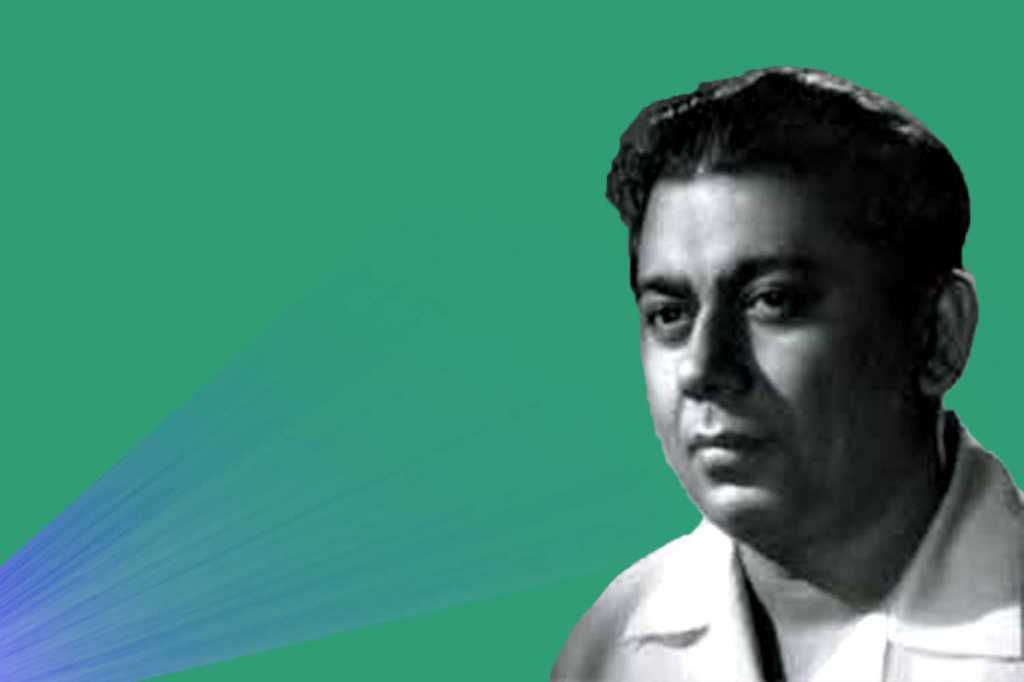
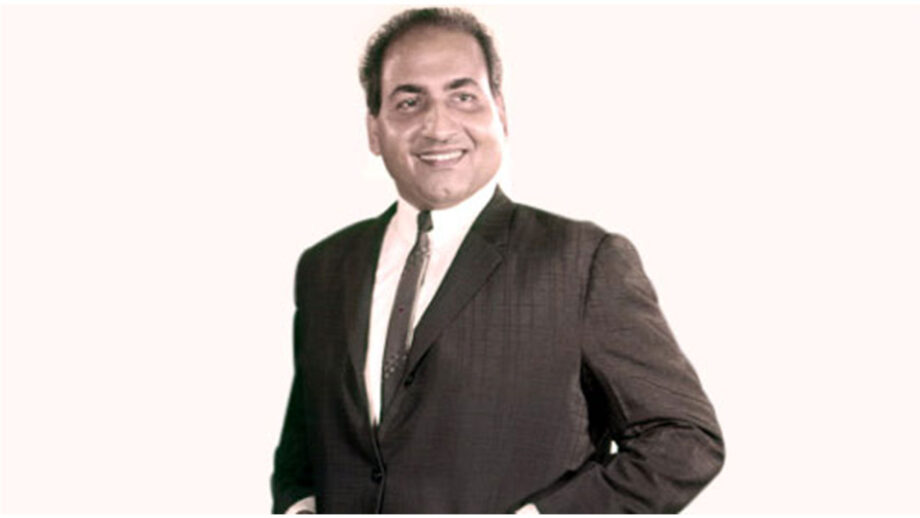
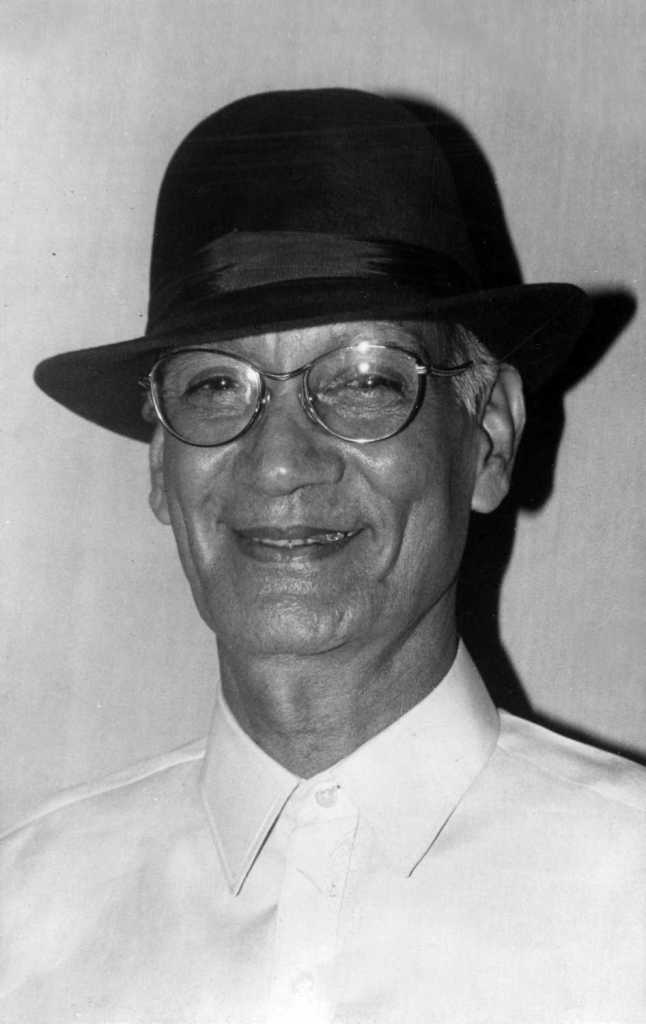
 Music Unrestricted