Can we not borrow these lines from the famous poet Mirza Ghalib and take the liberty of saying this about the legendary music composer Ghulam Mohammad himself who had tuned these lines so beautifully for the film Mirza Ghalib . Not only this song, all the songs from this 1954 film were composed so exquisitely by the composer , who , as luck would have it, remained on the sidelines and his name is never remembered by most of us , except those who are seriously into the golden era of Hindi film music. It is a small consolation that when our government first decided to include the award for best film music at National level, Ghulam Mohammad was the first recipient and he got it for this film.
If we look at the music of just two of his films, Mirza Ghalib and Pakeezah, they can be counted among the best in Hindi films, that was in the league of the top composers. But, sadly the man remained one among the many such music composers who were unsung and forgotten . Fate was so cruel to him that it snatched him away around four years before his magnum opus Pakeezah got released. He could not see the adulation its music had received at that time and continues to be appreciated even today.
Ghulam Mohammed’s exact date of birth is not known , but the year was 1903. Born in a village , Naal, Bikaner, Rajasthan, into a family of musicians, his father, Nabi Baksh, was an accomplished tabla player. He learnt the dholak and tabla from his father in childhood. He got further training in the tabla, dholak and pakhavaj from Hyderabad’s Ghulam Rasool Khan. At the young age of six , he was paid a salary of Rs 25 per month in Lahore’s New Albert Theatre Company and Bikaner’s JB Company. In 1924, his father took him to Bombay, where after a struggle of eight years, in 1932 he got the chance of playing tabla in Saroj Movietone’s Productions’ “Raja Bharthari”. Thereafter, he assisted Anil Biswas, and later Naushad, with whom he had a long association , from 1943 (Sanjog) to 1952 (Aan). Ironically , Naushad was around sixteen years junior to him!
Like few other music assistants and arrangers like Dattaram for Shankar -Jaikishan, G.S Kohli for O.P Nayyar , Ghulam Mohammad also composed music independently even while assisting Naushad. However, unlike others, Ghulam Mohammad’s music had a distinct style , much different from that of Naushad. It is said he had composed independently for around 30 films. There is some confusion as to what was his first film that he composed independently . Some mention Mera Khwab (1943) as his first film, while Doli (1947) and Tiger Queen (1947) are also attributed as his first films. Making a debut as an independent composer at the age of 40 is quite late in film industry. However GM ( as I will refer to him henceforth for the sake of brevity) pursued diligently and with the film Amber made in 1952 , his songs started getting good attention. One of the songs from this film, Hum Tum Yeh Bahaar -a duet by Rafi & Lata sounds so fresh today as it was around 73 years ago!
This was followed by great songs in films like Dil-E-Nadaan (1953), Laila Majnu ( 1953), Rail Ka Dibba (1953-maybe the first rap song of Hindi films?) etc. In 1954 , he established his name among the great stalwarts of Hindi film music by his evergreen compositions for the film Mirza Ghalib that were based on Ghalib’s ghazals. Almost all the songs from this movie are masterpieces. He even won the 1955 National Film Award ( it was known as State Award then) for Best Music Direction for this film.
But inexplicably , he did not get the opportunities despite the excellent music in Mirza Ghalib; few films like Do Gunde in 1959 & Shama in 1961 had good songs , but Ghulam Mohammad continued to be on the sidelines .
The noted film maker Kamal Amrohi signed him up for his magnum opus, Pakeezah , a film that was started in 1956 and ultimately released in 1972! There were many reasons for the delay, primarily the separation of the film maker Kamal Amrohi and his wife , the well-known actress Meena Kumari and her deteriorating health because of her unfortunate addiction to alcohol. During its release the film was initially having a lukewarm response but the demise of Meena Kumari a month after the release made the film a box office hit. Not to deny the most important fact that its music is considered one among the best scores in Hindi films.
As luck would have it, Ghulam Mohammad had left this world in 1968, four years before the film’s release and could not experience the great accolades for his compositions. Naushad, had completed the back ground score and it is said , few songs also. In all there were some 15 songs originally composed by Ghulam Mohammad for the film but only six were retained in the film. Later , HMV released an album Pakeezah Rang Barang that had rest nine songs.
If we have to describe Ghulam Mohammad’s music, it was an eclectic mix of tunes based on classical raagas, a deep understanding and importance to the lyrics that were tuned in perfectly as evident from his songs based on Ghalib’s ghazals, excellent percussion arrangements (as he himself was a master of many percussion instruments) , an orchestration that used mostly Indian instruments like Sitar , Sarangi , Shehnai , but at the same time integrated beautifully western instruments like different types of guitars, piano etc.
I have tried to compile his best songs and grouped them film-wise as in some of his films almost all the songs are great compositions. They are arranged chronologically , with the song name, singer(s) and lyricist mentioned.
Amber (1952)
Hum Tum Yeh Bahaar Dekho-Rafi & Lata-Shakeel Badayuni
A lilting , romantic melody that has a fast-paced rhythm and when it is sung by the eternal pair of Rafi & Lata , then it is bound to be pleasing to the ears. One of the earlier hits of Ghulam Mohammad. Also a rare occasion when Rafi sang for Raj Kapoor!
Dil-E-Nadaan (1953)
2. Zindagi Denewale Sunn, Teri Dunya Se Dil Bhar Gaya-Talat Mehmood-Shakeel Badayuni
One of the best songs of Talat , for whom Ghulam Mohammad had composed so many great songs. The opening notes with a guitar strumming sets the tone and then the velvet vocals of Talat, the sublime lyrics of Shakeel and intoxicating melody of the tune take you into a different world.
3. Jo Khushi Se Chot Khaye, Woh Jigar Kahan Se Laaun- Talat Mehmood-Shakeel Badayuni
Instead of guitar , it is the sarangi that sets the sober mood for this ghazal. The velvet vocals of Talat were extensively used by Ghulam Mohammad in his various songs. Like many songs of GM, the importance to lyrics is paramount and Shakeel Badayuni was a solid support to him in many such songs.
The ‘caarvaan’ of GM with Talat & Shakeel continues in this 1953 version of Laila Majnu, with one of the career best songs of Talat. Observe how GM used a typical waltz -like rhythm for a ghazal. The violins are simply haunting and tug at your heart.
Lata joins the ‘caarvan’ in this song and GM keeps the orchestration to bare minimum as the raag Bhimpalasi on which it he had composed it conveys the mood of the song so effectively.
Rail Ka Dibba (1953)
6. La De More Baalma Aasmani Chidiyan-Rafi & Shamshad- Shakeel Badayuni
If someone thinks GM was mostly composing very sober , serious songs , here is a delightful , absolutely rocking number.
Can we say this was the first ever rap song in Hindi films?!!
And when those yesteryear masters compose even a rap song , observe how melodious and delightful it sounds. Not the terrible ear shattering modern versions! The lung power of Shamshad is even greater than that of Rafi and she simply shines through the song. Just watch out from 1.45 mins in this clip-for 15 seconds she sings breathless!
Mirza Ghalib (1954)-All Lyrics by Mirza Ghalib
We now come to a masterpiece of an album by GM and I had mentioned in the beginning of my article, songs from just these two films- Mirza Ghalib and Pakeezah are enough to record the contribution of GM to Hindi film music in golden letters. Each song that I have listed here is a gem . GM had composed for Talat and Suraiyya some of their career-best songs. Ghalib’s best ghazals have been brought to life by the excellent tunes of GM ; there may be some other composers also who might have set these ghazals to tune but GM ‘s compositions stand out. Those who are going through this blog are requested to listen to all these songs in the links provided below -someone has been kind enough to provide English translation for the immortal poetry of Ghalib .
Among the songs that I have listed here, Aah Ko Chahiye Ek Umr is truly mesmerizing with a fast-paced tune and do I have to say anything about the great Ghalib’s lines-“ Khaak ho jaayenge hum , tumko khabar hone tak”! ( I will not be there by the time you realize my love). And Rafi, as usual gets just one song that is picturized on a fakir and in that , he leaves his inedible mark! The opening lines of this blog are from this. Suraiyya renders three solo gems- Aah Ko Chahiye , Nukta Cheen Hai & Yeh Na Thi Hamari-the last one is absolutely stunning with the high notes at the end . Talat’s intensely emotional Phir Mujhe Deeda-E-Tar and Ishq Mujhko Na Sahi show us why he was called the King of Ghazals.
Each song mentioned here is a gem to be listened to again and again and I am sure listeners will agree with me when I say GM is no less a composer than the stalwarts who got their fame in Hindi film music.
7. Dil-E Naadan Tujhe Hua Kya Hai-Talat and Suraiyya
8. Phir Mujhe Deeda-E-Tar- Talat
9. Aah Ko Chahiye Ek Umr-Suraiyya
10. Hai Bas Ke Har Ek Unke-Rafi
11. Nukta Cheen Hai Gam-E-Dil-Suraiyya
12. Ishq Mujhko na Sahi Vehshat hi Sahi- Talat
13. Yeh Na Thi Hamari Qismat- Suraiyya
Kundan (1955)
14. Aao Hamare Hotel Mein-S.D. Batish & Sudha Malhotra-Shakeel Badayuni
Similar to the peppy song from Rail Ka Dibba , enjoy a lighter mood with GM ‘s song. These songs show GM’s skill in composing a variety of genres.
Maalik (1958)
15. Man Dheere Dheere Gaye Re-Talat Mehmood & Suraiyya-Shakeel Badayuni
One more example of how GM could bring out the best from both Talat & Suraiyya. A romantic song with that typical understated melody that has been the hallmark of GM’s style.
GM creates the same magic with another eternal pair- this time with Rafi & Lata. An intensely moving song , with superb sitar and sarangi that can easily be considered as good as having been composed by any of the stalwart composers who are considered as the “top ten”.
Shama (1961)
Apart from Mirza Ghalib and Pakeezah , if there was another film in which all the songs were too good, it was Shama. It had excellent songs rendered by Suraiyya ( who had acted along with Nimmi ) , Suman Kalyanpur & Rafi. Suraiyya’s Dhadkte Dil Ki Tamanna can be considered as one of the best from GM , a rare but intensely emotional Dil Gam Se Jal Raha by Suman , a lively romantic solo by Rafi-Who Saadgi Kahe Ise and once again Suraiyya surprises us with Mast Ankhon Mein Shararat.
Dhadakte Dil Ki Tamanna has a superb combination of Sitar , Sarangi & Guitar , with that brief pause in the last line of each anatara. One should not forget the superb lyrics by Kaifi Azmi—woh gam haseen hai jis gam ke zimmedaar ho tum!
Note how GM had used Suman Kalyanpur to traverse the high notes in Dil gam se jal raha . Note how GM had structured of the antaras in “Mast ankhon mein shararat” with a sudden shift in notes from a high to low, executed superbly by Suraiyya.
17. Dhadakte Dil Ki tamanna-Suraiyya-Kaifi Azmi
18. Aap Se Pyaar Hua Jata Hai- Suraiyya-Kaifi Azmi
19. Dil Gam Se Jal Raha-Suman Kalyanpur- Kaifi Azmi
I come to the last but the most important work of Ghulam Mohammad. Each song from Pakeezah will continue to enthral the generations to come. There are very few films in which we see each song a classic masterpiece . When we listen to a particular one , we would like to say this is the best among all, then we tend to think the same about the next one we listen ..and the next one….
The percussion in Chalte Chalte is something simply out of the world and personally , I like this song so much that I can listen to this multiple times on a loop! Apart from being a treat for the ears, just observe the camera work in Inhi Logon Ne Li Le-one can see the dancers in buildings far away, at multiple locations-so meticulous picturization. A word about the principal photographer Josef Wirsching who was a German but settled and worked in India for around 20 films, with Mahal( 1949), Dil Apna Aur Preet Parayee( 1960) being other famous films apart from Pakeezah. Unfortunately, like GM, he also passed away before the release of Pakeezah, in 1967.
The intensely classical Thade Rahiyo, the complex percussion arrangement in Aaj Hum Apni Duaon ka , the cool-as-a-breeze Chalo Dildar Chalo are songs that can be made only once in a decade!
The raagamalika in Mausam Hai Aashiqana has one of the best orchestration by GM with each antara is set in different raag. It is difficult to describe the songs of Pakeezah in one or two paragraphs-maybe one day I will try to write an exclusive blog on them.
Among the unreleased songs, I have included just one here-a solo by Rafi .
22. Chalte Chalte Yuhin Koi Mil Gaya -Lata-Kaifi Azmi
23. Inhi Logon Ne Le Li Na Dupatta-Lata-Traditional
There are conflicting versions about exactly how many songs were totally recorded for Pakeezah film -some say 15 , some 20! Also there is a controversy whether Naushad completed only the back ground score or even composed 3-4 songs that were not included in the film. I am not an authority on these and would like to avoid getting into controversies. For me the music of Pakeezah is something that I can keep listening multiple times . As a token of good faith to the composer, Kamal Amrohi compiled the tracks that were not included in the film and had them released by His Master’s Voice as ‘Pakeezah Rang Barang’.
Acknowledgements and Disclaimer:
I sincerely thank the publishers of following Internet sources for the information that I could gather for this article:
You Tube
Wikipedia
The songs mentioned are from the popular, public domain and have been embedded here only for the listening pleasure of the music lovers. This blog does not claim any copyright over them, which rests with the respective owners of the rights The photograph is taken from the internet, duly recognizing the full copyrights for the same to the original creator or the site where they were originally displayed .This blog does not claim any copyright over them, which rests with the respective owners of the rights.
When someone takes the name of noted playback singer P Leela today, I think a majority may not be knowing her or even confuse her with the more popular P Susheela. True to the main idea behind this blogsite, I am trying to write about all such forgotten artists so that at least in future their names and contribution to film music will always be remembered.
P Leela had a different voice that was both melodious and had a majestic ring that suited Carnatic classical , folk, and of course the light music genres for films. She has sung around 5000 songs in all the south Indian languages -her native Malayalam, Tamil , Telugu , Kannada and in other regional languages of India. She was given the titles Ganamani, Ganavarshini, Kalarathnam etc among many others.
In the 1950’s & 60’s she had sung extensively in Tamil films and of course in other languages also , but my knowledge is restricted to the Tamil film songs and so I will try to make a humble attempt to write about some of her great solos and duets. It has indeed been a great experience for me, mostly ignorant about many great artists of the golden era of Tamil music , to discover their songs.
Porayath Leela was born in Chittoor, Palakkad district of Kerala to V K Kunjanmenon Menon and Porayath Meenakshi Amma. She was the youngest among three daughters-Sharadha, Bhanumathi and Leela. Her father was a teacher in Ramavarma Higher Secondary School , Ernakulam . It was her father who inspired her to learn music and her first guru for Carnatic classical music was Thiribuvana Manibhagavadhar, the uncle of musician T. V. Gopalakrishnan. Later on she was trained by many other vidwans like Chembai Vaidyanatha Bhagawathar, Paththamadai Krishna Ayyar, Maruthuvakudi Rajagopala Iyer, and Rama Bhagavathar. On the advice of the headmistress of the school where Leela was studying , her father took her to Madras ( as it was known at that time) in the year 1944 and she learnt music like in a gurukulam under the tutelage of Vadakkancheri Ramabagavathar in Mylapore.
In the year 1948 , Leela got her first break as a playback singer in the film Kanganam that had music composed by Padmanabha Sastry. In the same year she also sang in the Malayalam movie Nirmala . By the 50’s she started singing in almost all the south Indian languages.
In an era when stalwarts well-versed in Carnatic classical music like M S Subbalakshmi , M L Vasanthakumari & D. K. Pattammal were singing for films also, it was P Leela’s immense talent and versatility that enabled her to create a name for herself. Leela could sing a song that had pure Carnatic classical base -Kathiruppan Kamala Kannan , a folk song with the right accent and intonation- Thazhayam Poo Mudichu) , a westernized tune- Raja Magal Roja Malar that had an Arabian feel, a folk and classical touch all in one song , an intensely moving female version of Endru Thaniyum Intha Suthantira dagam etc. For almost 20 years , starting from the late 40’s till late 60’s she was active in Tamil films. Of course in Malayalam she was one of the most prolific singers and was quite active till the late 70’s.
When the Guruvayoor Dewaswom decided to bring out the album Narayaneeyam (Bhagavata Purana in poetic form composed by Melpathur Narayana Bhattathiri, a celebrated Sanskrit poet of Kerala in 16th century) , names of several musicians like M.S. Subbalakshmi , M.L. Vasanthakumari were considered and finally the Dewaswom approved P Leela to sing Narayaneeyam. “I got the chance to sing Guruvayarappan Narayaneeyam which I consider as an honour…”said Leela.
Known for her humility , in spite of being a very successful singer in all southern language films , she spent her later years with her nephews and nieces and focused more on classical concerts and light music programs. Unfortunately her marriage with a lawyer was not successful. During her lifetime she got many awards from various southern states , including the Kalaimamani award from Tamil Nadu, but as it always happens , the government of India awarded her the Padma Bhushan , posthumously in 2006.
An example of her humility and kind-heartedness was her gesture of suggesting the name of S Janaki, who was at that time still trying to make it big in Tamil films , for the masterpiece Singara Velana Deva in the film Konjum Salangai -a song that warranted matching the high octaves of Karakurichi Arunachalam’s nadaswaram. Very few in the music world would help a competitor!
The former Chief Minister of Tamil Nadu , Jayalalitha had paid a glowing tribute to her after her demise:
“One of the greatest vocal musicians of India, who made a name for herself by singing exquisite songs in her mellifluous voice in Malayalam, Tamil, and Telugu both for the film industry, as well as in Carnatic music. She had also rendered melodious devotional songs. Though she had been decorated with a number of awards including the Kalaimamani Award of the State Government for 1991-92, she was the epitome of humility and considered her contributions in the field of music a humble service to humanity and an offering to the Lord. In her passing, we have lost a great singer, leaving a great void in the world of music.”
With the limited knowledge that I have about her repertoire , I have selected 25 best songs by her , arranged in chronological order with the song , film , year, co-singers, music director and lyricist mentioned in that order.
Amaidiyillatha Maname Yen Maname-Pathala Bhairavi-1951-Duet with Ghantasala-Ghantasala-Thanjai N Ramaiah Dass
A lilting romantic melody, with that typical majestic voice of Leela complementing Ghantasala , with whom she had sung so many songs in Telugu. The tunes of the 50’s had their own sweet charm.
2. Perinbame Vaazhvile Endrume-Devaki-1951-Duet with Tiruchi Loganathan-G Ramanathan-A Maruthakasi
I tried to get a good quality link to this song, but was unable to do so. A song that has so much energy bursting forth, composed by the veteran G Ramanathan, who had given so many memorable songs for P Leela. And what to say about Tiruchi Loganathan-whatever he sang were superb!
One interesting thing about this film is that , it is picturized on V M Janaki, who was the wife of late M G Ramachandran and was the heroine in the film.
3. Ellaam Inbamayam-Manamagal-1951-M.L Vasanthakumari & P Leela-C.R Subbaraman-Udumalai Narayanakavi
C R Subbaraman was a legendary composer who had nurtured one more genius in Tamil film music-our own Mellisai Mannar MSV! The song Ellam Inbamayam is a great classical composition by C R Subbaraman, sung by M L Vasanthakumari and P Leela , and picturised on Padmini , in her debut film and her sister Lalitha. It is rare to see a song picturized with so many shots . It is said that the veteran actor-comedian , N S Krishnan who had produced and directed this film , had introduced all the technicians involved at the end credits of the film-definitely a unique concept for 1951! Note how P Leela has rendered this so well , singing with an established Carnatic classical singer like M L Vasanthakumari. Such songs will remain for posterity and it was truly a great experience for me to listen to this song after so many years.
4. Yaanai Thandham Pole-Amarakavi -1952-Duet with M.K. Thyagaraja Bhagawathar-G Ramanathan-Suratha
After the infamous Lakshmikanthan case , the legendary M K Thyagaraja Bhagavathar did act in few films , but unfortunately they were not super successful ones as compared to the 40’s which was the zenith of his career. However when listen to this song, we wonder why songs like this did not become famous. A superb composition , composed by G Ramanathan , sung so well by P Leela and MKT. Note the innovative counter-melody created by G Ramanathan at the end of the song when P Leela does a humming that goes counter to the main song.
5. Konji Pesum Kiliye- Amarakavi -1952-Duet with MKT-G Ramanathan-Suratha
One more hidden gem from the same film -note how P Leela matches the high octaves of MKT so effortlessly. The song sounds deceptively simple but if you listen carefully , you can discover what intricate notes have been weaved in by GR and how both the singers have rendered them so well.
6. Vaaranam Aayiram Soozha Valam Seidhu -Thooku Thooki-1954- Duet with M.L. Vasanthakumari – G Ramanathan- Nachiyar Thirumozhi by Aandal
Thooki film is known for bringing together the two legends -Sivaji Ganesan and TMS together. Although the song Sundar Soundari Nirandariye is more popular, I have selected another song as the former is sung together by Leela & A. P Komala whereas the Vaaranam Aayiram Soozha Valam Seidhu has once again MLV and P Leela rendering a superb song in their typical classical style. The lyrics are from the literary works of Aandal , a devotee of Vishnu, composed in the 8th century. She is the only woman Aalwar among the twelve great devotees of Lord Vishnu.
7. Vaarayo Vennilaave -Missiamma-1955-Duet with AM Rajah-S Rajeshwara Rao-Thanjai N Ramaiah Das
Among the songs in this list, I think this one must be known to most of the readers. An evergreen melody composed by S Rajeshwara Rao with that mandolin being supreme in the orchestration. Beautifully picturized on Gemini Ganesan and Savitri, songs like this will remain evergreen for centuries.
8. Therinthu Kollanum Penne-Missiamma-1955- S Rajeshwara Rao-Thanjai N Ramaiah Das
This song is surprisingly not that much popular in spite of having a superb piano playing throughout the song ( I understand that Piano was played by one Ramachandran Diwakar). It is very rare to see a song picturized with the leading lady playing a piano in our films.
9. Mayame Naan Ariyen- Missiamma-1955- S Rajeshwara Rao-Thanjai N Ramaiah Das
The film Missiamma and Vanjikottai Valiban had some of the best songs from P Leela. Only after listening closely to P Leela’s songs, I realized how she was able to mould her voice to different genres. It is really a pity that she was not utilized more in Tamil films ; of course I do not have anything against her illustrious contemporaries like P Susheela & S Janaki who are great artists without any doubt. This is only a longing that we could have enriched the treasure of the golden era with more of P Leela’s songs also.
10. Vaanga Machan Vaanga-Madurai Veeran-1956-Solo & Duet versions (with TMS) -G Ramanathan- Thanjai N Ramaiah Das
If one listens to this song immediately after listening to the one in S. No 9, my observation must be ringing true. The way she adapts to a folk style in Vaanga Machan Vaanga is something truly amazing. There are two versions -the first one has P Leela dominating the first part only to handover the baton to another legend, TMS who elevates the song to an even higher level. The second link has a solo version by Leela.
11. Aaha Inba Nilavinile Oho Jagame -Maya Bazaar-1957-Duet with Ghantasala- Ghantasala- Thanjai N Ramaiah Das
One of the most entertaining films from the yesteryears, May Bazaar also had superb music. Although S Rajeshwara Rao was originally signed up , he left the film after composing 4 songs due to some differences , it was Ghantasala who completed the major part of the film. A soothing melody, with a scenic boat ride on a moonlit ride , the gentle voices of Ghantasala and P Leela take you into a tranquil world.
12. Kannudan Kalandhidum Subadhiname- Maya Bazaar-1957-Duet with Ghantasala- S Rajeshwara Rao- Thanjai N Ramaiah Das
One more duet by the P Leela and Ghantasala that has a pleasing melody from the blockbuster film Maya Bazaar.
Although I am not an expert in identifying the classical raagas, I understand this song is set on Charukesi raagam. An excellent rendition by P Leela , with so much of devotion and emotion that she has given to the song , especially at the high octaves in the charanam .
14. Thai porantha vazhi porakkum-Thai Piranthal Vazhi Pirakkum-1958- T. M. Soundararajan, P. Leela, S. V. Ponnusamy & L. R. Eswari-K.V Mahadevan-A Maruthakasi
Almost everyone in Tamil Nadu would be familiar with this song that is invariably played in radio on Pongal festival , the beginning of the Tamil month “ Thai.” No one would ever believe that P Leela’s mother tongue was not Tamil, when we listen to her songs-she sang with a perfect accent , more so when singing such folk songs that give a flavour of the rural life in Tamil Nadu.
15. Kathiruppan Kamala Kannan-Uthamaputhiran-1958-G Ramanathan- T K Sundara Vadyar
Right at the beginning of the song, by hearing that typical beat of tabla , we can understand it is the legendary G Ramanathan’s composition. And who else to render a classic raagamilka song other than P Leela . Her mastery is evident throughout the song. It is a raagamalika consisting of Saramati, Tilang and Mohanam raagas.
You can discover the versatility of Leela’s singing when you listen to this this song. Effortlessly she renders this fast -paced peppy number, with so much of energy!
17. Kannun Kannum Kalanthu-Vanjikottai Valiban-1958-Duet with Jikki -C Ramachandra-Kothamangalam Subbu
I had covered this song in detail in my blog “ A musical journey-Tamil film music” and in that I had focused more on the music director C Ramachandra and his outstanding orchestration . P Leela brings the right classicism to Padmini’s dance while another legend , Jikki ( P Krishnaveni) provides an equal counter-point by lending her vocals to Vyjanthimala’s dance. One can write pages about this song that is well known to every one interested in old Tamil songs, but I do not know how many would be remembering the singers who gave us this wonderful song.
18. Raja Magal Roja malar- Vanjikottai Valiban-1958-C Ramachandra-Kothamangalam Subbu
From the same film , here is one hidden gem , that somehow remained a distant second to Kannum Kalanthu . While the latter was a duet with Jikki, in this song it is all the way P Leela who has rendered one of her all-time great songs. The song consists of three different parts with each one in a different genre that only a genius like C Ramachandra can think of. Starting off with an Arabian style , the song in the next part shifts to a typical folk genre and then moves on to a sort of westernized classical waltz and finally comes back to Raja Magal Roja Malar. P Leela proves her prowess in all the three styles and comes up with an immortal song. Those who are listening to this for the first time are bound to listen repeatedly in a loop!
It is surprising that we have a popular song of P Leela under the music direction of Mellisai Mannargal Vishwanathan-Ramamoorthy only in the year 1959 ! Although she had been singing for them right from Genova film (1954) and then in few films also in between, to the best of my research , I could not find any popular song in this combination. But what a great song this is! With just 3-4 instruments V-R composed a masterpiece of folk song that would always be listed at the top whenever one tries to make a list of best Tamil film songs in the folk genre. P Leela’s diction is so perfect to suit a typical village girl , with the veteran TMS adding his own charm.
Honestly, I listened to this song for the first time only while working on this blog. Many songs from the film Bhaga Pirivinai were quite popular but somehow I had not listened to this earlier. A friendly teasing between the hero , Sivaji Ganesan, and a group of village girls, beautifully written by Pattukottai Kalyana Sundaram and superbly rendered by TMS & Leela. Not to miss the enactment on screen by the legend Sivaji.
Although S Janaki’s life-time best song Singara Velane deva is the most popular song from this film, this one is equally mesmerizing. A scintillating dance number composed by the veteran S M Subbaiah Naidu and rendered by Leela in her typical style.
23. Nilave Nee Intha-Pattinathar-1962-Duet with TMS-G Ramanathan-T.K Sundara Vathyar
I keep discovering so many unheard gems while working on my blogs. That is the greatest reward for me! Note when TMS sings for himself on screen, the voice sounds so different from his songs for MGR or Sivaji! And what to say about Leela? She has moulded her voice to suit the mood of the song , proving that she was one of the foremost playback singers.
By the 70’s , the number of songs by Leela in Tamil films had reduced drastically, with MSV mostly composing songs with P Susheela or L R Eashwari and rarely S Janaki. The music composer C N Pandurangan is relatively lesser known , but I understand he had composed for 40 films in a career spanning 30 years. Despite being immensely talented commercial success evaded him and hence he is almost unknown today. This rare song in 1972 has P Leela singing with the same fervour. Once again a classical melody.
I was totally surprised to note that Leela had sung for Ilayaraja! Knowledgeable readers may comment if there was any other song in Tamil from these two. This song is from an obscure film Karpoora Mullai that was a remake or rather dubbed version of the Malayalam film Ente Suryaputhriku ( the link to the song also mentions that film only) . Even more surprising to note is that the song is mostly in Sanskrit and lyrics has been credited to Ilayaraja. It is supposed to be based on a very rare raaga-Rukumambari. Note how at the age of 57 , Leela has rendered this so nicely.
Acknowledgements and Disclaimer:
I sincerely thank the publishers of following Internet sources for the information that I could gather for this article:
You Tube
Wikipedia
Ms Subashree Thanikachalam’s QFR series in YouTube
The songs mentioned are from the popular, public domain and have been embedded here only for the listening pleasure of the music lovers. This blog does not claim any copyright over them, which rests with the respective owners of the rights The photograph is taken from the internet, duly recognizing the full copyrights for the same to the original creator or the site where they were originally displayed .This blog does not claim any copyright over them, which rests with the respective owners of the rights.
After having covered many legendary music composers, lyricists, and singers in my blogs , both in Hindi & Tamil films, I thought of breaking the monotony of organizing my blogs artists-wise and start a separate section on “ theme” based songs. Of course , I have a huge list of artists yet to be covered , but I thought it is good to do something different .
And when we think of one theme or word that has been the most common one in many songs in Hindi films , right from the vintage era to the present times, it is Zindagi-literally meaning life .
If one starts listing out songs that have Zindagi as the core theme , it will run into hundreds or maybe thousands! I will try using some filter to work out a list that may help in fine tuning the selection of songs. Initially I thought of selecting one song that had Zindagi in the mukhda of the song , from each of the prominent male and female playback singers. But on second thoughts , I felt selecting them lyricist-wise might be a better way. So here we go with 20 selected songs that are primarily about Zindagi. I have covered almost all the major lyricists and few relatively less-known.
The word Zindagi is basically derived from the Persian language and has been extensively used in Urdu and Hindi. The Hindi equivalent is Jeevan. Many decades ago , when I was staying in hostel during my graduation , in a small town deep south in Tamil Nadu, I was one of the very few guys to listen to Hindi songs. Many of my friends were not familiar with Hindi and they used to comment “ most of the Hindi songs have Zindagi or Duniya”! True to some extent, but when I started searching for songs composed by each lyricist that has Zindagi in the mukhda, I could not find any popular song by some of the lyricists! For example , despite extensive searching, I could not find any popular song by the lyricist Gopaldas Neeraj who had written some of the most philosophical songs! Maybe my own poor top-of-the-mind recall and research could have resulted in leaving out some of the lyricists or even some of the popular songs!
Zindagi is a word that was used by our lyricists to denote many things. Sometimes it is literally life, sometimes it may refer to one’s love or lover, in other situations it can even refer to the struggles one undergoes in life etc. I am not an expert on poetry/literature/etymology etc and so will restrict myself to how I enjoy listening to these film songs and briefly touch upon the salient part of the lyrics to the best of ability.
Since I have gone by the rule of one song per lyricist, the music directors and singers covered may not be extensive, but to my own surprise , I find many of the major ones covered. Of course repetitions are bound to be there. Also I have selected those songs that have the word Zindagi in the mukhda of the song. Mostly it appears in the first line itself , some starting with that word , but in very few songs it appears in the second line of the mukhda. Also the entire song need not be as such describing Zindagi. With that disclaimer , let me take you through 20 songs that I could list out .
These are arranged in the chronological order of the year of the film, with the lyricist name mentioned first, followed by , in that order-song, film, year, singer(s) and music director. Also some of the songs may be relatively unknown -I have selected their song purely for the excellent lyrics that talks about Zindagi. As I always mention , my selection may not be everyone’s selection. Readers can enrich the blog by mentioning their own favourites in the comments section !
Shakeel Badayuni : Yeh Zindagi ke mele-Mela-1948-Rafi-Naushad
Shakeel Badayuni’s name is known mostly to those who love the songs of golden era. Although he is identified as Naushad’s trusted shayar, he had written many memorable songs for Hemant Kumar and Ravi also . In this song look at the way in which he condenses the philosophy of life in so simple words:
ye zindagi ke mele,ye zindagi ke mele,
duniya me kam na hoge, afsos hum na honge
duniya hai mauj-e-dariya, katre ki zindagi kya
paani me mil ke paani, anjaam ye ke faani
and further…
Ek din padegaa jaana, kya waqt kya zamana
Koi Na saath dega,sab kuch yahin rahega
Jayenge hum akele , yeh Zindagi ke mele
Naushad’s simple orchestration is carried through by the exquisite poetry of Shakeel Badayuni and Rafi’s evocative singing.
If Shakeel painted a sad reality and ephemeral nature of life , Rajendra Krishan captures Anarkali’s ode to love by stating that Zindagi is for that person who falls in love. He goes on to say Zindagi hai bewafa …Loot pyaar ka maaza
This song also has a sad version , when Anarkali’s love is not accepted by Jahangir’s father , Emperor Akbar, and she is supposed to be buried alive…note how Rajendra Krishan comes out with these superb lines:
Shailendra, one of the greatest poet-lyricists , had the knack of conveying profound philosophy in absolutely minimum words. Taking off with the popular doha from Kabir, he compares life to a dream…where there is no difference between truth or false .
Rangi ko naarngi kahe, bane dudh ko khoya
Chalati ko gaadi kahe, dekh kabira roya
Zindagi khwaab hai
Khwaab men jhuthha akya aura bhala sach hai kya
Sab sach hai
Dil ne ham se jo kaha, ham ne waisa hi kiya
Fir kabhi furasat se sochenge, bura tha ya bhala
Ek katara maya aka jab patthar ke honthon par pada
Us ke sine men bhi dil dhadka, ye us ne bhi kaha
The last stanza is the best one…
Ek pyaali bhar ke mainne gam ke maare dil ko di
Zahar ne maara Zahar to murde men fir jaan aa gayi
4. Qamar Jalalabadi-Aye Meri Zindagi Tujhe dhoondhoon kahan-Adil-E-Jahangir-1956-Talat -Husnlal Bhagatram
In this Qamar Jalalabadi’s song , Zindagi refers to the hero’s lover who has been separated from him. This song also has a female version sung by Lata , with different anatara. I came to know about the Urdu word ‘ mehmil’ -literally means a camel’s saddle and figuratively ‘ that by which anything is supported.
Qamar sahab has used it so beautifully in these lines:
Ae meri zindagi tujhe dhoondhoon kahaan
naa to mil ke gaye naa hi chhodaa nishaan
Naa wo laila rahi naa wo mehmil rahaa
paas manzil pe aake lutaa kaarwaan
ho lutaa kaarwaan
ae meri zindagi tujhe dhoondhoon kahaan
5. Jan Nisar Akhtar-Mere Zindagi Ke Humsafar-Shrimati 420-Geeta Dutt-O P Nayyar
While selecting the major lyricists for this blog, I almost forgot this great lyricist who had penned some of the most memorable songs. Also , while my focus was mainly on the lyricists, somehow my listing included all the main singers , excluding Geeta Dutt, till I discovered this song. Here the word Zindagi is used in close association with a partner who travels with one’s life . Jan Nisar Akhtar had a great collaboration with O P Nayyar and this is a rarely heard song . In the early years, OPN had used Shamshad Begum and Geeta till he discovered Asha .
meri jindagi ke humsafar
dekhna yaha bhin ek najar
tera mera raz kya
is kadar bhi naz kya
thoda thoda pyar kar le
kal ki kuch nahi khabar
6. S H Bihari-Yeh Hansta Hua Carvan Zindagi Ka-Ek Jhalak-1957-Hemant & Asha-Hemant Kumar
I discovered this song while searching for songs to be included in this blog and what delightful discovery it turned out to be! As one may observe while going through these 20 songs, many of them are pathos , but some like this one is a delightful , happy one. S. H Behari has written it so well.
ye hansta huaa karavaa zindagi kaa
naa puchho chalaa hai kidhar
tamannaa hai saath chalate rahe ham
naa bite kabhi ye safar
zami se sitaaro ki duniya me jaaye, haan haan wahan bhi yahi geet ulfat ke gaaye…
Asha only keeps responding with one or two words in between, but the way Hemant da has composed this song , it is truly delightful. It was truly a pleasant surprise for me to know that this song has a cover version sung by Mukesh…I think Mukesh must have sung very few songs in Hemant da’s composition and both these versions have their own unique charm. I am giving the link to both of them here.
I could not find any reason why there were two lyricists for a song-it is absolutely rare in film songs. Set in Malkauns raag by Hansraj Behl and sung superbly by Rafi this is a very rare song and is made immortal by Rafi’s emotional singing.
Badlaa to aise badlaa hai kuchh rang-e-gulsitaan
ik phuul pe bahaar hai ik phuul pe Kizaan
zindagii bhar gam judaai ka mujhe tadpaayegaa
har nayaa mausam puraanii yaad lekar aayegaa
From the lyrics it appears to be picturized on a lover conveying his pangs of separation . The line ‘har nayaa mausam puraanii yaad lekar aayegaa ‘ sums up the essence of the song-even as time flows with changing seasons, he is still haunted by the old memories of his love.
For every song that talks about the struggles in life or separation brought into one’s life by failure in love life , there is an equally cheerful one also.
Here Kavi Pradeep says life is a song that seems to blossom like spring after the hero and heroine fall in love.
Ga rahi hai zindagi har taraf bahar me kis liye
char chad lag gaye hai tere mere pyar me
is liye
zindagi bhar ke liye tu baanh meri tham le
jab talak ye sans hai har sans tera nam le
ek nayi duniya khadi apane itezar me kis liye
char chad lag gaye hai tere mere pyar me
is liye
9. Prem Dhawan-Mujhe Pyar Ki Zindagi denewale-Pyar Ka Sagar- 1961-Rafi & Asha-Ravi
Prem Dhawan was a lyricist, music director and a choreographer and even acted in two films. Mostly known for his soul stirring patriotic songs , in this song he gets into a romantic mood . Although the hero is happy that he got his life through the love from his lover , he has lot of apprehensions whether it will last, whether she will turn away from him in future and even if the world may conspire to separate them! However she assures him that she has totally surrendered herself to his love and even asks him to test her!
Mujhe Pyar Ki Zindagi denewale
Kabhi gam na dena Khushi denewale
Mohabbat ke waade bhula to na doge
Kahin mujhase daaman chhuda to na loge
Mere dil ki duniya hai tere hawaale
Mujhe pyaar ki jindagi denewaale
10. Shiv Kumar Saroj -Khamosh Zindagi Ko awaaz de rahe ho-Naag Mandir-1966-Rafi-Lakshmikant Pyarelal
Very few might have heard this rare song from an obscure film called Naag Mandir, written by an unknown lyricist Shiv Kumar Saroj. He was an announcer in the famous Radio Ceylon and written a handful of film songs. When there is Rafi to sing, even such obscure songs become eternal melodies.
khamosh zindgi ko aawaj de rahe ho
tute huye haatho mein kyu saaz de rahe ho
benur meri aankhe aur dur kaa safar hai
uthate hain paanv lekin gir jane ka bhi dar hai
gir jane ka bhi dar hai
par kaat ke kisi ke paravaj de rahe ho
11. Majrooh Sultanpuri-Hui shaam unka khayal aa gaya wohi Zindagi ka sawaal aa gaya-Mere Hum Dum Mere Dost-1968-Rafi-Lakshmikant Pyarelal
While searching for popular songs written by Majrooh one of the most prolific lyricists, I could not find any song that immediately came to my mind .I could only dig out this song, that is no doubt very popular but has the word Zindagi appearing in only the second line of the mukhda!
Hui shaam un ka khyaal a gaya
Wahi zindagi ka sawaal a gaya
12. Kaifi Azmi -Zindagi Hai Kya Bolo Zindagi Hai Kya -Satyakam-1969-Kishore Kumar, Mukesh & Mahendra Kapoor-Lakshmikant Pyarelal
My search for one more famous lyricist , Kaifi Azmi also turned out to be almost futile like that of Majrooh , till I came across the film Satyakam. The film is considered as one that had a career best performance of Dharmendra in the role of a person who tried to tread the path of truth in his life despite numerous hurdles. There are two songs in this film that talk about Zindagi and both are superb ones; however I selected this one for the excellent lyrics that not only talks about Zindagi but ‘ aadmi’, ‘ dosti’ and that too in a very interesting manner. The three singers , Mukesh , Kishore and Mahendra Kapoor singing together is one more rarity! Kishore and Mahendra Kapoor give comical interpretations for Zindagi, Aadmi, Dosti etc whereas Mukesh comes out with a sober meaning for the same. Superbly composed , written and sung.
The other song from the same film is Do din ki Zindagi Kaisi Hai Zindagi, by Lata which is also too good.
13. Sahir Ludhianvi-Zindagi Ke Rang Kayee Re-Aadmi Aur Insaan-1969-Asha-Ravi
When one thinks of Sahir’s songs with ‘Zindagi’ the top of the mind recall will always be Mein Zindagi Ka Saath Nibhata from Hum Dono and Zindagi bhar nahin bhoolegi woh barsaat ki raat. However I had covered these two songs in detail in my earlier blogs and so I have selected a less popular but no doubt a masterpiece by the great combination of Ravi & Asha -who gave so many good songs that were unfortunately never acknowledged by the singer herself.
Zindagi ke rang ki re, saathi re
Zindagi ke rang ki re
Zindagi dilon ko kabhi jodati bhi hai
Zindagi dilon ko kabhi todati bhi hai
Zindagi ke rng ki re
Zindagi ki raah men khushi ke phul bhi
Zindagi ki raah men gamon ke dhul bhi
Zindagi ke rang ki re
Zindagi kabhi yakin, kabhi gumaan hai
Har qadam pe tera mera imtihaan hai
Zindagi ke rang ki re
14. Indeevar -Zindagi Ka Safar Hai Kaisa -Safar-1970-Kishore-Kalyanji Anandji
Indeevar pleads his inability to comprehend life-he goes on to say no one has understood it nor known it well. The film Safar has the hero struck with a terminal illness and so the song captures his mood .
Zindagi ka safr, hai ye kaisa safr
Koi samajha nahin, koi jaana nahin
Hai ye kaisi dagar, chalate hain sab magar
Koi samajha nahin, koi jaana nahin
Zindagi ko bahut pyaar hamane diya
Maut se bhi mohabbat nibhaayenge ham
Rote-rote zamaane men aye magar
Hnsate-hnsate zamaane se jaayenge ham
Jaayenge par kidhar, hai kise ye khabar
Koi samajha nahin, koi jaana nahin
15. Hasrat Jaipuri -Zindagi Ek Safar Hai Suhana-Andaaz-1971-Kishore-Shankar Jaikishan
One of Kishore Kumar’s iconic songs, and also my eternal favourite for the superb lines written by Hasrat Jaipuri , the out-of-the world yodelling by Kishore da and a peppy rhythm and orchestration by …who else…the great Shankar Jaikishan. Though Hasrat shares Indeevar’s thoughts partly-that is , he also agrees no one knows what will happen in our life tomorrow, but paints a brighter, optimistic picture .
Many-a-times we tend to dismiss film songs as not class, but it is to the credit of lyricists and poets like Hasrat who convey profound philosophy in a language that anyone can understand.
Zindagi ek safar hai suhaana
Yahaan kal kya ho kisane jaana
Chaand-taaron se chalana hai age
Asamaanon se badhna hai age
Pichhe rah jaaega ye zamaana
Hansate gaate jahaan se guzar
Duniya ki tu parwa n kar
Muskuraate hue din bitaana
Maut ani hai aegi ek din
Jaan jaani hai jaaegi ek din
Aisi baaton se kya ghabaraana
16. Yogesh -Zindagi Kaisi hai paheli-Anand-1971-Manna Dey-Salil Chowdhury
Yogesh wrote excellent songs for Salil da in addition to few other composers. The film Anand had two songs by him -Zindagi Kaisi hai paheli and Kahin door jab din dhal jaaye.
Yogesh talks about life as a riddle that sometimes makes you laugh and sometimes cry. And unwillingly we get caught in the race to run behind our dreams and ultimately a day comes when we go beyond our dreams into the other world.
Zindagi kaisi hai paheli haae
Kabhi to hnsaae, kabhi ye rulaae
Kabhi dekho man nahin jaage
Pichhe pichhe sapanon ke bhaage
Ek din sapanon ka raahi
Chala jaaye sapanon se age kahaan
Jinhon ne sajaaye yahaan mele
Sukh-duhkh sng-sng jhele
Wahi chunakar khaamoshi
Yun chale jaaen akele kahaan
17. Anand Bakshi -Zindagi Ae Zindagi Tere Hai Do Roop-1972-S D Burman-S D Burman
A very rare and almost forgotten song, I had not known earlier that Burman Da got the National award for best music for this film. Anand Bakshi is more known for his lively , romantic songs rather than philosophical songs . But in this song he has gone all out and written a masterpiece. Not only Zindagi, but he goes on to say Chandini, Aadmi and Dillagi-all have two sides to them.
Burman da used to sing the title song for some of his films and must have sung just a dozen odd songs in his entire career in Hindi films , but whenever he sings with his unique voice that had an earthy feel, it becomes a masterpiece. The flute used throughout the song is simply out-of-the world ( though I have not researched , could have been Hariprasad Chaurasia as he had played for many of Burman da’s songs-purely my guess)
zindagi aye zindagi zindagi, tere hai do rup
biti hui raato ki bato ki tu chhaya
chhaya vo jo banegi dhup
kabhi tere kinare thi thandi thandi hay re
ab tu hi mere ji me aag lagaye
chandani aye chandani chandani, tere hai do rup
tute hue sapno ki apno ki tu chhaya
chhaya vo jo banegi dhup
aate jate pal kya hai samay ke ye jhule hai
bichade sathi kabhi yad aaye kabhi bhule hai
adami aye adami adami, tere hai do rup
dukh sukh ke jhulo ki phulo ki tu chhaya
chhaya vo jo banegi dhup
koi bhuli hui bat mujhe yad aai hai
khushi bhi tu layi thi aur ansu bhi tu layi hai
dilagi aye dilagi dilagi, tere hai do rup
kaise kaise vado ki yado ki tu chhaya
chhaya vo jo banegi dhup
18. Gulzar-Tere Bina Zindagi Se Koi Shikwa-Aandhi-1975-Kishore Kumar & Lata-R D Burman
Aandhi film had some of the best songs from the team of Gulzar and R D Burman. I think for a majority of Hindi film music lovers, Gulzar is a favourite lyricist-personally I am not a big fan , though I do like most of his early songs and selected few from his later years like this one. Composed superbly by Pancham da and sung brilliantly by Kishore and Lata, this one can count among their best duets ever. Gulzar captures the emotions of the couple who are unable to spend time together with the immortal lines:
Tere bina Zindagi se koi shikwa toh nahi, shikwa nahi, shikwa nahi
Tere bina Zindagi bhi lekin , Zindagi toh nahi, Zindagi nahin, Zindagi nahin , Zindagi nahin
19. Sudharshan Fakir-Zindagi Zindagi mere ghar aana- Dooriyan-1979-Bhupendra & Anuradha-Jaidev.
Sudharshan Fakir was a Urdu poet and lyricist and is well known for his ghazals , many that were popularised by Begum Akhtar and Jagjit Singh.
Note the excellent poetry in the lyrics-I think there is no need to explain anything-the various stages in life – from falling in love , getting married and having a child (princess-“ shehzaadi” !) are all captured so beautifully by Sudharshan Fakir.
Zindagi, zindagi, mere ghar ana, ana zindagi
Zindagi o zindagi mere ghar ana, ana zindagi
Mere ghar ka sidha sa itana pata hai
Ye ghar jo hai chaaron taraf se khula hai
Na dastak zaruri na awaaz dena
Mere ghar ka darawaaja koi nahin hai
Hain diwaaren gum aur chhat bhi nahin hai
Badi dhup hai dost, kadi dhup hai dost
Tere anchal ka saaya churaake jina hai jina, jina zindagi
Mere ghar ka sidha sa itana pata hai
Mere ghar ke age mohabbat likha hai
Na dastak zaruri na awaaz dena
Main saanson ki raftaar se jaan lungi
Hawaaon ki khushbu se pahachaan lungi
Tera ful hun dost, teri dhul hun dost
Tere haathon men chehara chhupa ke jina hai jina, jina zindagi
Magar ab jo ana to dhire se ana
Yahaan ek shahajaadi soyi hui hai
Ye pariyon ke sapanon men khoyi hui hai
Badi khub hai ye, tera rup hai ye
Tere angan men, tere daaman men
Teri ankhon pe, teri palakon pe
Tere qadamon men isako bithhaake jina hai jina, jina zindagi
20. Raja Mehdi Ali Khan- Kaise kategi Zindagi tere bagair- Tere Bagair Album-2009-Private Album-Rafi-Madan Mohan
I was surprised to note that Raja Mehdi Ali Khan, who wrote many superb ghazals for Madan Mohan did not have any popular one with the Zindagi word. Then I discovered this -a relatively new song in the sense that it was initially recorded for a film that was never released and much later , in 2009, Madan Mohan’s son Sanjeev Kohli released many such hidden gems of Madan Mohan through an album titled Tere Bagair. Now how Madan Mohan’s music was far ahead of his times-a superb ghazal , written so well and above all rendered with a passion that can be done only the great singer – Rafi sahab.
kaise kategi jindagi tere bagair, tere bagair
paayunga har shay mein kami tere bagair, tere bagair
kaise kategi jindagi tere bagair, tere bagair
phule khilein tu yun lage, phul nahi yeh daag hai
taare falak pe yun lage jaise bujhe chiraag hai
aag lagaaye chaandani tere bagair, tere bagair
chaand ghata mein chhup gaya, saara jahaan udaas hai
kehati hai dil ki dhadkane tu kahi aaspaas hai
aake tadap raha hai ji tere bagair, tere bagair
kaise kategi jindagi tere bagair, tere bagair….
Acknowledgements and Disclaimer:
I sincerely thank the publishers of following Internet sources for the information that I could gather for this article:
You Tube
Wikipedia
The songs mentioned are from the popular, public domain and have been embedded here only for the listening pleasure of the music lovers. This blog does not claim any copyright over them, which rests with the respective owners of the rights The photograph is taken from the internet, duly recognizing the full copyrights for the same to the original creator or the site where they were originally displayed .This blog does not claim any copyright over them, which rests with the respective owners of the rights.
If I have not covered a living legend like Sistla Janaki in my blogs it is because of a simple reason . The dilemma of how to select few songs from the huge number of hit songs that she has rendered in Tamil films alone, apart from all the other South Indian languages, in a career that spans around six decades. Of course, my own limited knowledge about her songs also prevented me from writing about her till now. Even now, I am not confident if I would be able to do some justice to her, but let me at least try.
S Janaki ( henceforth I will refer to her as SJ ) , a living legend, has rendered some of the most difficult songs in film music. In her own words , the song “Shiva shiva ennada naaligeyeke” for the Kannada film Hemavathi was her toughest song , composed in Thodi and Aabhogi , alternating between these two ragas and the lightning speed in which she sings the swaras towards the end of the song is something unbelievable. I am providing the link to that song here:
Almost similar , but more melodious, is her famous Singara Velana Deva from the Tamil film Konjum Salangai, in which she matched the virtuosity of the legendary Nadaswaram player Karakurichi Arunachalam, note by note. For many legendary singers , unfortunately we do not have any authentic source on exact number of songs rendered by them . SJ might have definitely sung thousands of films songs, albums, songs for TV & Radio , sung as solo, duet and with multiple singers. I do not have any official statistics for this number. Since she sang in all the four southern languages , it must be at least in the range of 10,000-20,000 in my own estimate.
Born on 23rd April 1938 to Sistla Sreeramamurthy & Satyavati in Guntur, Andhra Pradesh. Her father was an Ayurvedic doctor and teacher. Although she never had any formal training in classical music, she did learn some basics from a Nadaswara vidwan Paidiswamy. In the town of Sircilla , she spent her childhood and at the young age of 9 , she sang for the first time on stage. Later , when she was in her twenties, on the advice of her uncle she moved to Chennai and approached the noted music director R Sudarsanam. However it was with the composition of T Chalapathi Rao for the film Vidhiyin Vilayattu in 1957 ( the song was En Aasai Paazhunaathu Eno) she began her glorious career. Immediately after this film she started singing in Telugu and Kannada. Statistically , she is said to have sung the maximum songs in Kannada, followed by Malayalam , Telugu, and Tamil.
Although SJ was singing many songs in Kannada, Malayalam & Telugu , in Tamil till the mid 70’s she sang lesser number of songs as P Susheela was already established as the number one female playback singer during the 50’s & 60’s . However, in my opinion, SJ sang some of the best songs of her career during that period. Of course , in 1976 , there came a turning point in her career with the film Annakili , after which there was no looking back for her in Tamil film music .
Her versatility is unmatched- she could sing like a small kid, intensely emotional songs, folk songs, pure classical songs, devotional songs and one of the most popular genres- her romantic and sensuous songs-all with equal fervour. The ease with which she reaches the higher octaves is simple unbelievable. Starting her career with the yesteryear legends like G Ramanathan, KV Mahadevan, Vishwanathan -Ramamoorthy she could easily adapt her singing style to newer generation music directors like Ilayaraja, A.R Rehman , Vidyasagar etc. Of course she did the same in other languages like Kannada, Malayalam, Telugu but I am restricting my blog to only the music I am aware of, i.e. Tamil and that too within my limited ability.
I have tried my best to select few songs from her vast repertoire and tried including a mix of her early songs that are also my personal favourites, and her later, more popular songs. They include her fabulous solos and some of her best duets. Songs have been arranged in chronological order of the film’s year of release , with song , film, year , music director , lyricist, and co-singer.
I have to confess here that my knowledge about SJ’s songs is limited-I have listened to few of them and they are mostly from the pre-90’s and so many readers may find my selection a bit strange. I have tried my best to include her best solos and duets with most of the prominent male playback singers – SPB ( the most popular pair! ) , TMS,P.B. Sreenivas, KJ Yesudas, Malaysia Vasudevan, P Jayachandran, M.S Vishwanathan & Ilayaraja . Among the composers , I have not ventured into the songs she must have sung for many later composers in Tamil films as I have very little idea about that period.
Singara Velane Deva” –Konjum Salangai -1962-S.M Subbiah Naidu-Ku. Ma. Balasubramaniam-Nadaswaram played by the legend Karakurichi P. Arunachalam
Though SJ was singing for almost 5 years in Tamils films, this epic “ duet” of SJ with the Nadaswaram played by the maestro Karakurichi P Arunachalam is considered as one her career best. It is said that initially they considered many other singers , but ultimately selected SJ to sing this , matching the high octave of the nadaswaram. The making of this song itself is an interesting story and this has been explained so nicely & comprehensively by Ms Subashree Thanikachalam in her QFR series and I am providing a link to that here. The way in which SJ matches each and every note of the nadaswaram is something that has to be mentioned in golden letters of the annals of Tamil film music history.
The song:
The story behind the song’s creation
2. Kannan Mananilayai” –Deivathin Deivam -1962- G Ramanathan-Mahakavi Subramanya Bharatiyar
A rare song that is truly a gem from the early years of SJ’s career. A superb raagamaligai from the great composer G Ramanathan ( I have written about this song in my blog on GR) , that starts off with Bhimpalasi , then meanders to a soft Bhageshree and ends with raag Bihaag that smoothly flows with romance. Matching step by step with SJ is the veenai played with so much of classicism . No doubt SJ had her most popular and brilliant songs in 70’s and later, but her earlier songs had a purity and innocence that was unmatched.
3. Pon Enben Siru Poovenben-Policekaran Magal-1962- Vishwanathan-Ramamoorthy-Kannadasan-Duet with PBS
Sounding so sweet in lower notes is a difficult thing to achieve. PB Sreenivas and SJ are too good in this song that starts off at a slow pace and with lower octaves. And then after Vishwanathan-Ramamoorthy ‘s scintillating interlude with veenai , flute & strings the song shifts to a faster tempo and higher notes. An immortal melody from V-R based on Darbari Kanada raagam. I consider this as one of the most melodious duets of PBS & SJ.
4. Chinnanjiriya Vanna Paravai-Kungumam-1963-K. V Mahadevan-Kannadasan-Duet with TMS
The same raagam Darbari Kanada is handled in a different way by another legendary composer, K V Mahadevan. In this , TMS joins SJ and both render a masterpiece together, matching note by note so well. The intricate alaapanai towards the end of the song seem so effortless when these two legends sing together.
Hidden amongst the more famous songs in this film like the evergreen TMS & P Susheela duet Muthukalo Kangal and P Susheela’s solo Enge Neeyo Naanum ange unnodu, this SJ solo remained a relatively unheard one , but as usual SJ shows her immense talent in singing this in a truly amazing way. The starting itself is at such a high note and the excellent orchestration by MSV adds so much power to the song. Those who are hearing this for the first time, like me, are sure to hear it repeatedly.
6. Unnidathil Ennai Koduthen -Avalukendru Oru Manam-1971-M.S Vishwanathan-Kannadasan
As I keep discovering more and more gems of SJ from the Black & White era films, I am truly amazed at the immense variety of songs she had rendered. The tune , interludes & charanam are all vintage MSV! Superb shehnai as in most of MSV’s old songs and when we have SJ going all out , then it has to be a masterpiece.
7. Sollathan Ninaikiren- Sollathan Ninaikiren-1973- M.S Vishwanathan-Vaali-Duet with MSV
Whenever I listen to this song, I wonder how futuristic , MSV’s tunes were!
There is a sweet contrast in the voices-rustic, heavy voice of MSV coupled with a soft and velvety voice of SJ. As such MSV sang very rarely and with SJ , must be just a handful. The tune itself is so mesmerising and the orchestration by MSV , with those superb guitars, flutes, that solo violin, MSV’s trademark piano-all simply out of the world. The last stanza is normally not heard in the audio versions and I think only the film version has it.
8. Then sinthuthe vaanam -Ponnuku Thanga Manasu-1973-G.K Venkatesh-Kannadasan-Duet with SPB
G.K Venkatesh , the legendary composer in Kannada films , scored for few Tamil films only but whatever he composed were superb tunes. The golden combination of SPB & SJ would later go on to create great waves in Tamil films with Ilayaraja, GKV’s protégé . It is said that GKV was quite busy during the time of composing this song and he had created the basic melody and gave it to his assistant Ilayaraja to arrange and conduct . Note how SJ effortlessly reaches the high octaves in the lines “ Vaidehi munne raghuvamsha raman.”
Although SJ was singing for a long time in Tamil films and even more in the other southern languages, it was this song that took her to the Mt Everest of Tamil film music! The brilliance in IR’s composition was evident in his very first film , that continued at least for another two decades, almost uninterrupted.
SJ’s mastery over the emotions in the song , along with her trademark pitch makes this a milestone song in her career.
If IR had triggered the SJ wave with Annakili, MSV , who , till then had relatively given only few songs to her, came up with a masterpiece. In my purely personal opinion , this is one of her greatest songs. I simply cannot get tired listening to this. The way SJ carried this song is very difficult to explain. MSV comes up with a unique concept of starting the song with a fast tempo & chorus humming. His typical drums give the kick start and then SJ makes her grand entry like a superstar in a film scene with her extraordinary alaap. The core theme of the song , as usually written so well by the great Kannadasan, is about how the heroine feels after falling in love after years of slogging to support the large family she is burdened with . MSV’s tune, Kannadasan’s words and SJ’s singing -all create the exact feel for the situation. That is why songs created by those legends are evergreen.
After Annakili , this was one more feather in SJ’s cap. IR’s guitar, flute , strings that dominate the prelude is etched in our memory even after 48 years . This song brought the first National award for best female playback singing for SJ ; she continued to win three more National awards. There might not have been even a single day when this song was not heard at the time of its release.
One phrase from summarizes this song: ‘Jillendra Kaatre’…cool breeze. Whenever you listen to this you feel a cool breeze caressing you.
Matching note by note , the sound of ‘kuil’ (nightingale) in this song, SJ could come out with a super hit song in this movie , that also had the great classical singer M Balamurali Krishna rendering his immortal Chinna Kannan Azhaikiran.
13. Antha Purathil Oru Maharajan-Deepam-1977-Ilayaraja -Pulamaipithan-Duet with TMS
The first few years after he stormed the Tamil film music scene , Ilayaraja was having a creative explosion! Whatever he tuned turned out to be a super hit. TMS and SJ sang very few songs together and that too in IR’s composition, they were very few, but this is one song that remains in our memory whenever we think of this rare combination. Note how SJ modulates her voice in the line “ Aasai kanindhu vara avan paarthaan; annam thalai kunindhu nilam paarthaal.”
In songs like this, SJ proves that apart from those high pitched, intricate/difficult, and romantic songs, she can also render a sober , melodious song with equal fervour.
When we listen to this song, the first impression is on the extraordinary tune and orchestration of IR. But it is also the excellent singing of SJ, who took this song to a different level, and made it into a masterpiece. Especially the way she elaborates that “ kanatha…ondrai theduthe” with those subtle pauses and drag.
Like Senthoorapoove , Kaatril Yenthan Geetham , this is one iconic solo of SJ under the baton of the maestro Ilayaraja. One of my all-time favourites of this combination, the multi-layered orchestration by IR is simply world class. SJ brings the right tone to the song , with a restrained singing in some places and then going all out in the higher notes in her typical style.
That intricate humming right from the beginning of the song to the first charanam and the second one , and of course the usual orchestration brilliance of IR set the mood for the song.
18. Pothi Vechha Malliga mottu-Mann Vasanai-1983-Ilayaraja-Vairamuthu-Duet with SPB
The hero of this song is of course SPB , who embellishes it with all those intricate nuances that he is well known for. Equally SJ matches him in each and every note. And when these two sing together it is always magic!
19. Vetti Veru Vasam-Mudal Mariyathai-1985- Ilayaraja-Vairamuthu-Duet with Malaysia Vasudevan
Mudal Mariyadai had some of the best songs from the team of IR & Vairamuthu although it is said that they did not like the film and never watched it! It even fetched Vairamuthu a National award for best lyrics. One of the best duets of Malaysia Vasudevan and SJ , with both effortlessly gliding through those high octaves in the charanams.
When two legends , MSV & IR teamed up for this film , the music is bound to be a milestone. The former had composed most of the songs in the films, with IR taking care of the arrangements and orchestration. A soft melody that lingers in your mind with SJ conveying the feelings of separation by a lovelorn woman so evocatively.
21. Kodiyile Malliyappu-Kadalora Kavithaigal-1986-Ilayaraja- Vairamuthu-Duet with P Jayachandran
Just around 3 months back we lost this legendary singer-P Jayachandran. If someone could look at the statistics of his Tamil songs, he must have had the one of the highest percentage of hits. This eternal duet by him and SJ , with that out-of-the world orchestration by IR has always been my personal favourite.
22. Adi Aathhadi -Kadalora Kavithaigal-1986-Ilayaraja- Vairamuthu- Duet with Ilayaraja
From the same film Kadalora Kavithaigal, we have one more excellent duet of SJ, this one with the composer himself. Also the unique experimentation by IR by creating an overlap of the singer’s voice adds so much charm.
23. Thoongatha Vizhigal Rendu-Agni Natchatiram-1988-Ilayaraja-Vaali-Duet with KJY
It has been IR’s mastery to take a classical raagam and compose a catchy film song , embellishing it with a superb orchestration . And when it comes to a classical base song, then who else but the Gaana Gandharvan K J Yesudas to join with SJ and come out with a timeless classic.
24. Sundari Kannnal Oru Sethi – Thalapathi -1991-Ilayaraja-Vaali-Duet with SPB
It was a real dilemma for me to choose from the numerous hits of the golden combination -SPB & SJ. All songs from Thalapathi were super hits and this duet
is one of the most famous from this duo.
25. Nenjile Nenjile-Uyire-1998-A. R Rehman-Vairamuthu
I have limited knowledge of Tamils songs after 1990 , especially those SJ hafd sung with composers other than Ilayaraja. I have to admit that I was aware of the Hindi version of this song that was also composed by ARR ( film Dil Se) sung by Lata Mangeshkar when her voice was past her prime. Only when searching for some best SJ songs for ARR , I came across this -even at the age of 60, SJ’s voice sounds so youthful.
With that I conclude my article on the versatile S Janaki. I only wish I had listened to many more songs of her . Normally I do not venture into the songs in other languages that I am not very familiar , but would like to make an exception here. This Malayalam song-Thumbi Vaa Thumbakudathin from the film Olangal, written by O N V Kuruppu ,has been my personal favourite and so posting the link here:
IR must have liked this tune so much that he later took into this into a Tamil film -Sangathil Padatha Kavithai for the film Auto Raja and in Telugu as Aakasham Ennatido for the film Nireekshana . All had one common singer-S Janaki!!
Acknowledgements and Disclaimer:
I sincerely thank the publishers of following Internet sources for the information that I could gather for this article:
You Tube
Wikipedia
QFR series in YouTube by Ragamalika TV
The songs mentioned are from the popular, public domain and have been embedded here only for the listening pleasure of the music lovers. This blog does not claim any copyright over them, which rests with the respective owners of the rights The photograph is taken from the internet, duly recognizing the full copyrights for the same to the original creator or the site where they were originally displayed .This blog does not claim any copyright over them, which rests with the respective owners of the rights.always known as S Janaki and shortened SJ for simplicity , in my blogs , it is because of this . The dilemma of how to select few songs from the huge number of hit songs that she has rendered in Tamil films alone, apart from all the other South Indian languages, in a career that spans around six decades. Of course, my own limited knowledge about her songs also prevented me from writing about her till now. Even now, I am not confident if I would be able to do some justice to her, but let me at least try.
SJ , a living legend, has rendered some of the most difficult songs in film music. In her own words , the song “Shiva shiva ennada naaligeyeke” for the Kannada film Hemavathi was her toughest song , composed in Thodi and Aabhogi , alternating between these two ragas and the lightning speed in which she sings the swaras towards the end of the song is something unbelievable. I am providing the link to that song here:
Almost similar , but more melodious, is her famous Singara Velana Deva from the Tamil film Konjum Salangai, in which she matched the virtuosity of the legendary Nadaswaram player Karakurichi Arunachalam, note by note. For many legendary singers , unfortunately we do not have any authentic source on exact number of songs rendered by them . SJ might have definitely sung thousands of films songs, albums, songs for TV & Radio , sung as solo, duet and with multiple singers. I do not have any official statistics for this number. Since she sang in all the four southern languages , it must be at least in the range of 10,000-20,000 in my own estimate.
Born on 23rd April 1938 to Sistla Sreeramamurthy & Satyavati in Guntur, Andhra Pradesh. Her father was an Ayurvedic doctor and teacher. Although she never had any formal training in classical music, she did learn some basics from a Nadaswara vidwan Paidiswamy. In the town of Sircilla , she spent her childhood and at the young age of 9 , she sang for the first time on stage. Later , when she was in her twenties, on the advice of her uncle she moved to Chennai and approached the noted music director R Sudarsanam. However it was with the composition of T Chalapathi Rao for the film Vidhiyin Vilayattu in 1957 ( the song was En Aasai Paazhunaathu Eno) she began her glorious career. Immediately after this film she started singing in Telugu and Kannada. Statistically , she is said to have sung the maximum songs in Kannada, followed by Malayalam , Telugu, and Tamil.
Although SJ was singing many songs in Kannada, Malayalam & Telugu , in Tamil till the mid 70’s she sang lesser number of songs as P Susheela was already established as the number one female playback singer during the 50’s & 60’s . However, in my opinion, SJ sang some of the best songs of her career during that period. Of course , in 1976 , there came a turning point in her career with the film Annakili , after which there was no looking back for her in Tamil film music .
Her versatility is unmatched- she could sing like a small kid, intensely emotional songs, folk songs, pure classical songs, devotional songs and one of the most popular genres- her romantic and sensuous songs-all with equal fervour. The ease with which she reaches the higher octaves is simple unbelievable. Starting her career with the yesteryear legends like G Ramanathan, KV Mahadevan, Vishwanathan -Ramamoorthy she could easily adapt her singing style to newer generation music directors like Ilayaraja, A.R Rehman , Vidyasagar etc. Of course she did the same in other languages like Kannada, Malayalam, Telugu but I am restricting my blog to only the music I am aware of, i.e. Tamil and that too within my limited ability.
I have tried my best to select few songs from her vast repertoire and tried including a mix of her early songs that are also my personal favourites, and her later, more popular songs. They include her fabulous solos and some of her best duets. Songs have been arranged in chronological order of the film’s year of release , with song , film, year , music director , lyricist, and co-singer.
I have to confess here that my knowledge about SJ’s songs is limited-I have listened to few of them and they are mostly from the pre-90’s and so many readers may find my selection a bit strange. I have tried my best to include her best solos and duets with most of the prominent male playback singers – SPB ( the most popular pair! ) , TMS,P.B. Sreenivas, KJ Yesudas, Malaysia Vasudevan, P Jayachandran, M.S Vishwanathan & Ilayaraja . Among the composers , I have not ventured into the songs she must have sung for many later composers in Tamil films as I have very little idea about that period.
Singara Velane Deva” –Konjum Salangai -1962-S.M Subbiah Naidu-Ku. Ma. Balasubramaniam-Nadaswaram played by the legend Karakurichi P. Arunachalam
Though SJ was singing for almost 5 years in Tamils films, this epic “ duet” of SJ with the Nadaswaram played by the maestro Karakurichi P Arunachalam is considered as one her career best. It is said that initially they considered many other singers , but ultimately selected SJ to sing this , matching the high octave of the nadaswaram. The making of this song itself is an interesting story and this has been explained so nicely & comprehensively by Ms Subashree Thanikachalam in her QFR series and I am providing a link to that here. The way in which SJ matches each and every note of the nadaswaram is something that has to be mentioned in golden letters of the annals of Tamil film music history.
The song:
The story behind the song’s creation
2. Kannan Mananilayai” –Deivathin Deivam -1962- G Ramanathan-Mahakavi Subramanya Bharatiyar
A rare song that is truly a gem from the early years of SJ’s career. A superb raagamaligai from the great composer G Ramanathan ( I have written about this song in my blog on GR) , that starts off with Bhimpalasi , then meanders to a soft Bhageshree and ends with raag Bihaag that smoothly flows with romance. Matching step by step with SJ is the veenai played with so much of classicism . No doubt SJ had her most popular and brilliant songs in 70’s and later, but her earlier songs had a purity and innocence that was unmatched.
3. Pon Enben Siru Poovenben-Policekaran Magal-1962- Vishwanathan-Ramamoorthy-Kannadasan-Duet with PBS
Sounding so sweet in lower notes is a difficult thing to achieve. PB Sreenivas and SJ are too good in this song that starts off at a slow pace and with lower octaves. And then after Vishwanathan-Ramamoorthy ‘s scintillating interlude with veenai , flute & strings the song shifts to a faster tempo and higher notes. An immortal melody from V-R based on Darbari Kanada raagam. I consider this as one of the most melodious duets of PBS & SJ.
4. Chinnanjiriya Vanna Paravai-Kungumam-1963-K. V Mahadevan-Kannadasan-Duet with TMS
The same raagam Darbari Kanada is handled in a different way by another legendary composer, K V Mahadevan. In this , TMS joins SJ and both render a masterpiece together, matching note by note so well. The intricate alaapanai towards the end of the song seem so effortless when these two legends sing together.
Hidden amongst the more famous songs in this film like the evergreen TMS & P Susheela duet Muthukalo Kangal and P Susheela’s solo Enge Neeyo Naanum ange unnodu, this SJ solo remained a relatively unheard one , but as usual SJ shows her immense talent in singing this in a truly amazing way. The starting itself is at such a high note and the excellent orchestration by MSV adds so much power to the song. Those who are hearing this for the first time, like me, are sure to hear it repeatedly.
6. Unnidathil Ennai Koduthen -Avalukendru Oru Manam-1971-M.S Vishwanathan-Kannadasan
As I keep discovering more and more gems of SJ from the Black & White era films, I am truly amazed at the immense variety of songs she had rendered. The tune , interludes & charanam are all vintage MSV! Superb shehnai as in most of MSV’s old songs and when we have SJ going all out , then it has to be a masterpiece.
7. Sollathan Ninaikiren- Sollathan Ninaikiren-1973- M.S Vishwanathan-Vaali-Duet with MSV
Whenever I listen to this song, I wonder how futuristic , MSV’s tunes were!
There is a sweet contrast in the voices-rustic, heavy voice of MSV coupled with a soft and velvety voice of SJ. As such MSV sang very rarely and with SJ , must be just a handful. The tune itself is so mesmerising and the orchestration by MSV , with those superb guitars, flutes, that solo violin, MSV’s trademark piano-all simply out of the world. The last stanza is normally not heard in the audio versions and I think only the film version has it.
8. Then sinthuthe vaanam -Ponnuku Thanga Manasu-1973-G.K Venkatesh-Kannadsan-Duet with SPB
G.K Venkatesh , the legendary composer in Kannada films , scored for few Tamil films only but whatever he composed were superb tunes. The golden combination of SPB & SJ would later go on to create great waves in Tamil films with Ilayaraja, GKV’s protégé . It is said that GKV was quite busy during the time of composing this song and he had created the basic melody and gave it to his assistant Ilayaraja to arrange and conduct . Note how SJ effortlessly reaches the high octaves in the lines “ Vaidehi munne raghuvamsha raman.”
Although SJ was singing for a long time in Tamil films and even more in the other southern languages, it was this song that took her to the Mt Everest of Tamil film music! The brilliance in IR’s composition was evident in his very first film , that continued at least for another two decades, almost uninterrupted.
SJ’s mastery over the emotions in the song , along with her trademark pitch makes this a milestone song in her career.
If IR had triggered the SJ wave with Annakili, MSV , who , till then had relatively given only few songs to her, came up with a masterpiece. In my purely personal opinion , this is one of her greatest songs. I simply cannot get tired listening to this. The way SJ carried this song is very difficult to explain. MSV comes up with a unique concept of starting the song with a fast tempo & chorus humming. His typical drums give the kick start and then SJ makes her grand entry like a superstar in a film scene with her extraordinary alaap. The core theme of the song , as usually written so well by the great Kannadasan, is about how the heroine feels after falling in love after years of slogging to support the large family she is burdened with . MSV’s tune, Kannadasan’s words and SJ’s singing -all create the exact feel for the situation. That is why songs created by those legends are evergreen.
After Annakili , this was one more feather in SJ’s cap. IR’s guitar, flute , strings that dominate the prelude is etched in our memory even after 48 years . This song brought the first National award for best female playback singing for SJ ; she continued to win three more National awards. There might not have been even a single day when this song was not heard at the time of its release.
One phrase from summarizes this song: ‘Jillendra Kaatre’…cool breeze. Whenever you listen to this you feel a cool breeze caressing you.
Matching note by note , the sound of ‘kuil’ (nightingale) in this song, SJ could come out with a super hit song in this movie , that also had the great classical singer M Balamurali Krishna rendering his immortal Chinna Kannan Azhaikiran.
13. Antha Purathil Oru Maharajan-Deepam-1977-Ilayaraja -Pulamaipithan-Duet with TMS
The first few years after he stormed the Tamil film music scene , Ilayaraja was having a creative explosion! Whatever he tuned turned out to be a super hit. TMS and SJ sang very few songs together and that too in IR’s composition, they were very few, but this is one song that remains in our memory whenever we think of this rare combination. Note how SJ modulates her voice in the line “ Aasai kanindhu vara avan paarthaan; annam thalai kunindhu nilam paarthaal.”
In songs like this, SJ proves that apart from those high pitched, intricate/difficult, and romantic songs, she can also render a sober , melodious song with equal fervour.
When we listen to this song, the first impression is on the extraordinary tune and orchestration of IR. But it is also the excellent singing of SJ, who took this song to a different level, and made it into a masterpiece. Especially the way she elaborates that “ kanatha…ondrai theduthe” with those subtle pauses and drag.
Like Senthoorapoove , Kaatril Yenthan Geetham , this is one iconic solo of SJ under the baton of the maestro Ilayaraja. One of my all-time favourites of this combination, the multi-layered orchestration by IR is simply world class. SJ brings the right tone to the song , with a restrained singing in some places and then going all out in the higher notes in her typical style.
That intricate humming right from the beginning of the song to the first charanam and the second one , and of course the usual orchestration brilliance of IR set the mood for the song.
18. Pothi Vechha Malliga mottu-Mann Vasanai-1983-Ilayaraja-Vairamuthu-Duet with SPB
The hero of this song is of course SPB , who embellishes it with all those intricate nuances that he is well known for. Equally SJ matches him in each and every note. And when these two sing together it is always magic!
19. Vetti Veru Vasam-Mudal Mariyathai-1985- Ilayaraja-Vairamuthu-Duet with Malaysia Vasudevan
Mudal Mariyadai had some of the best songs from the team of IR & Vairamuthu although it is said that they did not like the film and never watched it! It even fetched Vairamuthu a National award for best lyrics. One of the best duets of Malaysia Vasudevan and SJ , with both effortlessly gliding through those high octaves in the charanams.
When two legends , MSV & IR teamed up for this film , the music is bound to be a milestone. The former had composed most of the songs in the films, with IR taking care of the arrangements and orchestration. A soft melody that lingers in your mind with SJ conveying the feelings of separation by a lovelorn woman so evocatively.
21. Kodiyile Malliyappu-Kadalora Kavithaigal-1986-Ilayaraja- Vairamuthu-Duet with P Jayachandran
Just around 3 months back we lost this legendary singer-P Jayachandran. If someone could look at the statistics of his Tamil songs, he must have had the one of the highest percentage of hits. This eternal duet by him and SJ , with that out-of-the world orchestration by IR has always been my personal favourite.
22. Adi Aathhadi -Kadalora Kavithaigal-1986-Ilayaraja- Vairamuthu- Duet with Ilayaraja
From the same film Kadalora Kavithaigal, we have one more excellent duet of SJ, this one with the composer himself. Also the unique experimentation by IR by creating an overlap of the singer’s voice adds so much charm.
23. Thoongatha Vizhigal Rendu-Agni Natchatiram-1988-Ilayaraja-Vaali-Duet with KJY
It has been IR’s mastery to take a classical raagam and compose a catchy film song , embellishing it with a superb orchestration . And when it comes to a classical base song, then who else but the Gaana Gandharvan K J Yesudas to join with SJ and come out with a timeless classic.
24. Sundari Kannnal Oru Sethi – Thalapathi -1991-Ilayaraja-Vaali-Duet with SPB
It was a real dilemma for me to choose from the numerous hits of the golden combination -SPB & SJ. All songs from Thalapathi were super hits and this duet is one of the most famous from this duo.
25.Nenjile Nenjile-Uyire-1998-A. R Rehman-Vairamuthu
I have limited knowledge of Tamils songs after 1990 , especially those SJ hafd sung with composers other than Ilayaraja. I have to admit that I was aware of the Hindi version of this song that was also composed by ARR ( film Dil Se) sung by Lata Mangeshkar when her voice was past her prime. Only when searching for some best SJ songs for ARR , I came across this -even at the age of 60, SJ’s voice sounds so youthful.
With that I conclude my article on the versatile S Janaki. I only wish I had listened to many more songs of her . Normally I do not venture into the songs in other languages that I am not very familiar , but would like to make an exception here. This Malayalam song-Thumbi Vaa Thumbakudathin from the film Olangal, composed by Ilayaraja , written by O N V Kuruppu ,has been my personal favourite and so posting the link here:
IR must have liked this tune so much that he later took into this into a Tamil film -Sangathil Padatha Kavithai ( film Auto Raja) & and in Telugu as Aakasham Ennatido ( film Nireekhsana) . All had one common singer-S Janaki!!
Acknowledgements and Disclaimer:
I sincerely thank the publishers of following Internet sources for the information that I could gather for this article:
You Tube
Wikipedia
QFR series in YouTube by Ragamalika TV
The songs mentioned are from the popular, public domain and have been embedded here only for the listening pleasure of the music lovers. This blog does not claim any copyright over them, which rests with the respective owners of the rights The photograph is taken from the internet, duly recognizing the full copyrights for the same to the original creator or the site where they were originally displayed .This blog does not claim any copyright over them, which rests with the respective owners of the rights.
We all know that Mohammad Rafi was one of the most versatile singers , who could sing any genre of song . There is one more unique aspect that many would be aware at the back of their mind but might not have given much thought about it. This blog is an attempt to showcase that .
Whenever I used to listen to his songs like ‘Mein rickshawalla’ , Mein hoon albela tangewala’ or Sar jo tera chakraye , I used to wonder for how many ‘ occupations ’ or one can say street vendors he might have lent his impeccable vocals ?! I was pleasantly surprised to note there are quite a few songs that I could dig out! The sheer variety is simply amazing. From selling ice cream, insurance, chaat, paan, massage service, driving a rikshaw , a tonga, even offering marriage brokerage service, he has not left out any occupation!
These songs may not be the best in terms of musical quality , but I would say that they are still quite enjoyable. It must have been his innate humility to sing for any actor on screen, any music director , any banner /producer with the lowest budget that must have resulted in such a huge variety of songs.
Readers may find an overwhelming number of articles on Rafi in my blogsite. I have so far covered many artists from Hindi & Tamil films and would continue to cover hundreds of them in future , but Rafi would always be appearing in between as he is always closest to my heart!
There is one more topic that is in my mind-we find many cities appearing in Rafi’s songs. One day I may publish that also , though I may have to do some digging to check how many cities have been covered! With Rafi there is no dearth of topics!
So here we go! My selection of 20 songs arranged in chronological order based on year of the film. I have mentioned the commodity or service that is being sold or offered in the song and then the song , film, year, music director and lyricist.
Toy seller:Tera khilona toota balak-Anmol Gadi-1946-Naushad-Tanveer Naqvi
Although Rafi was singing from 1944 and must have sung around 40 songs till 1946, it was this song from Anmol Gadi that made everyone notice a new singer on the horizon. That film was totally dominated by songs from other legends like Noor Jehan, Shamshad Begum , Suraiya etc , with Rafi getting only this single song. Singing for a toy seller , Rafi slowly but firmly started his ascent to the great heights in his career . Note the antara that is unique and sung almost breathless with primitive recording techniques prevalent during 40’s.
2. Fruit SellerMain Mali Ka Chhokra Mera Bagh Hai Jamuna Paar-Sarkar-1951-Pt Gobind Ram-Qamar Jalalabadi-Duet with Shamshad Begum
I could not get any link that has the visuals but from the audio it appears Rafi is selling fruits and Shamshad Begum , vegetables! Pt Gobind Ram was a popular and successful composer in the 1940’s . It is interesting to note that in 1951 , one could get Kashmir Apples -4 for one rupee!!
3. Balloon seller:Le lo gubare humare pyare pyare-Bandish-1955-Hemant Kumar-Raja Mehdi Ali Khan
In this 1955 film also Rafi had just this song, picturised on the noted comedian Bhagwan selling balloons. Hearing Rafi in a Hemant Kumar composition is quite rare. Notice the difference in the singing style of Rafi from the 1946 ‘Tere Khilona’ to this in 1955. He is more confident and does the all the variations in his typical style. I found a strange thing-all the videos that have the visuals are just around 1.5 minutes! And so I have posted two links-one to just to show the visual selling of balloons and one that has only audio but the complete song.
4. Barber: Mera naam phataphat mera kaam jhataphat-Shahzada-1955-S Mohinder-Tanveer Naqvi
Unfortunately I could not get any video that has the visuals but the lyrics proves it is picturized on a person assuring he shall give a good and fast haircut! This film had two music directors-Nashad and S Mohinder with almost 3 songs composed by each. S Mohinder had composed some very good songs in Hindi films but went on to focus more on Punjabi films and became immensely popular there.
5. Perfume seller : Jungle ghooma basti ghooma ( Le le mera ittar)-Badshah Salamat-1956-Bulo C Rani-Shafiq Kanpuri
This is an absolutely hidden gem , with Rafi going all out and creating the typical intonations ( note in how many variants to that Le Le!) that a street seller normally does while selling his wares. Once again I failed to get a video link that has the visuals and only we can imagine how it would have been on screen! A word about the music director of this song: Bulo C Rani , many may erroneously think it is a name of a lady but he was a male music director , born, Bulo Chandiram Ramchandani and was a popular composer in the vintage era but later on faded out , not able to withstand the competition from many stalwarts of the golden era and it is sadder to note that at the age of 73 he was supposed to have committed suicide .
6. Masseur (Tel Maalish): Sar jo tera chakraye-Pyaasa-1957-S.D Burman-Sahir Ludhianvi
Among the many songs that Rafi sang for different “ on screen” occupations this one must the most popular. In an otherwise serious film that had Rafi’s epic Yeh Mehlon Yeh Takhton and Jinhe Naaz Hai Hind Par Who Khan Hai, we can only admire the great singer’s versatility . The way he sings this , it sounds exactly as if Johnny Walker singing for a road-side oil masseur.
7. Panwala: Aana O bhai jaan khilaoon pan lagake chuna -Taxi Stand-1958-Chitragupt-Majrooh Sultanpuri
It is sad that we do not get visuals of most of the songs . There is no limit to the variety in Rafi’s singing. Just note the change in tone -he sings one line in straight manner and immediately in the next line he changes it to that of a typical panwalla!
8. Vegetable seller (Sabziwala):Muliram aur bhindiwala ka nikala-Dulhan-1958-Ravi-S.H. Bihari
Ravi seems to have scored maximum number of songs for Rafi in this particular niche genre. There are 6 songs composed by Ravi out of 20 songs I have listed here ! When we hear this song we can understand why Rafi seems to have been the favourite of almost all music directors for such songs. I do not think any other singer would be able to demonstrate so much of variations.
9. Chatwala: Baaman ho ya jaat -Kaarigar-1958-C Ramachandra-Bharat Vyas-Duet with Chitalkar
Composed by C Ramachandra superbly with a Bhangra and Lavani style , this is one more hidden gem I discovered. When you hear this , you will definitely get a feel having a great chaat on the famous Chowpati beach in Mumbai! This song is also a foodie’ s delight as the three stanzas cover the most popular chaats: Ragda , Bhel puri and Paani Puri!! Chitalkar ( C Ramachandra) & Rafi singing together is one more rarity to be enjoyed.
10. Photographer: Dilbar pe ho na kaboo photo kheenchalo Babu-Pehli Raat-1959-Ravi-Majrooh Sultanpuri
There was a time when Johnny Walker always had one song picturized on him in every film , with Rafi singing for him. In this he is providing his professional touch for getting a nice photo and even enacts how to pose for a pic!
One of the most popular songs in this genre, picturized on another comedian, Mehmood, for whom Rafi has sung so many hit songs. The great lyricist Shailendra was truly a genius -he could write simple lines to convey great philosophy even in a song like this. The last antara is typical of Shailendra…
Raat din har ghadi ek sawaal, ek sawaal
Rotiya kam hain kyun, kyun hai akaal, kyun hai akaal
Kyun duniya me kami hai ye chori kisne ki hai
Kahan hai sara maal, kaha hai sara maal
12. Bangle seller:Le Lo chudiyan-Ghar Ki Laaj-1960-Ravi-Rajendra Krishan
Once again we have Johnny Walker , this time selling bangles on street. Observe the way Rafi says “ Chudi….chudiwala” ..he sounds exactly like a street seller! That was his exceptional skill!
13. Insurance agent: Babu insurance kara lo-Kala Admi-1960-Dattaram-Hasrat Jaipuri
Today we have a bombardment of sales pitch from various insurance companies in all media, social media , through pesky calls on our mobile phones ! We are totally frustrated with the unsolicited calls we get on our mobile phones. Wish someone can make a pitch in a funny way like how Rafi does in this song!
14. Cucumber seller (Kakadi) : Laila ki ungliyan-Ghar Ki Laaj-1960-Ravi-Rajendar Krishan
In the song Muliram aur Bhindimaal ka nikala diwala he was selling all types of vegetables; this one is a specialization ! He goes on to extoll the virtues of the humble cucumber and compares it with a lady’s finger!
15. Ice cream seller: Zindagi hai kya sun meri jaan-Maya-1961-Salil Chowdhury-Majrooh Sultanpuri
Salil da was inspired from the legend Charlie Chaplin’s composition called Terry’s Theme which was the theme music of his film Limelight. It fetched Chaplin his only competitive Oscar for Original dramatic score well after two decades ( the film was made in 1952 but was released fully in the USA only 1972 as his film was banned earlier in that country due to his “ supposedly communist leanings”).
Salil da , whenever he takes some excellent tunes from western music creates wonders and full justice to the composition. One of the most melodious songs in this list, Rafi’s vocals match Dev Anand so well . One melts like an ice cream while listening to the line ‘ zaban mein meethi karoon aa yahan.’
16. Tin Plating of Utensils (Bartan kalai):Bartan kalai kara Lo-Girls’ Hostel-1963-Ravi-S.H Bihari
Today many would not even know what is ‘ tinning of brass and copper utensil.’ This is something unique to our country as we cook many acidic or alkaline food that may react adversely with brass and copper and may be harmful for the body. So a thin coat of tin is applied inside the utensil so that it provides a safe barrier. Rafi has not left out even this relatively obscure occupation. The mukhda starts off with a parody of the famous song Hum Bekhudi Mein Tumko Pukare Chale Gaye that was also sung by Rafi , composed by S.D Burman for the film Kala Pani.
17. Tangewala: Goda Pishori mera , tonga Lahori mera (Mein Hoon Albela Tangewala)-Pyar Ka Bandhan-1963-Ravi-Sahir Ludhianvi
Although O P Nayyar might have composed most of the songs that had that typical horse-hoof beat rhythm, I could not find any song that suited this theme. So we have a relatively leisurely-paced horse driven by Raj Kumar that is typical of Ravi’s rhythm pattern . One more very popular song in this category , and Rafi does a superb job of singing for a tangewala played on screen by Raj Kumar!
18. Home guard: Mein albela Home guard-Johar in Kashmir-1966-Kalyanji-Anandji-Indeevar
Who could have ever imagined a song with a theme of Home guard! I.S Johar was a sort of rebellious actor who mostly acted in comical roles in Hindi films but was one of the few Indian actors to have acted in internationally acclaimed films like Lawrence of Arabia and Death On The Nile . He produced & directed in a series of films that had his name in title like Johar Mehmood in Goa, Johar Mehmood in Hong Kong etc.
19. Street magician: Beta jhamoore keh de duniya ko -Biradari-1966-Chitragupt-Prem Dhawan – Duet with Manna Dey
Although the premise for the song is that of a street magician , the song’s lyrics are more philosophical and written so well by Prem Dhawan. When two legends sing together , Rafi & Manna Dey then it has to be a superb song! Very rarely heard composition of Chitragupt.
Long before online matrimony sites , dating sites had come into our world there used to be a marriage broker who ‘ arranged’ marriages. Rafi has a song for them also! Picturised on a lesser-known comedian Johnny Fernandes , this film had very melodious & famous songs like Jab Jab Bahar Aaye , Aaiye Bahar Ko Hum Bant Le . Rafi’s excellent versatility is fully evident . Only he can do full justice to an intensely emotional Jab Jab Bahar Aaye and in total contrast, this comical one for a marriage broker in the same film.
I will try to come out with such off-beat topics with Rafi’s songs in future. With Rafi, there can never be a dearth of theme!
Acknowledgement & Disclaimer
I sincerely thank the publishers of following blogsites & Internet sources for the information that I could gather for this article:
You Tube
Wikipedia
The songs mentioned are from the popular, public domain and have been embedded here only for the listening pleasure of the music lovers. The photograph is taken from the internet, duly recognizing the full copyrights for the same to the original creator or the site where they were originally displayed .This blog does not claim any copyright over them, which rests with the respective owners of the rights.
In the year 2004, many newspapers published a report that Shamshad Begum, the noted playback singer had passed away , when she was very much alive and living with her daughter , son-in-law, and grandchildren, in Powai, Mumbai. No doubt it was sheer negligence by the media. It was also a reflection on the famous short-lived public memory . To some extent, it was also due to her own decision to stay away from the film industry, having been disillusioned with the politics in film industry. Actually, it was another Shamshad Begum, a lesser-known actress and happened to be the grandmother of actress Saira Banu who had passed away , which the media reported wrongly! Surprisingly this was much before the social media and fake news dominated world in which we live today!
In the early decades of Hindi films, singers with a resonating, powerful voices ruled the music scene. Singers like Ameerbai Karnataki, Kanan Devi, Zohrabai Ambalewali, Noorjahan, Suraiyya, Khursheed and Shamshad Begum are some of the famous female playback singers from that era. Among them, few like Noorjahan and Khursheed migrated to Pakistan after the partition of our country, whereas other singers faded into oblivion with Lata Mangeshkar, Geeta Dutt , Sudha Malhotra, Suman Kalyanpur , Asha Bhonsle gradually replacing them.
However, it was Shamshad Begum ( I will refer to her as SB for brevity) who remained successful even till the 60’s despite many other new singers entering the industry. Her decision to stay away from limelight was partly due to the disillusionment with the politics in the industry and partly due to the sudden demise of her husband in a road accident in 1955. It is good to note that the government honoured with the Padma Bhushan award when many other legendary singers had to be content with lesser awards or no awards at all!
During her peak years, she commanded a price that was unbelievable for those times. In one of her interviews , she had stated that her father’s advice to her always kept her in good stead. “Do not be too sweet that people would take you for granted and at the same time do not be too bitter so that everyone would avoid you.” She maintained a dignified relationship with all her associates and simply focused on her singing alone.
Born in Lahore in the undivided India on 14th April 1919, to Mian Hussain Baksh and Ghulam Fatima , she was one among the eight children of her parents . She started singing at the age of 12 in weddings, social functions and being from a conservative family , her father did not allow her to be photographed , although he reluctantly agreed to her singing career. As she had promised to her father that her face would not appear in public , it is said that only , much later , in 1970’s people could see her photograph!
Right from her school days, she was recognized for the quality of her voice and used to lead the school prayers. She had no formal training in music and though her parents were not much in favour of a career in singing , her uncle supported her and took her to a recording company Jenophone/Xenophone ( that was later taken over by HMV) . The well-known composer Ghulam Haider, who had given breaks for many legendary singers gave her a contract and it is said that she got around Rs 5000 for completing many songs for that recording company. Unfortunately those songs and many other songs that she would go on to sing live for All India Radio in Peshawar and Lahore are not available as they were never recorded but broadcast live.
When she was around 15 years old , she met Ganpat Lal Bhatto , a Hindu lawyer and married him , despite opposition from her family due to religious difference. They had a daughter Usha Ratra who married an Army Colonel Yogesh Ratra and she spent her last days with them and her grandchildren who were very much devoted to her.
She got her musical skill honed by Hussain Bakshwale Saheb a sarangi maestro and also by Ghulam Haider himself. She was one of the highest paid singers in Hindi film industry, with a voice that some compared to that of a temple bell , resonating , majestic , and flowing like a river effortlessly. She could sing a western style or cabaret song , a folk song , a peppy romantic duet , a sad ‘ bidaiee’ song, a qawwali -all with equal fervour. The 1941 film Khazanchi was a landmark film for her as she sang all the eight songs in that movie with the film and songs becoming a great hit.
She was once that most favoured female playback singers for all the top music composers of the 1940’s and 50’s . During the vintage era she sang for Ghulam Haider, Pt Govindram , Ghulam Mohammad followed by the legendary Naushad, C Ramachandra , S.D Burman & O.P Nayyar. In the industry she was a senior to most of the later day legends like Rafi, Talat, Kishore , Mukesh, Lata , Geeta Dutt, Asha Bhonsle etc . Even Naushad was junior to her and he had acknowledged publicly the fact that it was mainly due to Shamshad lending her vocals to many of his early hits, he got immense fame.
It is SB’s bad luck that all these four music directors, who worked with her in many hit songs, gradually shifted their focus to other female playback singers. C Ramachandra and Naushad started giving more songs to Lata, S.D Burman to Geeta Dutt , Asha Bhonsle initially and later on to Lata. O.P Nayyar initially worked with SB & Geeta Dutt but later on he shifted to Asha till they had their bitter rift. Although I could not get any authentic information on exactly how many songs SB had sung, it is estimated to be around 2000. Not only in Hindi, she also sang in Punjabi, Bengali, Marathi, Gujarati and even 2-3 songs in Tamil! I have given the link to a rare Tamil song by her in dubbed version of the hit film Aan at the end of this blog.
It is really difficult to select few songs from her vast repertoire , especially when we see that most of her songs during the golden era were super hits!
I have tried to select a few to the best of my ability , trying to showcase the huge variety in her singing. Songs are arranged in the chronological order of the song, film ,year of film’s release, co-singer, music director and lyricist mentioned in that order.
< Though I have tried to embed almost all the songs that can be played here itself, there are two songs which are not allowed by the respective uploader in YouTube and so you may have to click and view it in YouTube seperately>
Sawan Ke Nazare Hain-Khazanchi-1941-Ghulam Haider-Ghulam Haider-Wali Khan
The film Khazanchi was adapted loosely from a silent English film The Way of All Flesh made by Victor Fleming in 1927and it is considered to be one of the early blockbuster movies of Hindi cinema. It is to the credit of Shamshad Begum that she sung all the songs in this movie, mostly solos and one or two duets with Ghulam Haider himself.
2. Kahe Koyal Shor Machaye Re – Aag -1948-Ram Ganguly-Behzad Lucknowi
Whenever I listen to the songs of the film Aag, I always wonder why Ram Ganguly could not recreate the magic in later films. It is my personal observation that the music in this film was something far ahead of its times. Apart from this solo, Shamshad had a superb duet “ Solah baras ki bayee umariya” with Rafi , a funky Raat ko Jab Chamke Tare with Mukesh and another solo Dil Toot Gaya Ji in this film.
3. Dharti Ko Aakash Pukare – Mela-1948-Mukesh-Naushad -Shakeel Badayuni
Mela had some of the excellent scores of Naushad from his early years. Mukesh had his Gaye Jaa Geet Milan Ki, Rafi had his Ye Zindagi Ke Mele but it was Shamshad who sang a whopping 9 songs in the film! Dharti Ko Aaksh Pukare, though a very brief song , tugs at your heart with the pathos rendered soulfully by SB.
4. Mein Bhanwara Tu Hai Phool- Mela-1948-Mukesh-Naushad-Shakeel Badayuni
A vintage Naushad composition , with a superb combination of Mukesh’s soft voice and SB’s powerful voice providing a unique melody!
5. Chandini Aayee Banke Pyaar O sajna-Dulari-1949-Naushad-Shakeel Badayuni
One more quintessential Naushad composition. However we can notice how Naushad changes track by giving Lata around 9 songs and only 2 for SB! Must be the effect of the immense success of Barsaat when Lata stormed the industry and slowly started replacing other singers.
6. Na Bol Pi Pi More Angna-Dulari-1949-Naushad-Shakeel Badayuni
With just two songs given to her in this film by Naushad as compared to the lion’s share to Lata, SB makes the best out of them with these two evergreensongs.
One of the most famous songs by Chitalkar ( C Ramachandra) and Shamshad Begum, this is a duet that sounds as fresh as if it was composed yesterday. One of the TV channels I used to watch earlier and also our good old Vividh Bharati might have made an over-kill of playing this song almost every day and for a moment I thought if I should include any other CR ‘s composition instead of this, but on second thoughts, this is a great iconic song to be left out!
I had included this song in my blog on the genius composer Sajjad Hussain and generally I try not to repeat the songs. But I have to make an exception to my own ‘ unwritten’ rule! This song, though I heard it very recently is a hidden gem that I do not understand how it remained an obscure one till now. A fantastic composition that is typical of the maestro Sajjad, superbly rendered by SB.
9. Chod Babul Ka ghar – Babul-1950-Naushad-Shakeel Badayuni
One of the most famous “ bidayee” ( when the bride leaves for her husband’s house after marriage) , SB has once again given an immortal song with Naushad. It was Naushad’s firm belief in keeping the orchestration to the minimum in such songs and let the singer elevate the song to the height it deserves.
10. Milte Hi Aankhen Dil Hua- Babul-1950-With Talat Mehmood-Naushad-Shakeel Badayuni
I read somewhere that the newcomer Talat Mehmood was a bit nervous during the rehearsals for this song and it was the veteran Shamshad who boosted his morale by encouraging him to shed his inhibitions and what an evergreen duet this turned out to be. Whenever the Begum sings a duet , her voice overpowers the male singer!
11.Sharmaye Kahe Ghabraye Kahe- Baazi-1951-S D Burman-Sahir Ludhianvi
Shamshad delivers a superb foot-tapping cabaret number in this SDB composition.
12. Saiyyan Dil Mein Aana Re -Bahaar-1951-S D Burman-Rajendra Kumar
A 32-year-old SB singing for an eighteen-year-old Vyjantimala! A peppy song by the great Burman da to suit her breezy style of singing. Though I hate the concept of remixing old classic gems ( and mostly spoiling them!) I see that many of SB’s songs are popular with the remixing guys!
13. Duniya Ka Maza Lelo – Bahaar -1951- S D Burman- Rajendra Krishna
SDB takes us through Arabia and Hawaii with the fabulous interludes , superbly enacted on the screen by the great dancer Vyjanthimala and last but not least, a power-packed singing by the Begum!
Although this song is a triad, Rafi has only a small part humming “ O jee ho…” throughout the song and Lata also has an equal stanza, somehow SB, with her resonating voice, dominates the song.
16. Badi Mushkil Se Dil Ki Beqaraari- Naghma- 1953-Nashad-Nakshab Jaravachi
There is always confusion between the names Naushad and Nashad. I wonder why Shaukat Hussain Dehlvi/Shaukat Ali Hashmi called himself Nashad , which in Urdu signifies “ joyless,” “cheerless” . Maybe it was an intentional , antonym to his bitter rival Naushad which means , cheerful, happy! Anyhow, leaving that aside, this is a complex , difficult composition which SB renders with effortless ease.
17. La De More Baalma Aasmani Chudiyan – Rail Ka Dibba -1953- Rafi-Ghulam Mohammad-Shakeel Badayuni
Long before terms like ‘ breathless singing’ , ‘rap songs’ became a rage, SB and Rafi gave this superb , peppy rap song. Both of them render a breathless antara , effortlessly!
18. Kabhi aar kabhi paar – Aar Paar-1954- O P Nayyar-Majrooh Sultanpuri
SB’s best songs in the early years were with the stalwarts like C.Ramachandra, Naushad , S.D.Burman , and later on , it was the turn of another great composer from the musical land of Punjab, O.P Nayyar with his foot-tapping rhythm and beats to give equally great songs for her.
19. Boojh Mera Kya Naam Re- C.I.D- 1956- O P Nayyar-Majrooh Sultanpuri
The film C.I.D had some of Shamshad’s most memorable songs like the solos Boojh Mere Kya Naam Re, Kahni Pe Nigahen Kahin Pe Nishana and the triad with Rafi & Asha that remains so popular till now, Leke Pehla Pyaar Bharke.
20. Kahin Pe Nigahen Kahin Pe Nishana – C.I.D-1956-O P Nayyar-Majrooh Sultanpuri
An iconic song that defines the singing style of Shamshad Begum. OPN ‘s interludes mostly get repeated throughout the song but one does not feel bored as he makes it so catchy!
I am now running short of words as I cannot keep thinking of synonyms to words like evergreen/immortal/fresh /masterpieces for all the songs of SB! This only shows a whopping 75-80 % of her songs have been super-duper hits!
22. Mere Neendon Mein Tum Naya Andaaz -1956- Kishore Kumar-O P Nayyar-Jaan Nissar Akhtar
One of the rare duets of SB with Kishore , the two voices match each other perfectly well. And what a mesmerizing tune by OPN! The song lingers in your mind long after you have stopped listening to it.
By mid-50’s , Shamshad had reduced her singing due to the sudden demise of her husband in 1955 in a road accident. It was mainly due to the persistence of the producer-director Mehboob Khan , who managed to convince her to sing for this film after her brief hiatus.
24. Teri mehfil Mein kismat-Mughal-E-Aazam-1960-Lata-Naushad-Shakeel Badayuni
In the early years Lata and Shamshad had sung many songs together. This famous qawwali from Mughal-E-Azam was the last time they sung together. When it comes to qawwali, Shamshad was way ahead of others , but to her credit, Lata has also sung this well , despite this genre not being one of her strong points.
One may observe the huge gap between the years-from 1960, we now straight away come to 1968! It is to the credit of OPN that he gave the Begum a last memorable song. Technically this is not her last song as she sang for few films like 1970 Heer Ranjha ( Nache Ang Ve in Madan Mohan’s music with Jagjit Kaur) and I understand the song Main Papi Tum Bakshankar was her last recorded song.
As a bonus song, I am providing a link to her Tamil song ( Naan Raaniye Rajavin-Tamil dubbed version of Aan-Naushad-Kambadasan) . It is always a pleasure to listen to a legend from Hindi films rendering a song in my native language! This is from the dubbed version of the famous film Aan..the Hindi equivalent of this song was Mein Rani Hoon Raja Ki
Acknowledgement & Disclaimer
I sincerely thank the publishers of following blogsites & Internet sources for the information that I could gather for this article:
You Tube
Wikipedia
The songs mentioned are from the popular, public domain and have been embedded here only for the listening pleasure of the music lovers. The photograph is taken from the internet, duly recognizing the full copyrights for the same to the original creator or the site where they were originally displayed .This blog does not claim any copyright over them, which rests with the respective owners of the rights.
Around a year back, I had written about the legendary music director G Ramanathan and also on the journey of Tamil film music over last 50 years in this blogsite. For a greater part of my life , I had not listened much to old Tamil songs even from the years 1950-60’s leave alone from the previous vintage era of 1930-40’s. So it was only during the last few years when I started my blogs , I started listening to them and now-a-days I spend more time hooked to Tamils film songs. For me both Hindi and Tamil golden era songs are equally great , but heart goes more towards one’s mother tongue ! And the more I listened to Tamil songs, I find they were comparatively more rooted in classical base , with the 30’s and 40’s being almost equivalent to a Carnatic classical music concert, albeit encapsuled in 3- 4 minutes!
Ever since I listened to the song Bhoomiyil Maanida Janmam from the film Ashok Kumar that was sung by the first superstar of Tamil cinema , also known as Ezhisai Mannan ( the king of seven notes) Mayavaram Krishnasamy Thiyagaraja Bhagavathar, popularly known as MKT, I was completely fascinated by his singing! One may not believe if say that I literally listened to that song at least 15-20 times the day I first came across that song! The lyrics, tune and singing made a great impact on me. MKT was someone I had heard long back and would have hardly listened to just two or three of his songs. It was even a surprise to me when I thought of writing about this singer.
Later on I listened to his immortal Vadaname Chandra Bimbamo, Manmatha Leelaiyai Vendrar Undo, Amba Manam Kaninthu etc and even created a personal playlist for me in YouTube and started listening to many of his songs often during my morning walks. There was a magnetic attraction to his voice , that people used to say resembled a musical instrument in its tonal quality. A human voice that was absolutely without any flaw and pitch-perfect. A lesser talked about aspect about him is that he was an equally accomplished Carnatic classical music exponent , but only due to the unfortunate fact that his concerts were never recorded into exclusive gramophone records, this aspect remained unrecognised and people know him only as an actor-singer in films.
Born on 1st March 1910 to Krishnaswamy Aachari and Manikathammal in Thanjavur , his family later moved and settled in Tiruchirapalli. They were traditional goldsmiths, but the young MKT was neither interested in academics, nor in the family business. From a young age he was attracted to music and used to listen to the Thevaram and Thiruvasagam sung in temples and later on the songs in stage plays of the well-renowned S.G. Kittappa, who was to some extent his inspiration. Like any father of those days, Krishnaswamy Achari was against the young MKT getting attracted to music .There is an anecdote that one day he ran away from home and was later traced through some friends in Kadapa, a town in Andhra Pradesh, singing devotional songs . Seeing many people listening to his son, his father later brough him back to Trichy and reluctantly agreed to his interests.
MKT started singing bhajans organised by the temples and sabhas and slowly his fame as a musical prodigy spread everywhere. His talent was spotted by one F.G. Natesa Iyer, a railway employee, who was running a drama troupe in Trichy by the name of Rasika Ranjani Sabha. Mr.Iyer, in fact, was on the lookout for a boy to act in his drama ‘Harischandra’ as Lohidasan. He approached MKT’S father , Krishnamurthy and got his approval after much persuasion to take him in his drama troupe. Having made an impact at that young age , he later on honed his singing skills by learning from many veteran theatre performers and one Madurai Ponnu Iyengar, a renowned violinist. He had also learnt music from the Alathur brothers ( Srinivasa Iyer and Sivasubramania Iyer -were not real brothers but were called by that name as they were disciples to one Alathur Venkatesa Iyer , father of Sivasubramania Iyer).
In the year 1934, he got his first assignment to act in a movie “ Pavalakkodi that was made by Lakshmana Chettiar and directed by K Subramanyam. This film had a whopping 50 songs of which 22 were sung by MKT! Those days it was normal for films to run only through songs and dialogues were minimal. Also the songs used to be recorded as and when the filming was done. Pavalakkodi is supposed to have been the first commercially successful Tamil film , and ran for around 9 months.
From then the career of MKT rose meteorically and many super hit films followed like Naveena Sarangadara, Sathyaseelan, Chintamani, Ambikapathy, Thiruneelakantar, Ashok Kumar, Sivakavi, Haridas. The film Haridas had the unique distinction of running for almost three years at a theatre in Madras , now Chennai.
Like many other actor-singers of that era, both in Tamil and Hindi films, acting was not a major skill required . Singing ability alone made stars out of the artists. And in that aspect , MKT scored very well with his majestic pitch-perfect singing, strong classical base, and an extraordinary ability to glide through the high notes . The ten odd films that he acted in a period of same number of years made him the first superstar , with a fan following that even today’s top actors or singers could envy. He was mobbed in the train stations when he travelled, sometimes , his fans allowing the train to pass only after he obliged by coming out and waving to them and singing few lines. He was a trend setter when it came to hair style, with his trademark “ Bhagawathar Crop” !
But then, life always throws something unexpected. In his own words , he had once said: Ennai pol vaazhnthavarum illai, thaazhnthavarum illai-“ No one had lived liked me and no one had fallen like me”! His meteoric rise to a stardom was followed by an unexpected sad turn of events that shattered his life.
In the year 1944, MKT , along with the well-known comedian N S Krishnan and studio owner Sriramulu Naidu were arrested for an alleged conspiracy in the infamous “ Lakshmikanthan murder case”. I would not like to elaborate much on that unfortunate incident in his life , for which there are umpteen articles in the Internet. The victim was a notorious blackmailer , who used to write scandalous stories about celebrities in his magazine and extort money to buy his silence. The attack was carried out by a group of assailants and a case was made out that these three were the alleged conspirators. Despite a battery of well-known lawyers defending them , MKT and NSK had to undergo around two years of jail ( Sriramulu Naidu was however acquitted). Only after the Privy Council in London ( it was still British rule at that time) intervened and instructed the Madras High Court for a re-assessment of the case , they were acquitted. Noted lawyer of that time , V.L Ethiraj fought his case and got the acquittal and those who live in Chennai may know him as the founder of the famous Ethiraj College. To this day , the case is unresolved as to who were the actual conspirators.
By the time MKT became free in April 1947, the film making trend had changed towards more social themes with less importance to songs. Although he even produced and acted in Raja Mukthi (1948), Amarakavi ( 1952), Shyamala ( 1952) and Pudhu Vazhvu ( 1957), all the films failed . Coupled with this setback, he suffered from high blood pressure, diabetes and even partially lost his eyesight and passed away on 1st Nov 1959. Though some say he passed away in penury, there are reports to the contrary , that mention that he might not have had the earlier luxury, but still had a decent life thanks to some benefactors. That brings me to one important caveat for this blog-I had to rely on what material I could go through in the Internet and many anecdotes, stories on him can be unverified. I would focus only in his music and leave the rest to one’s own interpretation.
To be honest , I never thought I would write about the legendary M.K Thyagaraja Bhagavathar in my blog , mainly due to the fact that I had not listened to many of his songs and it was from a bygone era that I was not much familiar. Many , even in my age-group may not be fascinated by these songs , but as I had discovered , once we listen to them , we can find a unique charm and at least for posterity, I wanted to include them in my blogsite as a tribute to this legendary singer.
I should add one special note on Papnasam Sivan, the noted composer and lyricist who had composed most of MKT;s songs and he was later ably assisted by the veteran G Ramanathan who used to arrange and orchestrate his compositions.
I have tried to compile few of his best songs . These are sequenced in chronological order of the film’s release , with song-film-year-music director-lyricist mentioned in that order. To the best of my ability, I have tried to mention the raagam that the song is based on. Readers may be surprised to see two different links embedded for many songs. I have intentionally done that as one is the film version and the other a gramophone record version. Former has the typical vintage feel and the latter , slightly better acoustic & orchestration effects. Enjoy both the versions!
Pavazha maal varayil-Tiruneelakantar-1939-T N Rajaratinam Pillai-Thiruvaliyamuthanar ( Tiruvisaippa-a devotional poetry on Lord Shiva from Tirumurai) ; Raagam- Bhairavi and Kalyani
There is an interesting anecdote behind this exceptional Virutham . A virutham is a devotional verse sung in Carnatic music concerts. Viruttams do not possess a set tala and are solely improvised using one or more ragams. It is one of many forms of manodharma-spontaneous improvisations-in Carnatic music. Based on information passed on hearsay, the noted Nadaswara vidwan T.N Rajaratnam Pillai had tuned this Virutham in Bhairavi and Kalyani and asked MKT to render this as it would be played in Nadaswaram . That is why , although this film’s music is officially credited to Papanasam Sivan, this particular segment is supposed to be based on the TNR’s sangathis.
One can just immerse into this exceptional rendering by MKT that exactly sounds as how it would have been played in a Nadaswaram!
This song, unlike the earlier one I posted from the same film, is more popular .
3. Bhoomiyil Manida Janmam-Ashok Kumar-1941-Alathur V Subrahmanyam-Papanasam Sivan; Raagam-Sindhu Bhairavi
This is the song that inspired me to listen to this great singer and explore his other songs and ultimately made me write about him in my blogsite. This is one of the rare MKT films in which music is scored by someone other than the veteran Papanasam Sivan. Alathur brothers, as mentioned by me in the intro, were mentors of MKT and this tune is a mesmerizing one. Lyrics by Papansam Sivan is one more feather in the cap.
4. Satvaguna Bodhan -Ashok Kumar-1941-Alathur V Subrahmanyam-Papanasam Sivan; Raagam-Saramati-Jonpuri?
An interesting feature of this film is that Puratchi Thalaivar MGR acted in a small role in this film. You can see him in the first link below! I think he was credited simply as Ramchandar in the titles.
5. Unnai Kandu Mayangatha- Ashok Kumar-1941-Alathur V Subrahmanyam-Papanasam Sivan; Raagam-Bhairavi
A pleasing song set in Bhairavai raagam, with that typical MKT’s ease of gliding through the high octaves fully evident.
I am an ignoramus when it comes to knowledge about classical raagas. Based on what I could ascertain from the Internet, the raagam Kunthalavarali is a lighter Carnatic raagam and maybe that is why I could feel the song is so melodious and if I may use the word , “ breezy” to hear.
There is an interesting anecdote about this song. Originally Papanasam Sivan had written the Pallavi as “ Mugam Adu Chandra Bimbamo” ..when MKT heard and practised this, he felt it sounded like Muhammad and requested Papanasam Sivan to change and he obliged by changing it to Vadaname . One of the very popular songs of MKT, this has a modern and fresh feel even when we hear it after some 82 years! Wonder if any of the film songs composed now-a-days will be remembered even after few weeks or months!
Superbly written and composed by Papanasam Sivan, the film revolves around a poet Poyamozhi Pulavar , who was a great devotee of Lord Shiva and refused to sing about Shanmukha , his son. Later , Lord Shiva himself showed to him the unity of the forms of both the deities and then he started singing in praise of Shanmukha also. In this song one can appreciate the subtle way in which Siva Kavi puts forth his views why he cannot sing in praise of the son , when he is devoted to the father!
I do not know much about the story of this movie apart from what I had written earlier. From the lyrics it appears the poet had strayed away from the path of devotion and got carried away into a materialistic life , ignoring all the virtues. This song must be a repentance after he realizes his folly.
The 40’s films had very strong classical and devotional elements and this is a classic devotional song , composed in Panthuvarali raagam.
This raagam conveys pathos, intense yearning, and a pleading quality.
11. Manmatha Leelaiyai Vendraar Undo-Haridas-1944- Papanasam Sivan (with orchestration by G Ramanathan)-Papnasam Sivan-Co-singer-T.R. Rajakumari; Raagam-Charukesi
If there is a single iconic song of MKT , it is this! Popular to this day, the orchestration by G Ramanathan way back in 1944 is something truly trend-setting.
12. Krishna Mukuntha Murare- Haridas-1944- Papanasam Sivan (with orchestration by G Ramanathan)-Papnasam Sivan; Raagam-Navaroj
No doubt Haridas ran for three years , with evergreen songs like this, set in a relatively rare raagam, called Navaroj.
13. Ammaiyappa Ungal Anbai-Haridas-1944-Papanasam Sivan (with orchestration by G Ramanathan)-Papnasam Sivan; Raagam-Raagamalika-Kanada-Atana-Jonpuri
Once I started listening to MKT’s songs I realised why, despite having poor recording facilities, orchestration etc, these linger in our minds. The answer must lie in their strong classical base that is eternal.This raagamalika is a best example.
14. Vaazhvil Or Thirunaal-Haridas-1944- Papanasam Sivan (with orchestration by G Ramanathan)-Papnasam Sivan
Among the songs that I have listed so far, this could be the only one to be called a light music. I think the opening lines might have been inspired from a Hindi song Loot Liyo Mana Dheer , sung by Kanan Devi and composed by R.C. Bohral for the film Jawani Ki Reet made in 1939.
The white horse that MKT rides in this song is his own. The film starts with this song and one can see the early signs of a “ superstar” entry that was adopted by his successors!
15. Rajan Maharajan-Shyamala-1952-G Ramanathan-T.V Rajee-S.B Dinakar Rao-Kambadasan; Raagam-Huseni
I conclude my limited selection of the golden hits of MKT with this superb song that appeared in one of his four films that were made after his release and though all the films flopped, this song is nothing short of a masterpiece. Unlike the short 3-minute songs in most films, this is a full six minute long , but MKT keeps you totally immersed , with his exceptional , intricate alaapanais. I am not sure who had actually composed the music as this film credits three music directors!
I have not been able to listen to the duets of MKT and hence my selection has been only solo songs. That may require more digging into the great legacy he had left behind so that I can come back with a sequel!
As a bonus , I am providing the link to a tribute paid by the well-known Seerkazhi Govindarajan that he had composed & sung immediately after MKT had passed away. The song includes phrases from some of MKT’s popular songs and is a rich tribute to the legendary actor-singer.
Acknowledgement & Disclaimer
I sincerely thank the publishers of following blogsites & Internet sources for the information that I could gather for this article:
You Tube
Wikipedia
https://www.karnatik.com thanks to this site for information on raagam base for many songs of MKT.
The songs mentioned are from the popular, public domain and have been embedded here only for the listening pleasure of the music lovers. The photograph is taken from the internet, duly recognizing the full copyrights for the same to the original creator or the site where they were originally displayed .This blog does not claim any copyright over them, which rests with the respective owners of the rights.
With three National awards for best music, four Sur Singaar Samsad awards, the Lata Mangeshkar award by Madhya Pradesh government, in a repertoire of just around 40 films , if a music director died in a one-room paying guest accommodation , leaving behind materialistic possessions of a harmonium, few books and some personal effects, but a very rich legacy of songs that linger in our minds even now, it was Jaidev Varma.
My opening sentence may look a bit complicated and difficult-one can say Jaidev’s music was also like that. Very intricate tunes, with lyrics mostly taken from well-known poets that may not fit the regular film-style “easy on ears meter” -these were the strong points of his music.
There have been many artists who were so talented in their craft, but could not achieve much success , sometimes due to fate or in some other cases , due to their own mercurial temperament and inability to have inter-personal skills. But Jaidev’s case is intriguing. He was a simple, unassuming man who had very good relations with all and yet could not get the commercial success in the tough Hindi film music world. That is something very sad.
In order to understand the genius in him , one has to just look at the diverse types of songs he had composed that are popular till today -the romantic “ Abhi Na Jao Chodkar” , one of the most popular bhajans “Allah Tero Naam” , the patriotic “ Ab Koi Gulshan Na Ujde ”, the philosophic “ Mein Zindagi Ka Saath Nibhata Chala Gaya”, a song that conveys the pain of someone from outside surviving in a city like Mumbai “ Seene Mein Jalan, Aaankhon Mein Toofan Sa Kyun Hai” or trying to find an accommodation in the same city “ Do Deewane Shehr Mein Raat Mein Ya Dopahar Mein”, and last but not least, on a positive side ,seeking strength from the Almighty, there is “ Jaise Suraj Ki Garmi Se ”. The list can go on and on.
If we look at his style of compositions, it was a strong combination of melody based mostly on classical raagas and often blended with our folk music. He will compose a song like Abhi Na Jao Chodkar with a rhythm pattern that does not stop or change even for a second throughout the song and at the other extreme , could compose a song like Tu Chanda Mein Chandini , that has so many twists and turns in both the tune and rhythm pattern. Many songs had intricate mukhda-antara construction and were difficult to sing. He experimented a lot like having five different male singers in one single film ( Kinare Kinare-1963), worked with many lyricists . Just to give a perspective on the numerous lyricists/poets whose songs he had composed, in my selection of around 27 songs, there are 14 lyricists in additional to two traditional compositions! Shows what a genius composer he was to have tuned some very intricate lines with complex structure.
How much unlucky one can be in life is sadly seen in Jaidev’s career , wherein a huge number of 20 odd films never got released ! They were all either shelved in between or like in case of one of his films -Prem Parbhat- the prints were destroyed in a fire and the film is not available anywhere! It had the superb Lata solos Yeh Dil Aur Unki Nigahon Ke Saye and Yeh Neer Kahan Se Barse.
Jaidev was born in Nairobi, Kenya on 3rd August 1918 . His father was an official in the railways in Kenya and his family was affluent and also musically inclined. He learnt initial music from his mother who used to sing folk songs and songs from Ramayan etc. Later his family shifted to India in 1927 and he continued his education and also kept learning music. Like many artists of that era, he tried his hand in films by acting in few , but could not make any mark as an actor. He continued his journey of learning music with some veterans like Ustad Ali Akbar Khan, did some odd clerical jobs, got into a philosophical mode by staying at the ashram of Swami Sivananda and did a stint at the Lucknow All India Radio station by performing some light music. His visit to Jodhpur along with his guru Ustad Ali Akbar Khan gave him lot of insights on classical music .
Then in the year 1952, his Ustad got an assignment to compose music for the film Andhiyan and that is how he got into the role of an assistant music director. Unfortunately for Jaidev , that film and the subsequent Hum Safar made in 1953 , both flopped. He then joined S D Burman as assistant with the film Taxi Driver(1954).
He got his first break as an independent composer with the Chetan Anand film Joru Ka Bhai in 1955. One can say its music was a moderate success. The best was yet to come. His major work was Hum Dono , made in 1961 although in between he composed music for films like Anjali, Arpan, Raat Ke Raahi, Ek Ke Baad Ek etc, the music of which was not that popular. Hum Dono had excellent music and we can even say one of his most commercially successful film apart from Mujhe Jeene Do. In fact it is said that with the success of that film Dev Anand had assured him that he would offer films to him and to S D Burman also. Sadly this promise was never fulfilled and that film remained the only one for the Navketan banner of Dev Anand. Like many other greatly talented composers of the golden era, Jaidev also had to be contented with low budget , lesser-known films that never had the “ big stars” . And so , in spite of coming out with path-breaking music, he remained in the side lines.
Having been afflicted with asthma at an early age, he decided not to marry and remained a bachelor till his last day. His frugal life style is well-known in the industry and he lived his entire life in a one-room paying guest accommodation offered by one of his admirers. Towards the fag-end of his life , the government provided him an accommodation but as always it was too late.
However these material aspects never bogged him down and he took special interest in grooming several singers , who turned out to be so successful in their careers like Hariharan, Suresh Wadkar, Bhupendar, Anuradha Podwal , Chaya Ganguli, Penaaz Masani etc, just to name a few.
I was a bit apprehensive to write about him despite being a great admirer of his songs , mainly due to the worry that whether I could do at least some justice to the great songs he has left behind. As I always mention in my blogs, I am not an expert on the technicalities of music and hence I can only write about how I experience these songs as a listener.
Till A.R Rehman beat his record , he was the only music composer to have been awarded thrice with our country’s National award for best music direction (1971- Reshma Aur Shera, 1978-Gaman and 1984-Ankahee) , that too with a repertoire of just around 40 films! Truly a great genius!
Let us now look at few of his best songs. I have sequenced them film-wise and in their chronological order based on year of release. Song / Singer(s)/ Lyricist are mentioned in that order.
Hum Dono (1961)
In an attempt to break the monotony of writing about each song, I am trying to sum up Jaidev’s songs , film-wise, wherever there are multiple songs from the same fil. Hum Do was , without any doubt the first major break for him and almost all songs in that film are masterpieces.
In this film Jaidev gave two solos and one duet to Rafi and all turned out to be pure gold. In Mein zindagi ka saath, Jaidev cleverly used the cigarette lighter’s jingle as the starting point of the song. Sahir’s allegorical lines, tries to blow away the worries of life rather than literal cigarette smoke! He even goes on to summarize a deep philosophy “ gam aur kushi mein farq na mehsoos ho jahan, mein dil ko us mukaam pe latha jala gaya,” conveying the idea how one needs to be unmoved either by joy or by sorrow.
Kabhi Khud Pe is a song that seems to be compose just for Rafi-no one else can render the pathos with such feeling and that special touch he can only add-“ Ronaaa aaaya.” And is there any need to write about Abhi Na Jao Chodkar? It has almost become an anthem for romance, sounding so fresh today as it was when composed more than half a century ago. Lata’s Allah Tero Naam is the eternal devotional song that seems to have been tailor-made for her.
Mein Zindagi Ka Saath/Mohammad Rafi/Sahir Ludhianvi
Kabhi Khud Pe/ Mohammad Rafi/Sahir Ludhianvi
Abhi Na Jao Chodkar Mohammad Rafi& Asha Bhonsle/Sahir Ludhianvi
The link given below has both the popular duet version and the rarer Asha ‘s solo version also.
Allah Tero Naam/Lata Mangeshkar/ Sahir Ludhianvi
Kinare Kinare (1963)
This film had more than 10 songs! Jaidev did a fantastic work by giving four different male solo songs to four different singers-Manna Dey, Talat Mehmood , Mukesh and Rafi. All are truly great songs and only for making my blog short, I have to reluctantly include only three of them here. If Mukesh’s Jab Gam-E-Ishq had a very prominent flute right from the start of the song, it was the santoor giving fabulous company to Rafi in Teri Tasveer and in Talat’s Dekh Li Teri Khudayee, Jaidev just took a back seat after creating a superb tune and let Talat do the honors by his soulful singing.
Jab Gam-E-Ishq Sathata/Mukesh/Nyay Sharma
Teri Tasveer Bhi Tujh Jaise/ Mohd. Rafi/Nyay Sharma
Dekh Li Teri Khudai/Talat Mehmood/Nyay Sharma
Mujhe Jeene Do (1963)
If the songs that we have so far heard are starters, we now come to the main course and listen to the quintessential Jaidev. He was well-known for the most intricate tunes ( after maybe Sajjad Hussain) and that was his specialty. Sometimes one wonders if creating such difficult songs turned out in a way to be a hurdle in not becoming popular among the masses. Very few can sing these songs and so they remain un-remembered in singing shows. Anyway that does not take away the great respect he has from the connoisseurs. The song Raat Bhi Hai Kuch Bheegi Bheegi is one such example. Only a Lata could do full justice to this intricate composition. Just listen to that out-of-the -world alaap in the middle of the song!
Rafi has sung so many patriotic songs and ‘Ab Koi Gulshan Na Ujde’ remains one of his best ever. Just listen to the part “ Mandiron Mein Shank Baaje Masjidon Mein Ho Azaan”-Rafi takes us to a different world with his exquisite singing.
Raat Bhi Hai kuch bheegi/Lata/Sahir Ludhianvi
Ab Koi Gulshan Na Ujde/Mohd. Rafi/ Sahir Ludhianvi
Ek Bulbula Pani Ka ( 1970)
I had never heard this song and only while researching for this blog I came across this rare gem. The film was not released . The song somehow tugs at your heart, with the typical soulful rendering by Rafi and from Rafi’s voice texture, it looks to be even older than 1970 that is mentioned as the year of the film.
Teen taal par naach jawani bachpan aur budhape ka/Rafi/Kaifi Azmi
Reshma Aur Shera (1971)
No wonder Jaidev got his first National award for this film’s score. Tu Chanda Mein Chandini is a song that will remain , I think , for centuries in music lovers’ hearts. One has to get oneself immersed into this song to understand and appreciate how he takes the song through with different raagas, taal …and what a superb use of that santoor, flute and those stunning silent pauses in between. Ek Mithi Si Chuban is one more gem from this film that is a sheer sweet melody. Both these songs also bring to the fore Lata’s exceptional singing skills.
Tu Chanda Mein Chandini/ Lata/Balkavi Bairagi
Ek Meethi Si Chuban/Lata/Uddhav Kumar
Maan Jaiye (1972)
Like many other films for which Jaidev scored music , this was an obscure movie that may have not be remembered by many, but this rare song of Jaidev for Kishore Kumar is a hidden gem. I always felt that Kishore da sounds superb in offbeat songs like this.
Yeh Wohi Geet Hai Jisko Maine/Kishore Kumar/Naqsh Lyallpuri
Prem Parbat (1973)
Prem Parbat is one of those “ lost” films-the prints of the films were destroyed in a fire accident and so this film is lost forever! And what great songs Jaidev composed for this film. The two songs that I have included here are , once again from the golden combination of Lata & Jaidev. The first one is quite popular , with Jaidev using the santoor, flute and the unique percussion instrument “ ghatam” that is popular in Carnatic classical music. Padma Sachdev was a famous poetess in the Dogri language that is prevalent in Jammu region and had been awarded with Sahitya Academy award and Padma Shri. She had written a handful of songs for films . Note how Jaidev creates a superb melody based on the exquisitely written poetry of Padma Sachdev “ Yeh Neer Kahan Se Barse.”
Yeh Dil Aur Unki Nigahon Ke Saye/Lata/Jan Nissar Akhtar
Yeh Neer Kahan Se/Lata/Padma Sachdev
Parinay (1974)
When it comes to composing the best devotional songs in films, Jaidev was a master, non-pareil. Like other films, this one also for Jaidev , remained an obscure film long forgotten , but the song is still remembered .
Jaise Suraj Ki Garmi se/Sharma Bandhu/Ramanand Sharma
Laila Majnu (1976)
The film Lalia Majnu had Madan Mohan as the music director and most of the songs were composed by him and were great hits. The songs gave a major boos to the career of Rafi in the mid 70’s when many music directors had started moving away from him. Madan Mohan was steadfast in his choice of Rafi for a young Rishi Kapoor and this film gave a great boost to Rishi Kapoor’s career also due to the fabulous songs like Mein Tere Dar Pe Aaaya Hoon, Barbaad-E-Mohabbat Ki Dua, Hoke Mayoos Tere Dar Se etc.
However Madan Mohan , unfortunately passed before the completion of the film and it was his very close friend Jaidev who completed few remaining songs( one of which I have listed here) and also the background score.
Kehna Ek Deewana Teri Yaad Mein/ Likhkar Tera Naam Zameen Par-Rafi & Lata -Sahir
Alaap (1977)
In this film , the ‘angry young man’ Amitabh Bachchan had a totally offbeat role, but the film unfortunately flopped. But Jaidev composed one of the many memorable songs for Dasettan as K J Yesudas is known in Kerala. The deep , but at the same time melodious voice of KJY was used so well by Jaidev in composing this song that was written by the well-known poet Dr Harivanshrai Bachchan. The same film had a superb bhajan also that was sung by both KJY and Lata in separate versions-Mata Saraswati Sharada-once again proving that when it comes to composing devotional songs, Jaidev was without any competition.
Koi Gaata Mein So Jata/ K J Yesudas/Dr Harivanshrai Bachchan
Gharonda (1977)
One more great qualities of Jaidev was to introduce and nurture many new voices in HFM. Runa Laila, from Bangladesh, had her major hit with this song Tumhen Ho Na Ho although she had sung Ek Se Badkar Ek for Kalyanji-Anandji in the previous year. Bhupendar’s most famous solo song Ek Akela Is Shehr Main and the duet with Runa Laila -Do deewane shehr mein are popular to this day, thanks to Jaidev’s superb tune and orchestration. When we listen to the songs of Gharonda , we can appreciate how Jaidev adapted himself to the changing times of late 70’s -he still retained his core melody strength , while coming out with modern-sounding tunes that had great orchestration.
Tumhen Hi Na Ho/Runa Laila/ Naqsh Lyallpuri
Do Deewane Shehr Mein/Bhupendra & Runa Laila/Gulzar
Doooriyan (1978)
I have never heard Anuradha Paudwal’s voice so melodious and with so much of depth in any other song. Definitely Jaidev had a magic wand that could bring out the best from many of the upcoming singers. Once again , observe the orchestration that sounds so modern, without in anyway compromising the melody factor. The use of saxophone is relatively rare in Jaidev’s compositions, but in this song, it is very prominent, along with violin, piano , sitar etc. Not to forget one very important factor in Jaidev’s repertoire is his association with numerous lyricists and the fact that he gave prime importance to songs with excellent lyrical & poetical content.
After Reshma Aur Shera, Jaidev got his second National award for best music for this film , Gaman. We got to hear many new voices that later on went to become so famous and successful , while Jaidev remained the greatest mentor in HFM. Suresh Wadkar, Chaya Ganguly ( who was working in All India Radio as broadcasting programmer) and Hariharan -all got their major break with this single film. Chaya Ganguly also got her National award for best female playback singer for the song Aap Ki Yaad Aati Rahi. Personally , I consider Suresh Wadkar’s Seene Mein Jalan as one of his career best songs. In Hariharan’s Ajab Saneha Mujh Par Guzar Gaya we can relive the earlier masterpiece of Jaidev that he created with Rafi-Kabhi Khud Pe Kabhi Halat Pe song from Hum Dono. Gaman remains one of the topmost album of Jaidev.
Seene Mein Jalan/ Suresh Wadkar/ Shahryar
Aap Ki Yaad Aati Rahee/ Chaya Ganguli/ Makhdoom Mohiuddin
Ajab Saneha Mujh Par Guzar/ Hariharan/ Shahryar
Ankahee (1984)
Jaidev created a record of hattrick by getting his third National award for best music with Ankahee that was later on broken by A.R Rehman . It was after many decades , maybe after Basant Bahar’s Ketaki Gulab Juhi song that we could hear Pandit Bhimsen Joshi in a film song and what a surprise that he goes on to win a National award as best male playback singer for the song Thumak Thumak Pag Dumak! How many singers have got their awards in Jaidev’s music?!!
I had never heard about this film that was never unreleased and neither heard the two Mukesh gems that I have listed here. Only while searching for some rare songs of Jaidev, I happened to come across these two forgotten gems. I understand Jaidev earlier recorded these two Mukesh solos and one or two songs by Lata also , but the producer unfortunately passed away and may years later , his son had released only the audio of those songs. Mukesh is simply scintillating in these two songs that are typical of Jaidev-so intricate and unconventional!.
Tujh Ko Yun Dekha Hai /Mukesh|Kaifi Azmi
Tum Hi Ne Dil Ko Dil /Mukesh|Kaifi Azmi
Acknowledgement & Disclaimer
I sincerely thank the publishers of following Internet sources for the information that I could gather for this article:
The songs mentioned are from the popular, public domain and have been mentioned and embedded here only for the listening pleasure of the music lovers. Copyright of any images embedded rest with the respective owners. This blog does not claim any copyright over the songs and images, which rests with the respective owners of the rights
If we look at the Tamil film music during the golden decade of 60’s , that was the time when all the veterans of the earlier two decades , like Papanasam Sivan, G Ramanathan, S.V. Venkataraman, S.M Subbiaha Naidu, T.G Lingappa, R Sudarsanam, C R Subbaraman etc. were not much active. It was the time when M.S Vishwanathan , initially with his partner Ramamoorthy and later on as a solo composer was at his peak. Only the legendary , classically oriented K.V. Mahadevan held on with his own unique style. That is why it was really a challenge for Varadarajulu Kumar (named Kumaresan at his birth ), popularly known as V. Kumar to enter the field with his debut film Neerkumuzhi in 1965 that was directed by K Balachandar-his mentor and long-time associate . In the initial years KB was a great support to him . A genius , who never got his due during his lifetime and as it happened with many other legendary artists , only after he passed away , people started realizing what a great legacy V. Kumar has left behind.
He had to find that niche between MSV & KVM , both unbeatable legends to be successful and relevant. It is really commendable that he could compose some great songs that continue to be appreciated by many , though some of them may not really know the composer behind those songs! Who can forget the evergreen “ Unnidam Mayangugiren”- one of KJ Yesudas’ topmost songs , Seerkazhi Govindarajan’s “Aadi Adangum Vaazhkaiyada” that can compete with his more famous Ullathil Nalla Ullam by MSV, the evergreen New-Year favorite song “ Naan Unnai Vaazhti Padugiren” by P Susheela, just to name a few . It is also a surprising co-incidence that two iconic songs -one in typical Madras Baashai and one in typical orthodox TamBrahm Tamil were composed by him. I am referring to “Va Vaadyare Oottanda” by Manorama and “Aduthathu Ambujatha Paarthela” by T.M. Soundararajan & P. Susheela .
V Kumar was born to Varadarajulu Naidu and Danabaghyavathi Ammal on 28 July 1934 in Madras as it was called then. He did not have any formal training in classical music but used to sit beside his sister when she was being taught and grasped some nuances. Having obtained a B.A degree from Loyola College, he initially worked for the Telephones Department. Like most of the music directors , his love for music kept him pushing and he formed a small troupe and conducted music programs as a passion . In the 60’s Tamil dramas were very popular and he started composing music for the stage. ‘Kann Thirukkuma?’ was the first play for which Kumar composed music. In due course, fate would bring him to the noted producer-director Kailasam Balachandar.
Starting off composing music for KB’s dramas , he had developed a good rapport with him, and their association continued for many years till the film Arangetram after which even KB moved on to MSV . When KB made his directorial debut with the film Neerkumuzhi, Kumar was his natural choice . It is said that for this film V Kumar was supported by an experienced musician Rajagopal Kulasekar , better known as R.K. Sekar and later his son A.R. Rahman went on to create great waves in Tamil film music.
Although Kumar was an integral part of KB’s early films and his best songs came with this association , after the film Arangetram, KB never worked with V Kumar. However he worked with other banners such as Mukta films. Many films of the 70’s had memorable songs by V. Kumar even though the films themselves went into oblivion.
He must have composed for 100 odd films, that mainly consists of Tamil and few Telugu films. His music had melodious tunes, unique string, guitar arrangements, with the charanam composed in a manner that one would usually not anticipate after listening to the pallavi. Other unique features in his songs were that the interlude music were sometimes extra-ordinarily long and even within the charanam , there was a slight extension just when we would normally think it would end. These features would make his song stand out from that of an MSV or KVM composition. Of course only a discerning listener would be able to make this out. It was ironic that many of his songs were thought to have been composed by MSV!
While compiling the list of songs for this blog , I realized one glaring omission-I could not find even one MGR film in his repertoire. And there was a lone Sivaji Ganesan film, though I would say that I am not an authority on statistics on Tamil film music. That could be one more reason why he remained obscure, mostly known only to the serious listeners and not to the masses.
On the personal front, little is known about him except that in 1969 he married the playback singer K Swarna and has a son, Suresh. He passed away on 7th January , 1994 and the news of his demise was relegated to an obscure corner of the newspapers.
I myself was not aware of most of his songs and only while researching for this blog, came across many rare and forgotten gems. If I had missed out any prominent song, it is only due to my limited knowledge and not for any other reason. I have listed 27 songs in the chronological order of the release of the films, with song/film/year/singers/lyricists mentioned in that order.
As already mentioned Neerkumuzhi was the debut film for V Kumar ( I shall refer to as VK going forward). Superb orchestration , coupled with a scintillating dance by Nagesh make this a delightful song to watch and listen.
When one talks about Seerkazhi’s most memorable film songs , Ullathil Nalla Ullam always come to top of the mind. Not lesser in depth and pathos, this song is also considered as one of his masterpieces, with those trademark, stress that he does with the words. Suratha’s lyrics condense life’s philosophy in few words and that elevates this song to higher level.
3. Oru Naal Yaaro-Major Chandrakanth-1966-P.Susheela-Vaali
When you watch this song, you will find it difficult whether to focus on the fantastic antics of Nagesh or the excellent orchestration by VK , where he recreates the sound of vessels banging, bangles tinkling or the scintillating singing of PS ! A superb ,melody composed by VK in the famous film Major Chandrakanth that was sole collaboration of Jayalalitha with K Balachandar. One can observe the genius of VK in just this song alone.
4. Kalyana Saapadu Podava- Major Chandrakanth-1966-T.M.Soundararajan-Vaali
Once again the team of KB, VK & Nagesh come out with an evergreen song . The main strength of this song is the excellent tabla & dholak. What a great percussion arrangement and in between VK makes TMS sing a small classical ‘ alaapanai’ that is so beautifully embedded within the song.
Now-a-days in Tamil films there is a trend and craze for folksy songs that are termed “ gaana song”! This could be the first one to be composed way back in 1968. Composed by Vaali with lot of help from one M.L. Govind who knew the typical lingo that is popularly called Madras Bashai, Manorama has done a scintillating rendition. Anyone familiar with that lingo is sure to have a smile after listening to this fantastic song. Manorama used to sing earlier in dramas and was not an active singer at that time, especially in films. Hence VK was a bit apprehensive to have Manorama as the singer , especially the high notes at “ Nainaaa….” and “Machhaaan….” But he was awe-struck after listening to Achi singing that part with so effortlessly!
6. Aduthathu Ambujatha Parthela-Edhir Neechal-1968- T.M.Soundararajan & P. Susheela -Vaali
If ‘Vaa Vadyare’ showcased the typical Madras lingo , this one is an equally great classic that is composed by Vaali in typical Tamizh that is spoken by TamBrahms. We can call this song also as an anthem for that “ neighbour’s envy” complex. What wonderful lyrics, acting, singing by the legends TMS & PS who proved that they can sing anything and everything given to them. VK has composed this with a simple tune and orchestration but at the same time giving that comical effect in the tune itself. Absolutely no doubt that he was one of the most under-rated composers.
This is one of the most popular composition of VK. The great prelude and those extended interludes are as note-worthy as that of well -known composers. That characteristic string arrangement, use of guitar, saxophone and flute all blend together in a harmony that is evergreen! Not to forget the percussion arrangement with tabla and dholak playing along like a wave.
Written by Vaali in a question-answer format that depicts the tussle between two women married to the same man, and composed by VK in a tune that brings out the struggle both the women are going through. VK has to be credited for bringing to limelight many singers of yesteryears who were confined to sidelines. For this song, he had brought in Jamuna Rani to sing along with P Susheela.
9. Kannoru Pakkam-Nirai Kudam-1969- T.M.Soundararajan & P. Susheela -Kannadasan
I think this could be the only film that VK composed for a Sivaji Ganesan film. Superficially if you listen to this song , it may sound like that of a typical MSV song for a Sivaji film, but the interludes and charanam are typical of VK.
One interesting aspect in VK’s compositions that I observe is the manner in which he extends the charanams a bit more than what we usually expect it to end. Beautiful , lilting melody, and the lyrics by Vaali is so imaginative-in each stanza he describes how the wind, the sea waves and the rain drops join both the lovers . Only in very few songs you get to hear the male singer only supporting with a humming. SPB in his early years had great support from VK and he himself acknowledged this in one of his programs Simply SPB that he did during the Covid-19 pandemic.
One more example of VK taking the charanam to an extended part just when we expect it to end. I think this could be one very unique aspect of his tunes. The orchestration is never very grand ( obviously as most of the films he composed for were low budget ones) but he does lot of innovations within that constraint and makes the song interesting.
The string arrangements, bass guitar, drums, use of chorus -all make this song as good as you can expect any of the leading musical director of Tamil or Hindi films. It was a regular song in good old days during new year eves. The highlight of the song is that slow fading out of P Susheela’s voice at the end of each charanam.
13. Oru Malligai Mottu-Ranga Raatinam-1971- S.P.Balasubrahmanyam -Kannadasan
VK takes the usage of Hawaiian guitar, strings, accordion , flute to a different level. Add to that , SPB’s early youthful voice and his Rafi-esque style in elaborating the words ‘ mottuu..’ and ‘pattuu…’ Simply superb! However it is my observation that first part of the charanam and an accompanying brief violin phrase appear to have been inspired from the famous Hindi song Yeh Jo Mohobbat Hai from Kati Patang, though rest of the song is different.
If we listen to at least a dozen songs of VK then we can easily identify his style that was different from MSV & KVM. It would have been really a tough task for him to compose something unique when both these “ jambavans” were at their peak. Listen to this song to understand how beautifully he has arranged the charanams. TMS had the unique ability to mold his voice to suit the actor on whom the song was picturized similar to Mohammad Rafi and one can observe this , where he has modulated to suit actor Muthuraman and sounds different from that of a Sivaji or MGR song!
15. Unakkenna Kurachal Nee Oru Raja-Velli Vizha-1972-M.S.Vishwanathan-Vaali
What a great camaraderie the music composers of those times had! When VK composed this tune , that was to be picturized on an aged person’s character ( played by Gemini Ganesan) , he had decided this was to be sung by MSV . But the director K Balachandar was doubtful whether MSV would sing due to two reasons. One was whether he would sing for another composer’s tune and the other was both had not worked together till then.
However VK went ahead and went to MSV to request him. MSV was also initially hesitant as he said he sings very rarely and that too in his own compositions with the songs being not lip-synced by any actor and were mostly background songs. Once VK convinced him , MSV , after hearing the tune felt it was similar to his own style and added to that it was to be a background song . And what a great rendition by him! To this day a majority would be under the impression that as MSV had sung , it must be his own composition!
This could be VK’s most famous song. He did something truly innovative in this film by giving this melodious and soft song to L.R Eashwari and the other-a boisterous one to P Susheela ( Naan Satham Pottuthaan Paduven) . Both the singers are known for their skills in genres just the opposite! For LR Eashwari , this turned out to be one of her career best songs. Although the first lines of this song seem similar to Jeena Yahan Marna Yahan song from Hindi film Mera Naam Joker (1970) , rest of the song is totally different and shows VK’s caliber in taking a masterpiece of Shankar-Jaikishan and giving it a totally different treatment.
Arangetram means the debut, but sadly for the great association of K Balachandar and V Kumar , this movie turned out to be their last. To the best of my knowledge VK did not compose for any of KB’s film after this. This film was a bold , controversial film and one can say far ahead of its times. This song remains one of the most famous from this film.
Kannadasan had worked with V Kumar to a lesser extent and it was mostly Vaali who wrote most of VK’s songs. But the genius of Kannadasan is in full flow in this song. Like in many of K Balachandar’s films, he summarizes the entire story in three stanzas!
One of the most popular songs of VK and SPB-PS team and a great hit when it was released. The overlapping of both the singers towards the end adds so much charm to the song. Once again , listen to the superb orchestration of VK in terms of the percussion arrangement , guitar , flute, synthesizer, and that typical VK’s strings -great!
Inn this song , listen to the innovations VK has done in the percussion. So different and charming. And when we have the evergreen pair TMS & PS , we get a simple, but memorable duet. Even towards the end of the song , VK does an unexpected humming , when we least expected it.
If there is one song that is quintessentially V.Kumar , this is it. This is not only one of VK’s best , but even for KJ Yesudas, this can rank among his top 10! In his Simply SPB YouTube video, SPB explains how he missed the opportunity to sing this as he could not give dates to VK for the recording and ultimately , in his own words, ‘ the song went to the singer who rightly deserved it.’
The piano prelude, interlude, and that solo violin towards the end all make it a timeless classic. And not to forget the superb alaap by KJY. Thanks to Ms. Subashree Thanikachalam for featuring this song in one of her QFR series , I could learn that the piano was played by one Mr. Trevor Fernandez , the subtle but superb drums played by Mr. Noel Grant and that exquisite solo violin by Mr. Joseph. Great musicians and a legendary song composed by an unsung genius- V Kumar.
If one has to understand the quintessential VK style of composition , then this is the song to listen to , not once , but many times to understand how he comes out with an unusual charanam and blends it back to the Pallavi so effortlessly.
22. Ennodu Ennannavo Ragasiyam- Thoondil Meen-1977-Jayachandram & K Swarna-Vaali
The film Thoondil Meen had only two songs and I have included both of them here. VK had married the playback singer K. Swarna in 1969 and she has sung many songs for him. This is a rare song that has P Jayachandran & Swarna singing under the baton of VK . Listen to the superb guitar in the prelude and in subsequent interludes .
I find lot of similarities between this song and the famous K J Yesudas Hindi song Mana Ho Tum Behad Haseen from the film Toote Khilone, music composed by Bappi Lahiri. Bothe films seem to be from 1978! I am not a historian of film music and hence leave it at that! But the orchestration and charanam cannot be said to be exactly same. The way SPB and Vani Jayaram have rendered this is something out of the world!
One more hidden & rarer gem from VK. I have to say that my experience while searching for VK’s songs was truly and enriching one and I could hear many melodious songs that I have not heard for ages!
SPB & Vani Jayaram -they had sung comparatively few duets together in Tamil but most of them are so good.
25. Oru Paarvai Paarkum bodhu-Nangooram-1979- S.P.Balasubrahmanyam & K. Swarna-Kannadasan -V Kumar with Premasiri Khemadasa
This film was unique in one aspect – the music is credited to both V Kumar and another Sri Lankan composer Dr Premasiri Khemadasa. Both the songs that I have included are mostly unheard , but I found them very melodious and having a distinct charm .
26. Aalayam Naayagan- Nangooram-1979- S.P.Balasubrahmanyam & S.Janaki-Kannadasan- V Kumar with Premasiri Khemadasa
A sweet melody, unfortunately now mostly forgotten. I was pleased to rediscover this song , that I must have heard more than 40 years back!
Towards the end of his career, V. Kumar came out with this song and it was tragic to note he was just credited as VK in the album. Tamil music had changed a lot during this time , when the innovative sounds of orchestration, superior recording techniques employed by Ilayaraja ruled the roost.
I end this humble tribute to this simple gentleman , who remained so humble and unassuming like the music that he created, which , despite grand orchestrations or superior techniques , remained soulful and unique. It is indeed sheer coincidence that the day I complete this blog and publish it , happens to be his 28th death anniversary.
Acknowledgement & Disclaimer
I sincerely thank the publishers of following Internet sources for the information that I could gather for this article:
You Tube
Wikipedia
Ms. Subashree Thanikachalam’s QFR series in YouTube
A blog “ An Ode to V Kumar” published in newdhool.blogspot.com
The songs mentioned are from the popular, public domain and have been mentioned and embedded here only for the listening pleasure of the music lovers. This blog does not claim any copyright over them, which rests with the respective owners of the rights.
When I was racking my brain for a suitable theme to pay my humble tribute to the great singer Mohammad Rafi on his birth centenary that falls on 24th December 2024, I remembered an old interview of the great man. In his lifetime he had spoken so little that one can condense them in a single page , whereas if we have to write about the invaluable treasure of songs that he left behind , even a lifetime would not be enough! In that interview he had very modestly credited whatever he sang to his gurus and the music directors! No doubt the music directors explain the tune and situation to the singers to bring out the right effect, but it is a well-known fact that Rafi sahab always used to check on which actor the song was to be picturized, understand the mood of the song , rehearse thoroughly , and then render the song to a perfection that no one has come close to till this day. Also, he always used to point to the sky, referring to the Almighty whenever someone praised his singing , indicating that it was all God’s will. That was Rafi sahab-ever humble and down to earth.
Now , coming to the theme of this blog, since he very modestly credited his music directors , I thought why not look at the number of songs he sang for the music directors with whom he had worked in the 37 years of his career. I did that and selected those music directors with whom he had sung at least 20 songs and above. My count was 36 music directors, surprisingly very close to the number of years of his fabulous career in playback singing.
For this blog I have focused only on his solo songs, and maybe on some other occasion in future will try to write about his duets. For some of the music directors for whom Rafi had sung a huge percentage of excellent songs, I have selected two songs and for the rest only one . This is with an idea to keep the blog shorter ( even then it runs into 45 songs in all!). But I am sure Rafi fans will never tire of listening to his songs ; moreover, being a blog to commemorate his birth centenary, it definitely has to cover a wide range of songs.
Before I get into the song listing , some more statistics. The 36 music directors whom I have included here were the major ones for whom he sang 20 or more songs. But there are around 257 other music directors for whom he had collectively sung around 1030 songs! That only shows how he never bothered about money, big names/banners/heroes etc.
The listing is sequenced in descending order of total number of songs Rafi had sung for each music director, with the approximate number of songs he had totally sung mentioned in brackets. These are only rough numbers as per some data available with me. Even I was surprised to note the numbers against some of the music directors-for some it is surprisingly lower than what we usually perceive, like Naushad or surprisingly higher , like R.D Burman! Also, one may find some music directors like Vinod, Avinash Vyas, A.R Quereshi , S. Mohindar, Jamal Sen etc who could not make it to the top and remained relatively obscure , but some of the songs Rafi had sung for such music directors are top class, even though they are never heard much.
Against each song , I have mentioned the film, year, and the lyricist. The choice of the song for each music director is purely my own personal choice and will never match any other person’s choice. It is absolutely impossible to select one or two from hundreds of top-class songs he had sung for these music directors. Also, I would have written about some of the greatest songs of Rafi with these music directors elsewhere in my blogsite and so to avoid repetition, I have consciously selected some other song. With that caveat , let me start!
Laxmikant-Pyarelal(389)
For Laxmikant-Pyarelal, Rafi was always their most preferred male singer. Despite starting off only towards the late sixties and the fact that Rafi passed away in 1980, they scored the maximum number of songs for him. Although some of the songs towards the late 70’s may not count much in terms of quality, they gave so many hits for him. L-P’s tunes had great orchestration and percussion arrangements and most of their peppy numbers suited Rafi’s breezy style of singing.
Huyi Shaam Unka-Mere Humdum Mere Dost-1968-Majrooh Sultanpuri
I have selected a soft and less-boisterous song of L-P that Rafi takes it to great heights with his typical nuances.
Khilona Jaankar Tum to-Khilona-1970-Anand Bakshi
When the maestro sings, he gets into the soul of the song so much that it really tucks at your heart. There are many phrases that are sung with extra stretch in the antara…only Rafi could pull it so well. One of the most under-rated but superb actors of Hindi films, Sanjeev Kumar enacts this so well on screen.
Shankar-Jaikishan (378)
If only Jaikishan had not passed away so early , the duo of Shankar-Jaikishan would have scored the maximum songs for Rafi. I had to simply do a random pick of two of their songs as Rafi had given the most memorable hits with this golden duo -the emperors among music directors of the golden era.
The distinct S-J style of orchestration and power-packed tunes were rendered by Rafi with equal energy, making them a formidable team.
Mein Gaoon Tum So Jao-Bramhachari-1968-Shailendra
Generally, lullabies are associated with female singers, but Rafi can sing even a lullaby better than others.
Chitragupt( 261)
The very talented Chitragupta, remained in the shadows of the top stalwarts mainly due to the fact that he got only low budget films and not the big banners starring the top heroes. Rafi remained his main male playback singer.
Akhiyan Sang Akhiyan-Bada Aadmi-1961-Prem Dhawan
This could be among the top ten classical raag based film songs of Hindi film songs, but less talked about. Rafi is simply scintillating in this. As the picturization of the song is not matching the superb quality of singing, I have posted a link that has only audio, with good quality and also a bonus -the song repeats once more ! Get yourself immersed in this out-of-the world Malkauns raag based classic.
Sonwa Ke Pinjara Mein-Ganga Maiya Tohe Piyari Chadhaibo (Bhojpuri Film Song)-Shailendra
How can a singer bring so much of emotion in a 3-minute film song? Hailing from Punjab, observe the way he has rendered this song written in Bhojpuri dialect by Shailendra. Chitragupta has kept the orchestration to the bare minimum , with Rafi pulling your heartstrings . Even a stone listening to this song will melt.
Ravi (251)
Chitragupta and Ravi had much in common in the sense that melody always dominated their compositions and so Rafi was the most-preferred choice for both. Only difference was Ravi could get better commercial success . Rafi rendered some of his greatest ghazals and romantic melodies for Ravi.
Jaane Bahar Husn Tera-Pyaar Kiya To Darna Kya-1963-Shakeel Badayuni
Typical laid-back style composition of Ravi, that mostly had poetry at its heart , with Rafi rendering each and every syllable with so much of passion. That “Are wallah kamaal hai haaye”…it is such special touches that only Rafi brought into playback singing , making him the University for Playback Singing!
Choo Lene Do Nazuk Honton Ko
On screen, actor Raj Kumar is singing , intoxicated, but the teetotaller Rafi is rendering it as if he is even more intoxicated and making us intoxicated with his rendering.
O.P Nayyar (206)
Unlike most of the yester-year music directors who gave more soft, melodious , sober tunes, O.P Nayyar was different with his pulsating percussion arrangements. He brought in so much of high energy in the tunes like S-J and gave Rafi a much-needed break from getting bracketed with more of sad or soft melodious numbers. I have selected two songs that show cases the peppy side of Rafi’s singing as well as a soft romantic side that OPN composed.
Hai Duniya Usiki Zamaana-Kahmir Ki Kali-1964-S.H.Bihari
I could have selected a more fast , typical tonga-style song of OPN but this is too good to be left out. A masterpiece of composition and singing.
Subhan Allah haye haseen chehra
This is the typical OPN-Rafi combo that is full of joie de vivre and the hallmark of OPN-Rafi.
Kalyanji-Anandji (174)
To many it would be a surprise to note that K-A having composed 174 songs for Rafi. Their music is mostly associated with Mukesh in their earlier years and latter with Kishore Kumar. But Rafi had given some fantastic songs with K-A .
Sung with a subdued undercurrent of pathos, with Rafi’s vocals fitting to a tee the actor on screen , Shashi Kapoor.
Dil Bekaraar Sa Hai-Ishaara-1964-Majrooh Sultanpuri
The manner in which Rafi always balanced those little nuances in his singing ( example..mausam nashe mein choor hai, kuch peeke aayee hai ghata), without overdoing the same is something many singers were not able to emulate.
Naushad (171)
After the initial few years when the legendary Naushad used other male singers like Mukesh and Talat Mehmood, he almost completely switched to Rafi for the rest of his musical journey. The number of songs is lesser only due to the fact that he took very few assignments. Sometimes he used to take 6 to 8 months to complete a film. Most of Rafi’s songs with Naushad are masterpieces and it is indeed a futile exercise for me to select two from them!
Man Tarpat Hari Darshan-Baiju Baawara-1952-Shakeel Badayuni
One of the most memorable bhajans ever composed in Hindi films, no one can ever write anything about this song as it is enough to just immerse oneself into the same with closed eyes…Rafi brings Hari’s darshan to us with his singing.
Kal Raat Zindagi Se-Palki-1967-Shakeel Badayuni
This could be one of the songs that has a very long antara. Only the three legends-Rafi, Naushad and Shakeel can create such a masterpiece. The way Rafi elaborates each and every line of the antara is something out of the world.
Madan Mohan (168)
The Ghazal king Madan Mohan had a special chemistry with Rafi-he used to always ask him if he had sung any of those peppy, fast songs in the recent past and only after ensuring a ‘no’ from Rafi , he used to go for his recordings. MM’s music was known for its melody and Rafi rendered many immortal ghazals for him. With Rafi , MM had even experimented with a song that was far ahead of its time-Tum Jo Mil Gaye Ho-that was one of the most complex songs in HFM. I had already written about that song in my earlier blog and so here , I have listed two gems-one a famous ghazal and other one a very soft , romantic number that caresses you as you listen like a gentle breeze.
Rang Aur Noor Ki baraat-Ghazal-1964-Sahir Ludhianvi
Signature composing style of MM, with those fabulous violins and Rafi coming up with those evocative singing for which he was famous.
Ek Haseen Shaam Ko-Dulhan Ek Raat Ki-1966-Raja Mehdi Ali Khan
Like many of MM’s compositions , this is as fresh as it was composed yesterday! Whenever Rafi sings in lower octaves and in a softer tone , they become timeless! While listening , please do not miss that extra sweetness in “ shaaam ko” that only the master can render.
R.D Burman (130)
Although one would not immediately associate RDB with Rafi, like many music directors, who had depended on Rafi in their debut film, RDB was not an exception. His debut film Chote Nawab( 1961) and many other subsequent films till 1970 had predominantly Rafi as the main male singer. In fact, the film Teesri Manzil( 1966) had six songs by Rafi and all were super hits and gave the major boost to RDB’s career. Kati Patang in 1970 marked a significant shift to Kishore, but RDB continued with Rafi even till 1980 , when Rafi breathed his last. Late 70’s had many top hits for Rafi with RDB, even , ironically fetching him the lone National award for best male playback singer with the song Kya Hua Tera Vada.
A superb romantic song from this musical bonanza film, with trend-setting music by Pancham da.
Usha Khanna(115)
The only female music composer to have a long and successful career in the male-dominated field , Usha Khanna had great respect and admiration for Rafi and had given him a much-needed boost in the somewhat lean period for Rafi during the early 70’s, with her Teri Galiyon Mein Na Rakhenge song.
Maine Rakha Hai Mohabbat-Shabnam-1964-Javed Anwar
This typical Arabian music influenced composition is one of Usha Khanna’s top songs with Rafi. Written by her father Manohar Khanna under the pseudonym Javed Anwar.
Sonik Omi (114)
Manohar Lal Sonik and his nephew Om Prakash Sonik started their career as music arrangers and instrumentalists. They got their first film Dil Ne Phir Yaad Kiya as independent composers and its music is remembered even till today. In spite of giving many hits songs , they were relegated to low budget films and could not come to the top. Rafi had given some memorable hits for them, with Donon Ne Kiya , Tha Pyaar Magar being the most famous.
Kaliyon Ne Ghoonghat Khole-Dil Ne Phir Yaad Kiya-1966-G.L.Rawal
The nephew, Omi was once an arranger for the legendary music director Roshan and one can get a feel of the same arrangement in this song. An evergreen Rafi romantic song.
N. Dutta (112)
Hailing from a small village in Goa, Dutta Naik, credited as N. Dutta in films, was an unlucky genius. Despite scoring some great masterpieces and that too for big banners like B.R Chopra’s BR Films, somehow he could not get the recognition he richly deserved. He started as an assistant to the veteran composer S.D. Burman and had a great association with lyricist Sahir and together they gave immortal songs . Rafi was always N. Dutta’s favourite singer and the one I have included is an iconic song from the formidable trio of N. Dutta-Rafi-Sahir.
Maine Chand Aur Sitaron Ki-Chandrakanta-1956-Sahir Ludhianvi
The use of two sitars is a special feature of this evergreen song remembered for Rafi’s superlative singing, Sahir’s exquisite poetry and Dutta’s eternal composition.
Hansraj Behl (110)
Master Ji, as he was referred to in the industry ( the only one after the legendary Ghulam Haider) , Hansraj Behl is one more example of a forgotten or unlucky genius. Everyone would have heard his famous Rafi song Jahan Daal Daal Par Sone Ki Chidiya in our National days, without knowing the composer who created it! Starting from the Vintage era and going on to the Golden Era , he composed many melodious songs. His Mohabbat Zinda Rehti Hai for Rafi is also a very popular song.
Now-a-days even the good old Vividh Bharati channel of All India Radio seems to have forgotten such songs. A very beautiful composition sung by Rafi in his inimitable style. I do not know why two lyricists are associated with this song!
S.D Burman(103)
The veteran composer, Sachin Dev Burman, had a late start to his own career, almost at the age of 40, when he really took off. That , plus the fact that he was the only mainstream composer who even in his early years alternated between Rafi and Kishore , might have resulted in relatively lesser number of songs for Rafi. However, if we look at the quality of those songs, they must rank the highest. Many black & white films of Dev Anand had Rafi’s best songs. I have listed two of them here.
Tu Kahan Yeh Bata-Tere Ghar Ke Saamne-1963-Hasrat Jaipuri
The highlights of this song are the ‘out-of-the-world’ humming by Rafi at the beginning of each antara and the special echo effect that Burman da gave to the song.
Din Dhal Jaaye-Guide-1965-Shailendra
An entire blog can be written about this song! Guide was SDB’s magnum opus. All the songs are evergreen and this one has Rafi singing out his soul. The manner in which he expresses the words “ pareeshaaan” and “kkaaunn” are enough to prove he is without any comparison.
Husanlal-Bhagatram(101)
The first successful musical duo , Husanlal & Bhagatram were brothers of a noted music composer of the vintage era, Pt Amarnath. They dominated the 40’s but inexplicably faded into oblivion in later years. Solo songs of Rafi were relatively lesser as their duets for him were more popular.
Ek Dil Ke Tukde Hazar Huve-Pyaar Ki Jeet-1948-Qamar Jalalabadi
When one hears this song , we can realize how even at that young age of 24 , Rafi sang with so much of maturity and feel. By this time Rafi was slowly but surely reaching the top, not to look back till 1980!
Roshan(97)
Roshan ( full name Roshan Lal Nagarath) is known for his scintillating tunes with lilting melody and many twists and turns , with a trademark pause in the song that would elevate the composition to great heights. Flute was an integral part of his music. And similar to how Madan Mohan was considered king of ghazals, he was the king of Qawwalis. With Rafi, even though his number of songs were below hundred , but if we look at their quality, it must be the highest ever by any composer!
Man Re Tu Kahe Na Dheer -Chitralekha-1964-Sahir Ludhianvi
Considered as one of the best ever songs composed in Hindi films by many artists, this song, with a profound philosophical tone written by the veteran Sahir, remains one of Rafi’s career best.
Maine Shayad Tumhe-Barsat Ki Raat-1960-Sahir Ludhianvi
Barsat Ki Raat was one of Roshan’s best ever album. Who can forget the most famous qawwali of HFM , Na To Carvan Ki Talash Hai? The same film had some superb solos of Rafi like the one I listed here and Zindagi bhar nahi bhoolegi who barsaat ki raat.
S.N Tripathi(91)
Known for having composed the music for many films that had mythology or history as the main theme, Shri Nath Tripathi, apart from being a successful music director, was also an actor, singer , writer, and director of films. As Rafi was well-known for singing devotional songs, he was a natural choice for SNT for his various mythological films. The song I have selected is repeated from my earlier blogs , but could not ignore the same as it is a one-of-a-kind , that has only Rafi’s vocals , with no orchestration. Pure bliss!
Na Kisiki aankh ka noor hoon-Lal Quila-1960-Bahadur Shah Zafar(Muztar Khairabadi?)
There is always some ambiguity about who really wrote this song-whether the last Mughal emperor Bahadur Shah Zafar or Iftikhar Hussain Akhtar who was the grandfather of lyricist Javed Akhtar and father of another great lyricist Jan Nissar Akhtar. But there is no ambiguity in stating that this is one of Rafi’s topmost songs which only he can render!
C Ramachandra(83)
Although in his initial days, C Ramachandra composed many songs with Rafi, in the later years he had drifted away from him. There is a reason , but as it is controversial, I will skip that. One apparent reason could be that he himself was a good singer and so in later years he sang many of his compositions. Presenting a famous song of CR with Rafi from the film Nausherwan-E-Adil.
Ye Hasrat Thi Ki Is Duniya Mein-Nausherwan-E-Adil-1957-Parvez Shamsi
Apart from this superb solo, the same film had two very famous duets of Rafi with Lata: Taron Ki zubaan par hai mohabbat & Bhool Jayen Saare Gam.
Iqbal Qureshi(82)
With a height of 6’ 4” , Iqbal Quereshi was quite an impressive personality in the film industry. Like many other music directors, he is another example of an immensely talented composer but now relegated to obscurity. His film Cha Cha Cha had many popular and great songs.
Woh Hum Na The-Cha Cha Cha-1964-Neeraj
The film Cha Cha Cha was a forgettable one but all the songs are masterpieces.
S. Mohindar (76)
One of the last composers from the Vintage Era & Golden Era to have survived till 2020, his one song , Guzra Hua Zamaana , Aaata Nahin Dubaara , sung by Lata is just enough to keep his name immortal. Although he could not achieve much fame in Hindi films, he was a very prominent composer in Punjabi films.
Gussa Fizul Hai -Reporter Raju-1962-Anand Bakshi
One should credit S. Mohindar for giving Rafi a rare yodelling song. Yodelling is usually associated with Kishore and no one would have thought Rafi had ventured into that. But yes, he had done that also!
Khayyam(65)
After starting off his career in the mid 50’s with some of Rafi’s greatest songs like Hai Kali Kali Ke Lab Par, Jane Kya dhoondti rehati hai yeh ankhen, it appears that Khayyam forgot Rafi for a long ten years. Subsequently it was in 1977 , in the Kamal Amrohi film Shankar Hussain that Rafi sang for Khayyam and that one song is considered a masterpiece-Kahin Ek Masoom Nazuk Si Ladki. However, Khayyam and Rafi worked together in an few non film albums dedicated to bhajans and ghazals that showcase Rafi’s immense talent in the non-film genre also.
Aur Kuch Der Tehr-Aakhri Khat-1966-Kaifi Azmi
Observe how Rafi brings out the pleading of the character asking his love to be with him for some more time with that “ tehar.”
Ghulam Mohammad(62)
Apart from being Naushad’s right hand by taking care of his percussion arrangements , Ghulam Mohammad was a great independent music composer . Like many others talented , but unlucky composers of his time, he also remained in the shadows of the other stalwarts who could get commercial success. His last film Pakeezah, is an epic in terms of musical quality, but unfortunately the great composer could not live to see the immense appreciation the film’s music received. As that film was almost a decade in making, some of the songs were not included in the film. I have presented one such unheard song here.
Yeh Kiski Aankhon Ka Noor Ho tum-Pakeezah -1972 ( Not included in the film) -Majrooh Sultanpuri
The film had only Rafi song-the duet Chalo Dildar Chalo, with Rafi repeating only the first line Chalo Dildar Chalo Chand Ke Paar Chalo and that fabulous alaap in the interlude. This unreleased solo is truly a hidden gem.
Ravindra Jain(58)
By the time Ravindra Jain had debuted , it was almost mid 70’s . Yet they worked together for around 60 songs and this one is supposed to be the very first song composed by Ravindra Jain. Once again we see how Rafi had been associated with many upcoming music composers and giving them the boost to their careers with his songs. Truly an institution!
Nazar Aati Nahin Manzil-Kanch Aur Heera-1972-Ravindra Jain
Rajesh Roshan(47)
Son of the legendary music director of the golden era Roshan Lal Nagrath , Rajesh Roshan started his career with Kunwara Baap in 1974 and followed it with a successful film Julie that made him famous. Although Rafi had relatively lesser songs with him compared to other singers, he gave his best to all composers. One such from an obscure film is included here.
Dil Ki Kali Yun Hi -Inkaar-1977-Majrooh Sultanpuri
Sardar Malik(47)
There are many examples in HFM where the father remained unlucky and did not get the recognition he rightly deserved , but the next generation got immense fame. Sardar Malik and Anu Malik represent this . Mukesh had relatively more famous songs with Sardar Malik. Presenting a sweet melody from Sardar Malik & Rafi .
Mujhe Tum Se Mohabbat Hai-Bachpan-1963-Hasrat Jaipuri
Vinod(41)
Born Eric Roberts in the undivided Punjab, he adopted the screen name Vinod. Starting off with the vintage era he, went on to compose music till the late 50’s when he passed away at a young age of 37 due to some illness. His La Ra Lappa La Ra Lappa Layee Rakhda from the film Ek Thi Ladki sung by Lata is popular to this day. He is one among the many pioneers who introduced western music arrangements in HFM.
Puchiye Na Haal Ji Palle Nahin Maal Ji-Mukhda-1951-Aziz Kashmiri
I do not know what was the situation for this song-from the lyrics it appears that Rafi is singing for someone whose business has not gone well! Just listen to that “ hai”…by Rafi! I now realise that my criteria of travelling through Rafi’s journey with his music composers really turned out to be a right one. What an immense variety of songs we get to hear!
Avinash Vyas(38)
The Hindi film music world might not have given much chances to this composer, nor remembered him , but in the Gujarati film world he was a top-notch music composer. Rafi has also sung some Gujarati film songs under his music direction.
Bol Bol Bol Sach Sach Bol-Laxmi-1957-Qamar Jalalabadi
It was really a very pleasant surprise for me to listen to this song for the first time. What a rocking , laugh riot this song is! There are no words to describe this song. The lyrics are absolutely fantastic, the music is typical rock & roll style and in such peppy songs Rafi simply excels .
Vasant Desai(36)
Vasant Desai is one the leading composers from the vintage era to the golden era, who was known for his intricate classical music-based compositions. I have covered his major songs in my blog in this blogsite. He had famously said that Rafi was a ‘shapit gandharva’ , meaning a celestial singer who was sent to earth!
Kehdo Koi Na Kare Yahan Pyar-Goonj Uthi Shehnai-1957-Bharat Vyas
When someone hears this song immediately after listening to the Bol Bol Sach Bol I posted just above, it would be impossible to believe that the same singer has rendered both! What a versatility!
Hemant Kumar(30)
Hemant da, being a good singer himself, had used other singers sparingly and Rafi even lesser.
Hum Laaye Hai Toofan Se-Jaagriti-1954-Rajendra Krishan
Among the many patriotic songs that we hear during our National days, this one is somehow forgotten. A nice composition with Rafi’s usual fervour.
A.R. Qureshi(27)
Many would not know this famous table maestro , more popular by the name Allah Rakha, composed music for many films under the name A.R. Quereshi.
Ram Ki Mahima Nyari Re Manwa-Khandaan-1955-Sarshaar Sailani
A nice bhajan by Rafi , with that typical ease with which he sails through the high notes so effortlessly.
Jamaal Sen(27)
One of the forefathers of music composer Jamaal Sen, Kesar Sen was disciple of the legendary Tansen who was the Royal musician in Akbar’s court! Like many of the unlucky but talented composers in HFM , he never got his dues despite giving some memorable songs. However, his son and grandson Dilip Sen-Sameer Sen became quite popular in recent years.
Sun Sun Meri Kahani-Rangeela-1953-S.H. Bihari
One more quirky song by Rafi, that he has sung so much of variety and tricky , elaborate alaaps . I am sure you would like to listen to this twice or thrice to get a feel of the uniqueness of the tune and rendition.
Dattaram Gaikwad(26)
Just like how Ghulam Mohammad was the percussion expert for Naushad, Dattaram Gaikwad was for Shankar-Jaikishan. The similarity extends to both being independent music directors also. Ab Dilli Door Nahin was his debut film as independent music composer with the song that I have listed here becoming very popular. His songs from Parvarish were also well received.
Chun Chun Karti Aaaye chidiya-Ab Dilli Door Nahin-1957-Hasrat Jaipuri
Salil Chowdhary(26)
If there were two music directors in HFM who apparently did not have much fascination for Rafi , they were Anil Biswas and Salil Chowdhary. I do not have anything to write about the former, as he had hardly worked with Rafi. But Salil Chowdhary did work with Rafi for few songs and most of them were really great songs. The major rift happened during the recording of the song Tasvir Teri Dil Mein for the film Maya. But I do observe there were one or two songs that Salil Da composed for Rafi many years after Maya. Controversies apart, Salil da the composer is one of my all-time favourites and I do not let his apathy towards Rafi come in the way of appreciating his great music. He was a true genius.
Koi Sone Ke Dilwala -Maya-1961-Majrooh Sultanpuri
Maya had some of Rafi’s best songs with Salil da , despite the infamous spat! This is a typical Salil da composition with Rafi’s honey-laced vocals.
Bappi Lahiri (24)
Even I was surprised to note Rafi singing around 24 songs for Bappi Lahiri! In his early years Bappi da gave some great compositions , even classical based ones. Even though he might have worked with Rafi towards the fag end of Rafi’s career, he always held Rafi in great respect.
Bheegi Bheegi Rut Hai -Taqdeer Ka Badshah-1982-Nandi Khanna
This song must have been recorded before or in 1980 and the film released in 1982. When we listen to Rafi’s voice even in 1980 it sounds so young!
Jaidev(22)
Jaidev, a long-time assistant to the senior Burman, got his fame with the film Hum Dono which had three Rafi songs that are eternal. The one I have selected here and Kabhi Khud Pe & Abhi Na Jao Chodkar. Jaidev did not have any “ favourite “ singers and experimented with many. We would have loved to had more of Rafi singing for him.
Mein Zindagi Ka Saat-Hum Dono-1961
Iconic song from the Hum Dono..Sahir’s philosophical lines with Rafi singing with a drawl…duen mein udaaaaa….
Shyamji Ganshyamji (22)
Contrary to popular perception this is not a duo composer team but a single individual! Having changed his name from Ghanshyam to Shyam and then finally Shyamji Ghanshyamji, he achieved fame with this one song from Thokar.
Like many of the olden day songs, there are two versions of this song-one with two antaraa is more commonly heard but the one with the third antaraa is too good with Rafi in his usual elements.
Acknowledgements and Disclaimer:
I sincerely thank the publishers of following blogsites & Internet sources for the information that I could gather for this article. The songs mentioned are from the popular, public domain and have been mentioned & embedded here only for the listening pleasure of the music lovers. This blog does not claim any copyright over them, which rests with the respective owners of the rights.
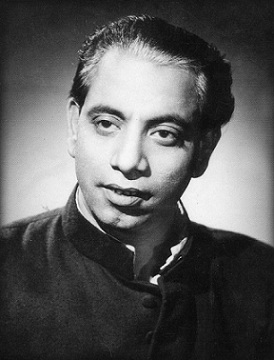
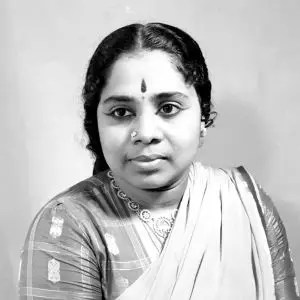
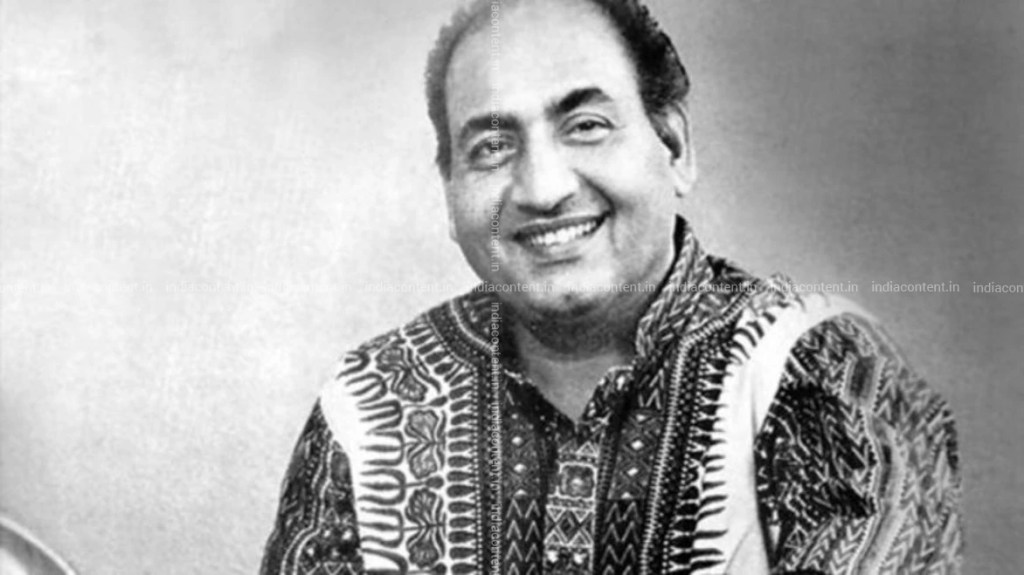
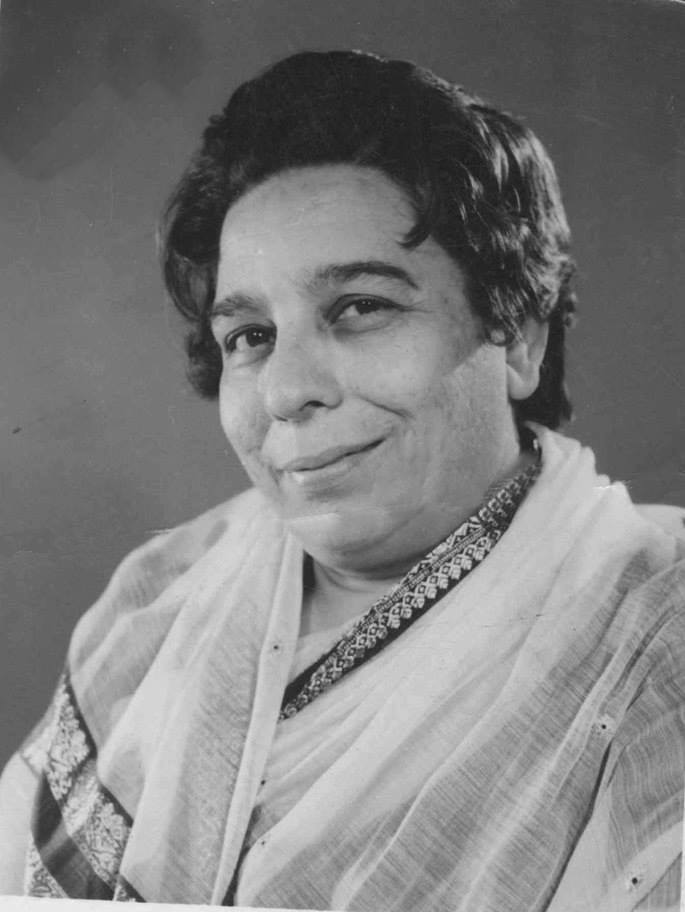
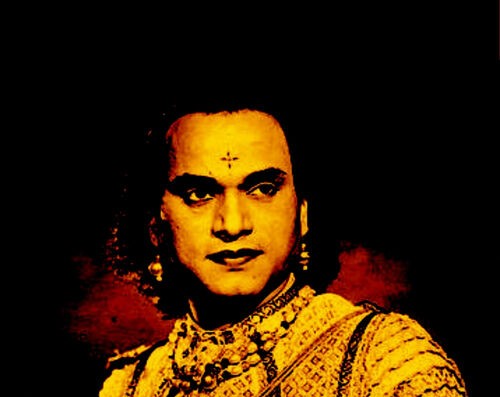
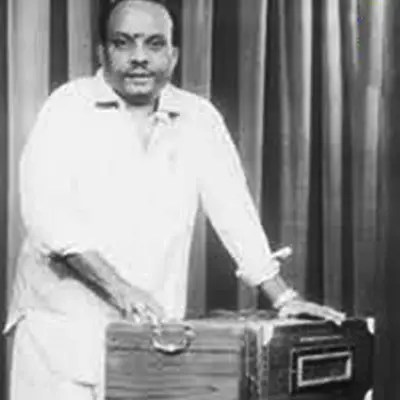
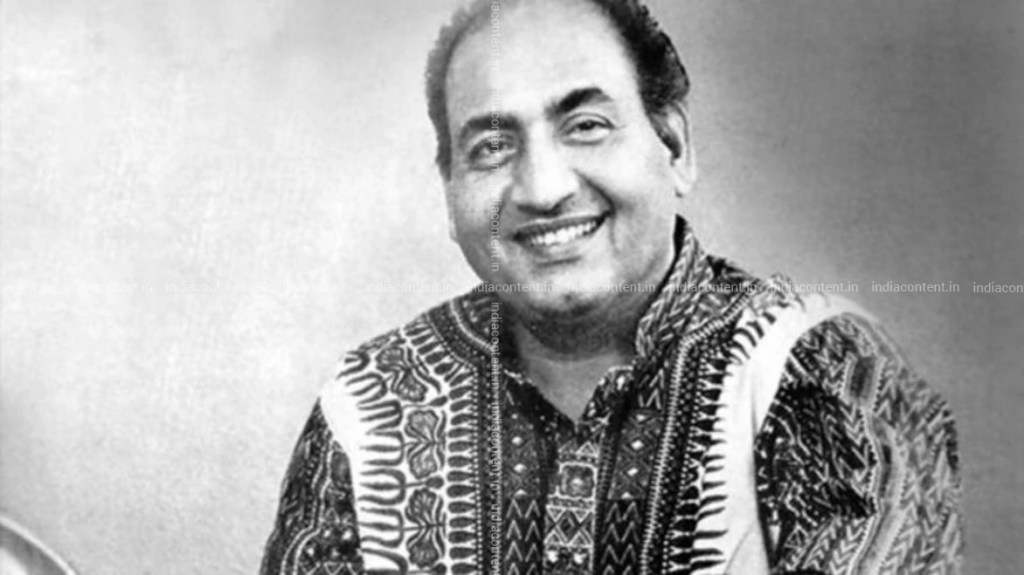
 Music Unrestricted