Sometimes we tend to completely forget about an artist who had been quite popular just around 3-4 decades ago. I was shocked to note that I had not even included her name in my long list of artists that I am supposed to cover in my future blogs. Today (7th Nov’ 2025) when I read about the sad demise of this actor-singer , I thought I should at least prepare a small tribute to her and write about some of the memorable songs she has left behind.
Born in an illustrious musical family , her father was Pratap Narain Pandit and was the elder brother of legendary Pt Jasraj, noted classical vocalist. She had three brothers , Mandheer Pandit, and the famous Jatin-Lalit music composer duo and three sisters-Maya Anderson, Sandhya Singh and the famous actor Vijayta Pandit. Noted music composer Adesh Shrivastava married Vijayta Pandit. It is very rare to come across a family with so many musical artists. But at the same time it is equally poignant to note that except for Pt Jasraj , others had a relatively brief career. Of course Jatin-Lalit were successful as music composer duo before they split up after the film Fanaah. Adesh Shrivastava unfortunately died of cancer just a day after his 51st birthday.
Sulakshana Pandit was one of the rare artists in the later period of Hindi films , who was an actor and singer , which was more prevalent in the vintage era. She had started singing even at the age of nine ( Pappa Jaldi Aa Jana with the legendary Lata Mangeshkar and other young singers Ila Desai & Meena Patki , for the 1967 film Taqdeer composed by Laxmikant Pyarelal). She accompanied her eldest brother Mandheer Pandit for performing many music shows.
Her father was a great influence in her life and had even tutored her and honed her musical skills. Her first major hit was with the great legend-Kishore Kumar for the film Door Ka Rahi -Bekaraar Dil Tu Gaaye Ja , composed by KK himself. However her next break came after almost four years , but with a bang that fetched her lone Filmfare award for best playback singing with the soulful Tu Hi Sagar Hai Tu Hi Kinara for the film 1975 film Sankalp , with music composed by Khayyam.
In the same year she had her break as an actor in the film Uljhan that had Sanjeev Kumar and Ashok Kumar along with her in the lead. This film was much talked about suspense thriller and also impacted her personal life. She adored Sanjeev Kumar and even proposed to him for marriage but he had refused. It is said this deeply affected her and she remained unmarried throughout her life. It is a strange twist of fate that she passed away of cardiac arrest on 6th November , 2025 , the same day when forty years back Sanjeev Kumar had passed away on the same date.
I have seen only very few films in which she acted , but as a singer I always liked her voice and she could carve out a niche for herself in the midst of tough competition from legends like Lata , and Asha. Her repertoire might have been limited but she did leave behind few evergreen songs that would be remembered for a long time. Her training in music made her sing quite well and she also had a voice that did not resemble Lata or Asha and hence had a distinct tone. It is truly unfortunate that she did not get the recognition she deserved.
I am listing few of her superb songs that provide a glimpse of her versatility and her strong musical grounding. These are arranged in chronological order , with song, film, year , music director, lyricist and co-singer mentioned in that order.
Bekaraar Dil Tu Gaye Jaa-Door Ka Rahi-1971-Kishore Kumar-A Irshad-Duet with Kishore Kumar
One of the best piano songs, Kishore proved he was a great music composer as well and gave Sulakshana Pandit her first hit song, that remains her all-time best till date. It is interesting to note KK singing for his brother Ashok Kumar .
2. Tu Hi Sagar Hai Tu Hi Sahara-Sankalp-1975-Khayyam-Kaifi Azmi
This song shows what a superbly gifted singer Sulakshana Pandit was and is famous for its meaningful lyrics and soulful tune composed by Khayyam. It is rare to see any singer getting an award for the very early songs in their career.
3. Bandhi Re Kahe Preet-Sankoch-1976-Kalyanji Anandji-M.G Hashmat
Rendered by SP on screen also, this is a song that does not sound like a typical Kalyanji-Anandji tune and is a hidden gem.
4. Jana Kahan Hai Pyaar Yahan-Chalte Chalte-1976-Bappi Lahiri-Amit Khanna-Duet with Bappi Lahiri
Bappi Da as a singer may not be everyone’s liking but he composed some lilting and peppy tunes that were very popular during the 70’s and 80’s. I had heard this song many times but never realised SP had sung this!!
5. Somwar Ko Hum Mile-Apnapan-1977-Laxmikant Pyarelal-Anand Bakshi-Duet with Kishore Kumar
One of the most popular duets of SP , this is a typical L-P & Anand Bakshi style composition that caught the attention of public due to the simplicity and catchy lyrics and tune.
6. Ghadi Milan Ki Aayee Aayee Tu Chutti Lekar-Ek Baap Chhe Bete-1978-Rajesh Roshan-Majrooh Sultanpuri-Duet with Rafi
During those days this song was very popular and was played frequently in radio. SP had many such hit duets with Rafi sahab.
7. Jab Aati Hogi Yaad Meri-Phaansi-1978-Laxmkant Pyarelal-Gulshan Bawra-Duet with Rafi
One more popular duet of Rafi and SP , with SP acting out the song on screen as well.
8. Boliye Surili Boliyaan-Grihapravesh-1978-Kanu Roy-Gulzar-Duet with Bhupendra
Kanu Roy was the famous singer Geeta Dutt’s brother and remained an unsung and unrecognised music director. Most of his songs were too good . This is a classical gem from him and sung very well by Bhupendra and SP. She demonstrates her classical singing ability so nicely and it is unfortunate that she did not get much opportunity to render songs like this.
9. Kajare Ki Baati-Sawan Ko Aane Do-1978-Raj Kamal-Maya Govind-Duet with K J Yesudas
The film Sawan Ko Aane Do was a musical hit with the new comer music composer Raj Kamal scoring many super hit songs like the title song, Chand Jaise Mukhde Pe, Teri Tasveer Ko, Bole To Bansuri, Tujhe Dekh Kar, mostly rendered by the veteran K J Yesudas and few by Jaspal Singh.
This duet of SP with KJY is relatively lesser known but not in any way lesser in quality .
10. Pardesiya Tere Des Mein-Garam Khoon-1980-Shankar Jaikishan-Singhar-Duet with Rafi
It is a common myth , spread by many, that the music of Shankar that he independently composed was mediocre. I could never understand how someone could say that. Just listen to this superbly orchestrated song in the year 1980 that , in my humble opinion, was as good as those masterpieces SJ composed in the 60’s. The string arrangement, solo violin, sitar, accordion, guitar all are vintage SJ! SP has matched Rafi’s versatility throughout the song. One of my all-time favourites of late SJ compositions.
11. Mana Teri Nazar Mein-Ahista Ahista-1981-Khayyam-Naqsh Lyallpuri
One more very soulful ghazal from the team of Khayyam and SP. I find that Khayyam has composed some of the best solo songs for SP.
12. Mausam Mausam Lovely Mausam-Thodisi Bewafaai-1981-Khayyam-Gulzar-Duet with Anwar
Of all the singers who came up after the sad demise of Rafi, trying to sing like him, I find Anwar was the best. Somehow he got very limited chances. This is a peppy number from Khayyam in a film that is otherwise known for the evergreen Kishore-Lata’s Hazar Rahein Mudke Dekhi..
13. Jiske Liye Sab Ko Chhoda-Sajan Ki Saheli-1981-Usha Khanna-Majrooh Sultanpuri-Duet with Rafi
One of the very last films for which the great Rafi sang before he left us, this was a very popular song, probably his last for Usha Khanna and also for Rajendra Kumar. SP’s collaboration with Rafi was a successful one with many of their duets becoming very popular.
14. Prabhu tum antaryami-Non Film Song-Khayyam
Khayyam composed many memorable Non film songs that were mostly bhajans or ghazals. Many of them were rendered by Rafi and this particular bhajan by SP was quite popular those days and somehow totally vanished from everyone’s memory later.
I end this small tribute with this soulful and superb bhajan.
Acknowledgements and Disclaimer:
I sincerely thank the publishers of following Internet sources for the information that I could gather for this article:
You Tube
Wikipedia
The songs mentioned are from the popular, public domain and have been embedded here only for the listening pleasure of the music lovers. This blog does not claim any copyright over them, which rests with the respective owners of the rights The photograph is taken from the internet, duly recognizing the full copyrights for the same to the original creator or the site where they were originally displayed .This blog does not claim any copyright over them, which rests with the respective owners of the rights.
In the late 70’s and during most of the 80’s , Tamil film music saw a plethora of new music directors, singers, lyricists , with trend-setting music styles that gave listeners a completely new way of experiencing film music. Although the legends TMS, PS , MSV , Kannadasan were still holding out despite strong competition, it was the time of K J Yesudas, S P Balasubrahmanyam, Vani Jayaram, S Janaki , Ilayaraja, Shankar-Ganesh, T Rajendar, Vairamuthu, Gangai Amaran just to name a few. The complete list will be covered in my future blogs! But among the new singers , there was a singer from Kerala , who had the unique ‘ midas’ touch-whatever he sang became a super-hit ! There was not a single day without his song Rasathi Unne Kaanatha Nenju being aired . With a voice that closely resembled his illustrious peer from the same state, K J Yesudas , with a softer tone, Paliyath Jayachandran or P Jayachandran was known for having maximum percentage of hits . His association with Ilayaraja was one of the most successful combinations during the 80’s.
P Jayachandran had a great career in the Malayalam film industry but his repertoire in Tamil is also equally rich. Jayachandran was born in Bhadralayam, Ravipuram, Ernakulam, to Thiripunithura Ravivarma Kochaniyan Thampuran, a member of the Cochin Royal family, and Subhadra Kunjamma . He was the third among the five children his parents had. Jayachandran graduated in Zoology from Christ College, Irinjalakuda. He had his schooling at the Irinjalakuda National High School from where he received many prestigious prizes for playing the Mridangam and light music in the State School Youth Festival. He completed his graduation in Zoology from the Christ Church college , Irinjalakuda.
Music was in his blood, his father Thiripunithura Ravivarma Kochaniyan Thampuran being a learned musician, though not a professional singer. His mother Subhadra Kunjamma was also a great music lover and encouraged him to learn the notes of Mridangam. In a young age , with his mother’s encouragement , he became well-versed with the mridangam.
Although he had not learnt any sort of classical music, his musical insight and his genuine love for music had helped him in winning many music contests he had participated. His elder brother Sudhakaran, was a close friend of Yesudas, and was instrumental in helping Jayachandran become a professional singer. Jayachandran used to sing the songs taught by his brother in school functions.
Jayachandran got married to Lalitha in the year 1973, who was also an ardent lover of music and always encouraged him. They had a daughter named Lakshmi and a son called Dinanath. His daughter and son are also singers .
Jayachandran was also a great lover of Hindi songs in his young days. I have seen some of his interviews in which he has talked about his admiration for the great Mohammad Rafi who had inspired many other great singers of South like SPB, Yesudas .
Like few other singers, in his case also the song he had recorded first was released later ! His song for the 1965 Malayalam film Kunjali Marakkar , Oru Mullappo Malayumai ( music composed by B.A Chidambaranath) got released later and his Manjalayil Mungithorthi song, composed by G. Devarajan in the film Kalithozhan (1966) came earlier. Later on, his song in the 1967 film Udhyogastha , ‘ Anuragaganam pole’ became a famous one followed by some more that fetched him great fame like the M S Vishwanathan composed Neelagiriyude (‘Suprabhaatham’) for the film Panitheeratha Veedu in 1973 for which he got the Kerala State award for best playback singing.
Music composer M B Sreenivasan was well-known for his intricate and off-beat compositions and his song Ragam Sreeragam for the film Bandhanam fetched Jayachandran another Kerala state award . He was the recipient of the national award in the year 1985 for Sivasankara Sarva Saranya Vibho in Sree Narayana Guru composed by G. Devarajan.
Since my blogs are about Tamil and Hindi film songs, let us turn to Jayachandran’s Tamil film career. His first Tamil film song was Thanga Chimizh Pol , composed by the veteran M.S Vishwanathan for the 1973 film Manipayal. However he got noticed first in Tamil films with his song Manthara Malare, Manthara Malare for the film Naan Avan Illai that was composed by MSV. Though this song became popular , his major hit came with the two duets he sang for the 1976 film Moondru Mudichu, Aadi Velli Thedi Unnai and Vasantha Kala Nadigalile , composed by MSV. In the year 1978, Ilayaraja’s songs for Jayachandran started a long & successful association between them , like Vazhkaiye Vesham for Aarilinthu Arubaduvarai and Chitira Chevvanam Sirikkakanden & Oru Vanavil Pole for Kaatrinile Vraum Geetham.
Jayachandran continued his glorious innings with Ilayaraja till 90’s but the peak was in 80’s with many super hits in this decade. Jayachandran had sung some memorable songs with many other music directors also and I have tried to organize my song selection into 3 categories. His songs with MSV, Ilayaraja and Other composers.
Jayachandran won a National Award, five Kerala State Awards and four Tamil Nadu State Awards. In the year 2001, he was honoured with the Swaralaya Kairali Yesudas Award. In 2020, he was awarded the J. C. Daniel Award, the highest award in Malayalam cinema, for his outstanding contributions to Malayalam cinema. He is widely regarded as one of the greatest expression singers in South India.
Jayachandran died from liver cancer in Thrissur, Kerala, on 9 January 2025, at the age of 80. He was cremated with full state honours at his ancestral home in Chendamangalam, North Paravur, Kerala on 11 January 2025.
His songs for MSV
Manthara Malare Manthara Malare- Naan Avan Illai-1974-Kannadasan & Bhaskaran-Duet with L R Eashwari
With a Tamil-Malayalam mix of lyrics, this is a very unique song , with the Tamil lyrics having a Malayalam touch and Malayalam lyrics having a Tamil touch. Jayachandran brings out the expressions so well in his very first major hit song.
2. Adi Velli, Thedi Unnai-Moondru Mudichu-1976-Kannadasan-Duet with Vani Jayaram
I had written about the other famous song from this movie, Vasantha Kaala Nadigalile in my earlier blogs and so included this here. A classic Kannadasan’s anthathi style lyrics, composed so beautifully by MSV and rendered equally well by both, Jayachandran and Vani Jayaram
3. Paalabhishekam Seiyavo-Muthana Muthallavo-1976-Vaali-Duet with P Susheela
I think many would have forgotten this song-a rare , pleasant melody by MSV . Jayachandran’s Tamil diction was a great strength for him, coupled with his melodious voice and a soft, silky rendition.
4. Swing Swing Unathu-Vanakkathukuriya Kathaliye-1978-Vaali-Duet with Vani Jayaram
I have observed that some songs become rare as they are forgotten after the time in which they were released. I heard this sweet melodious duet after a long time. A rare occasion when Jayachandran sang for the Superstar Rajinikant!
5. Kalai Magal Alaimagal-Velli Ratham-1979-Vaali-Duet with P Susheela
That rhythm pattern is trademark MSV…one more song that must have been forgotten . Vaali’s powerful lyrics add so much meaning to the song beautifully rendered by Jayachandran and Susheela.
6. Kavithai Arangerum Neram-Antha Ezhu Naatkal-1981- Kuruvikkarai Shanmugam-Duet with S Janaki
Out of the many songs composed by MSV for Jayachandran, this must be the most popular one. It is said that the lyricist Kuruvikkarai Shanmugam learnt how to play the harmonium in order to do full justice to this song! Jayachandran renders a power-packed song.
7. Neeril Oru Thamarai-Nenjatai Alli Thaa-1984-Vaali
One more rare song that I discovered only while searching for this blog. Usually actor Mohan always had SPB doing the playback for him and had innumerable hits with him, but this is one has Jayachandran singing for him.
The long and successful association of Ilayaraja and Jayachandran started off with the song Poonthendrale Nalla Neram from the 1977 film Bhuvana Oru Kelvijuri and they together are said to have worked for around 90+ songs, with a huge percentage of them being super hits. This song , a pathos for Rajinikant in an off-beat role is sung with so much of expression by Jayachandran.
One of the most popular , but so-difficult-to-sing songs from the team of Ilayaraja and Jayachandran . The prelude is one of the best ever by IR and not only the prelude, even the interludes are simply outstanding. Jayachandran does full justice to the song that is truly difficult to sing. When this film was released , this song became one of the greatest hits!
4. Manjal Nilavukku Indru-Muthal Iravu-1979-Kannadasan- Duet with P Susheela
It was the time when whatever IR composed turned out to be pure gold! This one with the rhythm of a train is well known for the excellent orchestration
5. Thalattuthe Vaanam-Kadal Meengal-1981-Panchu Arunachalam-Duet with S Janaki
IR used to innovate in each one of his songs with something unique. This song is always remembered for that peculiar percussion. This is also a ‘boat’ song but note the difference between this and Chittira Chevvanam.
Jayachandran comes out with a softer tone for this romantic number and make it so sweet to hear.
6. Poonthendral Kaatre Vaa-Manjal Nila-1982-Gangai Amaran- Duet with P Susheela
It is amazing to note that Jayachandran has sung excellent duets with all the main female playback singers like P Susheela, S Janaki and Vani Jayaram. And added to that some of the superb solos as well!
7. Kalidasan Kannadasan-Soorakottai Singakutti-1983-Vaali-Duet with P Susheela
This was one more song of Jayachandran that was so popular during the 80’s just like Rasathi Unne. Hardly a day passed without hearing this song , those days!
8. Indraiku Yen Intha Ananthame-Vaidehi Kathirunthal-1984-Gangai Amaran-Duet with Vani Jayaram
A superb Aabhogi raagam based composition of IR, this is a true masterpiece from Jayachandran and Vani Jayaram. I personally would rate this among the topmost songs of Jayachandran.
The song that is immediately identified with Jayachandran. A simple tune that was rendered with full expressions by Jayachandran that remains evergreen to this day. I came across an article that said in a place called Cumbum in Tamil Nadu , a herd of wild elephants used to wait near a theatre in which this film was running and the elephants listened intently to this particular song and would disperse once the song was over!
I was surprised to read about how all the three super hit songs from the film Vaidehi Kathirunthal were recorded in a single day! What a great team IR and Jayachandran were!
11. Kodiyile Mailliaypoo-Kadalora Kavithaigal-1986-Vairamuthu-Duet with S Janaki
One of my all-time favourites and definitely among the outstanding compositions of IR that were the pinnacles of his orchestration skills. The typical multi-layered instrumental arrangement, coupled with an outstanding singing by both Jayachandran and S Janaki…a song that will last forever.
12. Mayanginen Solla Thayanginen-Naane Raja Naane Manthiri-1986-Vaali- Duet with P Susheela
Those vintage flute notes of IR, Jayachandran’s soft romantic touch in his voice, Susheela going strong even in her 50’s -all make this one more evergreen song.
13. Poova Eduthu Oru Maala-Amman Koil Kizhakala-1986-Gangai Amaran-Duet with S Janaki
Vijayakant and Jayachandran were a hit pair and the last few songs and this one are classic examples.
His songs for other music directors
I myself was all along thinking that Jayachandran’s top songs were composed by either MSV or Ilayaraja. So it was a pleasant surprise to note he has rendered some great songs with many other composers . Although a major part of his repertoire in Tamil films consisted of songs composed by Ilayaraja, M S Vishwanathan and Shankar-Ganesh, there were at least some 40 other music directors for whom he has sung. Of course for most of them it could have been just in a single digit.
Pennalla Nee Oru Bommai-Sonthamadi Nee Enakku-1977-V Kumar-Vaali-Duet with P Susheela
I had written about the composer V Kumar in this blogsite-a great composer but was not so lucky in getting the recognition he richly deserved. This is a rare gem from one the early years of Jayachandran.
2. Ennodu Ennenavo Ragasiyam-Thoondil Meen- 1977-V Kumar-Vaali- Duet with Swarna
V Kumar’s wife Swarna was a good singer and it was truly great of him not to impose her in his compositions-he had mostly composed with other leading female playback singers only. This is a superb song, with the unique orchestration style of V Kumar evident throughout.
3. Poovannam Pola Nenjam- Azhiyada Kolangal-1979- Salil Chowdhury-Gangai Amaran-Duet with P Susheela
The great legend from Bengal , who had given some of the most intricate and melodious songs in Bengali, Hindi and in his later years , in Malayalam , Salil Chowdhury worked for a handful of Tamil films also. This one from Azhiyada Kolangal was a super hit and is a lilting , trademark Salil da composition that , at the time of its release , came as a whiff of fresh breeze.
T Rajendar was known for his unique style and out-of-the-box thinking in terms of tune and lyrics. Among Jayachandran’s top songs , this one will always be featured.
5. Kannil Vanthai Nenjil Nindrai-Lottery Ticket-1982- L Vaidyanathan-Muthulingam
L Vaidyanathan had composed music for few films only and is known for his unconventional tunes. One more song that Jayachandran sang for Mohan .
Kunnakudi Vaidyanathan, a legend in playing the violin , had a successful innings in composing for Tamil films. Many of his songs have been brilliant. This Hindolam based song is somehow forgotten and it is truly sad. Jayachandran has rendered this classical number with so much of expression and perfection.
7. Sangeethame En Deiveegame-Kashmir Kadali-1983- G K Venkatesh-Pulamaipithan-Duet with P Susheela
Mentor of Ilayaraja , G K Venkatesh was a genius , and was a legend in the Kannada film music. He composed for few Tamil films and whatever he composed were great songs. This song deserved much better recognition , but like it happens for many good songs, got into the rarely-heard category.
8. Mounamulla Mayakkam-Azhagu-1984-G K Venkatesh-Vairamuthu- Duet with S Janaki
One more rare gem from the great G K Venkatesh. The string arrangement is something great , for which GKV was well-known. A soft and pleasing romantic duet.
Shankar Ganesh came out with some very good songs now and I was surprised to note Jayachnadran had sung a good number of songs for them. Hoiwever I could observe very few were popular or good. This one stands out for excellent guitar and Jayachandran renders a soulful number.
10. Thirunaalum Varumo Swaami-Isaikku Oru Koil-1987-K V Mahadevan-??- Duet with P Susheela
This was a Tamil dubbed version of the Telugu film Shrutilayalu. This could be the only film in which Jayachandran sang for K V Mahadevan. The original Telegu version had K J Yesudas singing the same song. I tried my best to find out the lyricist for this song , but could not find !
Acknowledgement & Disclaimer
I sincerely thank the publishers of following blogsites & Internet sources for the information that I could gather for this article:
The songs mentioned are from the popular, public domain and have been embedded here only for the listening pleasure of the music lovers. The photograph is taken from the internet, duly recognizing the full copyrights for the same to the original creator or the site where they were originally displayed .This blog does not claim any copyright over them, which rests with the respective owners of the rights.
Before I begin , a big thanks to all those who have viewed my blogs -this year in just 9 months it has crossed 10,000 views!
One may wonder why such a long tag line in the title of this blog! When the Hindi film industry had legendary male playback singers Rafi, Talat, Kishore, Manna Dey and Mukesh , with each one having their unique voice and style , we can imagine how difficult it might have been for Mahendra Kapoor to create a name for himself. He left behind some evergreen songs like Chalo Ek Baar Phir Se , Neele Gagan Ke Tale, Aadha Hai Chandrama , Ankhon Mein Qayamat Ke Kajal , Hai Preet Jahan Ki Reet, Mere Desh Ki Dharti etc.
If we look at the followers of male playback singers of the golden era of Hindi film music , we find a majority of them either adoring Rafi or Kishore , then to some extent a niche group who love Mukesh , Talat Mehmood. For Manna Dey and Mahendra Kapoor , although many like their songs , we do not see an intense , passionate fan-base. Between the two we may even find many who like Manna Da’s classicism , but finding an ardent fan for Mahendra Kapoor is relatively rare. This is not to generalize but at a glance this seems to be the reality. But , of course , there would definitely be many who like his songs and I am one of them! In fact I can say with humility that I like all these singers and …ooops I forgot one more name-Hemant Kumar-though for me his name comes first as a great composer . The most charming aspect of the golden era of HFM is that we had such a huge variety of singers , complemented with even more diverse music composers and their equally competent lyricists. That is why I find it strange that even many learned music lovers and writers keep comparing these legends and come out with their own biased opinions, extolling some to a very great extent, and putting down others !
In my blogs , I like to celebrate the music of all! Sometimes even those , whom I may personally not be listening that much. For me music till the early 70’s was filled with so many gems to keep discovering and enjoying. In this blog , let us look at some of the great songs Mahendra Kapoor(MK) left behind for us. I had mentioned some time back in my blogs that pure coincidence makes me take up an artist for my blogs and I find that I am writing about him or her close to their birth or death anniversary. As I publish this , the 17th death anniversary of MK just passed by last week, on 27th September.
Mahendra Kapoor was born in Amritsar on 9 January 1934 but was brought up in Mumbai ( then Bombay) , where his father had a business of garments. From an early age he always considered the great Mohammad Rafi as his inspiration . MK graduated from the St Xaviers College, and his interest in music was evident from those days. His training on music started with B.M. Vyas and Ustad Meharji. He also got trained in classical music from Pt Husnlal of the famous musical duo Husanlal Bhagatram , Ustad Niaz Ahmed Khan, Ustad Abdul Rehman Khan and Pt.Tulsi Das Sharma. Of course the great Mohammad Rafi was always his idol and had even mentored him to some extent.
He started singing from the year 1953 with songs in films like Madmast, Lalkaar (1956) , Diwali Ki Raat (1956), Heer (1956) etc. He was also part of the qawwali Unhe dekh le to in the film Madhmast composed by V Balsara. However all these songs did not give any major break for him. Fortune favoured him when he got selected as the best singer in Metro-Murphy All India Singing Competition, the judges being the topmost music directors: Anil Biswas, Naushad, C Ramchandra, Vasant Desai and Madan Mohan. The contest had a benefit for the winner that the judges were to offer a chance to sing in their composition. Naushad, honoured that condition , and gave him his major break by offering the song Chand Chupa Aur Tare Toothe in the film Sohni Mahiwal (1958). It so happened that this song got released earlier although as per MK’s own interview in Vividh Bharati , the song Aadha Hai Chandrama Raat Aadhi was recorded earlier ( composed by C Ramchandra for the film Navrang) but was released after the Sohni Mahiwal film song. CR also gave a major boost to his career in Navrang with other songs like Shyamal Shyamal Baran & Yeh Maathi Sabhi Ki Kahani Kahegi that made MK a singer to be noticed.
MK started getting more success in BR Chopra’s films , with the music director Ravi giving him his all-time hits like Chalo Ek Baar , Neele Gagan Ke Tale, Kisi Pathar Ki Moorat Se and many more . Other music directors like N Dutta, O.P Nayyar , Kalyanji Anandji also composed some of the best songs for MK. One of the main strengths for MK was the effortless ease he used to reach the high notes and stay there for some time! The song Na Mooh Chupake Jiyo is one such example. Despite having a strong and deep voice , he could render a soft ghazal . And when it comes to patriotic songs , he was at the top. Peppy numbers like Aankhon Mein Qayamat Ke Kajal or Lakhon Hai Yahan Dilwale were also a cake-walk for him.
He had sung many popular songs in Marathi and of course in his native Punjabi , apart from many other languages like Gujarati, Bhojpuri etc. He also had the unique distinction of collaborating with the famous band Boney-M to render some of their famous songs with Hindi lyrics for an album M-3 that had Mahendra Kapoor singing with singer Mussarat. MK’s best output was in the 60’s and 70’s ; however even in 80’s he rendered some great songs . In the year 1988 , B R Chopra’s TV adaptation of the epic Mahabharat became a very popular program and every Sunday people across the country were able to listen to the stirring rendition of MK’s title song for this TV series.
The government of our country recognized his contribution by conferring the Padma Shri award in the year 1972 ; he had also won the National award for best playback singing for his iconic Mere Desh Ki Dharti in the film Upkaar -1968. He also got the Filmfare Award thrice -in 1964 for Chalo Ek Baar Phir Se from the film Gumrah; in 1968 for Neele Gagan Ke Tale from the film Humraaz and in 1975 for the song Aur Nahin Bas Aur Nahin in Roti Kapda Aur Makaan. He was also honoured with other awards like the Mian Tansen award, Life Time Achievement award by the Maharashtra state government and Lata Mangeshkar award by the Madhya Pradesh state government.
He passed away on 27th September , 2008 due to cardiac arrest, leaving behind his wife, children, and grandchildren. His son Rohan Kapoor is also an actor and play back singer.
I have selected around 33 songs here , organized them into his great works with the music directors Ravi & O.P Nayyar who had given him the best songs of his career and then another category that has songs composed by many other music directors. I have selected 11 songs for each category , with an aim to cover the variety in MK’s singing and tried to include different music directors in the last category. I have also tried to put together a list that has many popular songs and some rare, not-heard-much ones.
As I am completing the blog, I realise , maybe in future one more blog may be required to do a proper justice to MK’s songs with few other music composers and duets with other singers. I have mentioned the song/film/year/ lyricist and any co-singers in that order.
Songs composed by Ravi Shankar Sharma ( Ravi)
If there are two music directors who were instrumental in giving a major boost to MK’s career , it is Ravi & O P Nayyar. For Ravi , Rafi was always the first choice, but in most of the B R Chopra films, it was mostly MK. Like many of the anecdotes that go around in the film world, they say B R Chopra had some rift with Rafi and that is how MK got many opportunities, but I find that Rafi has also sung in many of the B R Chopra films! Whatever it is , we are more interested in the music than these stories! The team of Ravi-MK-Sahir created some of the best ever songs of HFM . I have tried to list some of them here, though some of them are from non B R Chopra films.
Chalo Ek Baar Ajnabee-Gumraah-1963-Sahir Ludhianvi
Any talk about MK’s songs has to start from this masterpiece. MK was lucky to lend his vocals to one of the most famous lines written for a Hindi film song by the great Sahir Ludhianvi-Woh afsana jise anjaam tak laana nah o mumkin, Use ek khubsurat mod dekar chodne achha!
2. Aap Aaye To Khayal-E-Dil-E-Nashaad-Gumrah-1963- Sahir Ludhianvi
Starting off with a slow pace and in low notes, MK travels to the higher octaves with his typical ease in the antara.
3. Yeh hawa yeh fiza- Gumraah-1963-Sahir Ludhianvi
Ravi composes a superb song with guitar providing the main rhythm and a nice mandolin , flute taking us through the cool hills and MK rendering a soulful number .
4. Husn aur ishq ke takraae ki raat ayi hai -Sagaai-1966- Rajendra Krishna
Relatively a rare song for a non-B R Chopra film, this song shows the softer vocal skills of MK. A melodious one that appears a bit different from Ravi’s usual style.
5. Neele Gagan Tale-Hamraaz-1967-Sahir Ludhianvi
After Gumraah, it was Hamraaz that had MK’s career best songs. This one will remain eternal-whenever we listen to this we are taken to a beautiful, scenic place under the blue sky -somehow many of MK’s songs were picturized with beautiful hills or such similar scenery around. That is why his songs caresses us like a gentle breeze.
6. Kisi Pathar Ki Moorat- Hamraaz-1967-Sahir Ludhianvi
Once again the intense Urdu lyrics of Sahir come to life with MK’s mellifluous singing. Those days , a piano song is bound to be a super hit. Ravi’s trademark dholak, banjos elevate the song to a different level. MK has sung this with the right intonations, just like his idol, Mohammad Rafi. And who can forget the words of Sahir-Har ek beja takalluf se bhagawat ka irada hai?
7. Na mooh chupa ke Jiyo- Hamraaz-1967-Sahir Ludhianvi
Many singers of the golden era could reach the higher notes with ease, but MK had the unique ability to not only reach those high notes , but could “stay” there for a while with enormous lung power. The sheer force of this song is simply mind boggling and this remains one of my all-time favourites. Once again the exceptional lyrics of Sahir and the thundering dholak of Ravi , alongwith the vocals of MK create an evergreen song.
8. Tum agar saath dene ka- Hamraaz-1967-Sahir Ludhianvi
God only knows what chemistry Ravi, Sahir and MK had when they worked for Gumrah and Hamraaz films-looks like whatever they touched turned gold ‘a la Midas’!
9. Ae Jan-E-Chaman Tera Gora Badan-Anmol Moti-1969-Rajendra Krishan
One may not be too impressed with the picturization of this song , but the tune and MK’s rendition make this a good one.
10. Sansaar Ki Har Shay Ka-Dhund-1973– Sahir Ludhianvi
The film , Dhund was based on Agatha Christie’s story ‘The unexpected Guest’ and is one of the good films in Hindi. This title song is rendered by MK in his inimitable style.
11. Beete huye lamhon ki kasak saath -Nikaah-1982- Hasan Kamaal
Music director Ravi was well known for his melodies and when the music tastes started becoming different, he had almost withdrawn from Hindi films and instead made a very good name for himself in the Malayalam film industry. After a long gap , when B R Chopra signed him for this film , he proved that he still had those creative juices flowing. MK had this soulful ghazal along with few other memorable songs like Dil Ki Yeh Aarzoo thi koi -a duet with Salma Agha. MK’s voice had the same texture that he had when he sang those great songs for Ravi 16-17 years ago in Gumrah and Hamraaz.
Songs composed by O. P Nayyar
After Ravi, it was in O P Nayyar’s music that MK could some out with his best songs. Once again there was the infamous spat between OPN and Rafi in 1968 who till then had worked so well together , and were also very close friends. I would not like to ponder much about these stories as no one knows exactly what happened! The result was that MK got great opportunity to sing for OPN and that is how we got all those superb songs. Ultimately Rafi being the supreme gentleman that he always was , patched up with OPN by taking the initiative solely from his side , and they did work together , but by that time OPN ‘s creativity had come down and he was not able to create the magic like before. O P Nayyar’s music till the time he was at the top , guaranteed success even for those films that did not have anything much to talk about except for the music. His name used to be prominently displayed in the film posters and that was enough to draw the audience! His foot-tapping rhythm , superb tunes and orchestration are loved even today.
Mera Pyar Woh Hai -Yeh Raat Phir Na Aayegi-1965-S.H Bihari
One of the early songs of MK with OPN much before the OPN-Rafi rift. Many of the golden era music directors had a great team work with their favourite lyricists. Just like Ravi & Sahir , OPN & S H Bihari created some of the great songs that were rendered by MK. In fact in this blogsite I had written in detail about many such teams.
2. Badal Jaaye Agar Maali-Baharen Phir Bhi Aayengi-1966-Kaifi Azmi
A classic guitar-based OPN’s rhythm , this is the only song by MK in the film.
3. Badi Mushkil Se Kaboo-Humsaya-1968-Hasrat Jaipuri-Duet with Asha Bhosle
It is said that this was the film during which OPN stopped working with Rafi . Though all the songs are great, somehow the film flopped commercially.
4. Aankhon mein Qayamat Ke Kajal-Kismat-1968-S.H Bihari
Quintessential OPN songs in this film are this one and the next I have listed. These two are my personal favourites also. Whenever we think of MK’s song with OPN this comes to our mind first. Superb rendition by MK and of course who can forget those guitars ?! The way in which MK had rendered both the songs of this film showcase the pop-singer in him.
5. Lakhon Hai Yahan Dilwale- Kismat-1968-S.H Bihari
Though this one might seem to be similar to Ankhon Mein Qayamat song the way MK comes out with those modulations makes this one of his career-best!
6. Kamar Pathli Nazar Bijli-Kahin Din Kahin Raat-1968-S.H Bihari
One of the rarer songs from the team of OPN-S H Bihari and MK. The antara is unusual and not the typical style of OPN-MK had pulled it off so well.
7. Yaaron Ki Tamanna Hai- Kahin Din Kahin Raat-1968-Aziz Kashmiri
It is indeed very rare to see any other singer apart from Rafi singing for the noted actor-comedian Johnny Walker. The typical horse-hoof beat of OPN is in full play and adds to the charm of the song.
8. Haath Aaya Hai Jab Se -Dil Aur Mohobbat-1968-Shewan Rizvi- Duet with Asha Bhosle
The lyricist Shewan Rizvi mostly wrote for O P Nayyar and this song could be one of the best by him. I always liked this song mainly for these lines:
Ungaliyaan jab zamaana ki mujh par uthhe
Kho na jaana kahin aisi haalaat main
Roshani zindagi men mohabbat se hai
Warana rakha hai kya chaandani raat main
Although the song has Asha singing a major part, MK does make his mark with the lone antara that he gets to sing.
9. Kahan Se Layee Oh Jan-E-Man-Dil Aur Mohobbat-1969-S.H Bihari-Duet with Asha Bhosle
MK does a superb ‘ harkat’ while singing the line in the first antara, especially in the line “yahi wo chehra hai poojte hain”:
yahi wo aankhe hai jinke moti
chamak rahe hai samundro me
yahi wo chehra hai pujte hai
OPN used to refer to his favourite lyricist S H Bihari as Shayar-E-Azam meaning the great among the lyricists. Asha does a superb humming throughout the song; not to forget the superb santoor that OPN uses in the orchestration.
10. Andhere Mein Jo Baithe Hain-Sambandh-1969-Kavi Pradeep
The two songs from Sambandh would rate among the top 10 songs of MK . He has breathed life into these two songs, with the song Jo Diya Tha Tum Ne having the unique feature of Hemant da singing in an OPN composition.
11. Jo Diya Tha Tum Ne-Sambandh-1969-Kavi Pradeep-Duet with Hemant Kumar
Songs composed by Other music directors
Among the other music directors in whose compositions, MK had his best songs were C Ramachandra, N Dutta, Kalyanji Anandji . I have included some of his best songs from these 3 composers and also five others like Naushad who gave his first hit song -Chand Chupa Aur Tare Toote, Pt Ravi Shankar-a rare duet with Geeta Dutt , two songs from Madan Mohan , one from my eternal favourite composers-Shankar Jaikishan, and one from Lakshmikant Pyarelal’s Roti Kapda Aur Makan that fetched MK one more Filmfare award. All these songs give a glimpse of the variety in MK’s singing and hope those who listen to these would like them.
The songs that made MK famous after years of struggling. Wish Naushad had given few more songs to him!
2. Aadha hai chandrama-Navrang-1959-C Ramachandra-Bharat Vyas-Duet with Asha Bhosle
Whenever we think of top songs composed in the raag Malkauns, this would be on the top of the mind-a superb by the great C Ramachandra-Navrang had some of his fabulous songs and MK had totally 4 songs in this film.
CR innovates orchestration by using musical instruments for mimicking everyday sounds in a household! Note the richness in MK’s voice texture in this song.
4. Aaj ki raat nahi shikwa shikayat ke liye -Dharmaputra -1961- N Datta -Sahir Ludhiyanavi
I had not listened to this song for decades and was delighted to discover this while researching for the blog. Just like Ravi & Sahir, N Dutta and Sahir had a great chemistry and had given numerous masterpieces. This one shows the softer side of MK’s singing.
5. Kho Gaya Hai Mera Pyar-Hariyali Aur Rasta-1962-Shankar Jaikishan-Hasrat Jaipuri
The film Hariyali Aur Raasta had great songs by SJ , that were msostly rendered by Mukesh and Lata; this solo by MK is one of the rare ones that SJ had composed for him and is quite a popular one.
6. Dhoonde Nazar Nazar-Dilli Ka Dada-1962-N Dutta-Jan Nissar Akhtar- Duet Asha Bhosle
A nice melody by N Dutta , rendered beautifully by MK & Asha.
7. O Bedardi Kyon Tadpaaye-Godaan-1963-Pt Ravi Shankar-Anjaan-Duet with Geeta Dutt
The veteran classical Sitar maestro Pt Ravi Shankar composed a handful of songs for few films , but all were simply outstanding. This rare duet of MK & Geeta must have been forgotten by many. Note the use of predominantly Indian classical instruments by the maestro in the orchestration.
8. Chodkar Tere Pyar Ka Daman-Woh Kaun Thi-1964-Madan Mohan-Raja Mehdi Ali Khan-Duet with Lata Mangeshkar
When Rafi & Lata did not sing together for few years, MK got the opportunity to sing some duets with her. One of the typical sweet romantic melodies by the ghazal king Madan Mohan.
9. Dil Laga Kar Hum Yeh Samjhe-Zindagi Aur Maut-1965-C Ramachandra-Shakeel Badyuni
A rare association of CR with Shakeel Badayuni, that tabla pattern is vintage CR!. One of MK’s great songs …
10. Ari Oh Shok Kaliyon Muskura -Jab Yaad Kisi Ki Aati Hain-1967- Madan Mohan- Raja Mehdi Ali Khan
When I heard this song after a long time , I could not guess the music director correctly as it had shades of SJ in the first prelude and also reminded me of OPN -it was only after listening to that distinct string arrangement that I guessed correctly it was Madan Mohan. A superb ghazal by MK.
11. Hai Preet Jahan Ki Reet Sada-Purab Aur Paschim-1970-Kalyanji Anandji-Indeevar
Readers may find it strange that I have included this and not the most popular song of MK -Mere desh ki dharti! It is just because everyone must have listened to that ‘n’ number of times in all our National days. This is rare and personally I like this song for MK’s superb rendition , K-A superb orchestration, and the powerful lyrics of Indeevar. I could not get the original video link embedded here due to technical issues and so this is from a live performance of MK. I am providing a link to the original song as a hyperlink< https://www.youtube.com/watch?v=TdmUuRELfWI&list=RDTdmUuRELfWI&start_radio=1>
12.Aur Nahi Bas Aur Nahin-Roti Kapda Aur Makaan-1974-Laxmikant Pyarelal-Santosh Anand
I conclude the blog with this pathos by MK that may not be that popular , but is a complex tune that was composed by L-P with MK getting his third & last Filmfare award.
Acknowledgements and Disclaimer:
I sincerely thank the publishers of following Internet sources for the information that I could gather for this article:
You Tube
Wikipedia
The songs mentioned are from the popular, public domain and have been embedded here only for the listening pleasure of the music lovers. This blog does not claim any copyright over them, which rests with the respective owners of the rights The photograph is taken from the internet, duly recognizing the full copyrights for the same to the original creator or the site where they were originally displayed .This blog does not claim any copyright over them, which rests with the respective owners of the rights.
I had covered Vani Jayaram’s superb twenty solo songs in my Part1 of the blog on her. Now let us look at some of the equally excellent duets that she had sung with many leading singers . Vani Jayaram should have deserved more solos but somehow she sang relatively lesser number of solos compared to duets.
One aspect of VJ that I forgot to mention in Part1 was that she had many other talents like writing poetry in Tamizh , drawing, painting which she had revealed in some of her interviews. In fact, in her school days , she had even acted ! Her parents had named her rightly Kalaivani. Whenever I watched her interviews and also tributes to her by her contemporaries, she comes across as a very humble human being, soft-spoken and a punctual, disciplinarian . Also a delight for all the music directors she worked with as she used to grasp the tune immediately and render them with least number of takes. In the days when entire song had to be done as many times as someone makes a mistake, this was a great blessing for everyone.
VJ had a tough competition with the legend P Susheela still going strong , S Janaki being supported by Ilayaraja to a great extent but despite this , she had fabulous duets with all the leading male playback singers like TMS, SPB, KJY , Jayachandran, Malaysia Vasudevan etc.
As much as her solos were excellent, Vani Jayaram’s duets had a charm of their own. When she started singing in a big way, the veteran T.M Soundararajan was slowly getting replaced by others and so we have very few duets of her with him. In Tamizh , she had some excellent duets with K J Yesudas , with both being masters in the classical genre. In other languages like Kannada, Telugu, she had many duets with S P Balasubrahmanyam. I have tried to list , to the best of my ability, some of her fabulous duets with the leading male playback singers and few rare ones with her contemporary female playback singers also. I could discover a rare triad-maybe the only one song that all the three legends of South Indian female playback singers had sung together-P Susheela , S Janaki & Vani Jayaram-although I would not say it is a great song, for the sheer rarity, I have included it at the end.
Duets with T M Soundararajan
Many-a-times songs by a particular combination of singers may be less in numbers but they leave behind memorable songs. TMS & VJ is one such combination. Whenever we talk of duets of TMS it was all along with the legend P Susheela , and few with S Janaki and L R Eashwari . I do not know how many duets he had sung with VJ but I have tried to select three great duets by these two gifted singers.
Aandavan Illa Ulagamethu-Oru Oothaapoo Kan Chimittugirathu-1976-V Dakshinamurthy-Ra. Pazhanisami
V Dakshinamurthy was a much-revered music director in South, mainly in Malayalam films . In Tamizh he had composed for very few films , but whatever he composed had a different tone and evergreen melodies. Both TMS and VJ start off at their trademark high notes. I do not know much about the lyricist Ra Pazhanisami , but he seems to have written with innovative imagination like , Nadi irunthal meen irukkum, Vidhi irunthal sernthirukkum….kaalam , athan kolam, yengo , yengo.
2. Ammanai Azhagu Migum Kanmanai-Avan Oru Sarithiram-1977- M S Vishwanathan -Kannadasan
Set in a relatively rare raagam Dharmavati, this is one of the most famous duets from this pair. TMS starts with his usual magnificent tone , followed by VJ’s adding her intricate touches . When we have two legendary singers and two immortal music director-lyricist MSV and Kannadasan , we can only expect a masterpiece.
3. Ethhanai Malargal-Oru Nadigai Nadagam Paarkiral-1978-M S Vishwanathan-Jayakanthan
In my part 1 , among the great solos of VJ, I had included her Veru Idam Thedippovaalo from the film Sila Nerangalil Sila Manithargal. From the same film maker Jayakanthan , there was one more offbeat film Oru Nadigai Nadagam Paarkiral , with MSV somehow creating very different style of songs for his films-these films had just a couple of songs only but are vintage MSV. Once again TMS and VJ come out with their great skills in rendering the intricate alaapanais that MSV ‘s tunes invariable have.
The only duet with P B Sreenivas
4. Oru Paarvai Pothum-Vadamaalai-1979-M.S.Vishwanathan-Lyrics(?)
Just as I was concluding that there was no duet in Tamizh films by P B Sreenivas and Vani Jayaram, I was lucky to come across a video in YouTube in which VJ was being felicitated in the presence of the veteran singer PBS and he himself reminded VJ that they had sung this only duet in Tamizh. I tried my best to find out about the lyricist for this song, but could not get any information. Nothing is known about this film also, except for meagre details in the IMDB site that states this was directed by one Maruthi Valli-in all probability the film never got released is my guess.
But leave all that aside-what a great tune by MSV -note the special tabla pattern towards the end of the song-trademark MSV! One really wishes PBS and VJ had sung more songs together.
Duets with K J Yesudas
5. Swargathin Thirappuvizha-Pallandu Vazhga-1975-K V Mahadevan-Pulamaipithan
Surprisingly , KV Mahadevan , who had enabled two National awards for VJ by way his Sankarabharanam and Swati Kiranam in Telugu, seems to have composed relatively few songs for her in Tamizh. This film ,a remake of the famous Hindi Do Ankhen Barah Haath that did not have any place of romance , had this famous duet in the Tamizh version. A typical KVM tune , with KJY and VJ providing a breezy duet. Personally I would rate the duets of VJ with K J Yesudas as among her best ever. I have selected seven here and all are true gems.
6. Gangai Yamunai Inguthan-Imayam-1979-M S Vishwanathan-Kannadasan
One of the most popular duets from this golden pair, along with Antha Maanai Paarungal azhagu. By the late 70’s music style in Tamizh films had changed dramatically with the entry of Ilayaraja and his excellent orchestration. However our dear Mellisai Mannar stood firm with the inherent strength of the great, eternal melody in his tunes that would keep alive his songs even after decades.
7. Anthamanai Paarungal Azhagu-Andaman Kadali-1978- M S Vishwanathan- Kannadasan
Is there anything needed to be written about this masterpiece. For MSV, a simple guitar was enough , ably supported by two great singers to come out with a song that sings so melodious even after more than four decades.
8. Ninaivale Silai Seidu- Andaman Kadali-1978- M S Vishwanathan- Kannadasan
The fortunes were turning among the singers, with the new taking over form the old. Andaman Kadali had two songs by the veteran TMS but the two duets of KJY-VJ are popular to this day. Of course this is not a comparison as all great artists also go though a time when the new takes over. That typical rhythm pattern of MSV , the exceptional high notes through which both KJY & VJ glide over so effortlessly-all make this a great song.
9. Thendralil Aadum Koonthalil-Maduraiyai Meeta Sundarapandian-1978-M S Vishwanathan- Pulamaipithan
The film Maduraiyai Meeta Sundarapandian was last film of MGR as was already the Chief Minister of Tamil Nadu by the time this movie was released. Although the film was not a big commercial hit, as usual the songs were too good as MGR always had the great ability to select the best among the best tunes . A superb raagamalika by MSV , starting off with Suddha Saveri, then progressing into Abheri and Charukesi raagas, he rightly chose the two legends KJY and VJ , masters in the classical genre.
10. Gangai Nadi Oram-Varaprasadam-1976- R Govarthanam-Pulamaipithan
This could be among the early duets of KJY and VJ , with R Govarthanam composing a superb melody. It is said that Ilayaraja had composed the background score for this film-could be his first background score and also did the arrangement of music .
11. Thangathil Mugameduthu- Meenava Nanban-1977-M S Vishwanathan-Muthulingam
There are no limits to the innovations that MSV did in his compositions . The rhythm pattern , including that beat that is played after VJ does a small alaapanai is something that we wait with bated breath! Throughout the song the intricate alaap done by both KJY and VJ elevates the song to a different level.
Duets with S P Balasubrahmanyam
12. Bharati kannamma-Ninaithale Inikkum-1979-M S Vishwanathan-Kannadasan
S P Balasubrahmanyam and Vani Jayaram is another successful pair. Who can forget their classical masterpieces in the Telugu film Shankarabharanam . That film fetched VJ her second National award. Ninaithale Inikkum was a musical bonanza and this song is one of the most popular duets of this pair.
As I had mentioned in my Part 1 on VJ’s solos, although she sang relatively lesser songs for Ilayaraja, whatever she sang for him turned out to be great hits.
14. Ilakkanam Marutho-Nizhal Nijamaagiradu-1978- M S Vishwanathan-Kannadasan
There were few songs in the noted director K Balachandar’s films , that were composed by MSV and written by Kannadasan that would summarize the entire film in just three stanzas . This is one great example of that. SPB & VJ breathe in life to the great lyrics and tune of Kaviarasar and the Mannar.
While writing about the most under-rated music director V Kumar in my blog , I realised what great tunes he had composed. This is one of the most memorable duets of SPB & VJ. The song reminds me strongly of Mana Ho Tum Behad Haseen sung by K J Yesudas for the Hindi film Toote Khilone by Bappi Lahiri. Both the films were released in 1978 ; difficult to make out who inspired whom. But leaving that aside , it is superbly rendered by SPB & VJ in Tamil and KJY in Hindi! Of course V Kumar’s orchestration is more innovative and ahead of its time.
This is the first duet of SPB & VJ in Tamizh, composed by the famous music director from the Kannada film industry, Vijay Bhaskar. Many-a-times we observe that there is a total freshness in the tunes composed by music directors who are not from the mainstream in a particular language. Vijay Bhaskar had composed some brilliant songs and one can appreciate the absolute freshness in both SPB & VJ’s voices.
17. Kalam maralam nam kadal maruma-Vazhkai-1984-Ilayaraja-Vairamuthu
The alaapanai at the very beginning of the song sets the base for a great song. IR’s orchestration at its best , coupled with SPB’s and VJ’s crystal clear singing.
18. Naana Paaduvathu Naana-Noolveli -1979-M S Vishwanathan-Kannadasan-With SPB & L R Anjali
Vintage MSV composition , with that trademark tabla taking through the songs with so many twists and turns. An intricate composition that SPB and VJ make it seem so easy to sing! L R Eashwari’s sister , Anjali adds those peppy parts of the song.
Duets with P Jayachandran
19. Aadi Velli Thedi Unnai-Moondru Mudichu-1974- M S Vishwanathan-Kannadasan
The contemporary of K J Yesudas from the Malayalam film industry ,P . Jayachandran had the great ability to come out with hits after hits in Tamizh films. Almost all the songs he sang in Tamizh were super hits. The two songs from the film Moondru Mudichu are amazing for the ‘ anthathi’ style lyrics of the one and only Kaviarasar Kannadasan, composed brilliantly by MSV and sung by Jayachandran and VJ.
20. Vasantha Kaala Nadigalile- Moondru Mudichu-1974- M S Vishwanathan-Kannadasan-With Jayachandran & MSV
An unconventional song in the sense that it starts off as a gentle romantic one , with the main characters of the movie having a leisurely boat ride. The twist comes when the character played by Kamal Hassan falls into the river accidentally and does not know swimming-the character played by Rajinikant watches menacingly , without rescuing him and a hapless heroine Sreedevi pleads him to save her lover, but he intentionally lets him drown. The menacing vocals of MSV takes the song to a different tone and Kaviarasar ends the anthathi with Vithi vagaiyai mudivu seyyum vasantha kaala neeralaigal. An iconic song by Vani Jayaram with Jayachandran, that remains in our memory forever.
There are very few duet songs in which the male singer contributes only by humming or just few ‘alaapanais.’ This is one such song and I was in two minds whether to include this in my list. But this is just a superb rendition by VJ and without any doubt Jayachandran makes his mark with those alaapanais in the interludes. VJ essays those terrific charanams in her characteristic flair.
Duets with Malaysia Vasudevan
22. Oru Kaathal Enbathu-Maatran Thottathu Malligai-1984-Shankar Ganesh-Pulamaipithan
While searching for best duets of Malaysia Vasudevan and VJ, I was lucky to discover this rare gem. MV had a distinct voice that one can say had some similarity with TMS but still he could chart his own unique place among the male playback singers. The number of duets with VJ may be less in numbers but the two songs I have listed are definitely worth listening to .
23. Enni Irunthathu eedere-Antha Ezhu Naatkal-1981-MSV-Vairamuthu
Duets with other female singers
24. Kelviyin Nayagane- Aboorva Raagangal-1975-M S Vishwanathan-Kannadasan-Duet with B S Sasirekha
In film music , duet songs between female singers generally revolve around two characters who are both friends , sisters and sometimes even two heroines loving the same hero! It is rare to see a song that is sung by a mother and daughter and that too an estranged one and if you add the situation that summarizes the entire film, you have almost only one song and what a masterpiece we got from the harmonium of MSV, pen of Kannadasan and the impeccable vocals from VJ and B.S Sasirekha. Kannadasan’s memorable words “illatha medai ondril ezhuthatha nadagathai ellarum nadikkindrom , naame ellorum paarkindrom,” the way MSV composed this brilliantly starting off with Darbari Kanada , then shifting to Brindavani and at the end Madyamavathi, Vani Jayaram and B S Sasirekha’s reaching those Mt Everest-high notes with their out-of-world singing …no one can describe such songs-we have to immerse ourselves in its beauty and wonder at these artists!
Songs like this must be one in a million-I wish that future generations well into the next centuries must listen to this and wonder at with limited technology , the legends were able to create music that remain eternal.
One last word but not the least-the way the song was picturized by the legendary director K Balachandar is something we should not forget to appreciate, and so is the acting by lead actor Sreevidya.
25. Intha Pennodu Piranthathu Nadanam- Samayalkaran-1974-M S Vishwanathan-Vaali-Duet with S Janaki
I keep discovering more and more rare songs while hunting around for songs for my blogs and that is my greatest reward! When we have two great singers who are well known for the ease with which they travel through the intricate notes , then what more do we wish for! The film must have been long forgotten and it is a pity that such a nice song was lost in an obscure film!
26. Kollaiyittavan Neethan-Ninaithathai Mudippavan-1975-M S Vishwanathan-Pulamaipithan
We have one of the greatest female singers of our country, P Susheela pairing with VJ in this duet from one of MGR’s last films before he entered into politics in a big way. The song has many references to his political views . There is one more famous duet of PS with VJ in the film Paritchaiku Neramachu-Malligai Poocharam . I just selected one -both these songs may not do justice to the talents of these two legendary singers but they are worth listening to just for the sake of rarity .
27. Vanthale thekku seemaiyile -Pondatti Sonna Kekanum-Chandrabose -Vaali- A rare triad of P Susheela, S Janaki and Vani Jayaram
I conclude this blog with a very rare triad by all the three legends-P Susheela, S Janaki & Vani Jayaram. Although one wishes that someone could have composed a better song with the immense talent of all the three great female singers , still this one has that unique rare quality.
Acknowledgements and Disclaimer:
I sincerely thank the publishers of following Internet sources for the information that I could gather for this article:
You Tube
Wikipedia
Ms Subashree Thanikachalam’s QFR series in YouTube
The songs mentioned are from the popular, public domain and have been embedded here only for the listening pleasure of the music lovers. This blog does not claim any copyright over them, which rests with the respective owners of the rights The photograph is taken from the internet, duly recognizing the full copyrights for the same to the original creator or the site where they were originally displayed .This blog does not claim any copyright over them, which rests with the respective owners of the rights.
In a family of six daughters and three sons, she was born as the fifth daughter. As per the traditional practice the child is given a name on the eleventh day from birth, but as her mother was not well on that day, the naming ceremony got postponed and it was only later on , her father consulted an astrologer for a suitable name. The astrologer apparently informed the father that the baby had done lot of good deeds in the previous birth , like performing abhishekam ( sacred ritual of pouring a liquid on a deity’s idol) of honey at the famous Murugan temple at Palani and so will be a very great singer and advised the baby to be named as Kalaivani. Kalaivani in Tamil denotes Goddess Saraswati , who is the deity for knowledge, wisdom, speech , music and arts.
This is the story of Vani as Kalaivani was called by her parents and after her marriage to Mr Jairam, became the legendary singer Vani Jayaram . She herself narrated this in one of her interviews and so I have reproduced this anecdote here. How prophetic the words of that astrologer turned out! When she sang it was flawless, like a pristine river flowing along smoothly and with a diction that was perfect in whatever language she sang. She has sung in almost 19 languages, approximately 20,000 songs in a career that started in 1971 and continued for almost five decades!
Vani was born in a classically trained musicians family in Vellore , Tamil Nadu. Her parents, Duraisamy Iyer and Padmavathi, trained her under Ranga Ramunaja Iyengar and enrolled her in his classes, where he taught her a few Muthuswami Dikshitar kritis. Later she continued her formal Carnatic training under the guidance of Kadalur Srinivas Iyengar, T. R. Balasubramanian, and R. S. Mani.
Like many child prodigies , she had a passion towards music from a very young age and was glued to the Radio Ceylon channel and was attracted to Hindi film songs to the extent that she used to memorize and reproduce the entire orchestration of the songs . At the age of 8, she had the opportunity to give her first public performance at All India Radio, Madras.
Vani did her schooling at Lady Sivasamy High School, Chennai and then graduated from the Queen Mary’s College, Chennai. After her studies, Vani was employed with the State Bank of India, Madras, and later in 1967, she was transferred to the Hyderabad branch. Her marriage with Jairam brought her to Mumbai and seeing Vani’s musical skills, Jairam encouraged her to get trained in Hindustani classical music under the tutelage of Ustad Abdul Rehman Khan. She had rigorous training under the Ustad , many-a-times for 12-16 hours in a day. She decided to resign her job and devote full attention to music. Her husband , Jairam was a pillar of support in her career. Later, her guru , Ustad Abdul Rehman Khan introduced her to the well-known musical genius Vasant Desai .
Thanks to him and the director Hrishikesh Mukherjee, she was selected to sing three songs for the film Guddi that was made in 1971. Her song Bole Re Papihara took the entire country by storm and she became famous overnight! As the cliché goes, there was no looking back for her in her musical career. Of course , her stint in Hindi films was short and there were stories about how she was prevented from getting more songs ,but let us not delve upon that. In a short period , she sang duets with the leading male playback singers in Hindi like Rafi, Kishore Kumar, Mukesh, and Manna Dey. What was loss for the Hindi film music , turned out to be a great bonanza for the South Indian film music.
VJ ( I will henceforth Vani Jayaram as VJ for brevity) , entered the Tamil film with her first song for a Tamil film “ Thayum Seyum” for which music was composed by the veteran S M Subbiah Naidu but unfortunately the film and the song remained unreleased. Then came an obscure film Veettukku Vanda Marumagal and she had a duet with T M Soundararajan “ Or Idam Unnidam” that was nothing to write home about. Again , her solo ‘ Malrapol Sirippathu Pathinaru’ in Sollathan Ninaikiren in 1973 was drowned under the all-time great “ Sollathan Ninaikiren Ullathal Thudikkiren ” composed and sung by M S Vishwanathan and S Janaki.
But fate had something better in store for her and with the immortal “ Malligai En Mannan Mayangum” in the 1974 film Deerga Sumangali, she had arrived with a bang. This song , even after 51 years sounds as fresh as it was when we heard it first. Then came her masterpiece that fetched her the first National award for best female playback for the song Ezhu Swarangalukkul in the film Aboorva Ragangal. This song along with Kelviyin Nayagane are examples of VJ’s stunning singing abilities.
The 70’s decade saw lot of churning in Tamil film music, with the old order slowly giving way to the new artists, in all aspects-music director Ilayaraja stormed with his Annakili in 1976, singers K J Yesudas, SP Balasubrahmanyam, S Janaki and Vani Jayaram were singing along with the legends T.M Soundararajan and P Susheela . VJ had some of her best songs during this decade as the song list that I have selected reveal.
Apart from her great training in classical music, VJ had a crystal-clear voice that could reach the higher octaves so comfortably . Her pronunciation was always perfect and the way she could emote according to the genre of the song. Example-just listen to her Nitham Nitham Nellu Choru and Naane Naana Yarothana-these are not her typical styles but she could render the folksy Nitham Nitham and an intoxicated Naane Naana perfectly like she rendered Ezhu Swarangalukkul . Even the relatively rare genre of ghazal in Tamil film music sounded so easy when Shankar -Ganesh , taking inspiration from the famous ghazal singer Jagjit Singh’s Tum Nahin Gam Nahin Sharaab Nahin, composed one of VJ’s masterpiece Megame Megame Paal Nila Theyuthe.
She was the choice of veteran Pandit Ravi Shankar for his immortal compositions in Meera -Hindi film made in 1979. Similarly the classical genius K V Mahadevan made the Thyagaraja kritis popular among the masses with his Shankarabharanam , Telugu film, ably assisted by VJ and SPB. She has the distinction of getting three National awards for best singing -all accorded to her for film songs with a strong classical base: Ezhu Swarangalukkul for Tamil film Aboorva Ragangal, her songs in two Telugu films Shankarabharanam & Swati Kiranam ( Aanathi Neeyara is something from the heavens!).
Although she was very actively singing in the 70’s & 80 ‘s in Tamil films, but later on had sung lesser . To some extent she chose to sing only those songs that were to her liking and in the later years the lyrics had turned more unpalatable for her and she preferred to focus in other south Indian languages and more devotional songs.
If I have to do a proper justice to her vast repertoire , I have to divide this blog into two parts-one for her ‘out of the world’ solos and second for the exquisite duets that she sang with almost all the male singers of that time.
Here is my part 1 that has some of her great solo songs-many are quite famous but I have also tried to include few rarely heard gems , that I could discover while researching for this blog. They are listed in chronological order , with song-film-year-music director -lyricist mentioned in that order.
Malligai Yen Mannan Mayangum-Dheerga Sumangali-1974-M S Vishwanathan-Kannadasan
What a sensation this song created in 1974 and even now after 5 decades, whenever I hear this it always creates a pleasant feeling. MSV’s tunes always had that intrinsic melody that are timeless. Although VJ sang few before this , it is this song that made everyone sit up and notice the new singer in Tamil films. Of course by this time, her debut Bole Re Papihara in the 1971 Hindi film Guddi had made her popular throughout the country.
2. Malligai Mullai Poopanthal-Anbe Aaruyire-1975-M S Vishwanathan-Vaali
Somehow the word Malligai turned out to be a good omen for VJ and this one also , coming in the next year , became quite famous. The way she takes up the first charanam in those typical high octaves and does that little jugglery with the line at the end “ Amarndhiruppaal indha mana magalae” is something outstanding.
Kunnakudi Vaidyanathan, apart from being a wizard with the violin , composed music for many films and had his own unique style. One of VJ’s greatest strengths was her perfect Tamizh diction and the lyrics of the song complement this. Written by Ulundurpettai Shanmugam, who , in his early years was a staunch atheist, but after a severe illness , got cured after having prayed to Lord Muruga ( as advised by someone close to him) and became a great devotee and later wrote hundreds of devotional songs. He had even translated many hymns , bhajans from Sanskrit to Tamil .VJ also excels in the devotional genre and so we have a gem of a song.
4. Yen Ullam Azhagana Vellithirai-Cinema Paithiyam-1975-Shankar-Ganesh-Kannadasan
For VJ , it must a unique thing that after her immensely successful Bole Re Papihara in Hindi , she got the opportunity to sing its Tamizh equivalent when the Hindi film Guddi was remade as Cinema Paithiyam. The music directors Shankar-Ganesh . Actually Shankar and Ganesh started off as a duo , but after the sudden demise of Shankar, Ganesh carried forward with Shankar’s name always prefixed and were known for some of their brilliant compositions. Ganesh had VJ as one of their most prominent female playback singers. Their tunes were sometimes brilliant , but at times they used to compose forgettable tunes also. However this one does a great justice to the original Bole Re Papihara , though not an exact imitation of the tune.
5. Ezhu swarangalukkul-Aboorva Raagangal-1975-M S Vishwanathan-Kannadasan
Can someone ever do any justification in describing this song? This is one song that will remain forever as long as there is music in this world. VJ got her first National award for best playback singing , though MSV , as usual gets left out. In terms of composition, lyrics(need a separate blog to write about Kannadasan’s master work!-I had done a humble tribute to him in my blog about Kannadasan) and singing, this remains a masterpiece. In spite of being relegated to a title song (cannot understand why K. Balachandar who usually does great picturization of songs decided like this!), with no situation to enhance the mood of the song, it is sheer genius of MSV, VJ & Kannadasan that elevates this song to its great heights. The classical training of VJ provides the strong foundation to this song . I can go on and on…better listen to this and get yourself immersed in the sheer delight of this song.
6. Nadamennum Kovilile-Manmatha Leelai-1975-M S Vishwanathan-Kannadasan
One more gem from the same trio-MSV , Kannadasan and VJ and if we add K Balachandar it becomes a quad! However, once again, I am personally disappointed with the picturization of this song , that seems a bit out of place , considering the excellent lyrics by the Kaviarasar. Especially , the class seen in the composition , lyrics and singing is so superlative that the visuals are a big let-down. VJ renders a stunning Sri Ranjani raagam based number with the play of swarams , and when we have MSV’s wizardry in the orchestration, it is just bliss. I have consciously provided the link to the audio of the song as the picturization doesn’t do any justice at all to this masterpiece and in fact spoils it in my humble opinion.
7. Sugam Aaaiyarm En Ninaivile-Mayangukiral Oru Madhu-1975-Vijay Bhaskar-Panchu Arunachalam
In the 70’s decade, there were many music directors trying to create their own space and Vijay Bhaskar was one among them. A veteran of the Kannada film world , he had composed few great songs for Tamizh films also. Many of his tunes were different from the prevailing styles and he had composed some wonderful songs for VJ. Compared to the heavily classical based songs of VJ , this showcases her style in a lighter music.
My selection has 3 songs composed by Vijay Bhaskar and all are rare gems. I was fortunate to come across this rare song after ages, while looking at best songs of VJ.
9. Manamagale Un Manavaraikolam– Kalangalil Aval Vasantham-1976-Vijay Bhaskar-Kannadasan
Vijay Bhaskar proves his mastery in composing an intricate tune and VJ executes it with a skill that is truly amazing. It is amazing to observe VJ matching the pitch of the nadaswaram step by step just like that famous song of S Janaki from Konjum Salangai-Singara Velane Deva. Pity that songs like this have remained mostly unheard and appreciated.
10. Pongum Kadal Osai-Meenava Nanban-1977-M S Vishwanathan-Vaali
Personally I would rate this among the top 5 songs of VJ. What a scintillating composition by MSV and how beautifully she has rendered it. Right at the beginning , the way she starts off with the line “ Pongum Kadalosai” shows her mastery and MSV , uniquely sets the tone with a distinct rhythm pattern. If I am not mistaken the vibraphone is used prominently in this along with tabla and not to forget the flute. The clarity , flow like a mountain stream and the sweetness in voice at higher notes-all make this VJ’s priceless gem.
11. Veru Idam Thedi Povalo-Sila Nerangalil Sila Manithargal-1977-M S Vishwanathan-Jayakanthan
An unconventional and bold theme , this film had just two songs-one rendered by the master MSV himself-Kandathai sollugiren Ungal Kathaiyai sollugiren and this song by VJ. Superbly written by Jayakanthan himself , the song depicts the struggle of a woman, who has an unfortunate incident when a stranger offers her a lift on a rainy day and summarizes her the story at the end of the film. MSV’s tune and VJ’s emotive singing brings forth the pain of the heroine.
As I mentioned earlier, Shankar Ganesh could come out with some brilliant tunes now and then and for VJ they always created something magical. One interesting fact about this song is that the legendary lyricist A Maruthakasi , who had worked mainly in the 50’s and 60’s had written this . As usual VJ starts off at a pitch that she pulls off with an apparent ease that seems unbelievable.
Although Ilayaraja had few songs for VJ as compared to other music directors, he had given her some iconic songs that gave opportunity to showcase her versatility. Till this song happened, no one could believe that VJ can sing a typical folk song. For Ilayaraja, known for using a grand orchestra , a simple morsing and ghatam was enough to create this “ ultimate foodie” song. The way VJ makes a sound that one would while relishing a tasty food is fabulous!
The four songs of Ilayaraja that I have selected here are iconic and brings out the immense variety in VJ’s singing. If Nitham nitham nellu choru was folksy, Ennullil Yengo had a touch of a ghazal coupled with a Hindustani classical feel. The picturization , though crucial to the movie, somehow spoils the song’s pristine quality and personally I always prefer to listen to rather than watch ( like how I enjoy almost 95% of my favourite songs!).
If someone had any doubts if VJ can sing songs like this, she proved them all wrong! This was not her regular style at all , but just look at the way she rendered a song that comes to everyone’s mind when her top songs are listed out. Ilayaraja , as usual , comes out with a great tune and orchestration, with the guitar, violins, saxophone all creating an evergreen song.
16. Yen Kalyana Vaibogam- Azhage Unnai Aardikkiren-1980-Ilayaraja-Vaali
From the same film Azhage Unnai Aardikkiren, Ilayaraja creates another masterpiece for VJ , this time more in line with her strong points. The charanams are simply outstanding.
Ghazals are usually rare in Tamizh films and when Shankar Ganesh took inspiration from the famous ghazal xomposed by Jagjit Singh ( Tum Nahin Gam Nahin) , it was natural they opted for VJ. Having been well trained in the genre and also with her strong Hindustani classical music, VJ, if I may take the liberty to say, matched the rendition of the ghazla maestro Jagjit Singh and had even surpassed in few places with her intricate alaapanai. One should credit lyricist Vairamuthu for writing to a preset tune with so meaningful words and Shankar Ganesh for the superb orchestration.
One is reminded of the legendary music composer O P Nayyar , with the guitar used as part of rhythm . A delightful , lilting rendered by VJ so beautifully.
The journey of SG with VJ continues even into the 80’s and this is a very rare gem and a sweet melody . This song also has a feel of a ghazal and VJ does a great job once again.
20. Ulagengum Nam Veedu-Pathini Pen-1993-M S Vishwanathan- Pulamaipithan
I came to know of this song that many would not have heard thanks to an interview of VJ for a TV channel. VJ narrated in that interview that once the recording was over , MSV complimented her stating that he had composed the tune with so much of effort and time and she had rendered that with so much of ease. Great compliment from a genius composer to a legendary singer. I have not seen the visuals of this song but it appears that the actor starts off singing in Hindi and then once the crowd demands she must sing in Tamizh, switches over to Tamizh. The alaapanais in this song are just out of the world!
I will continue Part 2 soon , with some of her excellent duet songs….
Acknowledgements and Disclaimer:
I sincerely thank the publishers of following Internet sources for the information that I could gather for this article:
You Tube
Wikipedia
Ms Subashree Thanikachalam’s QFR series in YouTube
The songs mentioned are from the popular, public domain and have been embedded here only for the listening pleasure of the music lovers. This blog does not claim any copyright over them, which rests with the respective owners of the rights The photograph is taken from the internet, duly recognizing the full copyrights for the same to the original creator or the site where they were originally displayed .This blog does not claim any copyright over them, which rests with the respective owners of the rights.
Whenever we look at the list of the most popular and well-remembered music directors of the Hindi film golden era, the name of Shri Nath Tripathi will mostly be an after-thought! Even I am guilty of this omission as I am writing about him after having covered around 14 other music directors earlier.
Known more for his devotional and classical-raag based songs , he did not have any distinct style of orchestration like many others that made it relatively difficult to recognize his composition immediately after listening to few strains of his songs. However he had the uniqueness of coming out with intensely melodious songs and extracted the maximum from a raag or a tune that he composed. He is definitely one among the music directors who were recognized for their strong rooting in classical raaga-based compositions, like Naushad, Vasant Desai and to some extent C Ramachandra.
S. N. Tripathi, was born in Varanasi, Uttar Pradesh, to one Pt. Damodar Dutt Thakur, was a school principal. He obtained his BSc degree from Allahabad, and got his training in classical music from the famous Morris College of Music in Lucknow founded by the Pandit V. N. Bhatkhande, later known as Bhatkhande Music Institute. Like numerous other artists, he also moved to Bombay , as it was known then, in 1935 and worked as a violinist for the veteran music director Saraswati Devi.
He got his first opportunity to work as an independent music composer for the film Chandan in 1941. After having composed for many films either mythological or historical ones, he ultimately achieved for the superb compositions in films like Janam Janam Ke Phere(1957), Rani Roopmati (1957), Lal Qila ( 1960) and Sangeet Samrat Tansen ( 1962) .
A lesser-known facet of this talented composer was that he had acted in many films ( roughly at least 50 odd films!) and was also a film director , having directed approximately 15 films. His role as Hanuman in the film Ram Bhakt Hanuman ( 1948) brought him many such assignments, mainly in mythological films. He had a well-built physique that suited the role of Hanuman in many films. He also directed few successful Bhojpuri films , with Bidesiya ( 1963) being the most popular.
While gathering details of some of his best songs, I was pleasantly surprised to listen to two songs that appear in the film one after the other in the film Rani Roopmati -Ud Jaa Bhanwar Maya Kamal Ka by Manna Dey and Aaja Aaja Bhanwar by Lata. These two songs alone are enough to place him among the topmost composers of the golden era. More about these two songs in my song listing below. His two compositions in the film Lal Quila are without any orchestration and rely only on the pristine vocals and the singing skills of the legend Mohammad Rafi. One of these songs is quite famous-Na Kisiki Aankh Ka Noor Hoon, but the other one is very rarely heard- Lagta Nahin Hai Dil Mera Ujde Dayaar Mein.
I should definitely mention a word about the great lyricist Bharat Vyas ( who ( about whom I shall dedicate a blog in the near future) who had a great association with S. N Tripathi ( for brevity I shall refer as SNT in this article) . In this selection of 22 songs , 10 of them were written by him. Shows what a great team they were. Bharat Vyas was well-renowned for writing mostly in chaste Hindi as compared to many of his contemporaries who used lot of Urdu shayari.
As a humble tribute to this multi-faceted music composer who was also an actor and director , I have selected 22 songs that showcase his immense composing skills. The songs are listed in chronological order of the year in which the film was released . The song-film-year-singer(s) and lyricist are mentioned in that order.
Jhumti Hai Nazar, Jhumta Hai Pyar-Hatimtai-1956-Mohammad Rafi & Asha-Raja Mehdi Ali Khan
It was a sheer pleasure for me to listen to this song , literally after decades. I do not know why this song is never played in radio now-a-days ; I remember few years ago at least once in a while we used to hear this. A delightful duet and that is not in the typical classical style of SNT, but one with a westernized touch.
2 Parwar Digar-E-Aalam-Hatimtai-1956-Mohammad Rafi-Akhtar Romani
One of the famous devotional songs of Rafi, he has given his heart to this song. SNT’s skill in composing songs that have a historical/mythological/religious flavour was unmatched. One should not forget to compliment the excellent lyrics of Akhtar Romani , more famous for his ghazals .
3 . Aa Laut Ke Aaja Mere Meet-Rani Roopmati-1957-Mukesh-Bharat Vyas
One of the most popular songs from the film Rani Roopmati, and also one can say one of the top songs of Mukesh that he sung for music directors other than Shankar-Jaikishan, Roshan and Kalyanji-Anandji who are usually associated with his best songs.
4. Baat Chalat Nahin Chunri Rang Dal- Rani Roopmati-1957- Mohammad Rafi & Krishnarao Chonkar-( Credited to Bharat Vyas but this is a traditional classical bandish)
The film Rani Roopmati was based on the legendary love between Rani Roopmati of Mandavgarh ( Mandu) and the ruler of Malwa kingdom , Baaz Bahadur ( Baazid Khan). The film was also directed by SNT and was one of his major works in terms of music , along with Sangeet Samrat Tansen.
5. Ud Jaa Bhanwar-Rani Roopmati-1957-Manna Dey-Bharat Vyas
The two songs Ud Jaa Bhanwar and Aaja Aaja Bhanwar appear in the film one after the other and are the superb examples of SNT’s mastery in the classical genre. The first one is based on Raag Darbari Kanada and the second , Brindavani Sarang ; I have not watched the film , but understand from the visuals that in the first song , Manna Dey renders an outstanding Darbari Kanada and the ‘bhanwar’ ( bee) flies away , having been trapped inside a flower. Then comes the nightingale , Lata , who also gives out a superfluous song , that makes the bee come inside and settle itself inside the flower! Both songs have a philosophical connotation-escaping from the world of illusion and getting attracted towards it .
It is really sad to note that these two songs are not heard popularly in radio/any playlist . These are as good , if not , even better than many other songs that are usually considered among the best film songs based on classical raagas.
One more song that is strangely ignored by the popular media -it is really incomprehensible why SNT’s many such masterpieces have slowly become totally forgotten. A super duet by Rafi & Lata, both show their prowess in rendering a classical gem. The frenetic pace towards the end of the song is an icing on the cake!
8. Janam Janam Ke Phere- Janam Janam Ke Phere-1957-Mohammad Rafi -Bharat Vyas
Rafi had rendered so many title songs , that are usually picturised during various stages of the film’s story. SNT was known for his purity in the compositions, avoiding any extra-ordinary ornamentation in orchestration and let the tune speak for itself. This song takes us through the various stages in the film’s story.
9. Zara Saamne To Aao Chaliye- Janam Janam Ke Phere-1957-Mohammad Rafi & Lata-Bharat Vyas
One of the most popular songs composed by SNT, the usage of Shehnai is something that SNT mastered in most of his songs.
10. Un Par Kaun Kare Vishwas-Kavi Kalidas-1959-Mohammad Rafi & Lata-Bharat Vyas
My observation after listening to many songs of SNT that he got stereotyped into composing only for mythological/historical films and so the style must have got restricted. Branding an artist into a strict stereotype has always been the bane of our film producers and directors , thereby depriving of a variety of music that we could have otherwise enjoyed. As usual Lata & Rafi both render this high-pitches emotional song in their usual style.
11. Lagta Nahin Hai Dil Mera Ujde Dayaar Mein-Lal Quila-1961-Mohammad Rafi-Bahadur Shah Zafar
When it comes to experimentation, SNT was equally adept. The film Lal Quila has two songs that are , what is called in musical term, Senza Misura – It indicates that a piece of music, or a section within a piece, should be performed without a strict tempo or time signature. Essentially, it signifies free rhythm or tempo. Both the songs Lagta Nahin Hai Dil Mera ( surprisingly not heard much) and Na Kisiki Aankh Ka Noor Hoon( more popular) are truly masterpieces by SNT, ably helped by Rafi, who always elevated such songs to a level that maybe even the composer would not have imagined.
Lagta Nahin Hai Dil Mera ends with the poignant line:
कितना है बद-नसीब ‘ज़फ़र’ दफ़्न के लिए
दो गज़ ज़मीन भी न मिली कू-ए-यार में
12. Na Kisiki Aankh Ka Noor Hoon- Lal Quila-1961-Mohammad Rafi-Bahadur Shah Zafar/Muztar Khairatabadi? ( there is a controversy as to who had actually written this-Muztar Khairatabadi ‘s son is Jan Nissar Akhtar and grandson Javed Akhtar)
13. Nigahon mein tum ho-Jadoo Nagari-1961-Lata-Hasrat Jaipuri
It is really sad to note that many such gems of SNT got relegated to films that were relatively obscure , with no major actors to give them a boost. He very rarely worked for the top heroes or banners and thus his music remained unsung. Normally Lata is always associated with songs that are set in higher octaves, which is one her major strengths , but this is one of those rare ones in which she sounds very sweet in lower notes. Also a rare teaming up of SNT with Hasrat Jaipuri.
14. O Pawan veg se udne wale ghode-Jai Chittaud-1961-Lata-Bharat Vyas
The historical-mythological theme keeps running for SNT. This song however is one of the more popular ones and the horse-hoof rhythm is not a sober trot but a fast one befitting the legendary Chetak that was the horse in which the great warrior Maharana Pratap rode.
15. Man ki gagariya mein tu chamka-Piya Milan Ki Aas-1961-Mohammad Rafi & Lata-Bharat Vyas
At last we see a prominent hero -Manoj Kumar in one of SNT’s films! This is again a sober melody by his , with Lata and Rafi rendering it with perfection. Note the variation in the tempo of the song as it progresses.
I have selected 6 songs from this career-best work of SNT. The film has totally 13 major songs and is definitely the best ever work by SNT. I could have included few more songs like the Raag Deepak Deepak Jalao, Jyoti Jagao by Rafi , but due to brevity sake , restricted myself to just 6 songs . Badli Badli Duniya is a delightful duet by Lata & Mahendra Kapoor.
In a film that was dominated by Manna Dey , Rafi and Mahendra Kapoor, Mukesh , like in many other instances, steals the show with just one song and turns it into one of the most popular one. SNT must have selected Mukesh for this song as it has some low octaves which was definitely Mukesh’s forte. Shehnai is mostly very prominent in SNT’s compositions and this song is one of the classic examples.
18. Sapt Suran Teen Gram- Sangeet Samrat Tansen-1962-Manna Dey-Swami Haridas
Sapt Suran Teen Gram and Raag Bhairav Shant Ras are true gems that have been very sadly ignored by the mainstream media and the radio stations , including good old Vividh Bharati who have never played these songs to the best of my knowledge.
Raag Bhairav Pratham Shant Ras Jake is a raagamalika with many major raag like Bhairav, Malkauns, Hindola, Deepak, Megh Malhaar, mentioned with their main characteristics in terms of swar in aaroh and avaroh. Truly a masterpiece rendered by Manna Dey along with a chorus that is equally adept , classically.
A superb duet rendered by two legends-Rafi & Manna Dey . Note the part when Rafi starts off with a masterly low octave, matching step by step with Manna Dey-one can almost hear him sing like Manna Dey-the scene depicts Swami Haridas and Tansen singing together
Kamal Barot had a very distinct voice and SNT seems to have utilised her vocals so well that this song always comes to one’s mind whenever we think of her best songs. This superb bhajan in high octaves is tailor-made for Kamal Barot and Mahendra Kapoor. The link provided below has the full audio version .
22. Mohammad Shah Rangeele – Nadir Shah -1968-Rafi & Suman Kalyanpur – Majrooh Sultanpuri
I end the blog with an absolutely stunning composition by SNT that was sung by Rafi and Suman Kalyanpur ( in the film version it was Suman and the audio record had Lata !) . What a complex composition that shifts between different tempo !
Mohammad Shah was among the last Moghuls and was called “ rangeela” due to his penchant for the arts -music and dance -rather than the duties of governance! Thanks to YouTube , I could listen to this song that was never heard in radio-reasons known only to them and God! I have given the links to both the versions-first one has Suman and second Lata-once can never tell the difference at first-only discerning music lovers would be able to differentiate their voices.
Although he was active in his career as a music director and director of films till the late 70’s , his memorable musical works was till the late 60’s . He passed away on 28th March 1988, at the age of 75 in Mumbai . His trusted assistant Chitragupta branched off as an independent music composer and was known for his very sweet melodies that must have been imbibed into him by the veteran S N Tripathi .
Acknowledgement & Disclaimer
I sincerely thank the publishers of following blogsites & Internet sources for the information that I could gather for this article:
You Tube
Wikipedia
The songs mentioned are from the popular, public domain and have been embedded here only for the listening pleasure of the music lovers. The photograph is taken from the internet, duly recognizing the full copyrights for the same to the original creator or the site where they were originally displayed .This blog does not claim any copyright over them, which rests with the respective owners of the rights.
Around two years back I had posted the Part 1 of my blog on this genius lyricist , Kaviarasar Kannadasan with a promise that I will keep writing about him further blogs. I could write only about five songs from the almost 5000+ songs he had left behind for us. I had mentioned in that blog it may be a life-long effort to cover his works.
Since I had already given a brief introduction about him earlier , let me straight away come to the theme of this blog. This is about few unique songs in which he had created masterpieces with his unique play of words. I think there could be some particular word to describe this properly as per Tamizh literature-maybe “சொல்வண்ணம் ?? Unfortunately I am not an expert in Tamizh literature -I only know to listen to those songs, enjoy their beauty and try writing about them to the best of my ability.
With Kannadasan , there will never be any dearth of topics to write about. We can keep admiring at some amazing aspect of his writing and so with the promise that this will be an ongoing series , let me try to list ten songs that I have picked up at random.
I had covered the most famous அத்திக்காய் காய் காய் ஆலங்காய் வெண்ணிலவே in my Part 1 blog on Kannadasan. I shall be writing more about the word play in the lyrics-that does not imply in any way that I am ignoring the musical and singing aspect -all these are absolute masterpieces in composition and rendition .
The songs are arranged in chronological order of the year of the film and mention , in that order, the song/film/year/music director and singers.
One of the iconic songs from the team of Vishwanathan-Ramamoorthy-Kannadasan and P Susheela, when we listen to this song , we are in a great , but sweet dilemma -whether to appreciate the composition , the singing, or the superb word play of Kaviarasar!
His imagination seems to have no bounds at all-just look at the lyrics with most words ending with ‘தான்’!!
The sublime , but superb orchestration of V-R coupled with one of her career best rendition by P Susheela- no one knows for how many songs we can say this about her- all make this song an immortal classic!
அத்தான் என்னத்தான் அவர் என்னை தான் எப்படி சொல்வேனடி
அவர் கையை தான் கொண்டு மெல்லத்தான் வந்து கண்ணை தான் எப்படி சொல்வேனடி..
ஏன் அத்தான் என்னை பார் அத்தான் கேள் அத்தான் என்று சொல்லித்தான் சென்ற பெண்ணைதான் கண்டு துடித்தான் அழைத்தான் பிடித்தான்,அணைத்தான் எப்படி சொல்வேனடி….
மொட்டுத்தான் கன்னி சிட்டுத்தான் முத்துத்தான் உடல் பட்டுத்தான், என்று தொட்டுத்தான்
கையில் இணைத்தான் வளைத்தான் பிடித்தான் அணைத்தான் எப்படி சொல்வேனடி….
2. அன்று ஊமை பெண்ணல்லோ ( Andru Oomai Pennallo) -Paarthal Pasi Theerum-1962- Vishwanathan-Ramamoorthy -A L Raghavan & P Susheela
Starting with the hero teaching a tribal girl the Tamizh alphabets, this one has Kannadasan writing in his typical imaginative style . That folksy touch ending most of the words with the sound ‘அல்லோ, is something very rarely heard.
This song also is also one that made A L Raghavan famous and to this day it is identified with him. The immortality of such songs lies not only in the Kaviarasar’s word plays but the manner in which Mellisai mannargal complement with a tune that brings out the lyrical beauty . Check out that metallic sound they created and also that solo violin in a typical folk style.
3. பால் வண்ணம் பருவம் கண்டு வேல்( Paal Vannam Paruvam Kandu) -Paasam- 1962- Vishwanathan-Ramamoorthy -P B Sreenivas & P Susheela
It is indeed very rare to see PBS singing for MGR and this is one such evergreen composition. Here Kannadasan uses the word ‘vannam’ to mean different things-literally color and to describe “ like that” . Tamizh language itself is so rich and full of multiple interpretations to the same word or phrase and when a genius like Kannadasan decides to play with the words, it is a sheer delight for listeners.
4. காற்று வந்தால் தலை சாயும்( Kaatru Vanthal Thalai Sayum) -Kathiruntha Kangal-1962- Vishwanathan-Ramamoorthy – P B Sreenivas & P Susheela
Written in a ‘question and answer’ format, this is one more example of Kaviarasar’s mastery in creating so many varieties in his songs.
காற்று வந்தால் தலை சாயும்- நாணல்; காதல் வந்தால் தலை சாயும் – நாணம்
The entire song is written with such beautiful ‘riddles’ ; one more brilliant aspect of Kannadasan’s word play is that it is never about playing around with words just to prove his mastery-each and every word is fully relevant to the situation and conveys the mood of the song perfectly. That is why he is honoured with the title King among poets-Kaviarasar!
5. கட்டோடு குழல் ஆட ஆட( Kattodu Kuzhal Aada Aada) -Periya Idathu Pen-1963- Vishwanathan-Ramamoorthy -T M Soundararajan, P Susheela & L R Eashwari
With the words ‘ஆட, ஆட’ repeated so many time, the fabulous team of V-R, Kannadasan TMS, Susheela and L R Eashwari -create a lilting song that brings the flavour from a typical village life’! Look at the way in which Kannadasan not only played with the words , but brings in the two characters’ names in the film , வள்ளி and தில்லை in the line: பச்சரிசி பல் ஆட பம்பரத்து நாவாட, மச்சானின் மனமாட
வட்டமிட்டு நீ ஆடு , வள்ளி மனம் நீராட தில்லை மனம் போராட ரெண்டு பக்கம் நான் ஆட சொந்தமே நீ ஆடு, சொந்தமே நீ ஆடு…..
6. பனி இல்லாத மார்கழியா ( Pani Illatha Margazhiya) -Ananda Jothi-1963- Vishwanathan-Ramamoorthy -T M Soundararajan & P Susheela
Kannadasan not only wrote songs that had prominence to a particular word or phrase or sound getting repeated , but also in a question & answer format and in this song it is all along only questions-‘ this’ without ‘that’ . Entire song has so many of them :
பனி இல்லாத மார்கழியா படை இல்லாத மன்னவரா
இனிப்பில்லாத முக்கனியா இசை இல்லாத முத்தமிழா
அழகில்லாத ஓவியமா ஆசை இல்லாத பெண் மனமா
மழை இல்லாத மாநிலமா மலர் இல்லாத பூங்கொடியா
தலைவன் இல்லாத காவியமா தலைவி இல்லாத காரியமா
நிலை இல்லாமல் ஓடுவதும் நினைவில்லாமல் பாடுவதும்
பகைவர் போலே பேசுவதும் பருவம் செய்யும் கதை அல்லவா
7. நினைக்க தெரிந்த மனமே உனக்கு மறக்க( Ninaika Therintha Maname)-Ananda Jothi-1963- Vishwanathan-Ramamoorthy – P Susheela
From the same film Anand Jothi, see how he has come up with one more song that has both questions and answers!
நினைக்க தெரிந்த மனமே உனக்கு மறக்க தெரியாதா, பழக தெரிந்த
உயிரே உனக்கு விலக தெரியாதா, உயிரே விலக தெரியாதா
மயங்க தெரிந்த கண்ணே உனக்கு உறங்க தெரியாதா மலர தெரிந்த அன்பே உனக்கு மறைய தெரியாதா அன்பே மறைய தெரியாதா….
எடுக்க தெரிந்த கரமே உனக்கு கொடுக்க தெரியாதா, இனிக்க தெரிந்த கனியே உனக்கு கசக்க தெரியாதா, படிக்க தெரிந்த இதழே உனக்கு முடிக்க தெரியாதா படர தெரிந்த பனியே உனக்கு மறைய தெரியாதா…
கொதிக்க தெரிந்த நிலவே உனக்கு குளிர தெரியாதா, குளிரும் தென்றல் காற்றே உனக்கு
பிரிக்க தெரியாதா, பிரிக்க தெரிந்த இறைவா உனக்கு இணைக்க தெரியாதா, இணைய தெரிந்த தலைவா உனக்கு என்னை புரியாதா ,தலைவா என்னை புரியாதா…
Can there be any other example of his mastery over the words and also how to string these pearls in a golden necklace!
With the extra-ordinary rendition by Susheela and scintillating music by the mellisai mannargal, songs like these defined the golden era of Tamizh film music.
8. பார்த்தேன் சிரித்தேன் பக்கத்தில் அழைத்தேன் ( Paarthen Sirithen Pakkathil) -Veera Abhimanyu-1965-K V Mahadevan -P B Sreenivas &P Ssuheela
Inspired from the 12th century poet Kavichakravarty Kambar’s works, Kannadasan once responded to one of his assistants , when he asked him what was the sweetest poem he had ever written, by saying he had not done that yet and then came out with this song. Composed in the Sahana raagam by the musical genius K V Mahadevan, it is a song filled with honey!
Though I had covered this song in my blog on K V Mahadevan , this is one rare exception where I can repeat it . There is no need for me to describe anything further-just look at the lyrical beauty of this immortal classic!
பார்த்தேன் சிரித்தேன் பக்கத்தில் அழைத்தேன்
அன்று உனைத் தேன் என நான் நினைத்தேன்
அந்த மலைத் தேன் இதுவென மலைத்தேன்
பார்த்தேன் சிரித்தேன் பக்கம் வர துடித்தேன்
அன்று உனைத் தேன் என நான் நினைத்தேன்
அந்த மலைத் தேன் இவரென மலைத்தேன்
கொடித் தேன் இனியங்கள் குடித்தேன் என
ஒரு படித் தேன் பார்வையில் குடித்தேன்
துளித் தேன் சிந்தாமல் களித்தேன்
ஒரு துளித் தேன் சிந்தாமல் களித்தேன்
கைகளில் அணைத்தேன் அழகினை இரசித்தேன்
மலர்த் தேன் போல் நானும் மலர்ந்தேன்
உனக்கென வளர்ந்தேன் பருவத்தில் மணந்தேன்
எடுத்தேன் கொடுத்தேன் சுவைத்தேன்
இனித் தேன் இல்லாதபடி கதை முடித்தேன்
நிலவுக்கு நிலவு சுகம் பெற நினைந்தேன்
உலகத்தை நான் இங்கு மறந்தேன்
உலகத்தை மறந்தேன் உறக்கத்தை மறந்தேன்
உன்னுடன் நான் ஒன்று கலந்தேன்
9. தோள் கண்டேன் தோளே கண்டேன் ( Thol Kanden Thole Kanden)-Idhaya Kamalam-1965- K V Mahadevan -P B Sreenivas &P Susheela
Once again Kannadasan took inspiration from the lines of Kambar and composed this song.
தோள் கண்டேன் தோளே கண்டேன், தோளில் இரு கிளிகள் கண்டேன்
Although these words apparently seem to refer to planets/days of the week, in my humble interpretation , he is comparing the lady love as ‘moon’ ( திங்கள்) , and then goes on to compare her lips and smile that are ‘செவ்வாய்’ and ‘வெள்ளி’….
10. அன்பு நடமாடும் கலைக் கூடமே-Avanthan Manithan-1975-M Vishwanathan -T M Soundararajan &P Ssuheela
The anecdote behind this song must be known to many. The producer, director and MSV were following up with Kannadasan to complete this song , pressurizing him to complete soon as possible since they had planned to complete the shooting by the month of May. And mischievously , he composed this , in his inimitable style , ending all lines with ‘மே’!
அன்பு நடமாடும் கலைக் கூடமே, ஆசை மழை மேகமே
கண்ணில் விளையாடும் எழில் வண்ணமே, கன்னித் தமிழ் மன்றமே
காணும் நிலமெங்கும், தமிழ் பாடும் மனமே, உலகம் நமதாகுமே
அன்று கவி வேந்தன், சொல் வண்ணமே
யாவும் உறவாகுமே
There cannot be a better way to end this blog than the last lines that describes the word play –சொல் வண்ணமே -sol vannam -Kannadasan had created in his numerous songs!
Acknowledgement & Disclaimer
I sincerely thank the publishers of following blogsites & Internet sources for the information that I could gather for this article:
You Tube
Wikipedia
Ms Subashree Thanikachalam’s QFR YouTube series
The songs mentioned are from the popular, public domain and have been embedded here only for the listening pleasure of the music lovers. The photograph is taken from the internet, duly recognizing the full copyrights for the same to the original creator or the site where they were originally displayed .This blog does not claim any copyright over them, which rests with the respective owners of the rights.
Just like the way in which Rafi could elaborate a particular word or phrase in multiple ways in a song, we can write about his songs by looking at them from different aspects. That is why there cannot be any limitation to blogs on Rafi. I keep writing about various artists throughout the year but when it comes to 24th December and 31st July, it always has to be about Rafi.
On his 45th death anniversary , I thought of looking at some of his songs that are written beautifully and with his exceptional singing he elevates these songs to an even higher level . Rafi sahab must have sung around 5000+ songs and the number of music directors who had composed these runs into hundreds with equally hundreds of lyricists who wrote them. Among the most prolific lyricists who wrote the songs of Rafi are : Majrooh Sultanpuri, Anand Bakshi, Rajendra Krishan, Hasrat Jaipuri and Shakeel Badyuni. One day I may write a blog taking up the best songs from these and few other lyricists. Even for some obscure lyricists , he had made their songs immortal by his exceptional singing ! For this blog, I am not applying any criteria and just selected ten songs that came to my mind due to their inherent lyrical beauty and Rafi rendering them in a brilliant manner.
Rafi’s uniqueness was in his dedication to give his best to each song , irrespective of whether they were for big banners or lesser-known banners. Also, his diction was always superb , with no difficulty for us in understanding the words of the songs. Crystal clear pronunciation of Hindi and Urdu words was his strong point. Added to the clarity, he used to add his special touch , emphasizing few words, singing the same phrase in different ways in different stanzas , even rendering the entire song in a tone that suits the emotion of the song.
This blog is specifically about those songs , in which Rafi sahab enhances the beauty of the song by the way he picks up few words and phrases and embellishes them in his inimitable style. I have restricted myself just to ten such songs that are purely my personal favourites. Of course in all these songs one common factor is that the lyrics are also outstanding.
The songs listed her are mainly my personal likes; I am sure any other Rafi fan would have an entirely different list ! One more important note that I would like to add is that many of his top songs that became epics for having some of the best lyrics ever written , like Jinhe Naaz Hai Hind Par and Yeh Mehlon Yeh Takhton ( Sahir Ludhianvi for Pyasa), Bichde Sabhi Bhari Bhari( Kaifi Azmi for Kagaz Ke Phool) , Caarvan Guzar Gaya ( Neeraj for Nayee Umar Ki Nayee Fasal) etc were already covered by me in an earlier blog “ Few extraordinary songs of Rafi sahab” . Those were songs, which if anyone else had sung would not have made any impact . Since I had covered those songs elaborately in that blog , I am not including them here.
The songs are listed in chronological order of their film’s release with details of song viz, Lyricist -song title-film-year- music director mentioned in that order. Giving the entire lyrics for each song would make the blog too lengthy and so I have tried to highlight the best part of the song or the best part where Rafi sahab had enhanced the lyrical value of the song to the best of my ability.
Many songs in YouTube that have visuals sometimes have an issue of not enabled for playing in an embedded form and so in such cases, I have linked only the audio version of the song.
Kaifi Azmi-Jane Kya Dhoondti Rehti Hai Yeh Aankhen-Shola Aur Shabnam-1961-Khayyam
Kaifi Azmi wrote some of the most memorable songs , immortalized by the sheer singing power of Rafi sahab. In his early days, Khayyam composed some of his best songs with the help of Rafi .
Aarzu jurm, wafa jurm, tamanna hai gunaah
Ye wo duniya hai yahaan pyaar nahin ho sakata
Kaise baazaar ka dastur tumhe samajhaaun
Bik gaya jo wo kharidaar nahin ho sakata
Starting off with a leisurely pace , Rafi goes to the high notes at the end , conveying the softness of the lyrics in the beginning and the frustration towards the end. How superbly he breathes life to the hard-hitting lines of Kaifi Azmi with “bikh gaya jo wo khareedar nahin ho sakta ”in a way that only he can do.
2. Raja Mehdi Ali Khan-Mein Nigahen Tere Chehre Se Hataoon-Aap Ki Parchhaiyan-1964-Madan Mohan
Madan Mohan & Raja Mehdi Ali Khan were a great team. And if we add a romantic song , rendered by the master in that genre , then what else do we need! RMAK wrote many such beautiful ghazals for Madan Mohan.
Just that one word ‘ tauba tauba…tauba taubaaa’ is enough to make this song immortal. And in the line “tujhse nibh jaayegi, mein inse nibhaoon kaise” , one can sense the helplessness in his tone.
3. Sahir Ludhianvi-Mehfil Se Uth Jaane Walo-Dooj Ka Chand-1964-Roshan
Sahir is the superstar among lyricists and it is very difficult to choose one song written by this genius. As I had mentioned in my introduction, I have already covered his landmark songs. Mehfil se uth jaane walon is a hidden gem, not heard much and is one of the best by Rafi among the hundreds of songs that he had rendered in an ‘ intoxicated’ manner ( figuratively – everyone knows he was an absolute teetotaller , but rendered the best songs for an on-screen sharabi!!). Watch out for that ‘Mere Sathi’ each time he sings – it is sheer delight to listen . Also the hollow laughter after “ achha khasa khel raha” , which he repeats again in the last stanza. Rafi’s mastery lies in adding these special touches with a razor-sharp precision: a more-than-required exaggeration will make it over-powering and anything less would not make any impact. He knew exactly how to do those ‘ harkats’!!
Do din tumne pyaar jataya , do din tum se mel raha
Achha khasa waqt kata aur achha khasa khel raha
Ab us khel ka zikr hi kaisa, waqt kata aur khel tamaam
Long back, I had written about this song for a different blogsite dedicated to Rafi sahab and that was my very first blog! One of the best lullabies ever sung by a male playback singer, Shailendra’s mastery was in conveying profound philosophy in simple words that even a common man could understand.
Shankar- Jaikishan create a soulful melody and Shailendra’s imagination is at its height:
So gaya chaman-chaman, so gayee kali-kali
So gaye hain sab nagar, so gayee gali-gali
Nind kah rahi hai chal meri baahen thaam
Note how Rafi brings his voice almost to a whisper in the line ‘So gaye hain sab nagar, so gaye gali-gali’
Again, in the last stanza, the sorrow in these lines is so beautifully brought out by Rafi in a way that only he can.
Kaun ayega idhar, kiski raah dekhe ham
Jinaki ahaten suni, jaane kisake the kadam
5. Hasrat Jaipuri-Yeh mera prem patra padhkar -Sangam-1964-Shankar Jaikishan-last few lines by Vyjanthimala
Hasrat Jaipuri wrote some of the best romantic songs in Hindi film music and this could arguably be his best ever. The very beginning of the song shows the class of Hasrat:
Mehrbaan likhoon, Haseena likhoon, Ya Dilruba likhoon?
Hairan hoon ke aapko is khat mein kya likhoon?
Rafi’s special touch: In the very first line, he comes out with a softer ‘ ya dilruba likhoon ‘ , and at the end ‘ is khat mein kyaa likhoon , he perfectly conveys the dilemma of the hero as to what he should write to his lover! In many songs Rafi did almost 90% of the job of the on-screen actor!
Watch out how he goes to a high note till the word ‘bhatkegi’ in the line Agar mar jaaun ruh bhatkegi tere intezaaar main and then rapidly glides down in a silky tone with ‘ tere intezaar mein ’.
6. Majoor Sultanpuri-Janewalon Zara Mudke Dekho Mujhe-Dosti-1964-Laxmikant Pyarelal
The film Dosti had unknown actors, but had one of the best ever scores by Laxmikant Pyarelal for whom this was a major springboard to fame. What great songs Rafi had rendered-wish I could include all of them here! Majrooh weaved magic with his immortal compositions in all the songs.
Can there be any other better way of conveying the emotions of a differently-abled person than these lines?
Is anokhe jagat ki main taqdeer hoon ,
Main widhaata ke haathon ki tasveer hun, ek tasveer hun
Is jahaan ke liye, dharti maa ke liye
Shiv ka waradaan hun, main tumhaari tarah
Throughout the song one can hear how Rafi conveys the earnest plea of a differently- abled person asking the society to consider him as one among them only and not different from them. And his special touch comes with those subtle variations every time he sings “ mein tumhari tarah”
7. Gopaldas Neeraj-Aaj Ki Raat Badi Shok Badi Natkhat -Nayee Umar Ki Nayee Fasal-1966-Roshan
Gopaldas Neeraj was a well-known Hindi poet long before he entered the film world. Roshan immortalized him in the hall of fame with his masterpiece Swapn Jhare Phool Se Meet Chube shool se. I rate this as one of the best ever lyrical composition in Hindi film music. However as I had already covered this song in an earlier blog, I have picked up one more hidden gem from the same film. Dripping with romance , Neeraj’s sublime description of the hero’s lover is brought to life with Rafi’s vocals that seem to be drenched in honey. Though the entire song is a masterpiece in poetry, the last stanza is something magical! Note how Rafi renders the “ aur bezaaar” and also that special tone he lends to the line “ Ho…aisi rangeen ghazal raat na phir gaayegi”.
The last stanza lyrics goes like this:
Raat rani ki yeh bheeni si nasheeli khushboo
Aa rahee hai ke jo chan chan ke ghani dhalon se
Aisa lagta hai kisi dheet jhakore* se lipat
Khel aayee hai tere uljhe hue baalon se
Aur bezaar….aur bezaar na kar mere tadapte dil ko
Aisi rangeen..ho aisi rangeen ghazal raat na phir gaayegi
Aaj to tere bina neend nahin aayegi
Dheet jhakore meaning-a stray or wanton gust of wind
8. Shakeel Badayuni-Kal Raat Zindagi Se Mulakat Ho gayee-Palki-1967-Naushad
Naushad and Shakeel Badayuni are inseparable. While there are many articles about the great lyrics of Sahir, Shailendra, Kaifi ( absolutely no doubt they richly deserve that and I am myself a great fan of their lyrics ) but Shakeel is somehow is not talked about much. He has written some of the best Urdu shayari that were immortalized by the venerable Naushad and when Rafi teams up with them , it is sheer magic.
The tune is simple and more so the orchestration is minimal like most of Naushad’s songs. At around 6 minutes, this song is quite an unusually long song with just three stanzas only. Each stanza is lengthy and note how Rafi breathes life into each and every word, emphasizing few here and there. The basic idea of my blog is to showcase such songs, which sound so great due to the sheer power of the lyrics and how Rafi renders them to a perfection.
9. Prem Dhawan-Allah Hi Allah Kar Pyare Bhai-Pavitra Papi-1970-Prem Dhawan
Everyone must be aware of the anecdote about the young Rafi , who as a child used to be enthralled by a fakir’s singing in his village and he used to just follow him . It is my own imagination that he might have remembered this fakir when he sang this song and one can get the feel as if a fakir is singing it.
Prem Dhawan is one the rare artists who could compose music , lyrics and he was also a choreographer-truly multi-faceted artist. The song appears in the film at various situations and Rafi has sung this in a totally different tone.
This particular stanza seems to have been written for the farishta Rafi who has given us so much pleasure through his immortal songs :
Kabhi kabhi is duniya mein yaro
Aise farishte bhi aate hai
Kisi ko apna sab kuch deke
Khali hath chale jate hai
Jaise sukh ki chhaya deke
Jaise sukh ki chhaya deke
Badal jaye bikhar pyare
Bhai allah hi allah
Allah hi allah kar pyare bhai
10. Anand Bakshi-Mehbooba Teri Tasveer-Ishq Par Zor Nahin-1970- S D Burman
The song that is most popular from this film Ishq Par Zor Nahin, is Yeh Dil Deewana Hai . But in this song , Anand Bakshi, well known for his romantic songs, comes out with superb poetry to describe the hero’s mehbooba ( lover) and her beauty.
Observe how Rafi plays with the words “ Kis tharah” , and an ‘extended’ “tasveer” and that special touch to that “ suna hai” in the line tere jaisa koi kahin dekha na suna hai.
Acknowledgement & Disclaimer
I sincerely thank the publishers of following blogsites & Internet sources for the information that I could gather for this article:
You Tube
Wikipedia
The songs mentioned are from the popular, public domain and have been embedded here only for the listening pleasure of the music lovers. The photograph is taken from the internet, duly recognizing the full copyrights for the same to the original creator or the site where they were originally displayed .This blog does not claim any copyright over them, which rests with the respective owners of the rights.
A voice that can convey varied emotions like an intense pathos , the ebullience of a girl in love, a devotional fervour , the carefree tease of a cabaret dancer etc. It is really difficult to describe the voice of Geeta Dutt (born Geeta Ghosh Roy Chowdhuri). When we observe the different female playback singers of Hindi film music, we have sweet-as-nectar Lata Mangeshkar, Suman Kalyanpur and at the other end , powerful , ringing metallic voices like Shamshad Begum, Noorjahan . Somewhere in-between Geeta could find a niche for herself , with a combination of a commanding voice that can also sound so melodious. So we could hear the pain in her Waqt Ne Kiya Kya Haseen Sitam, the peppy Mera Naam Chin Chin Chu or Babuji Dheere Chalna and also a mellifluous Koi Chupke Se Aake Sapne that she sang in her last film before fate snatched her away cruelly at the young age of 42.
Like it happens purely by chance, the time I am publishing this blog is close to the anniversary of Geeta Dutt that falls on 20th July and just few days back, on 9th July , it was the birth centenary of her husband and noted film producer-writer-actor-director Guru Dutt.
Like the intense films that her husband used to make , their personal lives were also entangled in many twists and turns. Both were great artists and unfortunately except for few years , their married life was not a happy one with Guru Dutt very sadly passing away in 1964 at the age of 39 and Geeta Dutt followed eight years later , when she was just about to complete 42 years. There are many articles in the Internet about their personal lives and it must be known to many also and hence I will not elaborate further on that and instead focus more on her fabulous songs.
Geeta was one of 10 children born to a wealthy zamindar family in a Faridpur district in East Bengal, that is now Bangladesh. Her family moved to Calcutta and Assam in the early 1940s, leaving behind their land and properties. In 1942, her parents moved to an apartment in Bombay. Geeta was twelve and continued her schooling at the Bengali High School.
During her days in East Bengal , she trained as a singer under her music teacher, Hirendranath Nandy before her family settled in Bombay. The composer K. Hanuman Prasad heard her singing in her house when she was in Bombay and was impressed by her voice . He gave her the first opportunity to sing in the mythological film Bhakta Prahlad. She was given two lines to sing for two songs. Though she sang for few movies subsequently , it was the 1947 film Do Bhai that gave her the much-needed breakthrough, with the popular song “Mera Sundar Sapna Beet Gaya” scored by S. D. Burman becoming a hit. There was no turning back for her and soon she started singing for more than a dozen films in the next two years. Despite one more legend, Lata Mangeshkar storming the music industry in 1949, with Barsaat , Mahal etc , Geeta had her own place and was well established as a leading female playback singer.
In 1951, the film Baazi turned the career of many artists apart from that of Geeta Dutt- S D Burman the composer , Guru Dutt for whom this was his debut as a director and also for Sahir Ludhianvi, the great lyricist. Her songs in the Hindi film Baazi, with music composed by S. D. Burman, were highly well-received with the song “Tadbeer se bigdi hui taqdeer bana le” being an eternal favourite. It was also during the song recording for this film that she met and fell in love with Guru Dutt .
Apart from Hindi she was also well received in Gujarati films despite not knowing the language, and of course in her native Bengali films. After their marriage, she sang in all of Guru Dutt’s subsequent films with songs from films like Mr. & Mrs. ’55, C.I.D., Pyaasa, Kaagaz Ke Phool, and Sahib Bibi Aur Ghulam being etched in our memory.
There was a time when Guru Dutt did not want her to continue her singing career and coupled with the personal turmoil she faced in her married life with Guru Dutt , she turned to alcohol and slowly her career started declining in the late-1950s. The music composers who gave her immortal songs , S D Burman and O P Nayyar drifted towards Lata Mangeshkar and Asha Bhonsle respectively. Unfortunately she could not even take the opportunity of the spat between Burman da and Lata for few years as he had started preferring Asha .
Fate brought in a severe blow to her when Guru Dutt’s passed away in 1964 ( was it suicide or an accidental overdose of sleeping pills with heavy drinking-it is still debated). She performed even more infrequently in films. After a long hiatus , for composer Kanu Roy, she recorded three superb songs for Basu Bhattacharya’s film Anubhav in 1971. Just like a lamp that burns the brightest just before fading out , these songs show how she was still able to render classic masterpieces.
In all , over a 25-year career, Geeta Dutt recorded over 1,400 songs in various languages , mostly in Hindi, Bengali and Gujarati, few in languages like Marathi, Maithili, Bhojpuri, Punjabi, and Nepali. With Guru Dutt, Geeta Dutt had two sons, Tarun (1954-1985), Arun (1956-2014) and a daughter, Nina (b. 1962). She died on 20 July 1972 due to liver cirrhosis aged 41, in Mumbai, Maharashtra.
Geeta Dutt had a voice that can convey various emotions with an intensity that was unique to her. Compared to her other illustrious contemporaries, she was relatively less trained in the techniques of singing , but could compensate that with the intensity and emotions she brought out in her singing.
I have tried my best to list out 25 songs -some very popular and few that are relatively rare. Listing is in chronological order of the year of the film, with song-film-year-music director-lyricist and any co-singer mentioned in that order. The usual disclaimer -these are purely my personal favourites and it is very difficult to capture that huge variety of songs she had rendered in a short article.
<Some of the links to the songs embedded here do not play from the video version of the songs due to restrictions in Youtube and in those cases I have provided only the audio version links>
Mera Sundar Sapna Beet Gaya -Do Bhai-1947-S D Burman-Raja Mehdi Ali Khan
Geeta Dutt would have been just 17 years old when this song was recorded-what a maturity in her voice and the emotions she had conveyed became one of her greatest strengths.
2. Ghunghat Ke Pat Khol re tohe piya-Jogan-1950- Bulo C Rani-Meera Bai
This Meera bhajan composed so nicely by one the legends of the vintage era of Hindi film music, Bulo C Rani ( for a long time I was under the wrong impression this was a female music director but it was actually a male Bulo Chandiram Ramchandani!). The devotional genre was one more feather in her cap for Geeta Dutt.
3. Tadbir Se Bigdi Hui Taqdeer-Baazi-1951-S D Burman-Sahir Ludhianvi
It was a unique strength of Geeta Dutt that she could render a song full of pathos or a devotional one with as much skill as the fun-filled , peppy numbers like this one. It is said that people used to watch the movie Baazi only for this song, repeatedly! That ‘hey hey heyyyyy’ by her makes this song immortal.
4. Suno gajar kya gaaye-Baazi-1951- S D Burman-Sahir Ludhianvi
Burman da composed this with a grand orchestration that was rare in those days. A fast paced, combination of Spanish gypsy and Arabian music styles , Burman da truly excelled in this composition. The way Geeta Dutt sings the second antara-Husn bhi faani aur Ishq bhi faani hai marks her distinct style.
5. Yeh kaun aaya Baazi-1951- S D Burman-Sahir Ludhianvi
The film Baazi had both Geeta Bali and Kalpana Kartik and note how Geeta Dutt renders this song , picturized on Kalpana in a different tone when compared to those she sang for Geeta Bali.
6. Jai Jagadish Hare -Anand Math-1952-Hemant Kumar- Composed By Sanskrit Poet Jayadeva Circa 1200 AD-With Hemant Kumar
One of the masterpieces from Hemant da, Anand Math was his debut film in Hindi as a composer. This could be one of the rarest songs of HFM in which a Sanskrit shloka was taken from the 13th century work ‘Geeta Govinda’, by a Sanskrit poet Jayadeva . It is amazing to note that way back in 1952 , Hemant da had conceptualized this with two contrasting tunes. He recites the main shloka and Geeta Dutt follows him , repeating the lines Keshava dhrut meena shareera jaya Jagadeesh hare, Keshava dhrut wamana roopa jaya jagadeesh hare, Keshava dhrut Rama shareera jaya jagadeesh hare, Keshava dhrut Budhha shareera jaya jagadeesh hare and Keshava dhrut Kalki shareera jaya jagadeesh hare in a different tune. Imagine in the year 1952, with primitive recording technology and maybe just one mike for both the singers , they created such magical compositions.
The baritone of Hemant da contrasted with the intense devotional fervour in Geeta’s voice is something that remains in our mind long after the song is over.
7. Na Yeh Chand Ho Ga-Shart -1954-Hemant Kumar-S H Bihari
This song has two solo versions, one by Hemant da and one by Geeta Dutt . Both are classics in their own way.
8. Babuji Dhire Chalna-Aar Paar- 1954- O P Nayyar-Majrooh Sultanpuri
Contrast this with the Na yeh chand hoga that you might have just heard. Apart from S D Burman, it was O P Nayyar who gave maximum number of hits for Geeta Dutt. One can say this was the signature style of Geeta! The way she adds that special charm in the word “ Chalna” -simply superb!
9. Hoon abhi mein jawan ae dil- Aar Paar- 1954- O P Nayyar-Majrooh Sultanpuri
Continuing on similar lines to that of Babuji Dheere Chalna, this is one more delightful song by the magical team of OPN-Geeta -Majrooh. One difference is that Geeta renders this in a fantastic intoxicated tone. All the songs from this film could be included! I had to sacrifice them for the sake of brevity- Geeta’s fabulous duets with Rafi- Mohobbot Kar lo ji bhar lo, Arrey na na na tauba tauba, Sun sun sun zaalima pyar humko are simply outstading! Geeta’s solo Ye lo mein haari piya and the sad version Ja ja ja bewafa kaise pyar …those days all the songs from a film used to be super hits!
10. Aan Milo Aan Milo -Devdas- 1955- S D Burman- Sahir Ludhianvi-
Duet with Manna Dey
This is one genre that was absolutely Geeta’s forte! The devotional songs that she rendered were evergreen classics. Manna da adds more charm to this with his inimitable style .
11. Jaane Kahan Mera Jigar Gaya Ji Mr. & Mrs. ’55 – 1955- O P Nayyar-Majrooh Sultanpuri-Duet with Rafi
One of the iconic songs of Johnny Walker- Rafi and Geeta at their playful best! And when we have the foot-tapping rhythm of Nayyar sahab, what more do we want?!
12. Jaata Kahan Hai deewane-CID -1956- O P Nayyar-Majrooh Sultanpuri
Those days the censor board officials were strange! They had this song removed from the film due to the words “ phi phi…kuch tere dil mein phi phi…kuch mere dil mein phi ..phi!!! They thought the words phi phi was gibberish. Fortunately we have the audio! And what a scintillating performance by Geeta Dutt-note that extra drawl she added to the word ‘ kasam….aaaa’ as they say in today’s lingo-she just rocked!
13. Aye Dil Mujhe Bata De-Bhai Bhai- 1956-Madan Mohan-Rajendra Krishan
The normally staid and melodious Madan Mohan comes out with one more rocking number for Geeta Dutt. I do not have the statistics with me , but I think there must be very few songs he had composed for her. But legends, when they get even one song, grab the opportunity and make it an immortal classic.
14. Aaj Sajan Mohe Ang Lagalo-Pyaasa-1957-S D Burman- Sahir Ludhianvi
The character played by Waheeda Rehman conveys her unrequited love through this song that is composed as a bhajan – a classic example of Burman da’s superb composing skill. That dhol , a typical percussion used in Bengal , coupled with Geeta Dutt’s voice that brings out the pain sets the tone for this evergreen song. Pyasa had some of the best ever songs by Rafi like Yeh mehlon yeh takhton, Sar Jo tera chakraye, Jinhe Naaz hai Hind par woh kahan hai but in the midst of all those , this one by Geeta has its own place in Hindi film music. Of course there is another famous duet Hum Aaapki aankhon mein is dil ko …but sometimes radio, and almost all the albums have repeated this song so many times that I have not included that here.
15. Tum jo mil mere humsafar-12 ‘O’ Clock-1958-O P Nayyar-Majrooh Sultanpuri-Duet with Rafi
A soft and subtle romantic duet by OPN that brings out the voice of both Rafi and Geeta so nicely.
16. Mera Naam Chin Chin Chu-Howrah Bridge- 1958-O P Nayyar-Qamar Jalalabadi
The quintessential rock and roll style that was in vogue for most of the 50’s and 60’s , I think this song doesn’t need any thing to be written about. An eternal classic that describes the music of OPN and also the style of Geeta Dutt for whom this has become almost a signature song. This is equally popular with today’s generation as it was around six decades ago.
17. Mujhko tum jo mile yeh jahaan-Detective-1958-Mukul Roy-Shailendra-Duet with Hemant Kumar
Mukul Roy was brother of Geeta Dutt and a music composer too. During the stressful times that Geeta had in her personal life and even after her death, he took care of her and her children. The film Detective had some of the best scores by Mukul Roy. This is a delightful melody.
18. Nanhi Kali Sone Chali Hawa Dhire Aana -Sujata -1959-S D Burman-Majrooh Sultanpuri
One of the most famous lullabies of HFM. Caresses you as a gentle breeze.
19. Waqt Ne Kiya Kya Haseen Sitam-Kaagaz Ke Phool- 1959-S D Burman-Kaifi Azmi
My title for this blog has the lines from this song-tragically Geeta’s best song describes how fate brought in a tragic end to both Guru Dutt and herself. The way she has sung this is something that no one can replicate. That pangs of separation is conveyed so well but at the same time in an understated way. Considered as a cult classic movie now, Kagaz Ke Phool was a commercial disaster for Guru Dutt and he never directed a movie after this. Though he made few films afterwards that had his distinct touch , officially he credited the title to others.
His trusted photographer of the black & white era V K Murthy’s artistry is apparent in the way this song has been shot. Each frame is a painting.
20. Na mein dhan chahoon na ratan -Kala Bazaar-1960- S D Burman-Shailendra-Duet with Sudha Malhotra
One of the most beautiful bhajans ever composed in HFM ( some say this was Jaidev’s creation who was assisting S D Burman at that time) , this is a rare combination of Geeta with Sudha Malhotra.
Shailendra , as usual comes out with gems of wisdom with few words.
21. Na Jao Saiyaan Chhuda Ke Baiyaan -Sahib Bibi Aur Ghulam-1962-Hemant Kumar-Shakeel Badayuni
The three songs from Sahib Bibi Aur Ghulam that I have listed here do not need any description. Words will simply fail to explain them. Just close your eyes and get yourself immersed in them. The music of Hemant Kumar, lyrics of Shakeel Badayuni and last but not least Geeta Dutt’s out-of-the world rendition transport you to another world.
24. Mujhe Jaan Nah Kaho Meri Jaan-Anubhav- 1971- Kanu Roy-Gulzar
The last two songs in my blog is from the film Anubhav that was directed by Basu Bhattacharya , part of the trilogy by him on marital discord -Gharonda & Avishkar . Though Geeta sang in one more film after this, but this was her swan song. With almost nil orchestration , the immensely talented but sadly sidelined music director Kanu Roy brought out the best in Geeta Dutt’s voice in the three songs from this film. I have excluded Mera Dil Jo Mera Hota just for the sake of having the traditional 25 number of songs in my blogs!
25. Koi Chupke Se Aake- Anubhav- 1971- Kanu Roy-Gulzar
Acknowledgements and Disclaimer: I sincerely thank the publishers of following Internet sources for the information that I could gather for this article:
You Tube
Wikipedia
The songs mentioned are from the popular, public domain and have been embedded here only for the listening pleasure of the music lovers. This blog does not claim any copyright over them, which rests with the respective owners of the rights The photograph is taken from the internet, duly recognizing the full copyrights for the same to the original creator or the site where they were originally displayed .This blog does not claim any copyright over them, which rests with the respective owners of the rights.
Sometimes it so happens , purely by coincidence , that when I select an artist for my blog, his/her birth anniversary falls to close to the date I may complete it. It gave me immense pleasure to note that this blog will be published close to the 96th birth anniversary of a unique music composer and singer who was well known in the 50’s & 60’s and gave some immortal melodies with his honey-laced vocals and equally melodious tunes.
Aemala Manmadharaju Rajah, popularly known as A. M. Rajah (1929–1989 ) was born on 1 July 1929 in Ramapuram village, Chittoor District, Andhra Pradesh. His father died when he was just three months old and the family later moved to Renukapuram, Chittoor District , A.P. He completed his graduate studies from the famous Pachaiyappa’s College with a Bachelor of Arts degree. Music was always his passion and he used to win many prizes in the college music festivals.
Whilst studying , Rajah wrote, composed, and sang two songs in Telugu with the instrumental support of the music director K. V. Mahadevan for His Master’s Voice. These songs were broadcast by All India Radio and caught the attention of S. S. Vasan, noted film producer. After listening to these songs, Vasan, with the approval of his music director Emani Sankara Sastry, booked Rajah for his upcoming film, Samsaram. The song Samsaram Samsaram Samsaram, sakala dharma saram was well received by the listeners and he had made his mark. Slowly he started singing in his mother tongue Telugu and other languages like Malayalam and Kannada.
He even acted and sang in Pakkinti Ammayi (1953), which was a precursor to the famous film Padosan in Hindi and Adutha Veetu Pen in Tamil. Those days many Hindi films used to be dubbed in Tamil and one such film “ Aah” was released as “ Avan” in Tamil. In 1953, Rajah and Jikki were chosen by the leading composers Shankar- Jaikishan and Raj Kapoor to render the songs in the Tamil version and it is said they were the first pair from South to go to Mumbai and sing . Rajah also sang in a few Sinhala films produced in Chennai and Sri Lanka with Jikki and K. Jamuna Rani.
In the early years as a singer he had sung for the leading actors of those time like M G Ramachandran & Sivaji Ganesan in Tamil, N T Rama Rao & A Nageshwara Rao in Telugu, Prem Nazir and Satyam in Malayalam. Later on , in Tamil films, T M Soundararajan became the voice for both MGR and Sivaji and Rajah had his voice perfectly matched as the voice of another leading actor Gemini Ganesan. Only with the rise of P B Sreenivas as voice of Gemini, Rajah became less preferred. There are many stories about his stubbornness and short-tempered nature that made him a misfit in the whimsical film industry. I find some similarities between these stories to that of another such genius music composer in Hindi films Sajjad Husain. We do not know what happened exactly and hence I will not dwell upon them. Many artists have such strong individual principles or beliefs that they do not compromise with and hence they are often misunderstood , especially in the commercially driven film industry.
As listeners , our loss is that due to this trait, most of the leading composers of Tamil films, M.S Vishwanathan and K V Mahadevan did not have many songs for him and hence we can only wish we had more from these greats. Never-the-less whatever Rajah sang , they are hits and are with a sublime melody that one would like to listen now, even after 60-70 odd years they were composed. His voice had a very soft feel , almost one can say a feminine touch that suited intensely romantic songs, pathos and those with a classic base. He would also surprise us with a peppy “ Oho Enthen Baby Nee Vaarai Enthen Baby” and “ Paatu Padava Paarthu Pesava” that shows his versatility.
Rajah’s debut as music composer was for Sobha , a Telugu film made in 1958. Later his close friend and noted producer-director-writer C. V. Sridhar gave him the second break as an independent music director, in his own debut film as director-Kalyana Parisu. He fulfilled his promise that the day he directed his first film, Rajah would be its music director. Rajah received the Madras Film Fans Association award of Best Music Director in 1959 for this film. This film was a roaring success for both C V Sridhar and Rajah.
In the year 1958, Rajah married Jikki ( Pillavalu Gajapathy Krishnaveni) with whom he had earlier sung many duets, They were blessed with six children and some are still associated with music . It is commendable that despite Jikki being his wife, Rajah had sung many memorable songs with other singers like P Susheela and S Janaki in his own compositions . Of course many duets of Rajah & Jikki are evergreen.
Due to his own difficult ways, he slowly withdrew himself from the film industry after the mid-60’s and focused on his tourist car business in which he was successful. Also he did lot of music shows with Jikki in India and abroad and kept himself active with his music. Many years later , in 1971, the unassuming , genius composer V Kumar coaxed Rajah out of his self-imposed exile and gave him an opportunity to sing “ Mutharame Un Oodal Yennavo” song for the film Rangarattinam and it became a hit. Music duo Shankar-Ganesh came up with one more evergreen number Senthamaraiye Senthen Ithazhe for the film Puguntha Veedu in 1972. Later Rajah also composed for few films in the early 70’s but they were not so popular except for few like Raasi Nalla Raasi for Veetu Mapillai in 1972.
On the 8th of April, 1989, while travelling for a music show in Kanya Kumari, Rajah got down from the train in the Valliyur station as he was concerned about a boy from his troupe missing. Unfortunately when the train started moving , he tried to board , but slipped in the gap and got crushed by the train . A very sad and unfortunate end to a great genius. To the best of my knowledge one more genius music director Vasant Desai had a similar unfortunate fatal accident , slipping in an elevator shaft in his own apartment block in Mumbai.
When one more Raja from Pannaipuram , Tamil Nadu entered the film industry with his musical hit Annakili in 1976, the film maker Panju Arunachalam added the prefix Ilaya to differentiate from A M Rajah and he was subsequently known as Ilayaraja. It is interesting to note that for a very brief period , Ilayaraaja had worked as a guitarist for A M Rajah also !
I have listed 30 songs , and arranged them in two parts: first part has A M Rajah as a singer in other music directors’ compositions , second part has Rajah as a music director with songs that he had sung solo/ with other singers.
Since the number of songs are higher than my usual list that has 20-25 songs, I am keeping the description minimum for the sake of brevity.
Part 1-A M Rajah singing for other music composers (Song/ Film/ Year of film/ Music director/ Co-singer/ Lyricist/)
Samsaram Samsaram-Samsaram-1951- Emani Shankara Sastry-A M Rajah-Kothamangalam Subbu
Rajah’s debut film as a singer and note how at the young age of 22 , his voice and singing had so much of maturity!
2. Sirpi sethukkatha porchilaiye-Ethir Parathathu (1954)-C N Pandurangan-A M Rajah -K.P Kamatchi Sundaram
I had never heard this song till the time I started writing this blog-what a superb tune, depth, pathos in Rajah’s singing and not to forget the legend Sivaji’s expressions in enacting the song on screen. While researching for my blogs I came across this composer C N Pandurangan-and do not know much about him. I should try to explore more of his music-appears to be one more unrecognized artist in the film world.
3. Mayakkum Maalai Pozhude-Gul-E-Bakavali-1955-Vishwanathan-Ramamoorthy ( Originally composed by KVM for Koondukili)- A M Rajah with Jikki
I learnt that this tune was originally composed by K V Mahadevan for the film Koondukkili but was not included and later it was taken for this film , with the credit accorded to Vishwanathan-Ramamoorthy who had composed all others songs in this film. In his early days, Rajah had sung for both Sivaji and MGR and those were popular ones too.
4. Vaarayo Vennilave-Missiamma-1955- S Rajeshwara Rao-A M Rajah & P Leela-Thanjai N Ramaiah Das
With immortal songs like this , Rajah became the de-facto voice of Gemini Ganesan. This one is so popular even today with that superb mandolin-could be one among the best songs that used this instrument. My recent blog on P Leela also included this song-two legends singing together!
5. Brindavanamum Nandakumaranum- Missiamma-1955- S Rajeshwara Rao- A M Rajah & P Susheela -Thanjai N Ramaiah Das
It is interesting to note that this song alone was taken as it is for the Hindi version of this film ( Miss Mary -1957 ) by Hemant Kumar, whereas other songs were originally composed for the Hindi version. It is said Rajah was always inspired by the singing of Mohammad Rafi and Tlaat Mehmood and one can find that gentle, ghazal-like feel in many of his songs and compositions. Interestingly the Hindi version Brindavan Ka Krishna Kanhaiyya was sung by Rafi & Lata.
6. Then Unnum Vandu-Amara Deepam-1956-T Chalapati Rao- A M Rajah &P Susheela -K.P Kamatchi Sundaram
A lilting melody by the vetran music director in Telugu films, T Chalapati Rao-Rajah and P Susheela had sung many such sweet romantic duets.
It is my own observation that when female singers with a powerful voice like Bhanumati sing along with a gentle -voiced male singer , those songs have their own unique charm. One more example of Rajah with a super-hit song for MGR.
8. Kanmudum Velayilum Kalai-Mahadevi-1957-Vishwanathan -Ramamoorthy- A M Rajah & P Susheela -Kannadasan
Songs like these are simply gentle breeze that caresses us while we get immersed in their inherent melody and in the honey-laced voice of Rajah.
9. Thendral Uranguya Pothum-Petra Maganai Vitra Annai-1958-Vishwanathan Ramamoorthy- A M Rajah &P Susheela – A Maruthakasi
There must be few songs like this that have so many words in the lyrics . One of the most popular songs of Rajah , this can be heard multiple times without getting bored simply because of the impact of lyrics, tune, and exceptional singing by the two legends-Rajah and Susheela .
10. Aadada Manamum-Kalathur Kannamma-1960-R Sudarsanam- A M Rajah & P Susheela -Ku Ma Balasubramaniam
R Sudarshanam was always referred to as Sudarshanam Master-and he proves that he is a real master with this composition and the next one in my list. Note those fast-paced rhythm with table, dholak and bongos and that exquisite accordion! Rajah’s voice literally feels like a rose petal when he sings that second charanam-Roja-Puthu Roja-Azhagu Roja , fully enhancing the tune beautifully thought out by Sudarshanam master with a change of pace!
11. Kangalin Vaarthaigal- Kalathur Kannamma-1960-R Sudarsanam-A M Rajah &P Susheela-Kannadasan
I was under the impression that only TMS-P Susheela gave excellent duets, till I listened to so many from Rajah-Susheela pair. Though these may be lesser in number, many of them are evergreen and still sound so fresh.
12. Thuyilatha Pen Ondru Kanden- Meenda Sorgam-1960-T Chalapathi Rao- A M Rajah & P Susheela -Kannadasan
Any song that has the good old waltz rhythm is always a hit! And when you have the gentle vocals of Rajah , a superb piano , excellent orchestration , including that special touch of Chalapati Rao towards the end of the song with a delightful piano replacing the usual question and answer “ yaaro-neethan” , what else do we want!
13. Kalaiye Yen Vazhkaiyin Thisai-Meenda Sorgam-1960-T Chalapathi Rao-A M Rajah & P Susheela-Kannadasan
Rajah proves in this song what a great command he has on the classical genre. This superb Bhageshri raagam based melody is an absolute delight with that innovative humming of P Susheela. The alaap at the very beginning of the song is something to cherish -Rajah is simply superb in this.
14. Mutharame Un Oodal Yennavo-Rangaraattinam-1971-V Kumar-A M Rajah & L R Eashwari-Vaali
As mentioned in my intro , it was after a long hiatus Rajah was coaxed out of his self-imposed hibernation that V Kumar gave him a second innings with his song. A unique combination of Rajah with L R Eashwari. V Kumar had his own distinct style and he used to experiment with different pairs of singers-Rajah’s voice in the 70’s had a slightly different texture.
15. Senthamaraiye Senthen Ithazhe-Pugunda Veedu-1972-Shankar-Ganesh-A M Rajah & Jikki-Vaali
The duo Shankar-Ganesh started off as a team but due to the unfortunate demise of Shankar who was the younger brother of noted music director C R Subbaraman. Later Ganesh continued with the title Shankar -Ganesh and created his own niche. This song is one of the most popular after Rajah’s come back.
Part 2- A M Rajah as a music composer (Song/ Film/ Year of film/ Co-singer /Lyricist)
A M Rajah got his first break to compose music in Tamil films with C V Sridhar’s Kalyana Parisu. Both the film and its music were well received and this set the stage for Rajah to compose music for many films. However I have selected three of his major works as they contain some of his best compositions-Kalyana Parisu, Then Nilavu and Aadi Perukku. Among his works in the 70’s I could find one song that stood out-from the film Veetu Mappillai.
Vaadikkai Maranthathum-Kalyana Parisu-1959- A M Rajah & P Susheela -Pattukottai Kalyanasundaram
What a terrific fast paced interlude Rajah had thought of in this song, with those beautiful string arrangements! Not to miss that superb humming by Susheela and Rajah…
2. Kathalile Tholviutral Kanni- Kalyana Parisu-1959- A M Rajah & P Susheela-Pattukottai Kalyanasundaram
This film was known for the lead pair’s failure in their love and this song became sort of an anthem . The intense pathos in both the composition and singing stand out.
Jikki was known for her exceptional vocal skills and had sung for many other composers also, apart from her husband Rajah’s tunes.
4. Kaalaiyum Neeye Maalaiyum neeye-Then Nilavu-1961- A M Rajah & S Janaki -Kannadasan
One more example of Rajah’s command over the classical genre similar to Kalaiye En Vaazhvin . Was it a co-incidence that one had P Susheela humming throughout the song and the other one S Janaki? There are conflicting ideas about the raagam in which this is based-Hamsanandi or Basant-I am not an expert and I would just like to close my eyes and listen to this scintillating rendition.
5. Oho Enthan Baby- Then Nilavu-1961-A M Rajah & S Janaki-Kannadasan
Then Nilavu was without any doubt the magnum opus of Rajah with all the songs being super hits. And this song and Paatu Padava are the most famous of his songs.
6. Nilavum Malarum- Then Nilavu-1961- A M Rajah & P Susheela -Kannadasan
One more example of my theory-any song that has a waltz-based rhythm will always be a mega hit! Both Rajah and Susheela render such a great romantic melody!
7. Paattu Padava- Then Nilavu-1961-A M Rajah -Kannadasan
For many this could be one of the most popular songs of Rajah. I find shades of O P Nayyar’s typical tonga-rhythm ( horse hoof beat) and even his typical orchestration style in this but one should really appreciate that Rajah had not taken any specific song but just took the essence of OPN’s style . That mandolin , flute and violin arrangement is absolute class!
8. Chinna Chinna Kannile- Then Nilavu-1961- A M Rajah & P Susheela -Kannadasan
This song is picturized with the lead actors Gemini Ganesan and Vyjanthilamala in a Kashmiri style costume and Rajah composes a superb lilting melody that is in perfect sync with that.
9. Malare Malare Theriyatha- Then Nilavu-1961- P Susheela-Kannadasan
When it comes to solo songs , especially with a touch of pathos , then who else but the great legend P Susheela to render it. This film also has an excellent solo-Oorengum Thedinen Oruvarai Kanden- by Jikki but I had to exclude that -already my blog has crossed its usual length!
10. Thanimayile Inimai Kaana-Aadiperukku-1962- A M Rajah & P Susheela -K D Santhanam
After Kalyana Parisu and Then Nilavu, if there was one film that had superb songs composed by Rajah , it was Aadi Perukku. This one is also one of the well-known songs of Rajah.
11. Pengal Illaatha-Aadiperukku- 1962- A M Rajah & P Susheela -Kothamangalam Subbu
Qawwali is a genre that is very rarely heard in Tamil films. Rajah shows his mastery even in this genre.
12. Kannizhantha Manithar Munney Oviyam- Aadiperukku-1962-A M Rajah & P Susheela-Kannadasan
Kannadasan as usual comes out with so many similes to describe the story in his inimitable style , superbly composed by Rajah , sung by him along with Susheela.
13. Puriyathu Vaazhakaiyin Ragasiyam Puriyathu-Aadiperukku-1962-P B Sreenivas -Suratha
I had never heard this song and also never thought there could be a song composed by Rajah but sung by P B Sreenivas, whose voice also somewhat sounds like Rajah’s. In fact PBS later on became the de-facto voice of Gemini Ganesan. Though picturised as a background song, this is a very rare song and has some excellent lyrics by the lesser-known poet Suratha , tuned in with an intense pathos by Rajah.
14. Kaveri Oram Kavi Sonna Kaathal-Aadiperukku-1962-P Susheela -K D Santhanam
Apart from the superb singing by Susheela and a beautiful westernized orchestration by Rajah, do not miss the superb dance by Chandra Babu. One can keep admiring Rajah’s vast repertoire in composing so many genres. I really cannot understand why songs like these were never heard much.
15. Rasi Nalla Rasi-Veetu Mappilai-1972-A M Rajah & Jikki-Vaali
A M Rajah made a comeback as a singer and composer in the 70’s but by that time music trend was slowly changing . Still he did come out with some memorable songs like this one, singing along with his life-companion Jikki.
Whenever I try to write about those artists , whose songs I had not heard much till the time I start writing my blog, I am fully aware that I am not doing a good job as one should have immersed oneself for a long time in that artist’s music. However , personally for me it has been a great experience to listen to such a huge variety of music and it shows how many such legends had enriched our film music with their incredible talent.
Acknowledgements and Disclaimer: I sincerely thank the publishers of following Internet sources for the information that I could gather for this article:
You Tube
Wikipedia
Quarantine from reality series in YouTube by Ragamalika TV
The songs mentioned are from the popular, public domain and have been embedded here only for the listening pleasure of the music lovers. This blog does not claim any copyright over them, which rests with the respective owners of the rights The photograph is taken from the internet, duly recognizing the full copyrights for the same to the original creator or the site where they were originally displayed .This blog does not claim any copyright over them, which rests with the respective owners of the rights.
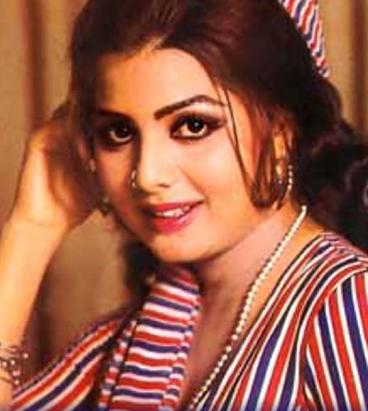
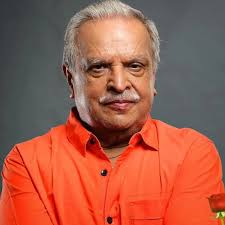
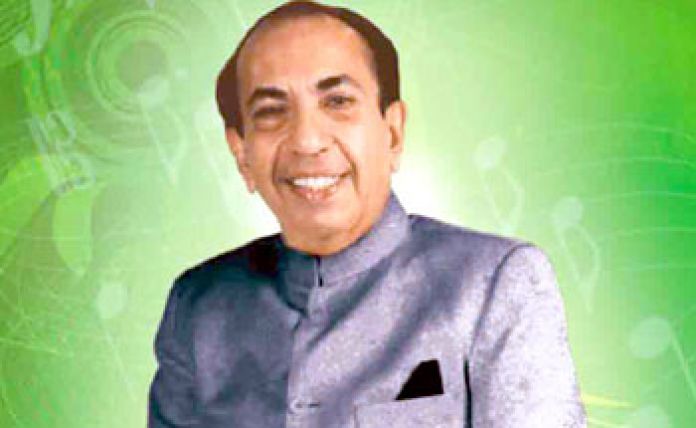
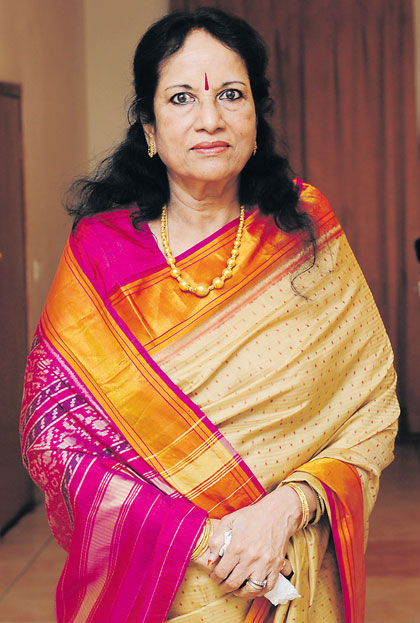
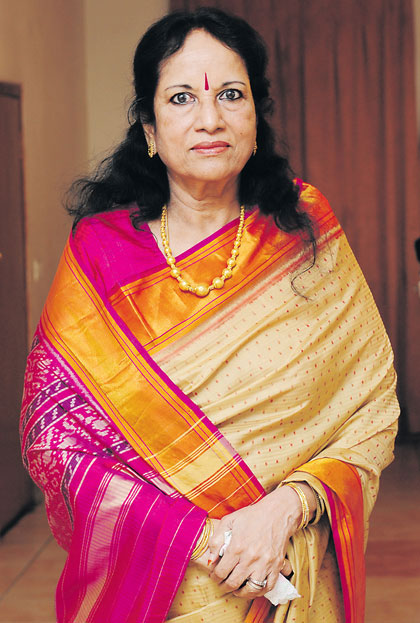
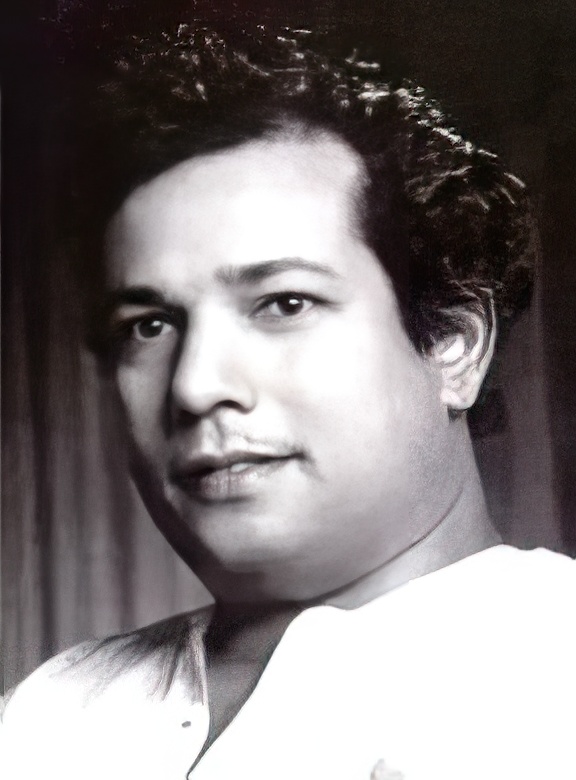
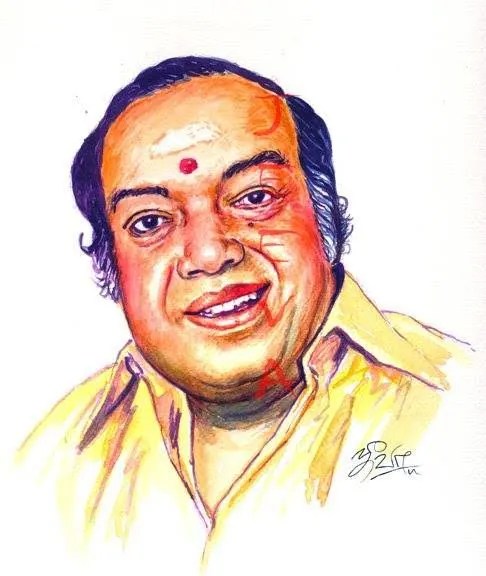
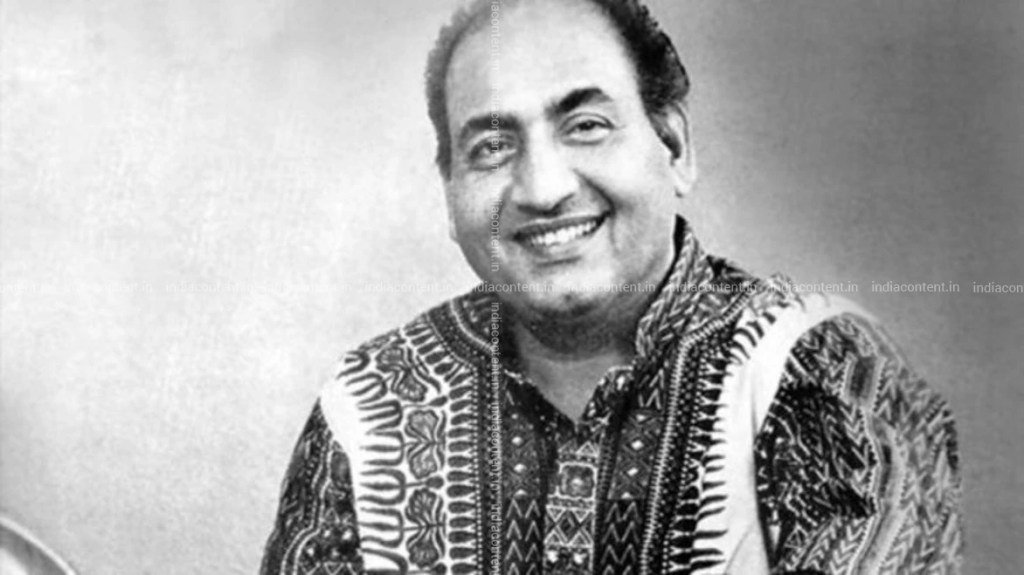
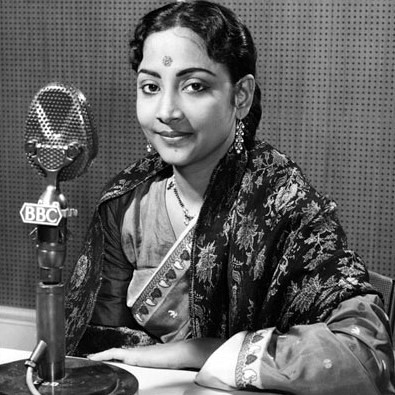
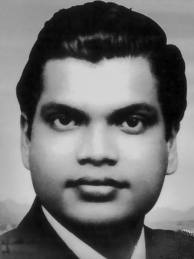
 Music Unrestricted