…If only fate had been more kind to him…
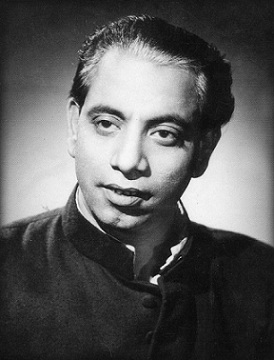
?? 1903 -17th Mar 1968
“है और भी दुनिया में सुखनवार बहुत अच्छे
कहते हैं कि ग़ालीब का है अंदाज़-ए-बयाँ और”….
There are many good poets in this world
But they say the style of Ghalib is unique
Can we not borrow these lines from the famous poet Mirza Ghalib and take the liberty of saying this about the legendary music composer Ghulam Mohammad himself who had tuned these lines so beautifully for the film Mirza Ghalib . Not only this song, all the songs from this 1954 film were composed so exquisitely by the composer , who , as luck would have it, remained on the sidelines and his name is never remembered by most of us , except those who are seriously into the golden era of Hindi film music. It is a small consolation that when our government first decided to include the award for best film music at National level, Ghulam Mohammad was the first recipient and he got it for this film.
If we look at the music of just two of his films, Mirza Ghalib and Pakeezah, they can be counted among the best in Hindi films, that was in the league of the top composers. But, sadly the man remained one among the many such music composers who were unsung and forgotten . Fate was so cruel to him that it snatched him away around four years before his magnum opus Pakeezah got released. He could not see the adulation its music had received at that time and continues to be appreciated even today.
Ghulam Mohammed’s exact date of birth is not known , but the year was 1903. Born in a village , Naal, Bikaner, Rajasthan, into a family of musicians, his father, Nabi Baksh, was an accomplished tabla player. He learnt the dholak and tabla from his father in childhood. He got further training in the tabla, dholak and pakhavaj from Hyderabad’s Ghulam Rasool Khan. At the young age of six , he was paid a salary of Rs 25 per month in Lahore’s New Albert Theatre Company and Bikaner’s JB Company. In 1924, his father took him to Bombay, where after a struggle of eight years, in 1932 he got the chance of playing tabla in Saroj Movietone’s Productions’ “Raja Bharthari”. Thereafter, he assisted Anil Biswas, and later Naushad, with whom he had a long association , from 1943 (Sanjog) to 1952 (Aan). Ironically , Naushad was around sixteen years junior to him!
Like few other music assistants and arrangers like Dattaram for Shankar -Jaikishan, G.S Kohli for O.P Nayyar , Ghulam Mohammad also composed music independently even while assisting Naushad. However, unlike others, Ghulam Mohammad’s music had a distinct style , much different from that of Naushad. It is said he had composed independently for around 30 films. There is some confusion as to what was his first film that he composed independently . Some mention Mera Khwab (1943) as his first film, while Doli (1947) and Tiger Queen (1947) are also attributed as his first films. Making a debut as an independent composer at the age of 40 is quite late in film industry. However GM ( as I will refer to him henceforth for the sake of brevity) pursued diligently and with the film Amber made in 1952 , his songs started getting good attention. One of the songs from this film, Hum Tum Yeh Bahaar -a duet by Rafi & Lata sounds so fresh today as it was around 73 years ago!
This was followed by great songs in films like Dil-E-Nadaan (1953), Laila Majnu ( 1953), Rail Ka Dibba (1953-maybe the first rap song of Hindi films?) etc. In 1954 , he established his name among the great stalwarts of Hindi film music by his evergreen compositions for the film Mirza Ghalib that were based on Ghalib’s ghazals. Almost all the songs from this movie are masterpieces. He even won the 1955 National Film Award ( it was known as State Award then) for Best Music Direction for this film.
But inexplicably , he did not get the opportunities despite the excellent music in Mirza Ghalib; few films like Do Gunde in 1959 & Shama in 1961 had good songs , but Ghulam Mohammad continued to be on the sidelines .
The noted film maker Kamal Amrohi signed him up for his magnum opus, Pakeezah , a film that was started in 1956 and ultimately released in 1972! There were many reasons for the delay, primarily the separation of the film maker Kamal Amrohi and his wife , the well-known actress Meena Kumari and her deteriorating health because of her unfortunate addiction to alcohol. During its release the film was initially having a lukewarm response but the demise of Meena Kumari a month after the release made the film a box office hit. Not to deny the most important fact that its music is considered one among the best scores in Hindi films.
As luck would have it, Ghulam Mohammad had left this world in 1968, four years before the film’s release and could not experience the great accolades for his compositions. Naushad, had completed the back ground score and it is said , few songs also. In all there were some 15 songs originally composed by Ghulam Mohammad for the film but only six were retained in the film. Later , HMV released an album Pakeezah Rang Barang that had rest nine songs.
If we have to describe Ghulam Mohammad’s music, it was an eclectic mix of tunes based on classical raagas, a deep understanding and importance to the lyrics that were tuned in perfectly as evident from his songs based on Ghalib’s ghazals, excellent percussion arrangements (as he himself was a master of many percussion instruments) , an orchestration that used mostly Indian instruments like Sitar , Sarangi , Shehnai , but at the same time integrated beautifully western instruments like different types of guitars, piano etc.
I have tried to compile his best songs and grouped them film-wise as in some of his films almost all the songs are great compositions. They are arranged chronologically , with the song name, singer(s) and lyricist mentioned.
Amber (1952)
- Hum Tum Yeh Bahaar Dekho-Rafi & Lata-Shakeel Badayuni
A lilting , romantic melody that has a fast-paced rhythm and when it is sung by the eternal pair of Rafi & Lata , then it is bound to be pleasing to the ears. One of the earlier hits of Ghulam Mohammad. Also a rare occasion when Rafi sang for Raj Kapoor!
Dil-E-Nadaan (1953)
2. Zindagi Denewale Sunn, Teri Dunya Se Dil Bhar Gaya-Talat Mehmood-Shakeel Badayuni
One of the best songs of Talat , for whom Ghulam Mohammad had composed so many great songs. The opening notes with a guitar strumming sets the tone and then the velvet vocals of Talat, the sublime lyrics of Shakeel and intoxicating melody of the tune take you into a different world.
3. Jo Khushi Se Chot Khaye, Woh Jigar Kahan Se Laaun- Talat Mehmood-Shakeel Badayuni
Instead of guitar , it is the sarangi that sets the sober mood for this ghazal. The velvet vocals of Talat were extensively used by Ghulam Mohammad in his various songs. Like many songs of GM, the importance to lyrics is paramount and Shakeel Badayuni was a solid support to him in many such songs.
Laila Majnu (1953)
4. Chal Diya Caarvaan – Talat Mehmood-Shakeel Badayuni
The ‘caarvaan’ of GM with Talat & Shakeel continues in this 1953 version of Laila Majnu, with one of the career best songs of Talat. Observe how GM used a typical waltz -like rhythm for a ghazal. The violins are simply haunting and tug at your heart.
5. Aasmaan Wale Tere Duniya Se -Talat & Lata- Shakeel Badayuni
Lata joins the ‘caarvan’ in this song and GM keeps the orchestration to bare minimum as the raag Bhimpalasi on which it he had composed it conveys the mood of the song so effectively.
Rail Ka Dibba (1953)
6. La De More Baalma Aasmani Chidiyan-Rafi & Shamshad- Shakeel Badayuni
If someone thinks GM was mostly composing very sober , serious songs , here is a delightful , absolutely rocking number.
Can we say this was the first ever rap song in Hindi films?!!
And when those yesteryear masters compose even a rap song , observe how melodious and delightful it sounds. Not the terrible ear shattering modern versions! The lung power of Shamshad is even greater than that of Rafi and she simply shines through the song. Just watch out from 1.45 mins in this clip-for 15 seconds she sings breathless!
Mirza Ghalib (1954)-All Lyrics by Mirza Ghalib
We now come to a masterpiece of an album by GM and I had mentioned in the beginning of my article, songs from just these two films- Mirza Ghalib and Pakeezah are enough to record the contribution of GM to Hindi film music in golden letters. Each song that I have listed here is a gem . GM had composed for Talat and Suraiyya some of their career-best songs. Ghalib’s best ghazals have been brought to life by the excellent tunes of GM ; there may be some other composers also who might have set these ghazals to tune but GM ‘s compositions stand out. Those who are going through this blog are requested to listen to all these songs in the links provided below -someone has been kind enough to provide English translation for the immortal poetry of Ghalib .
Among the songs that I have listed here, Aah Ko Chahiye Ek Umr is truly mesmerizing with a fast-paced tune and do I have to say anything about the great Ghalib’s lines-“ Khaak ho jaayenge hum , tumko khabar hone tak”! ( I will not be there by the time you realize my love). And Rafi, as usual gets just one song that is picturized on a fakir and in that , he leaves his inedible mark! The opening lines of this blog are from this. Suraiyya renders three solo gems- Aah Ko Chahiye , Nukta Cheen Hai & Yeh Na Thi Hamari-the last one is absolutely stunning with the high notes at the end . Talat’s intensely emotional Phir Mujhe Deeda-E-Tar and Ishq Mujhko Na Sahi show us why he was called the King of Ghazals.
Each song mentioned here is a gem to be listened to again and again and I am sure listeners will agree with me when I say GM is no less a composer than the stalwarts who got their fame in Hindi film music.
7. Dil-E Naadan Tujhe Hua Kya Hai-Talat and Suraiyya
8. Phir Mujhe Deeda-E-Tar- Talat
9. Aah Ko Chahiye Ek Umr-Suraiyya
10. Hai Bas Ke Har Ek Unke-Rafi
11. Nukta Cheen Hai Gam-E-Dil-Suraiyya
12. Ishq Mujhko na Sahi Vehshat hi Sahi- Talat
13. Yeh Na Thi Hamari Qismat- Suraiyya
Kundan (1955)
14. Aao Hamare Hotel Mein-S.D. Batish & Sudha Malhotra-Shakeel Badayuni
Similar to the peppy song from Rail Ka Dibba , enjoy a lighter mood with GM ‘s song. These songs show GM’s skill in composing a variety of genres.
Maalik (1958)
15. Man Dheere Dheere Gaye Re-Talat Mehmood & Suraiyya-Shakeel Badayuni
One more example of how GM could bring out the best from both Talat & Suraiyya. A romantic song with that typical understated melody that has been the hallmark of GM’s style.
Do Gunde (1959)
16. Bheegi Palken Utha-Rafi & Lata-Majrooh Sultanpuri
GM creates the same magic with another eternal pair- this time with Rafi & Lata. An intensely moving song , with superb sitar and sarangi that can easily be considered as good as having been composed by any of the stalwart composers who are considered as the “top ten”.
Shama (1961)
Apart from Mirza Ghalib and Pakeezah , if there was another film in which all the songs were too good, it was Shama. It had excellent songs rendered by Suraiyya ( who had acted along with Nimmi ) , Suman Kalyanpur & Rafi. Suraiyya’s Dhadkte Dil Ki Tamanna can be considered as one of the best from GM , a rare but intensely emotional Dil Gam Se Jal Raha by Suman , a lively romantic solo by Rafi-Who Saadgi Kahe Ise and once again Suraiyya surprises us with Mast Ankhon Mein Shararat.
Dhadakte Dil Ki Tamanna has a superb combination of Sitar , Sarangi & Guitar , with that brief pause in the last line of each anatara. One should not forget the superb lyrics by Kaifi Azmi—woh gam haseen hai jis gam ke zimmedaar ho tum!
Note how GM had used Suman Kalyanpur to traverse the high notes in Dil gam se jal raha . Note how GM had structured of the antaras in “Mast ankhon mein shararat” with a sudden shift in notes from a high to low, executed superbly by Suraiyya.
17. Dhadakte Dil Ki tamanna-Suraiyya-Kaifi Azmi
18. Aap Se Pyaar Hua Jata Hai- Suraiyya-Kaifi Azmi
19. Dil Gam Se Jal Raha-Suman Kalyanpur- Kaifi Azmi
20. Wo Saadgi Kahen Ise Deewangi-Rafi- Kaifi Azmi
21. Mast Ankhon Mein Shararat- Suraiyya – Kaifi Azmi
Pakeezah (1972)
I come to the last but the most important work of Ghulam Mohammad. Each song from Pakeezah will continue to enthral the generations to come. There are very few films in which we see each song a classic masterpiece . When we listen to a particular one , we would like to say this is the best among all, then we tend to think the same about the next one we listen ..and the next one….
The percussion in Chalte Chalte is something simply out of the world and personally , I like this song so much that I can listen to this multiple times on a loop! Apart from being a treat for the ears, just observe the camera work in Inhi Logon Ne Li Le-one can see the dancers in buildings far away, at multiple locations-so meticulous picturization. A word about the principal photographer Josef Wirsching who was a German but settled and worked in India for around 20 films, with Mahal( 1949), Dil Apna Aur Preet Parayee( 1960) being other famous films apart from Pakeezah. Unfortunately, like GM, he also passed away before the release of Pakeezah, in 1967.
The intensely classical Thade Rahiyo, the complex percussion arrangement in Aaj Hum Apni Duaon ka , the cool-as-a-breeze Chalo Dildar Chalo are songs that can be made only once in a decade!
The raagamalika in Mausam Hai Aashiqana has one of the best orchestration by GM with each antara is set in different raag. It is difficult to describe the songs of Pakeezah in one or two paragraphs-maybe one day I will try to write an exclusive blog on them.
Among the unreleased songs, I have included just one here-a solo by Rafi .
22. Chalte Chalte Yuhin Koi Mil Gaya -Lata-Kaifi Azmi
23. Inhi Logon Ne Le Li Na Dupatta-Lata-Traditional
24. Thade Rahiyo Oh Baanke Yaar- Lata-Majrooh Sultanpuri
25. Aaj Hum apne duaon ka-Lata-Kaif Bhopali
26. Chalo Dildar Chalo-Rafi & Lata- Kaif Bhopali
27. Mausam Hai Aashiqana-Lata- Kamal Amrohi
Not included in film :
28. Yeh Kiski Aankhon Ka-Rafi-Majrooh Sultanpuri
There are conflicting versions about exactly how many songs were totally recorded for Pakeezah film -some say 15 , some 20! Also there is a controversy whether Naushad completed only the back ground score or even composed 3-4 songs that were not included in the film. I am not an authority on these and would like to avoid getting into controversies. For me the music of Pakeezah is something that I can keep listening multiple times . As a token of good faith to the composer, Kamal Amrohi compiled the tracks that were not included in the film and had them released by His Master’s Voice as ‘Pakeezah Rang Barang’.
Acknowledgements and Disclaimer:
I sincerely thank the publishers of following Internet sources for the information that I could gather for this article:
- You Tube
- Wikipedia
The songs mentioned are from the popular, public domain and have been embedded here only for the listening pleasure of the music lovers. This blog does not claim any copyright over them, which rests with the respective owners of the rights The photograph is taken from the internet, duly recognizing the full copyrights for the same to the original creator or the site where they were originally displayed .This blog does not claim any copyright over them, which rests with the respective owners of the rights.
 Music Unrestricted
Sivanandamji,
I liked your superb survey of Ghulam Mohammad’s music. The oldtimers on Songs Of Yore are very fond of Ghulam Mohammad. I would have added only three of my favourites which are missing in your list.
Ye duniya hai yahan dil ka lagana kisko aata hai
Aansoo thi meri zindagi, aankhon ne jo baha diya
Mohabbat ki dhun beqaraaon se poochho
The first two films are not covered. The third is from Dil-e-Nadan (1953), but it is my great favourite.
Congrats.
AK
LikeLike
AK Ji
Thanks a lot for going through my blog and your appreciation. Yeh Duniya hai yahan di lagana is a song that I have heard earlier also-a rare Mukesh for Dev Anand combination!
The Rafi-Amirbai Karnataki song Aansoon thi meri zindagi-I am hearing for the first time.
I was also aware of Mohabbat ki dhun beqaraaon se poochho – a nice song. As every blog writer must be aware, we have to sacrifice few songs for the sake of brevity.
In my case , I have to honestly admit that when I write about the artists who worked in very early years like 40’s and 50’s , unless I hear their songs -at least a few lines , I may not be aware of that song just by going through their discography. So sometimes , many good songs may be left out!
Thanks once again….
LikeLike