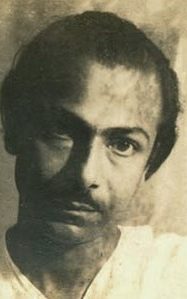
Salil Chowdhury : 19th November 1922 -5th Sep 1995
When we look at the music of Hindi films during period 1950- 1970, the most fascinating aspect is the immense variety brought out by the music composers in composition , orchestration , style etc. -a real challenge because a typical film song was just around 3-4 minutes long. For those ( like me!) infatuated with the music of the golden era, it is a great treat to listen and enjoy the various individual styles of those composers. A discerning listener can guess the music director in majority of the songs by just listening to few lines.
Among all those stalwarts , if there was one composer whose music would stand out so prominently that one can immediately identify the composer, it was undoubtedly the legendary Salil Chowdhury. He was not only a great music composer, but a lyricist ( for most of his Bengali songs), story-writer, poet, arranger, instrumentalist and one of the prolific music composer in multiple language films like Bengali, Hindi, Malayalam, Tamil , Kannada , Marathi etc. He could play the flute, violin, piano, esraj etc.
Born on 19th November 1922 in a village called Ghazipur, South 24 Parganas district of West Bengal, Salil Chowdhury’s childhood was spent among the lush tea gardens of Assam, where his father Dr Gyanendra Chowdhury was the Medical officer. The Chief Medical Officer was Dr Maloni, an Irish national. He used to listen to western classical music in the gramophone records at this gentleman’s house and this could have influenced the young Salil’s musical talent. He would go on to become one of the pioneers in using western classical music , especially the arrangement, innovative use of chorus and integrate them so beautifully into the Indian folk music and create immortal music for film songs in various languages already mentioned . Even when he took inspiration from other music like Mozart’s 40th Symphony for Itna Na Mujhse Tu Pyaar or a Russian Red Army marching song for Mausam Beeta Jaaye, it was done so beautifully, integrating the same into the grammar of a film song.
He was also greatly moved by the plight of the poor peasants especially during the Bengal famine and made him a full-time member of the IPTA ( Indian Peoples Theatre Association-a cultural wing of the Communist Party of India). He went on to compose many revolutionary songs for the peasants and even had to go underground fearing reprisal from the then ruling British .
The first Bengali film in which Salil Chowdhury composed music was Paribortan, released in 1949. From then to his last Bengali film Mahabharati, released in 1994, he had scored the music for 41 Bengali films.
His debut in Hindi films was through the award winning (Filmfare Best Movie Award and International Prize at the Cannes Film Festival ) “ Do Bigha Zameen” , which initially was made as a Bengali film . Though based on Rabindranath Tagore’s work , Salil Chowdhury had adapted the same with a difference in the story. Music for Do Bigha Zameen became very popular , with the song Mausam beeta jaaye ( Apni kahani chod jaa) being played even today.
There is some similarity between Salil Chowdhury and the music composer Ravi, not in their styles, but in the way they shifted their focus to Malayalam cinema. Malayalam film music always welcomed melody and when Salil Chowdhury entered the Malayalam film industry with the movie Chemmeen, its music became a landmark. In all he went composed music for films in 13 languages. This includes over 75 Hindi films, 41 Bengali films, around 27 Malayalam films, and a few Marathi, Tamil, Telugu, Kannada, Gujarati, Odia and Assamese films.
If we see the styles of different music composers, there are two schools. Some composers like Madan Mohan, Ravi, Khayyam in Hindi and KV Mahadevan in Tamil always preferred to compose the song based on the lyrics written. The others like Shankar-Jaikishan and Salil Chowdhury mostly liked to compose the tune first and then the lyrics were written. As per this school of thought, this gave them ample opportunity to experiment and create completely fresh tunes . There is no point in saying which style was better-each has its own charm and that is why listeners like us could listen to so many immortal songs that continue to entertain us.
Some of the unique aspects of his music was very innovative use of the obligato ( essential but subordinate instrumental part), counter melody and chorus that many-a-times accompanies the main singer and in some songs even acts as the interlude instead of the usual instrumental interlude. I always visualize his compositions as that of the river Amazon that is said to flow unpredictably, changing course suddenly. One can never guess how the antara would start after listening to the mukhda of his song. Even the second antara can be totally different than the first and third could be even more different!
Equally unique is his “ recreation” of his own tunes into multiple language film songs. For e.g. take the song Baag Mein Kali Khili ( from the film Chand Aur Suraj) which he originally composed in Bengali as Ja Re Ja Aamar Ashar Bhul Bheshe sung by his wife Sabita Chowdhury. The same tune in Bengali is more subtle and sober whereas the Hindi version is so lively and peppy, for a romantic genre. Not content with these two difference treatments , he takes the same tune for the antara in the Malayalam song Puthan Valakare from Chemmeen film …and converts into a perfect fisherman’s folk tune. I heard him saying in one of his interviews in All India Radio that he could do this with multiple languages as the film songs in our country have their own unique grammar that is understood across languages. What a beautiful observation! Salil da also composed the background score for many films in which the songs were composed by some other music director and some times he did not even take credit for the same .
I have only listed a fraction of his evergreen melodies – 20 songs that are my personal favorites. Sixteen of them are Hindi songs and two each from Malayalam and Tamil ( unfortunately I do not know much about his Bengali songs as that could be a separate ocean by itself and hence pardon me for the omission).
Songs are listed chronologically in the order of the films’ release with film /year/song title/ singer(s)/ lyricist mentioned in that sequence.
- Do Bhiga Zameen-1953/Hariyala Sawan Dhol Bajata Aaya/Manna Dey & Lata/ Shailendra
The debut Hindi film of Salil da, Do Bhiga Zameen had fabulous songs and my personal favorite is the one I have selected . The tempo of the song is so infectious that when you listen to this , you would fell like getting up and dance. The song is composed without any major interludes and is a seamless blend of singing and orchestration.
2. Jaagte Raho-1956/Teki Main Jhoot Boliya/Rafi & S. Balbir /Prem Dhawan
This is the first ‘Bhangra’ song in Hindi films and what a rocker it is. Rendered impeccably by Rafi and Balbir, with superb lines by Prem Dhawan ( in fact Salil da had acknowledged that this song was more of Prem Dhawan’s creation than his!). Amazing that some one from Bengal could create a masterpiece Punjabi bhangra.
3. Madhumati-1958/Dil Tadap Tadap Ke Keh Raha/ Lata & Mukesh/ Shailendra
Madhumati fetched Salil da his first Filmfare award for best music direction and is one of his most successful music score. Totally eleven songs are there in this film and all are gems. As Aaja Re Pardesi and Suhana safar aur yeh masusam are played so often and is known to everyone , I have selected the Dil Tadap Tadap Ke song , inspired from a Polish folk song. Salil da , in fact embellished this even more beautifully than the original with his superb orchestration and treatment.
4. Parakh-1960/O Sajana Barkha Bahaar Aayee/Lata/Shailendra
One of his superb compositions with bare minimum orchestration. I can say that this one carries the perfect stamp of his style. I am not very sure about the instrument that accompanies Lata as she starts the antara “ Tumko Pukare Mere Man Ka Papihara” -could be flute or the oboe which Salil da had used in many of his songs. Exquisite use of the sitar , the way the second antara is structured all make this just a pleasure to keep hearing again and again.
5. Parakh-1960/Mere Man Ke Diye/Lata/Shailendra
A very rarely played song , this song shows how beautifully Salil da had used Lata’s vocals. Lata herself on many occasions said that she always loved to sing Salil da’s compositions as many of them were challenging. If we have a composer like Salil da, singer like Lata and lyricist like Shailendra, a masterpiece can be created without just 2-3 instruments! That was the specialty of the golden era!
6. Chhaya-1961/Itna Na Mujhse Tu Pyaar Bhadaa/Talat Mehmood & Lata/ Rajendra Krishan
Once Salil da had jokingly said he could have been a re-incarnation of Mozart! That was his way of acknowledging the influence of his music on him. He must have composed this immortal classic duet of Talat and Lata as a tribute to Mozart. The tune is inspired from Mozart’s 40th symphony in G Minor but then the treatment is totally Indian .
7. Kabuliwala-1961/Ganga Aaye Kahan Se/Hemant Kumar/ Gulzaar
Kabuliwala is known for the masterpiece from Manna Dey -Ae Mere Pyare Watan, which , no doubt is a great song. Equally poignant and sung with that typical baritone of Hemant da, is the song ‘ Ganga Aaye Kahan Se” . Only while researching for this blog , I realized this was written by Gulzar. Long before he got his fame. With only the bare minimum instruments accompanying, Salil da brings to your eyes the immense depth of Ganga .
8. Maya-1961/Jaa Re Jaa Re Ud Jaare Panchhi/Lata / Majrooh Sultanpuri
The film Maya was one more feather in the cap of Salil da with some 8 songs and most of them being hits. Rafi had some great solo songs – Koi Sone Ke Dilwala and Zindagi hai kay sun meri jaan .
{Trivia about Zindagi Hai Kya song: This is somewhat inspired from the theme music of Charlie Chaplin’s Limelight and it seems not only Salil da, but many other music directors got inspired from this Chaplin’s tune -goes to the credit of Chaplin who basically was untrained in music!}
The Lata -Rafi duet Tasveer Teri Dil Mein is also popular to this day. But , again my personal favorite is the Lata solo—Jaa Re Jaa Re Ud Panchhi that is vintage Salil da all the way. The counter melody that runs through the antara is his specialty. I am poor in identifying the instruments , but I think the unique wind instrument that sounds like flute-Oboe was used by Salil da and he was one of the pioneers to bring that instrument in popular film music.
The prelude starts off with a flute , accompanied by strings, and then a brief guitar gives the kick -off. Lata’s exquisite rendering of the song takes us into a different world. The saxophone in the interlude continues the song seamlessly and just when you are thinking that one can not compose anything better than this, Salil da throws a surprise by bringing in that counter melody of Oboe as Lata sings Na dali rahi na kali.
Listen to the song with headphones and enjoy each instrument along with the divine voice of Lata to enjoy this song fully .
9. Anand-1970/Kahin Door Jab Din /Mukesh/Yogesh
When it comes to Salil da’s compositions , it is always quality over quantity. The film Anand has only 4 major songs-Kahin door jab din dhal jaaye, Maine Tere Liye Hi -both sung by Mukesh, Manna Dey’s evergreen Zindagi Kaisi Hai Paheli and Lata’s Na Jiya Laage Na. All are fantastic songs and it is really difficult to talk about one among those.
Kahin Door is Mukesh all time best song -the pathos that he was famous for comes out so poignantly in this . The way he starts off the song before the orchestration starts -especially that “ Saanjh ki Dulhan” in the low notes ( Mukesh’s forte) is enough to make this an epic song.
10. Mere Apne -1971/Koi Hota Jisko Apna /Kishore/Gulzar
In the early films of Salil da, he had utilized the vocals of Kishore Kumar in songs like Chota Sa Ghar Hoga Badlon Ke Chhaon mein , in the comical Aake Seedhi Lagi Jaise from Half ticket film but those were lighter songs. Salil da himself felt after recording this “ Koi Hota Jisko Apna” that he had not utilized Kishore da for such songs earlier. Personally one of my very favorite Kishore da songs, this is really a tough one to sing.
11. Annadata-1972/Raaton Ke Saye/Lata/ Yogesh
If one has to pick out Salil da’s most unique and difficult composition , in my opinion it must be definitely this one. It is unfortunate that this song is very rarely played in radio or TV. One can understand that it is difficult for anyone else to perform this in a singing show, but at least the original song could have been made more popular. Maybe it is too difficult for the general listener to appreciate!
What a complex structure Salil da has though about! I must confess that it would be impossible for me to write about the musical intricacies of this song. Only a person knowledgeable about music can do justice. A layman like me can only keep listening to this song again and again and wonder how could someone compose such a tune and more so how can a singer render this with so much ease. Hats off to Salil da and Lata!
12. Annadata-1972/Nis Din Sis Din /Lata/ Yogesh
Continuing with one more Lata solo from the same film Annadata, this is once again a typical composition of Salil da. After listening to just few seconds of the song one can guess the composer must be Salil da. Before the actual song starts there are two lines:
जिया लागे ना तेरे बिना जैसे प्रीतम हाए
चाँदनी बिना रात ना भाये
आ आ आ आ आ आ
The way these two lines are composed , gives you a glimpse of how unpredictable the song will turn out. Just like how Lata & Madan Mohan were a great combination, Lata & Salil da also gave us so many intricate melodies.
I am giving the link to the Bengali version of this song where you can hear a different interlude ( almost Arabic in nature) and different orchestration. Salil da could weave a magic with the same tune with different treatments in different languages!
13. Annadata-1972/Nain Hamare Sanjh Sakare/Mukesh/ Yogesh
A song that is completely ignored song ( reason I am saying this is that I have very rarely heard this in radio or even in any of the Mukesh playlists in the various media in Internet) . This is vintage Mukesh all the way-there cannot be anyone who can touch the lowest notes with so much of sweetness and at the same time maintain that typical pathos that runs through the song. Put on a headphone and listen to those particular words:
Koi jaane na….koi jaane naa…
( a brief pause here ) and then…Yahan.
When you listen to that “ Yahan” , you will realize what great singing Mukesh is capable of.
Unlike many other tunes , Salil da has kept this relatively simple ; however the very subtle instrumental ornamentation that he does in the background compensates for the typical twists and turns!
14. Rajnigandha-1974/Kai baar yuhin dekha hai/ Mukesh/Yogesh
This low budget film from Basu Chatterjee was a sleeper hit , mainly through word-of-mouth publicity. Basu Chatterjee became famous for such “ middle cinema” that were with simple plots , but picturized with reality without the typical “masala” elements of Bollywood films of those days.
There are just two songs in this film-the other one being Lata’s immortal Rajinigandha phool tumhare mehke yuhin Jeevan mein.
Mukesh once again gives one of his best for Salil da and got his first National award for best male playback singer.
15. Choti Si Baat-1976/Na Jaane Kyoon Hota Hai /Lata/Yogesh
The most popular song from this film , once again by the team of Basu Chatterjee and Salil da, is of course Jaane Man Jaane Man Tere do nayan, that propelled the veteran “ Gana Gandharvan “ from Kerala, K J Yesudas into the Hindi film world.
However I have selected this totally “ western” style song Na Jaane Kyoon by Lata . Reason being , excellent use of guitar , saxophone and not to forget the innovative use of chorus for which Salil da was well known.
The nightingale , in her own way , creates a magical song with ease as she carries those intricate notes that keep moving up and down.
16. Anand Mahal-1977/Ni Sa Ga Ma Pa Ni Sa Re Ga ( Aa aa re mitwa) /K J Yesudas/Majrooh
Since I did not list the Yesudas duet from Choti Si Baat, I decided to list out this superb , classical song which reveals a totally new Salil da . This is a classical master piece, set in raag Kalavati. Unfortunately this film , although completed was not released due to supposedly legal issues.
K J Yesudas’s absolute mastery over the classical genre is fully evident in this song.
Malayalam Songs
17. Chemmeen (The Prawn) 1965/Kadalinakkare Ponore/ KJ Yesudas/Vayalar Ramavarma
If I remember correctly , this could have been the first Malayalam song that I got hooked to in my childhood. The absolute freshness in the tunes , rooted very strongly in the folk style makes the songs of Chemmeen immortal. A very young voice of K J Yesudas is so pleasing to hear.
18. Chemmeen 1965 /Puthan Valakkare/KJ Yesudas, P Leela, K.PUdaybhanu, Shanta P Nair/ Vayalar Ramavarma
A song with a complex structure: it starts with fast mukhda and immediately shifts into a slow , lilting melody and the antara is completely different that is based on Salil da’s own Hindi song Baag Mein Kali Khili ( sung by Asha in Chand aur Suraj film). The rhythm of the song is perfectly in synchronization with a typical fisherman’s rowing of a boat.
Even those not knowing the language will listen to this again and again-truly an addictive song!.
Tamil songs
19. Azhiyada Kolangal ( Enduring Patterns)-1979 /Poovannam Pola Nenjam/P Jayachandran, P Susheela/Gangai Amaran
The film maker Balu Mahendra made his debut in Tamil with this ‘ coming of age’ film Azhiyatha Kolangal. Since Salil da had composed the music for Balu Mahendra’s Kannada debut film Kokila, he had expressed his wish to compose music for the Tamil film also. The music of this film had a total fresh feel in the Tamil film music that was so far dominated by veterans MSV, KVM, Ilayaraja and the songs remain popular to this day.
Right from the prelude to the rhythm pattern, interludes -all had a completely different feel that was knew to the Tamil film music and brought in a fresh fragrant whiff of air. Salil da based the orchestration with innovative use of the Ukulele ( a type of mandolin ) and a flute .
20. Azhiyada Kolangal-1979/ Naan Yennum Pozhuthu/ S P Balasubrahmanyam/Gangai Amaran
Na Mano Lage Na in Bengali, N a Jiya Laage Na in Hindi and then Naan Yennum Pozhudu—the first two by Lata and the Tamil version by the legend S P Balasubrahmanyam. Salil da in his own style takes the same tune and embellishes them with different orchestration in different languages.
It is not an easy task to render a song that was immortalized by the great Lata , but if SPB is the singer , it is possible! He takes this song to a different level, that is in his favourite ghazal style. Salil da’s typical use of chorus in the interludes, with some brass & guitar accompanying and percussion shifting between drums and table seamlessly -all these make this a treat to listen to.
I sincerely thank the publishers of following blogsites & Internet sources for the information that I could gather for this article:
- You Tube
- Wikipedia
- Songsofyore blogsite
- Ragamalika TV You Tube channel
- www.salilda.com website
Acknowledgements and Disclaimer:
The songs mentioned are from the popular, public domain and have been mentioned & embedded here only for the listening pleasure of the music lovers. This blog does not claim any copyright over them, which rests with the respective owners of the rights.
 Music Unrestricted