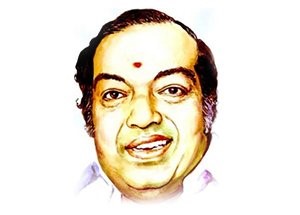
24 June 1927 – 17 October 1981
நான் நிரந்தரமானவன் அழிவதில்லை
எந்த நிலையிலும் எனக்கு மரணம் இல்லை
“I am eternal and is never destroyed….there is no end for me..”
Only poets have the rare privilege of writing their own epitaphs! Kaviarasar Kannadasan wrote these prophetic lines for himself, when he was just 39 years old !
The above lines are from his song “ஒரு கோப்பையிலே என் குடியிருப்பு” from the film Ratha Thilagam , music composed by K V Mahadevan. Like the song Paramasivan kazhutilirundu paambu kettadhu , this is one more song that Kannadasan had lip-synched on screen to make it immortal. One may consider these lines a bit egotistic but it is well known that he was one of those rare persons who openly talked about his various shortcomings and mistakes he made in life. In the same song , he talks about his weaknesses also!
Even after 41 years of his passing away , his songs continue to mesmerize the countless Tamizh music lovers worldwide. Among the 5000 odd songs that he wrote for films, he himself discounted around 20% as trash. But the rest 80% may need a lifetime for one to write about and this blog is a small step towards that.
I had not studied Tamizh except in the primary classes , and so it may be a foolish attempt to write about the poetry in that language and that too by a legend like Kaviarasar Kannadasan. Still I am attempting the impossible mainly due to my intense love for my native language and the lyrical beauty in Kannadasan’s songs. He was able to use the ancient, classical language’s inherent beauty and convey life’s philosophies in a way that even a layman could easily understand. He is also well known for many literary works like the famous “அர்த்தமுள்ள ஹிந்து மதம்” ( The meaningful Hinduism) and was even awarded a Sahitya Academy Award for his novel Cheraman Kathali . However I am not qualified to talk about those and would restrict myself to his film songs, that too with my limited understanding .
For a very long time I was more into listening to Hindi songs and used to admire the Hindi poetry & Urdu shayari in the Hindi film music( HFM). But when I started listening keenly to the great songs composed by Kannadasan , I concluded that he was simply an encyclopedia , an institution by himself. There was no limit to his imagination, spontaneity , versatility, and it is my opinion that he was first among the equals!
Born , Muthiah , to Sathappan Chettiar and Visalakshi Achi as eighth among ten children, he was brought up by one Chigappi Achi who had adopted him. He had studied up to 8th grade and did some job in a private company and worked as an editor for a magazine. His film career started off with the song Kalangathiru maname for the film Kanniyin Kadhali in 1949 , music composed by SM Subbiah Naidu , sung by K V Janaki and ended with “ Kanne Kalaimane” in 1981 for the film Moondram Pirai composed by Ilayaraja and sung by K J Yesudas. In those 32 years. he could make people laugh, cry, ponder over life, inspire , entertain , be optimistic, romantic through his songs and the mastery in Tamizh language.
This is the first blog that I am attempting to write exclusively about a lyricist. It is too daunting a task to select few songs from the approximately 5000 songs that he had written for films. I am restricting myself to just five songs to begin with and will keep writing in parts ( over many years ..I am sure!!). In my opinion that is the only way one can do justice to this legend and his immortal songs.
#1.மயக்கமா கலக்கமா மனதிலே குழப்பமா -Mayakkama Kalakkama Manathile Kuzhappama/Sumaithangi-1962/ Vishwanathan-Ramamoorthy /P B Sreenivas .
There is an interesting anecdote of how Kannadasan’s own song inspired another great lyricist in the Tamil film music , Vaali ( T S Rangarajan) to overcome the latter’s dejection . This has been narrated by Vaali himself to highlight the impact of Kannadasan’s lines. When Vaali was disappointed & dejected in not getting a breakthrough as a lyricist in films, he was thinking of going back to his hometown Srirangam, when he listened to this song written by Kannadasan. Taking inspiration from that song, he decided to fight it out and then later became a successful and even a competing lyricist. Can there be any better example to describe the power of words?
Listen to Vaali himself explaining the lyrics of this song in the following link:
மயக்கமா கலக்கமா
மனதிலே குழப்பமா
வாழ்க்கையில் நடுக்கமா
வாழ்க்கை என்றால் ஆயிரம் இருக்கும்
வாசல்தோறும் வேதனை இருக்கும்
வந்த துன்பம் எதுவென்றாலும்
வாடி நின்றால் ஓடுவது இல்லை
எதையும் தாங்கும் இதயம் இருந்தால்
இறுதி வரைக்கும் அமைதி இருக்கும்.
ஏழை மனதை மாளிகை ஆக்கி
இரவும் பகலும் காவியம் பாடி
நாளை பொழுதை இறைவனுக்கு அளித்து
நடக்கும் வாழ்வில் அமைதியை தேடு
உனக்கும் கீழே உள்ளவர் கோடி
நினைத்து பார்த்து நிம்மதி நாடு
Note the simple lines he had used in the last stanza to convey the essence of life’s philosophy. If one is going through a difficult time , it is better to do one’s duty ,dedicating it to the Almighty and find peace ; at the same time one can seek solace by thinking about the countless who are going through even more difficult times . That was the genius of Kannadasan. The chain of thought in this song is simply amazing.
#2. அத்திக்காய் காய் காய் –Athikkai kai kai Aalangai Vennilavee/ Bale Pandiyai-1962/ Vishwanathan-Ramamoorthy / T.M Soundararajan, P.B Sreenivas, P. Susheela and Jamuna Rani.
From philosophy to romance, let us look at how Kannadasan used the immense beauty of Tamizh language in the song . It seems initially MSV was making fun of the lyrics : what is this song—”kai -kai” like a vegetable market! But once he understood the hidden beauty of the song , along with the producer-director B.R Pantulu , the team created a landmark song. It is all the way the word play of Kaviarasar in full glory. In Tamizh a particular word has two or sometimes even more meaning and that was used so nicely in this song.
அத் திக்காய் காய் காய்
ஆலங்காய் வெண்ணிலவே
இத் திக்காய் காயாதே
என்னைப் போல் பெண்ணல்லவோ
நீ என்னைப் போல் பெண்ணல்லவோ
கன்னிக் காய் ஆசைக் காய்
காதல் கொண்ட பாவைக் காய்
அங்கே காய் அவரைக் காய்
மங்கை எந்தன் கோவைக் காய்
மாதுளங்காய் ஆனாலும்
என்னுளங்காய் ஆகுமா
எனை நீ காயாதே
என்னுயிரும் நீ அல்லவோ
இத் திக்காய் காயாதே
என்னைப் போல் பெண்ணல்லவோ
இரவுக்காய் உறவுக்காய்
ஏங்கும் இந்த ஏழைக்காய்
நீயும் காய் நிதமும் காய்
நேரில் நிற்கும் இவளைக் காய்
புருவங்காய் ஆனாலும் பருவங்காய் ஆகுமோ
என்னை நீ காயாதே என்னுயிரும் நீயல்லவோ
ஏலக் காய் வாசனை போல்
எங்கள் உள்ளம் வாழக் காய்
ஜாதிக் காய் பெட்டகம் போல்
தனிமை இன்பம் கனியக் காய்
சொன்னதெல்லாம் விளங்காயோ
தூது வழங்காய் வெண்ணிலா
என்னை நீ காயாதே
என்னுயிரும் நீயல்லவோ
உள்ளமெலாம் மிளகாயோ
ஒவ்வொரு பேர் சுரைக்காயோ
வெள்ளரிக் காய் பிளந்தது போல்
வெண்ணிலவே சிரித்தாயோ
கோதை என்னை காயாதே
கொற்றவரங்காய் வெண்ணிலா
இருவரையும் காயாதே
தனிமையிலேங்காய் வெண்ணிலா
#3. நினைக்க தெரிந்த மனமே /Ninaika Therintha Maname / Ananda Jothi-1963/ Vishwanathan-Ramamoorthy / P. Susheela.
From romance , we move on to pathos – a song that describes the emotions of a lady who is unable to bear the separation from her lover. This is another classic by Kannadasan. Each line has a phrase that is exactly contrary to the earlier one. The way in which Kannadasan keeps adding such antithesis in each line is just superb. Few examples that highlight this :
நினைக்க தெரிந்த மனமே உனக்கு மறக்க தெரியாதா
பழக தெரிந்த உயிரே உனக்கு விலக தெரியாதா
எடுக்க தெரிந்த கரமே உனக்கு கொடுக்க தெரியாதா
இனிக்க தெரிந்த கனியே உனக்கு கசக்க தெரியாதா
Like a sculptor not being satisfied and chiseling away till he gets the right shape or a painter working on his brush with strokes after strokes, Kannadasan does this with his immortal words.
கொதிக்க தெரிந்த நிலவே உனக்கு குளிர தெரியாதா
குளிரும் தென்றல் காற்றே உனக்கு பிரிக்க தெரியாதா
பிரிக்க தெரிந்த இறைவா உனக்கு இணைக்க தெரியாதா
இனைய தெரிந்த தலைவா உனக்கு என்னை புரியாத , தலைவா என்னை புரியாதா
Add Vishwanathan-Ramamoorthy’s evocative tune with excellent use of the shehnai and the nightingale P Susheela’s impeccable rendition-you get a song that will move you.
#4. வசந்த கால நதிகளிலே / Vasantha kaala nadigalile / Moondru Mudichhu-1976/ M.S. Vishwanathan / P. Jayachandran & Vani Jayaram
It is difficult to categorize the next song that I am going to talk about. It starts off as a pleasant duet, with the lovers enjoying a boat ride, but suddenly turns into a horrific tragedy, with the hero drowning in the lake in a sudden twist . The master-film maker, K Balachandar (KB) picturized this epic song for the film Moondru Mudichu. In most of KB’s films, there will be one song by Kannadasan that comprehensively summarizes the entire film. Composed in an innovative “அந்தாதி ” style, each line starts off with a word that is the ending word of the previous line.
I am reproducing the entire lyrics, so that we can appreciate the beauty of the language used by Kannadasan.
வசந்த கால நதிகளிலே
வைரமணி நீரலைகள்
நீரலைகள் மீதினிலே
நெஞ்சிறண்டின் நினைவலைகள்
நினைவலைகள் தொடர்ந்து வந்தால்
நேரமெல்லாம் கனவலைகள்
கனவலைகள் வளர்வதற்கு
காமனவன் மலர்கணைகள்
மலர்க்கணைகள் பாய்ந்து விட்டால்
மடி இரண்டும் பஞ்சனைகள்
பஞ்சனையில் பள்ளிக் கொண்டால்
மனம் இரண்டும் தலை அணைகள்
தலையணையில் முகம் புதைத்து
சரசமிடும் புதுக் கலைகள்
புதுக்கலைகள் பெறுவதற்கு
பூமாலை மனவினைகள்
மணவினைகள் யாருடனோ
மாயவனின் விதி வகைகள்
விதி வகையை முடிவு செய்யும்
வசந்த கால நீரலைகள்
MSV himself renders the last lines in a menacing tone that brings out the villainy in the scene, where the character played by Rajinikanth intentionally does not save his friend from drowning.
#5. கொடி அசைந்ததும் காற்று வந்ததா – Kodiasainthathum Kaatru Vanthatha / Paarthal Pasi Theerum-1962/ Vishwanathan-Ramamoorthy / T.M Soundararajan & P. Susheela
One can call this song a “Cause-and-Effect analysis” or the eternal “chicken or egg” puzzle. Who else can weave around a romantic theme on this other than the inimitable Kannadasan?!
கொடி அசைந்ததும் காற்று வந்ததா
காற்று வந்ததும் கோடி அசைந்ததா
Apart from being a lyrical beauty, it is a pleasing , melodious romantic one from the film Paarthal Pasi Theerum. Kannadasan takes the cause-and-effect theme and keeps weaving around it , using the words like ornaments. Read the whole lyrics to immerse yourself in the beauty of the poetry:
கொடியசைந்ததும் காற்று வந்ததா?
காற்று வந்ததும் கொடியசைந்ததா?
நிலவு வந்ததும் மலர் மலர்ந்ததா?
மலர் மலர்ந்ததால் நிலவு வந்ததா?
பாடல் வந்ததும் தாளம் வந்ததா?
தாளம் வந்ததும் பாடல் வந்ததா?
பாவம் வந்ததும் ராகம் வந்ததா?
ராகம் வந்ததும் பாவம் வந்ததா?
கண் திறந்ததும் காட்சி வந்ததா?
காட்சி வந்ததும் கண் திறந்ததா?
பருவம் வந்ததும் ஆசை வந்ததா?
ஆசை வந்ததும் பருவம் வந்ததா?
வார்த்தை வந்ததும் வாய் திறந்ததா?
வாய் திறந்ததும் வார்த்தை வந்ததா?
பெண்மை என்பதால் நாணம் வந்ததா?
நாணம் வந்ததால் பெண்மை ஆனதா?
ஓடி வந்ததும் தேடி வந்ததும்
பாடி வந்ததும் பார்க்க வந்ததும்
காதல் என்பதா? பாசம் என்பதா?
கருணை என்பதா? உரிமை என்பதா?
Acknowledgement & Disclaimer
I sincerely thank the publishers of following blogsites & Internet sources for the information that I could gather for this article:
- You Tube
- Mr. Annadurai Kannadasan’s You Tube channel “ Kannadhasan Productions”
- Ms. Subashashree Thanikacahalam’s You Tube channel: Ragamalika TV-QFR series.
- Wikipedia
The songs mentioned are from the popular, public domain and have been mentioned /embedded here only for the listening pleasure of the music lovers. This blog does not claim any copyright over them, which rests with the respective owners of the rights.
 Music Unrestricted
To appreciate and to involve so much with full sincerity to like each and every word of kavingyar’s lyrics requires such a total devotion, which is evident from your blog.
Barvo keep it up 👍👍
LikeLiked by 1 person